

Tarragon: Herb’s looks aren’t much, but it has flavour and is easy to grow
Advertisement
Read this article for free:
or
Already have an account? Log in here »
To continue reading, please subscribe:
Monthly Digital Subscription
$0 for the first 4 weeks*
- Enjoy unlimited reading on winnipegfreepress.com
- Read the E-Edition, our digital replica newspaper
- Access News Break, our award-winning app
- Play interactive puzzles
*No charge for 4 weeks then price increases to the regular rate of $19.00 plus GST every four weeks. Offer available to new and qualified returning subscribers only. Cancel any time.
Monthly Digital Subscription
$4.75/week*
- Enjoy unlimited reading on winnipegfreepress.com
- Read the E-Edition, our digital replica newspaper
- Access News Break, our award-winning app
- Play interactive puzzles
*Billed as $19 plus GST every four weeks. Cancel any time.
To continue reading, please subscribe:
Add Free Press access to your Brandon Sun subscription for only an additional
$1 for the first 4 weeks*
*Your next subscription payment will increase by $1.00 and you will be charged $16.99 plus GST for four weeks. After four weeks, your payment will increase to $23.99 plus GST every four weeks.
Read unlimited articles for free today:
or
Already have an account? Log in here »
Hey there, time traveller!
This article was published 23/08/2011 (5233 days ago), so information in it may no longer be current.
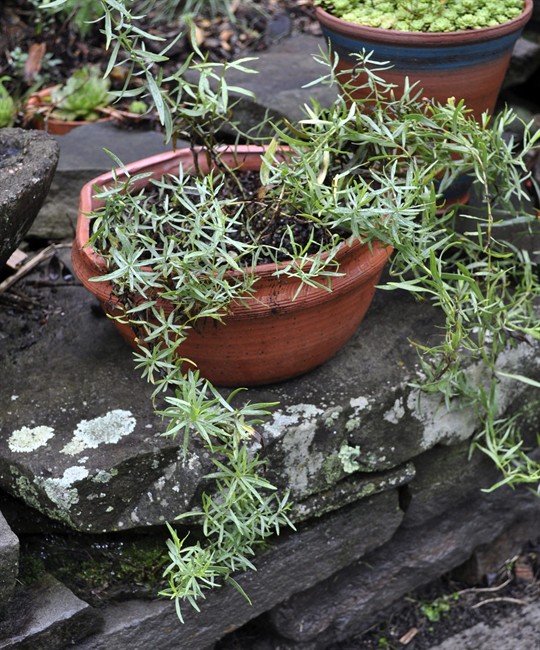
Tarragon (Artemisia dracunculus) looks as pretty now as it’s going to look any time of the year. Its flowers are nothing to speak of, but the strappy leaves — grey-green with a satiny sheen — hold up well in summer’s heat and dryness.
But who cares what tarragon looks like? We want it for its flavour, smooth and slightly licorice-y.
Although few people grow tarragon, it’s an easy herb to grow. The plant is as hardy to winter cold as it is to summer heat, and it’s perennial. Not perennial like mint or lemon balm, both of which take over the garden unless their growth is checked in some way, but perennial and well-behaved, spreading only slowly and not self-sowing its seeds.
NO NEED TO PLANT SEEDS
In fact, good tarragon doesn’t make any seeds at all. So don’t plan on sowing seeds to get tarragon started in your own garden. Only Russian tarragon (A. dracunculoides), a kind of tarragon lacking in flavour, makes viable seeds from which it can be propagated.
The way to make new plants of the desirable French tarragon, besides just going out and buying them, is by cuttings or by division. Stem cuttings root fairly easily whether the stems are young and succulent or old and tough. Or take root cuttings in early spring just before growth begins, setting thick root pieces beneath a one-centimetre cover of soil, either in seed flats or out in the garden.
Early spring is also the time to multiply a tarragon plant by division. Dig up an established clump, then cut it apart with a knife or your shovel blade into smaller pieces, each with roots attached, for replanting. Old plants like to be renewed this way every few years and replanted somewhere new.
For just one or two new plants, dig out some sprouts and attached roots from the edge of a clump, then replant them.
A FRIENDLY IMPOSTOR
To tide yourself over while waiting for your tarragon plantation to grow larger, you could plant an annual that has almost identical flavour. This plant (Tagetes lucida), called Mexican mint marigold, sweet mace or sweet scented marigold, can be grown from seeds.
The simple, yellow flowers look much like marigold because the plant is, in fact, a kind of marigold. Expect quick growth and, where winter temperatures don’t plummet quite to -18 C, also expect the plant to return year after year as a perennial.
AND NOW, FOR THE REAL THING
Getting back to real tarragon: Although easy to grow, tarragon, like any other plant, has likes and dislikes.

Give it full sun and soil that drains well, even a soil that is a bit on the dry side. Wet soil spells death to tarragon in winter.
And speaking of winter, at its approach, cut tarragon stems to the ground, then cover the plant with some fluffy, organic material such as straw or oak leaves. Remove the covering in spring as growth begins.
Given water in summer and some protection from bitter cold in winter, tarragon also grows well in a pot.
Once your tarragon plantation comes into full production, there’s almost no end to this herb’s uses. Pliny, writing in first-century Rome, recommended tarragon against fatigue, and perhaps that’s why in medieval times travellers slipped sprigs into their shoes before long journeys.
Vinegar takes on a tarragon flavour if poured hot over the herb, then sealed into bottles for two or three weeks. And tarragon is a perfect accompaniment to fish. Be careful, though, because in ancient Persia, tarragon was recommended for creating appetite.