

Death of the suit jacket
Men are still forced to wear them, but professional women are breaking free
Advertisement
Read this article for free:
or
Already have an account? Log in here »
To continue reading, please subscribe:
Digital Subscription
One year of digital access for only $1.44 a week*
- Enjoy unlimited reading on winnipegfreepress.com
- Read the E-Edition, our digital replica newspaper
- Access News Break, our award-winning app
- Play interactive puzzles
*Billed as $5.77 plus GST every four weeks. After 52 weeks, price increases to the regular rate of $19.95 plus GST every four weeks. Offer available to new and qualified returning subscribers only. Cancel any time.
To continue reading, please subscribe:
Add Free Press access to your Brandon Sun subscription for only an additional
$1 for the first 4 weeks*
- Enjoy unlimited reading on winnipegfreepress.com
- Read the E-Edition, our digital replica newspaper
- Access News Break, our award-winning app
- Play interactive puzzles
*Your next Brandon Sun subscription payment will increase by $1.00 and you will be charged $17.95 plus GST for four weeks. After four weeks, your payment will increase to $24.95 plus GST every four weeks.
Read unlimited articles for free today:
or
Already have an account? Log in here »
Hey there, time traveller!
This article was published 02/12/2012 (4931 days ago), so information in it may no longer be current.
Dresses dangled on the racks at Neiman’s and Saks and all Norah O’Donnell needed was a suit.
Earlier this year, when the veteran news anchor was scouring stores for a suit jacket to wear for her CBS This Morning publicity photo, she discovered what her viewers have known for years: The women’s blazer is disappearing — from department stores and network news broadcasts.
“I couldn’t find a nice suit jacket that wasn’t black,” O’Donnell said. “You used to find all kinds in blues and hot pinks. They stopped making them. That’s when I thought, what’s changed?”
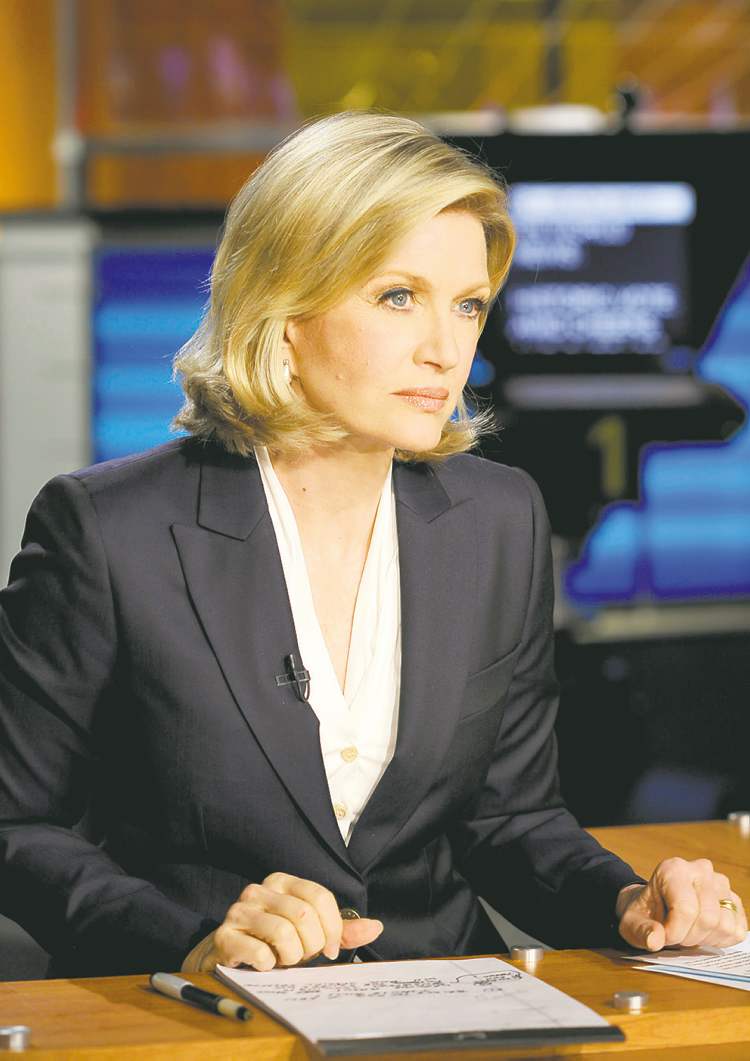
For her head shot, O’Donnell, 38, ended up choosing a six-year-old navy Giorgio Armani blazer out of her closet, one she rarely wears except when interviewing presidents or heads of state. Like so many working women in the news media and other professions, O’Donnell hasn’t bought a suit in years, a surprising admission, given that the newswoman spent her 20s wearing suits so she “could be taken seriously.”
For decades, the suit jacket transformed women into workers. With jackets required for entrance at male-dominated clubs and boardrooms, women bundled up their breasts to blend into a professional culture that predated their arrival. But in recent years, even as men continued to assume corporate uniforms of suits and ties, newswomen — one of the last vestiges of female suit wearers — have resoundingly dismissed them from their closets. They now flank themselves in bright sleeveless sheath dresses and stiletto heels, renouncing the once hard-and-fast edicts of television news: no bare legs, no long hair, no feminine distractions from the news. The revision of the female anchor’s dress code happened swiftly and broadly on network and cable television. And if newswomen are the most visible barometers of workplace fashion, the women’s suit may one day go the way of the petticoat.
“Ten years ago, professional dress meant a Talbots suit for women,” said Dave Smith, president of SmithGeiger, a market research firm that consults with news networks. “What’s appropriate for female talent on television has evolved because of familiarity. The audience has equal regard for female and male anchors. It’s given women far more liberty to be feminine.”
That theory of empowerment rings true for many newswomen. They’ve finally laid claim to the anchor’s chair and can let their hair down, or at least grow it past their shoulders. Even Diane Sawyer and Andrea Mitchell have adopted subtle changes in wardrobe. Sawyer sometimes wears crisp black blouses sans jacket while anchoring the evening news. Mitchell often prefers pastel, cap-sleeved shells for her afternoon show on MSNBC.
But skeptics find ulterior motives in the modern newswoman image, one that’s celebrated in men’s magazines and YouTube tributes to the legs of NBC’s Today. Skin sells, and media are more competitive than ever: Are networks encouraging lower necklines and higher hemlines to boost ratings?
Some morning-show hosts have commented on network edicts regarding dress. Before her departure from Today, Ann Curry told Ladies’ Home Journal that executives encouraged her to wear “ridiculously high-heel shoes.” Mika Brzezinski, co-host of MSNBC’s Morning Joe, found that executives tried to control her wardrobe when she transitioned into morning television.
“When Morning Joe started, I was a hostage to fashion by network executives and stylists, who thought they knew what I should wear,” Brzezinski said, calling the clothes “short, skimpy, tight. They were not me and not Washington.”
It was only when she went on the road with the show during the 2008 primary season that she began choosing her own clothing, which then included J.Crew blouses and casual separates.
“Joe [Scarborough] said, ‘That’s the look you want to hit with this show. You want to be you,’ which is kind of Washington, comfortable, not very showy. My style’s evolved over the years, but it came from shedding the culture of TV news that I used to try and compete in.”
Brzezinski’s current wardrobe falls in line with the modern uniform of female hosts and anchors.
“I can’t imagine wearing a jacket anymore,” Brzezinski said. “But I’m almost 46. There’s not a lot of choices for women my age. I get a lot of people who say, ‘Oh, you can wear that!’ But just because you can doesn’t mean you should.”
What women should wear on television is an ongoing public debate, particularly among newswomen themselves. In a 2011 interview with Katie Couric for Glamour Magazine, Rachel Maddow called the look of cable news “unbusinesslike.” Couric concurred, saying, “Some newswomen dress like they’re going clubbing.” Critics point to 24-hour cable news as the catalyst for the changing uniform. But Fox News fashion director Gwen Marder says that workplace fashion was evolving before cable news started showcasing shoulders.
“When I started 12 years ago, anchors wore two-piece suits, a corporate uniform,” said Marder, who buys and styles the wardrobes for 140 Fox anchors and reporters. “About seven years ago, fashion trends started to change and dresses were readily available.”
Fashion labels such as Diane von Furstenberg, Hugo Boss and Anne Klein started producing sheath dresses in solid colours that double as work and cocktail wear. The dresses showed up on cable news anchors around the same time, making it hard to pinpoint whether cable news caused or reacted to the retail trend. But among newswomen at least, 24-hour cable news networks became the laboratory for a grand makeover, which has since permeated the entire industry.
“We decided to push the envelope,” Marder said. “Everyone was wearing cardigans, and [we] said, ‘Let’s just try the sleeveless dress.’ It started to feel natural to everyone.”
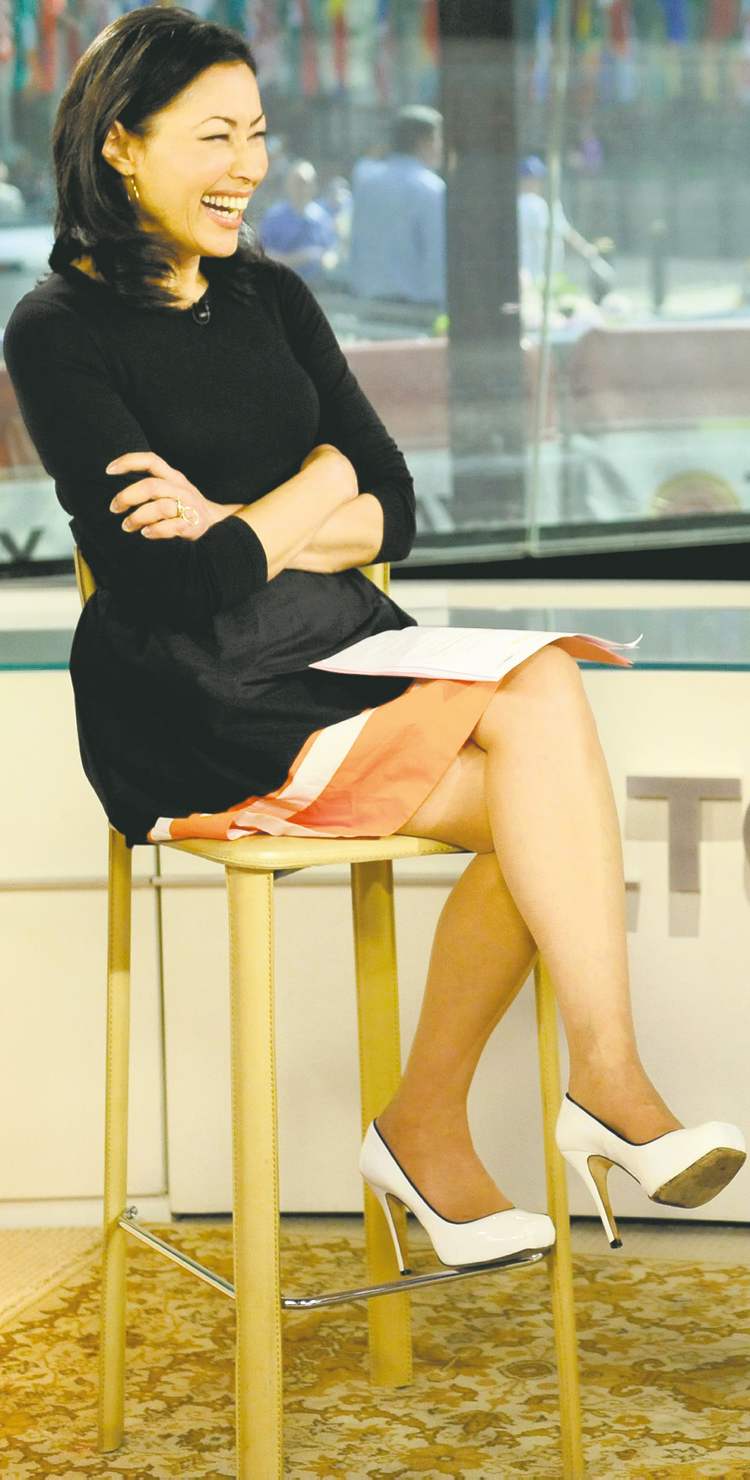
Fox News, which supplies clothing to its anchors like many networks do, gives anchors freedom over their garments, shoes and hemlines, only encouraging women anchors to wear bold colours that producers once eschewed: bright greens, fuchsias, hot pinks. “Our brand is colour,” Marder said.
And in only six years since cable news first showcased shoulders, the dress has become the preferred staple of women on television.
“Suits were very expensive,” O’Donnell said. “You can get a really nice dress for $300. I actually find it a lot easier as a working mom.”
Researchers wonder how the new look of news is affecting viewers. Maria Elizabeth Grabe, a telecommunications professor at Indiana University at Bloomington, co-authored a study on the impact of sexualization on news viewership. She found that the more “sexualized” a female anchor is, (i.e., bold makeup and clingy clothes), the less likely male viewers are to remember the news. For her 2011 study, a 24-year-old anchor read the same news broadcast twice, once in androgynous, loose-fitting clothing and little makeup and again while wearing bold makeup and attire that accentuated her waist-to-hip ratio. Viewers found the sexualized anchor less credible, but women remembered more from the sexualized anchor’s broadcast, indicating a gender gap in how viewers remember news content.
“The old wisdom of femininity not getting in the way of the news has been thrown out,” Grabe said. “I think the news consultancy business is driving the changes. With cable news networks taking off, it’s all about eyeballs and getting an audience.”
Still, when in doubt, in court or in the presence of breaking news, sleeveless dresses are left hanging in the closet. Candy Crowley and Martha Raddatz both wore traditional black suit jackets for their turns moderating presidential and vice-presidential debates. While the Supreme Court does not require women in the press section to wear suit jackets, they often do, perhaps to show solidarity with their male colleagues, who are required to wear suit and tie when in the chamber covering oral arguments.

Although some anchors, including Brzezinski and O’Donnell, prefer dresses to suits, the new wardrobe poses questions for television’s 20-something newcomers. Will sunny dresses and four-inch heels make them seem unprofessional?
Kayla Tausche, 26, a reporter for CNBC, is a relatively young face on the business network. She balances dressing for television with looking appropriate for source meetings on Wall Street.
“If you’re esteemed, you can wear a bright-coloured dress. But for younger anchors like myself, I worry that wearing bright colours might appear amateur,” Tausche said. She often wears the same sheath dresses that her colleagues wear, but prefers muted colours and tweeds.
— The Washington Post