

Checking out cockroach hotel
Advertisement
Read this article for free:
or
Already have an account? Log in here »
To continue reading, please subscribe:
Monthly Digital Subscription
$1 per week for 24 weeks*
- Enjoy unlimited reading on winnipegfreepress.com
- Read the E-Edition, our digital replica newspaper
- Access News Break, our award-winning app
- Play interactive puzzles
*Billed as $4.00 plus GST every four weeks. After 24 weeks, price increases to the regular rate of $19.95 plus GST every four weeks. Offer available to new and qualified returning subscribers only. Cancel any time.
Monthly Digital Subscription
$4.99/week*
- Enjoy unlimited reading on winnipegfreepress.com
- Read the E-Edition, our digital replica newspaper
- Access News Break, our award-winning app
- Play interactive puzzles
*Billed as $19.95 plus GST every four weeks. Cancel any time.
To continue reading, please subscribe:
Add Free Press access to your Brandon Sun subscription for only an additional
$1 for the first 4 weeks*
*Your next subscription payment will increase by $1.00 and you will be charged $16.99 plus GST for four weeks. After four weeks, your payment will increase to $23.99 plus GST every four weeks.
Read unlimited articles for free today:
or
Already have an account? Log in here »
Hey there, time traveller!
This article was published 01/06/2013 (4675 days ago), so information in it may no longer be current.
LOS ANGELES — In the war against pests, the lowly cockroach makes for a fearsome adversary. It can go weeks without water, survive decapitation for a time — and, like any proper super-villain, can send humans screaming from a room.
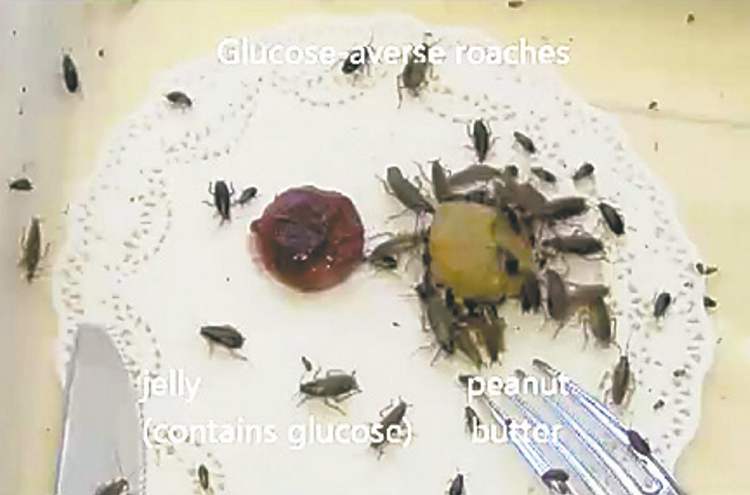
Now researchers have discovered how some roaches have eluded humans’ once-infallible traps: They have evolved so that glucose-sweetened bait tastes bitter.
The discovery, published last week in the journal Science, solves a 20-year mystery even as it sheds light on the cockroach’s powerful ability to adapt.
Cockroaches are an inevitable companion to human civilization. They infest dark corners of homes, feed on all types of food — not to mention hair, glue and soap — and skitter away quickly when spotted. They can fill homes in the tens of thousands.
Exterminators once responded to the onslaught by spraying a home’s baseboards with strong insecticide, but this risked exposing children and pets to harsh chemicals.
The baited trap solved this dilemma in the mid-1980s. Placed under sinks and in cupboards, the traps lured in hungry cockroaches with sugary temptations and then poisoned them quickly with insecticide.
But by 1993, exterminators started noticing something strange: The traps seemed to have lost their power. Somehow, cockroaches were thriving in baited homes.
Mystified researchers tested and discarded theory after theory until they finally hit on the explanation: In a remarkably rapid display of evolution at work, many of the cockroaches had lost their sweet tooth, rejecting the corn syrup meant to attract them.
In as little as five years, the sugar-rejecting trait had become so widespread that the bait had been rendered useless.
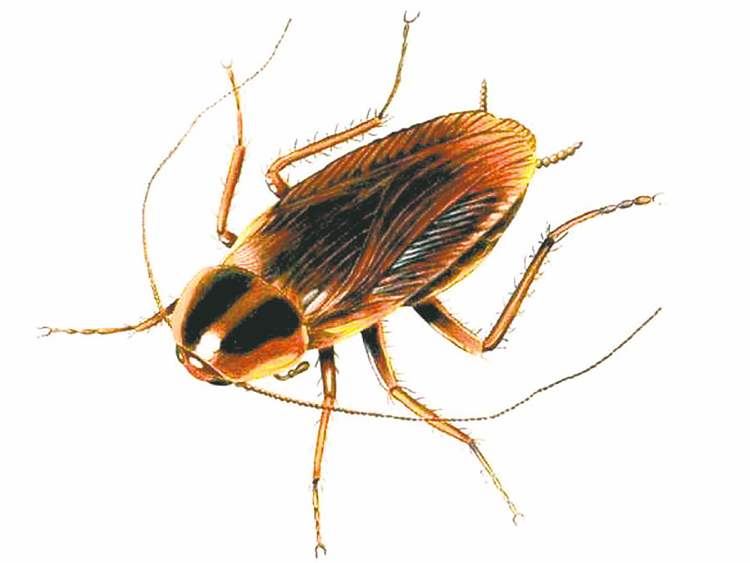
“Cockroaches are highly adaptive, and they’re doing pretty well in the arms race with us,” said North Carolina State University entomologist Jules Silverman, discoverer of the glucose aversion in that Florida kitchen during a bait test.
— from the wire services