

Verbal street harassment an everyday occurrence for many women
Advertisement
Read this article for free:
or
Already have an account? Log in here »
To continue reading, please subscribe:
Digital Subscription
One year of digital access for only $1.44 a week*
- Enjoy unlimited reading on winnipegfreepress.com
- Read the E-Edition, our digital replica newspaper
- Access News Break, our award-winning app
- Play interactive puzzles
*Billed as $5.77 plus GST every four weeks. After 52 weeks, price increases to the regular rate of $19.95 plus GST every four weeks. Offer available to new and qualified returning subscribers only. Cancel any time.
To continue reading, please subscribe:
Add Free Press access to your Brandon Sun subscription for only an additional
$1 for the first 4 weeks*
- Enjoy unlimited reading on winnipegfreepress.com
- Read the E-Edition, our digital replica newspaper
- Access News Break, our award-winning app
- Play interactive puzzles
*Your next Brandon Sun subscription payment will increase by $1.00 and you will be charged $17.95 plus GST for four weeks. After four weeks, your payment will increase to $24.95 plus GST every four weeks.
Read unlimited articles for free today:
or
Already have an account? Log in here »
Hey there, time traveller!
This article was published 03/11/2014 (4233 days ago), so information in it may no longer be current.
On an August day in New York City, Shoshana B. Roberts was harassed 108 times — by her definition.
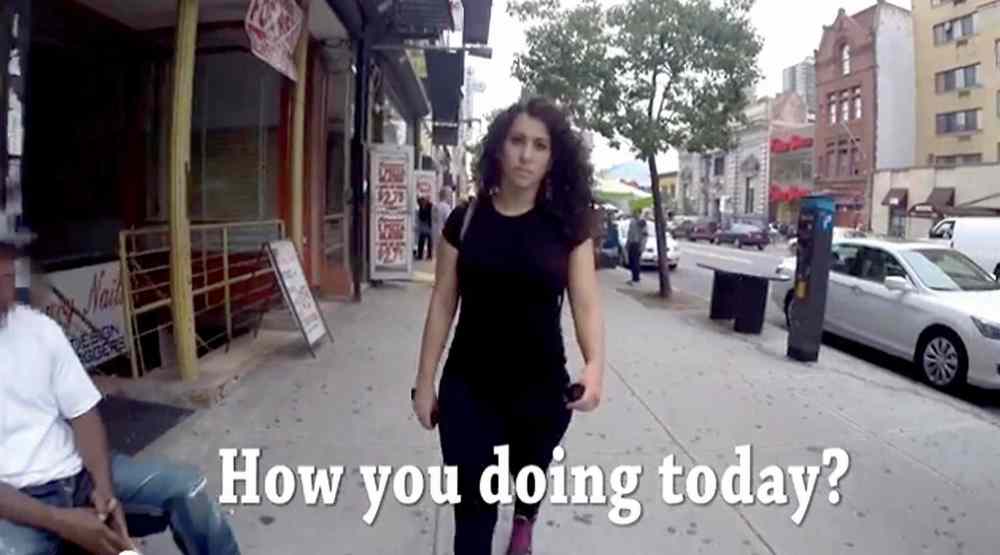
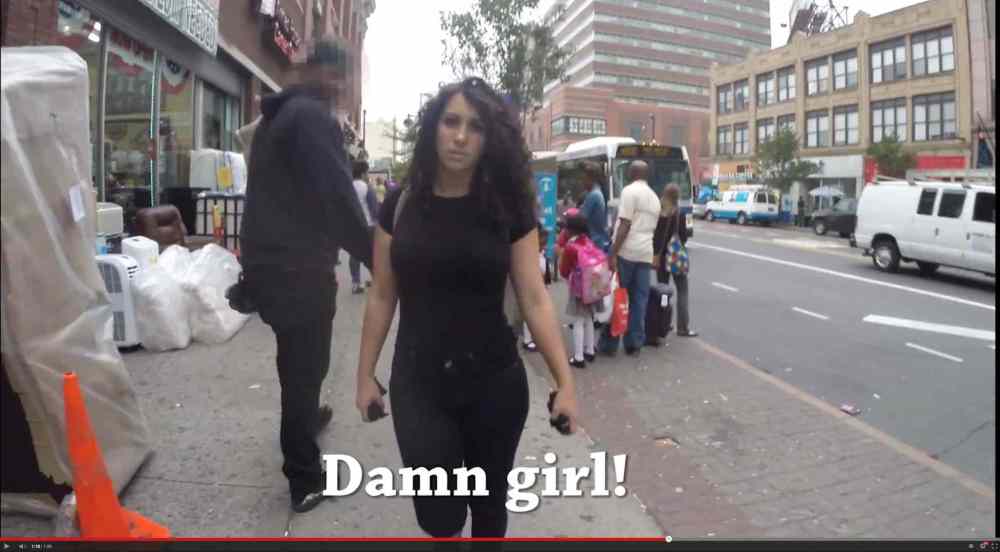
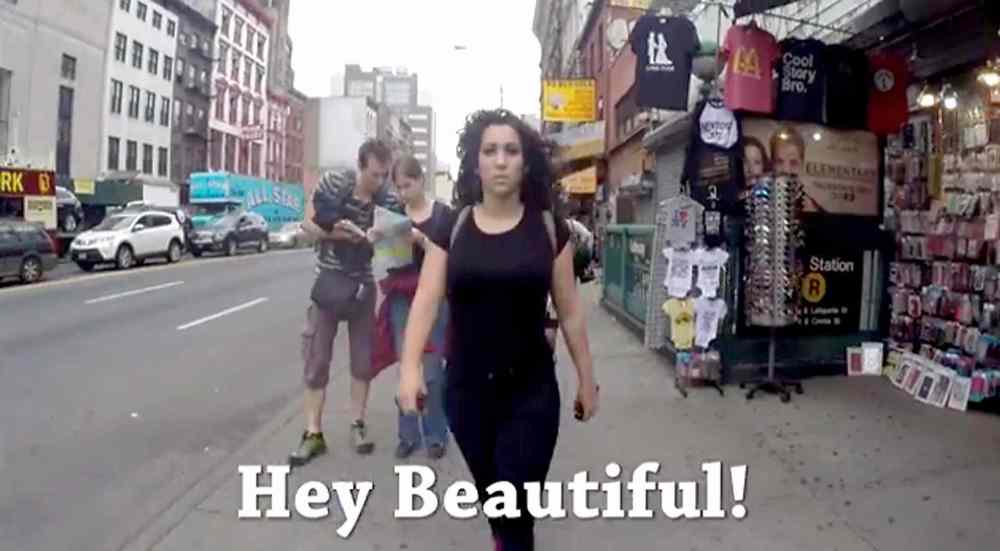
The whole thing was caught on video by Hollaback, an anti-street-harassment advocacy group, and edited into a two-minute public service announcement. Clad in jeans and a black T-shirt, Roberts walked around New York for 10 hours following filmmaker Rob Bliss, who had a camera hidden in his backpack.
One man says “Hello, good morning,” then follows Roberts for five minutes. Another says, “What’s up, girl? How you doin’?” When she doesn’t respond he reprimands her: “Somebody’s acknowledging you for being beautiful.”
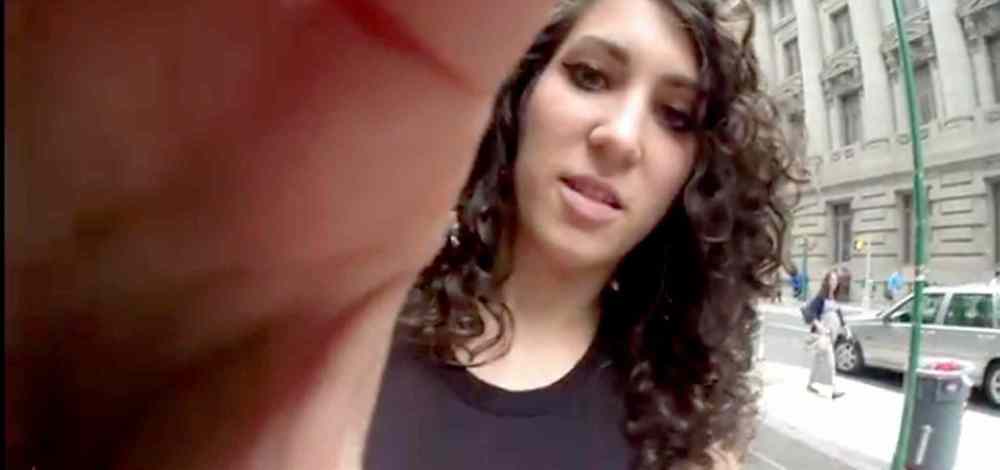
It goes on.
“Damn.”
“Hey baby.”
“God bless you, mami.”
And on.
“Smile,” one man says. She doesn’t. He commands her again: “Smile.”
“Not a day goes by when I don’t experience this,” Roberts told NBC. Her experience isn’t unusual. Many women experience street harassment in the form of catcalls, winks or even simple greetings that take on a different meaning when they come from a stranger staring at your breasts.
It happens at night. It happens during the day. It happens while walking to work, running in the park or shopping at the mall. In a segment for The Daily Show, Jessica Williams explores the gauntlet of street harassment she runs just to get to work.
According to the U.S. Centers for Disease Control and Prevention, one in three women has experienced what they call “non-contact unwanted sexual experiences,” which include street harassment. Another recent study by a group called Stop Street Harassment found two-thirds of women out of 2,000 polled across the U.S. had experienced street harassment. Twenty-three per cent had been touched by their harasser, and 20 per cent followed.
Some suspect both estimates are low. “I was actually surprised that the number of women harassed wasn’t much higher,” the Guardian’s Jessica Valenti wrote of the study, adding: “Maybe what we know is harassment has become so expected and commonplace we almost don’t identify it as notable anymore.”
“Given that half of those harassed said they’d first experienced it before age 17, maybe we’ve learned from a young age that some harassment is just the price we pay for stepping outside into a public space,” added Feministing.
Within hours of posting the video online, Hollaback tweeted that Roberts, the woman featured in the video, had received rape threats and asked followers to help police YouTube comments by reporting threats.
Other commenters admonished Roberts for wearing tight clothes, suggesting it is women who are responsible for what comes out of men’s mouths.
Many commenters on YouTube, Twitter and websites where the video was reposted expressed skepticism that phrases like “have a good day” or “good morning,” which Roberts counted as harassment, met the definition.
“Hello isn’t always as friendly as it seems,” wrote Autumn Whitefield-Madrano for the blog Feministe. “I’m talking about the hello that slides up and down the scale, the echo of a wolf whistle, its tone indicating what its denotation cannot. I’m talking about the hello that happens just as I pass a man on the street, the hello that is not a greeting but a whisper, the hello that puts me in a position of reaction — to turn my head in good faith to acknowledge the existence of a fellow human… or to hurry past, knowing full well that there’s a good chance it’s not my human existence, but my female existence, that’s being acknowledged.”
But saying “hello” back carries its own risks. “Over the years I’ve learned that sometimes hello indicates you’re willing to have a longer conversation — and that often that longer conversation quickly enters the realm of what is unquestionably street harassment,” Whitefield-Madrano wrote.
Another common refrain among commenters is that Roberts should have taken the uninvited comments as compliments.
Some women do perceive catcalls and comments from strangers as compliments. “When I know I’m looking good, I brazenly walk past a construction site, anticipating that whistle and “Hey, mama!” catcall. Works every time — my ego and I can’t fit through the door!” Doree Lewak wrote in the New York Post. “When a total stranger notices you, it’s validating,” she added.
“Compliments are meant to make the compliment receiver feel good and confident and happy. Your comments make me feel nervous and vulnerable and angry,” Sarah Jezior wrote in “An Open Letter To My Street Harassers” for the blog Hello Giggles.
The difference between casual greetings, compliments and street harassment has a lot to do with power dynamics. “Sexual harassment is about power and control,” Jezior wrote. “He wanted to remind me that he can say whatever he wants about my body, and no one will do anything about it,” she said of her aggressor. “He wants to remind me that I am a sexual object, not a human being with thoughts and feelings.”
Street harassment is also about fear — fear that words and whistles will escalate into an assault. In 2011, Psychology Today profiled a 14-year-old girl who was afraid to leave the house by herself because she was so frequently catcalled by men. In a survey for her book, Stop Street Harassment: Making Public Places Safe and Welcoming for Women, researcher and activist Holly Kearl found one in 10 women changed jobs to avoid harassment on their commute.

Street harassment is so common it seems almost normal. Women often don’t know how to respond. But some artists and advocacy groups have found creative ways to confront the problem.
Artist Tatyana Fazlalizadeh creates portraits of women with messages like “My name is not baby” and “Women do not owe you their time and conversation” and posts them in public places. It’s part of her project “Stop Telling Women to Smile” that aims to raise awareness about street harassment.
New York City officials invested $20,000 in Hollaback’s smartphone app that allows users to report incidents of harassment. The idea is to streamline the complaint process and help officials better understand the problem.
— Washington Post
History
Updated on Monday, November 3, 2014 6:53 AM CST: Replaces photo