

Clue detectives
Millions of puzzle lovers across the world sit down with a crossword every day

Advertisement
Read this article for free:
or
Already have an account? Log in here »
To continue reading, please subscribe:
Monthly Digital Subscription
$1 per week for 24 weeks*
- Enjoy unlimited reading on winnipegfreepress.com
- Read the E-Edition, our digital replica newspaper
- Access News Break, our award-winning app
- Play interactive puzzles
*Billed as $4.00 plus GST every four weeks. After 24 weeks, price increases to the regular rate of $19.95 plus GST every four weeks. Offer available to new and qualified returning subscribers only. Cancel any time.
Monthly Digital Subscription
$4.99/week*
- Enjoy unlimited reading on winnipegfreepress.com
- Read the E-Edition, our digital replica newspaper
- Access News Break, our award-winning app
- Play interactive puzzles
*Billed as $19.95 plus GST every four weeks. Cancel any time.
To continue reading, please subscribe:
Add Free Press access to your Brandon Sun subscription for only an additional
$1 for the first 4 weeks*
*Your next subscription payment will increase by $1.00 and you will be charged $16.99 plus GST for four weeks. After four weeks, your payment will increase to $23.99 plus GST every four weeks.
Read unlimited articles for free today:
or
Already have an account? Log in here »
Hey there, time traveller!
This article was published 21/12/2015 (3757 days ago), so information in it may no longer be current.
Hmm, what’s a 20-letter answer for Dec. 21?
Some might guess “shortest day of the year.” Others might suggest “four nights before Xmas.”
But the puzzle-solver in your family will know the correct answer: “National Crossword Day.”
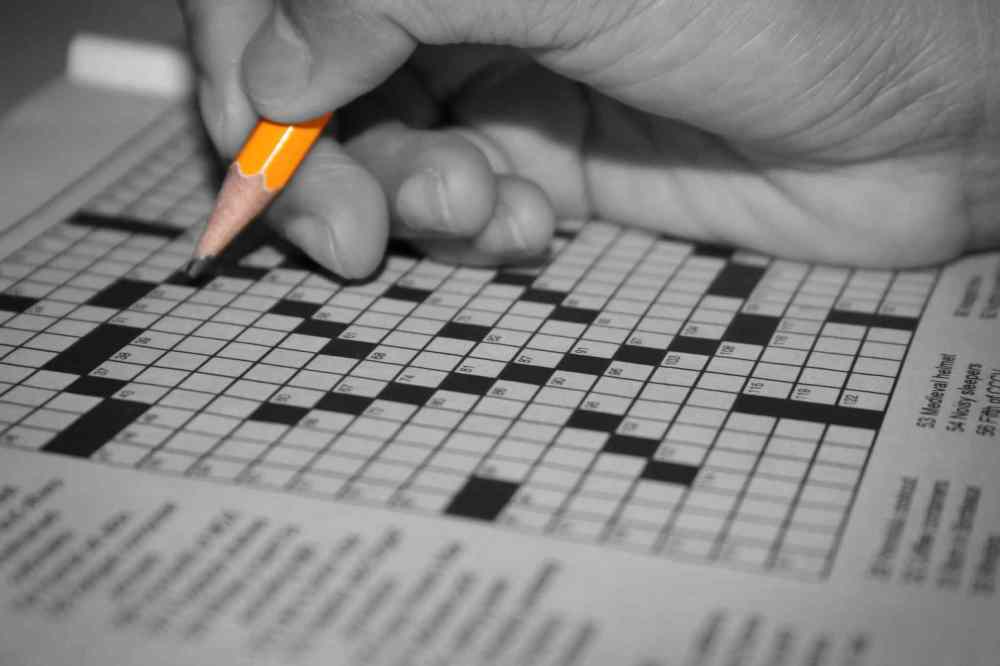
Today marks the 102nd anniversary of the first crossword puzzle appearing in a newspaper. On Dec. 21, 1913, a crossword puzzle devised by Arthur Wynne first appeared in the New York World.
There’s been no stopping crosswords’ popularity since. For instance, during a typical week, the Winnipeg Free Press will publish 16 crosswords — twice a day and four on Saturday — toss in another seven more in the paper’s Mind Games weekly puzzle supplement and one more for good luck in the weekly Yourtube TV listings book.
Type in crossword into the Apple App Store. You’ll never be able to scroll to the bottom of a list hundreds of apps long.
“Many things in this world come and go, but crosswords are still here,” says Calgary crossword constructor Gwen Sjogren, whose latest compendium of conundrums, O Canada Crosswords (Nightwood Editions, $13.95), is her 12th volume of puzzles.
At one time, Winnipeg crossword enthusiast Dominic Lloyd would polish off four or five crosswords a week taking the bus to work.
“I used to challenge myself to see if I could complete two crosswords and a Sudoku between getting on at the Cambridge Hotel and getting off at the West End Cultural Centre,” he recalls.
He’s had to cut back now that he’s become a parent, but the Sunday New York Times crossword — the gold standard of puzzles — is still a weekly habit, he says.
Puzzle-solving can be a relaxing pastime, but Lloyd says his demeanour can change if a puzzle is too vexing.
“If I’m stuck on a particular quadrant or theme then it’s more annoying than anything else,” he says. “Sometimes there’s just a block that takes a while to get past and it will gnaw at me while I’m off doing other things, like working or parenting.”
Sjogren, whose Canadian-themed puzzles also appear in Air Canada’s EnRoute magazine, remembers waiting for the TV Guide to be delivered to her home to solve its crossword.
She got into building puzzles much later.
“Like a lot of moms, I was looking for some mental stimulation beyond the kids,” says Sjogren, who used to work in corporate communications. “I thought, ‘I’ve been solving crosswords for all these years, maybe I can make one.’ “
She stumbled across a puzzle-making computer program at a church sale and that spurred her on.
Nowadays, she spends most of her crossword time making puzzles — O Canada Crosswords includes 100 puzzles and more than 11,000 clues — instead of solving them.
“If I’m sitting at my Honda dealership waiting for my car and (the paper) is there with a crossword in it, I can’t restrain myself,” she says. “But generally, since I design crosswords almost every day, I don’t really solve too many. I don’t want to consciously or unconsciously borrow someone else’s ideas or themes.”
Duplication is one of the bugaboos Sjogren faces when compiling her puzzle books.
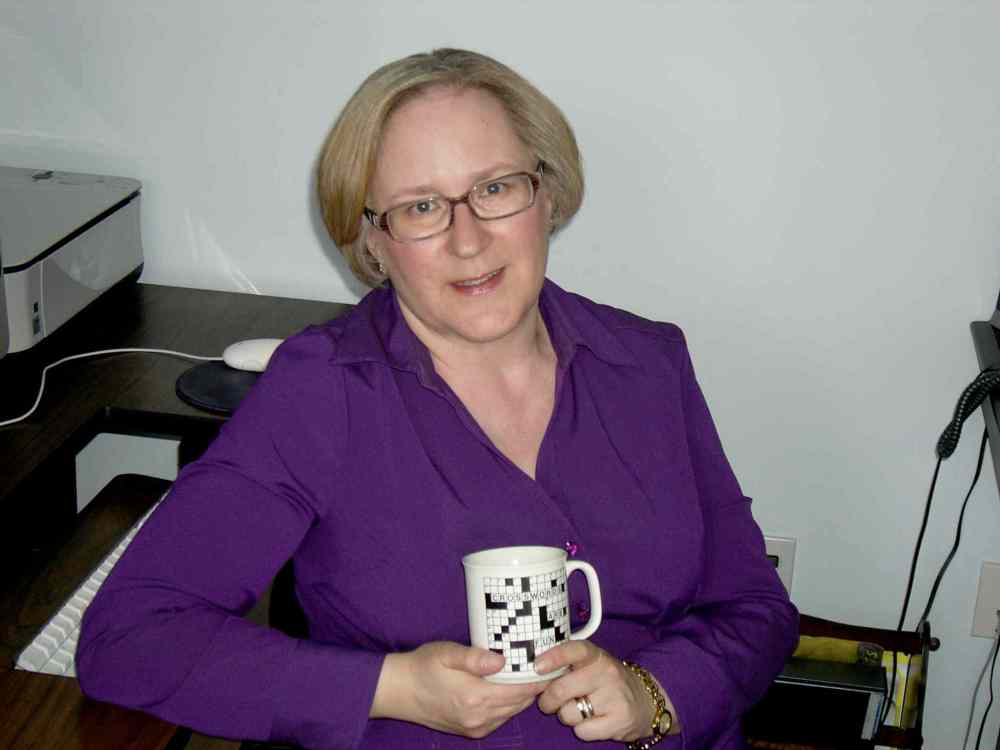
“I had a word come up — the word ulna, your arm bone — and it was already in the book one, two, three, four, five times,” she says. “It’s a joy and terror of doing big books; it’s almost impossible to avoid the repetition.
“The challenge for me is if I can’t get that word out of the way, how can I clue it differently than I have before.”
One time, Sjogren’s wittiness crossed the line with her editors.
“My favourite clue I ever wrote I wasn’t allowed to use,” she says. “The answer was hen and the clue that I wrote was ‘motherclucker,’ and my editor thought I was pushing the boundaries a bit.”
The challenge for puzzle-solvers can increase with the more rules crossword enthusiasts like Lloyd follow. In other words, no cheating with Google.
“I have a rule that I’m not allowed to look for help on the Internet — if I can find it in a book then it’s fair game, but just searching for an answer online kind of defeats the purpose for me,” he says.
“Once in a while I’ll admit defeat and then I check in with Rex Parker’s blog (Rex Parker Does the NYT Crossword Puzzle, rexwordpuzzle.blogspot.com) to find out the ones I couldn’t get and to find out how fast the super-smartypantses did it.”

Puzzle-solvers get more than an ego trip from figuring out a tough crossword. A 10-year study performed by Johns Hopkins University researchers in Baltimore, Md., found that nearly three-quarters of the elderly people studied showed cognitive benefits from solving crosswords and math puzzles.
Crosswords can even bridge the generation gap if they’re completed using teamwork.
“A lot of people tend to think of crosswords being a solitary activity, but a lot of people do crosswords together,” Sjogren says. “It’s a wonderful way to have an activity where you don’t have to plug something into a wall; it’s you and your brains.”
alan.small@freepress.mb.ca Twitter: @AlanDSmall
Alan Small
Reporter
Alan Small was a journalist at the Free Press for more than 22 years in a variety of roles, the last being a reporter in the Arts and Life section.
Our newsroom depends on a growing audience of readers to power our journalism. If you are not a paid reader, please consider becoming a subscriber.
Our newsroom depends on its audience of readers to power our journalism. Thank you for your support.
Across and down
- The first clue in the New York World’s first crossword: What bargain hunters enjoy. Answer: sales.
- Crosswords have a language almost all their own. The Guardian in the U.K. did a study of New York Times crossword answers and came up with the top 10 most common answers from 1996-2012. Naturally, they’re laden with vowels: era, area, ere, one, eli, ali, ale, ore, ate, ole.
- According to the 2008 U.S. Census, 14 to 16 per cent of adults try to solve crossword puzzles; half of those tackled them twice a week.
- The Free Press annual giant Christmas crossword will appear in the Uptown section on Dec. 24.
Alan Small
Reporter
Alan Small was a journalist at the Free Press for more than 22 years in a variety of roles, the last being a reporter in the Arts and Life section.
Our newsroom depends on a growing audience of readers to power our journalism. If you are not a paid reader, please consider becoming a subscriber.
Our newsroom depends on its audience of readers to power our journalism. Thank you for your support.
Advertisement Advertise With Us
Advertisement Advertise With Us
History
Updated on Monday, December 21, 2015 8:54 AM CST: Replaces photo