You don’t say…
Five famous quotes routinely attributed to the wrong person
Advertisement
Read this article for free:
or
Already have an account? Log in here »
To continue reading, please subscribe:

Digital Subscription
One year of digital access for only $205*
- Enjoy unlimited reading on winnipegfreepress.com
- Read the E-Edition, our digital replica newspaper
- Access News Break, our award-winning app
- Play interactive puzzles
*First annual payment billed as $205.00 + GST for one year. This annual subscription will automatically renew at $233.00 + GST every 52 weeks (10% off the regular annual price of $259.35). Offer available to new and qualified returning subscribers only. Cancel any time.
To continue reading, please subscribe:
Add Free Press access to your Brandon Sun subscription for only an additional
$1 for the first 4 weeks*
- Enjoy unlimited reading on winnipegfreepress.com
- Read the E-Edition, our digital replica newspaper
- Access News Break, our award-winning app
- Play interactive puzzles
*Your next Brandon Sun subscription payment will increase by $1.00 and you will be charged $17.95 plus GST for four weeks. After four weeks, your payment will increase to $24.95 plus GST every four weeks.
Read unlimited articles for free today:
or
Already have an account? Log in here »
Hey there, time traveller!
This article was published 18/02/2017 (3434 days ago), so information in it may no longer be current.
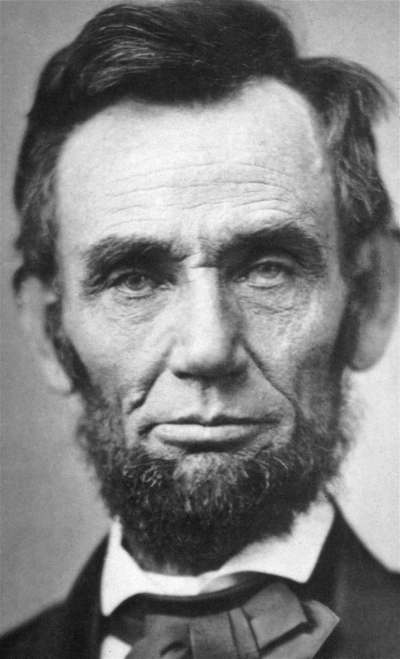
We hate to be a downer, but chances are most of you forgot that last Sunday marked the 208th birthday of Honest Abe Lincoln, the 16th president of the United States.
Fortunately, the current president, Donald Trump, didn’t forget, and commemorated the occasion by sharing an inspirational quote from the Great Emancipator on Instagram.
Both Trump and the Republican National Committee posted a photo of the Lincoln Memorial along with the following moving quotation: “And in the end, it’s not the years in your life that count. It’s the life in your years.”
It’s a pretty sweet sentiment, right? So what’s the problem? Well, as far as anyone, including the quote-sourcing website Quote Investigator, can tell, Lincoln never said these words. The phrase was most likely first used in 1947 in a Chicago Tribune advertisement for a book on aging by Dr. Edward J. Stieglitz.
But don’t be too quick to condemn Trump and the GOP for putting words in Lincoln’s mouth. There is no shortage of famous phrases that are routinely attributed to the wrong people, as we see from today’s list of the Top Five Misattributed Quotations:
5. The famous quote: “You can fool some of the people all of the time, and all of the people some of the time, but you cannot fool all of the people all of the time.”
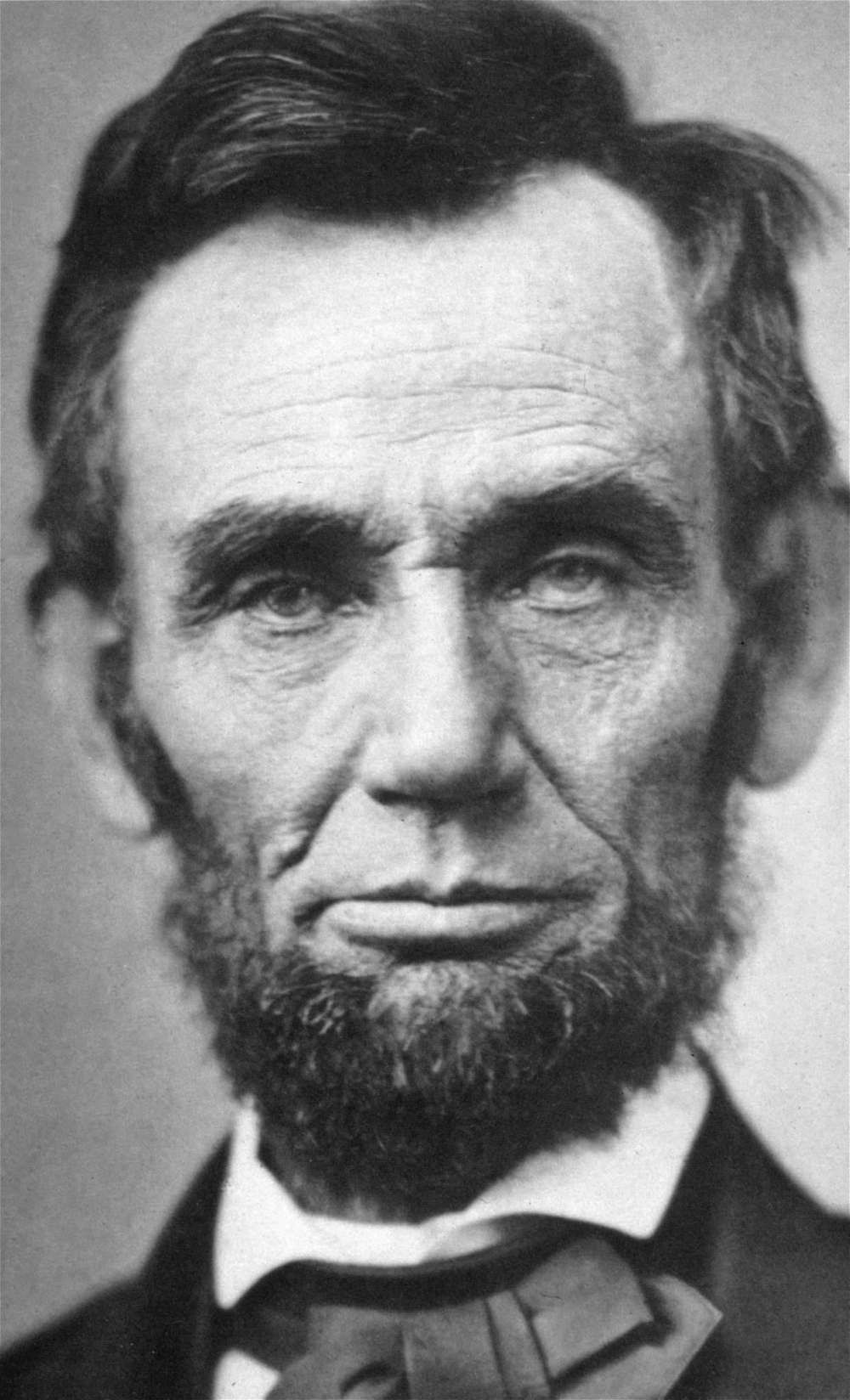
Everyone thinks it was: Abraham Lincoln
But it probably was: Jacques Abbadie
The quote confusion: It goes without saying Abraham Lincoln uttered some extremely historic expressions in his time, especially the Gettysburg Address in 1863 wherein he proclaimed: “Four score and seven years ago our fathers brought forth on this continent, a new nation, conceived in liberty, and dedicated to the proposition that all men are created equal.”
As Donald Trump is now aware, the problem is, since Lincoln’s assassination in 1865, dozens of famous quotes have wrongly been attributed to the man many consider the greatest president in the history of the United States. For instance, the website Quote Investigator has concluded there is no reasonable evidence suggesting Lincoln uttered the “can’t fool all the people” adage. Two decades after Lincoln’s death, Quote Investigator notes, the phrase was used without attribution in a speech by Prohibition Party politician William J. Groo.
But the first usage of the popular phrase likely dates back to 1684 in a work of apologetics written by Jacques Abbadie, a French Protestant based in Germany, England and Ireland. In his work, Abbadie wrote a phrase that translates as: “One can fool some men, or fool all men in some places and times, but one cannot fool all men in all places and ages.”
It popped up again in 1754 in the fourth volume of an encyclopedia edited by Denis Diderot and Jean le Rond d’Alembert. Since then, the phrase has frequently been used as an advertising gimmick, something we’re confident Lincoln would not have approved of. Trump, on the other hand …
4. The famous quote: “The ends justify the means.”
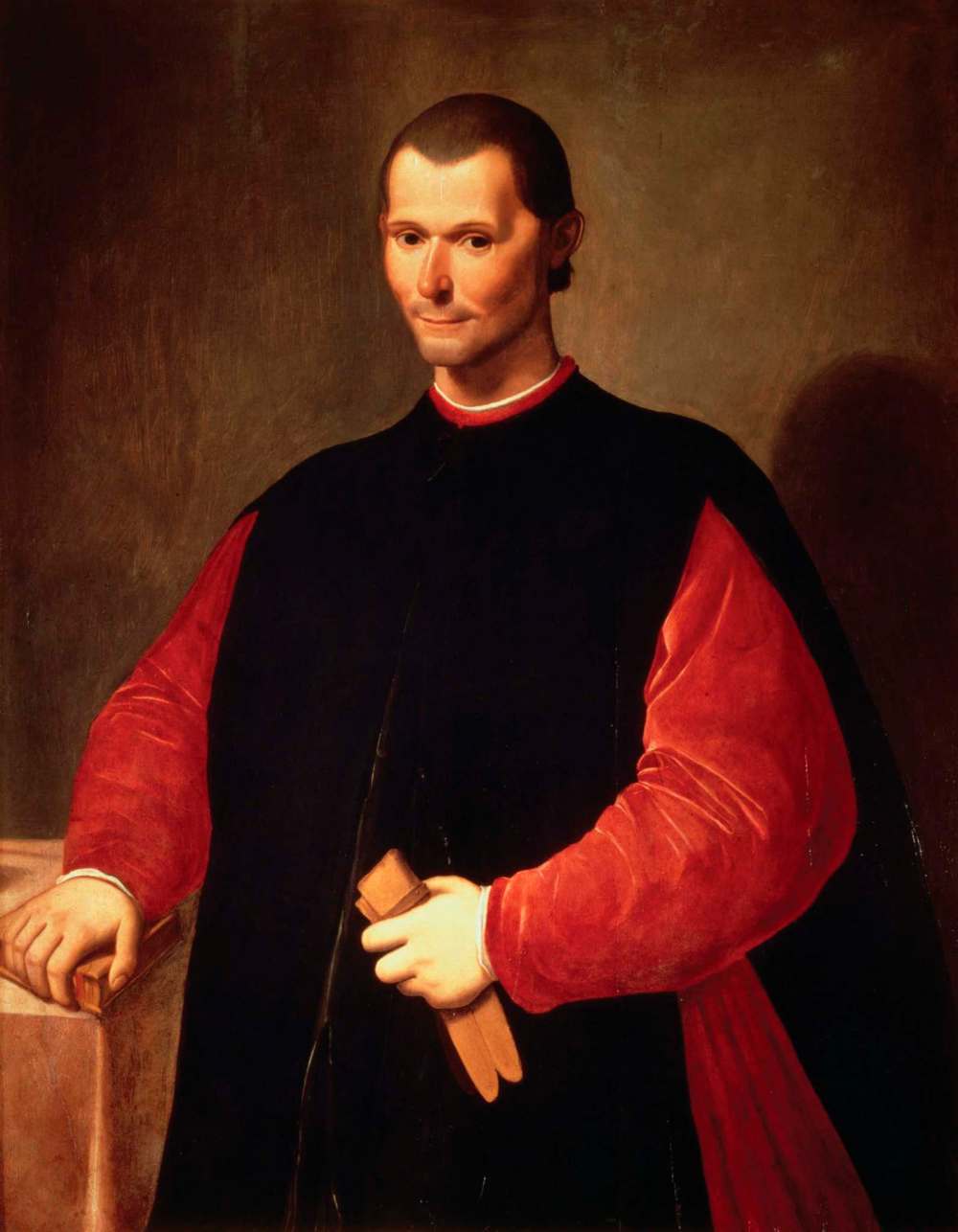
Everyone thinks it was: Niccolo Machiavelli
But it probably was: Ovid
The quote confusion: A legendary Italian Renaissance historian, politician and writer, Machiavelli is considered by most experts to be the father of modern political science. He wrote comedies, songs and poetry, but is renowned for his 1513 book The Prince, kind of an extended analysis of how to acquire and maintain political power.
The word “Machiavellian” is commonly used today to tarnish unscrupulous politicians of the sort Machiavelli famously described in The Prince, wherein he suggested immoral behaviour, such as dishonesty and killing innocent people, is normal and effective in politics. The thing is, Machiavelli’s writing certainly reflects the philosophy behind the phrase “The end justifies the means” — which essentially means that morally wrong actions are sometimes necessary to achieve morally right outcomes — but he never came right out and said those words.
As the Christian Science Monitor notes, the closest Machiavelli gets to expressing the adage is a chapter in The Prince wherein he argues people will always consider a prince’s means as honest and praise him. He wrote: “For that reason, let a prince have the credit of conquering and holding his state, the means will always be considered honest, and he will be praised by everybody because the vulgar are always taken by what a thing seems to be and by what comes of it.”
A more likely origin seems to be the Roman poet Ovid, who, in Heroides (ca. 10 BC) wrote “Exitus acta probat,” which roughly translates as “the outcome justifies the means.” Other online sources note the phrase was picked up buy the 19th-century Russian revolutionary Sergey Nechayev, author of the radical Catechism of a Revolutionary, a sort of manual for the formation of secret societies. The phrase reportedly was later used to justify murderous acts by Lenin and Stalin.
3. The famous quote: “There’s a sucker born every minute.”
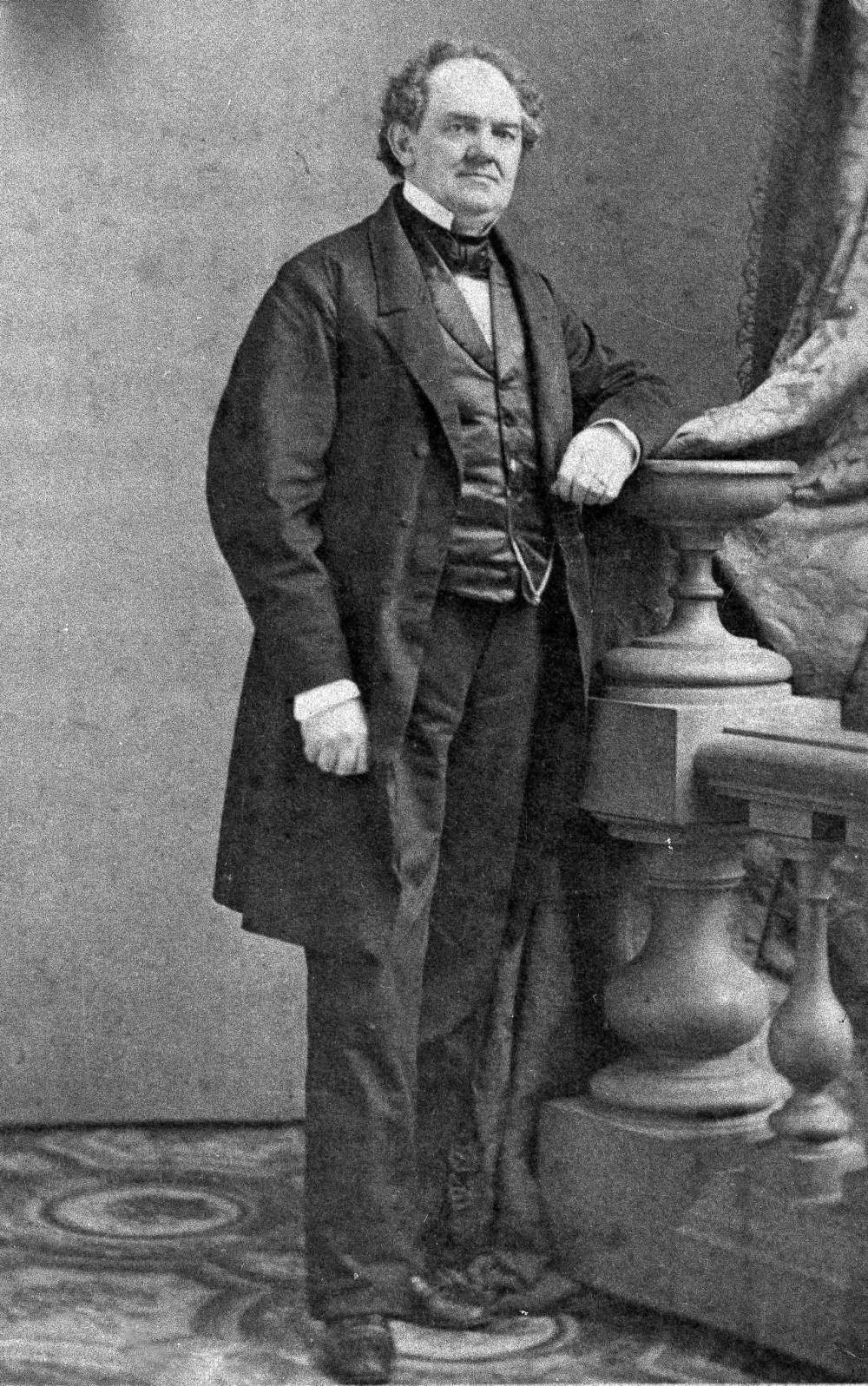
Everyone thinks it was: Phineas Taylor “P.T.” Barnum
But it probably was: Anyone from Anonymous to Mark Twain
The quote confusion: Everyone knows this was one of the famous phrases uttered by the legendary P.T. Barnum, the greatest American showman of the mid-19th century and the founder of the soon-to-be-defunct Barnum & Bailey Circus.
And everyone is wrong. Quote Investigator and other websites note there is no evidence that Barnum, the self-described “Prince of Humbugs,” ever said these words. “For his part, Barnum always maintained that his patrons were not ‘suckers’ but willing participants in his lighthearted pranks and hoaxes,” notes History.com. As Barnum himself famously said: “The people like to be humbugged.” Barnum’s biographer, Arthur Saxon, failed to find any evidence the famed showman spoke these infamous words. “There’s no contemporary account of it, or even any suggestion that the word ‘sucker’ was used in the derogatory sense in his day,” Saxon wrote. “Barnum was just not the type to disparage his patrons.”
The book Gem of the Prairie: Chicago Underworld (1940) contends the phrase was coined by gambling-house keeper Michael Cassius McDonald. When his partner fretted whether they could lure enough gullible gamblers to their tables, McDonald allegedly retorted: “Don’t worry about that, there’s a sucker born every minute.”
In 1806, an article entitled “Essay on False Genius” in The European Magazine and London Review put the words in the mouth of a fictitious commodity seller as follows: “It was the observation of one of the tribe of Levi, to who some person had expressed his astonishment at his being able to sell his damaged and worthless commodities, ‘That there vash von fool born every minute.’ ”
It’s even been credited to Mark Twain. So it’s extremely unlikely Barnum ever said the words, even though his main goal was to separate fools from their money.
2. The famous quote: “Let them eat cake.”
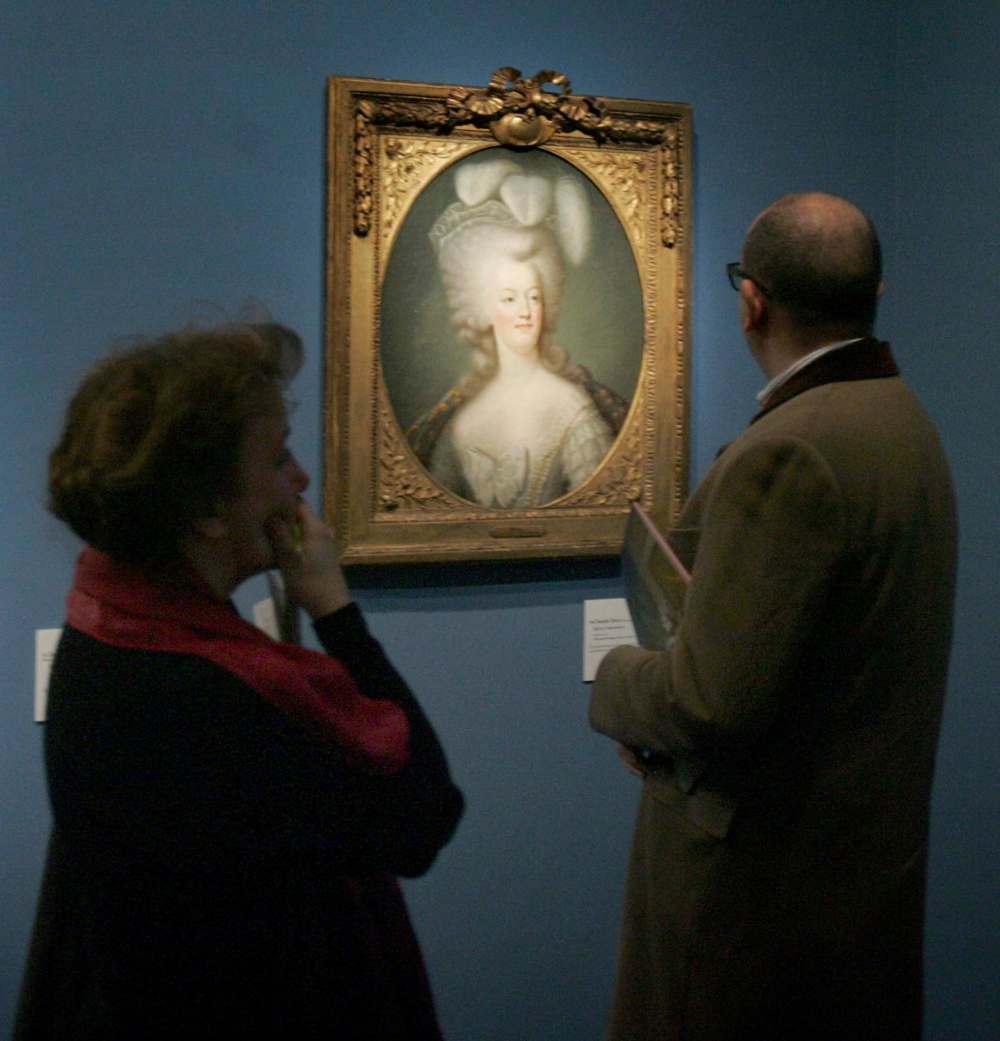
Everyone thinks it was: Marie Antoinette
But it probably was: Jean-Jacques Rousseau or an unnamed princess
The quote confusion: It is arguably the most famous quote in history. As History.com notes, at some point around 1789 after being told her French subjects had no bread, Marie Antoinette, the last Queen of France prior to the French Revolution, supposedly sniffed: “Qu’ills mangent de la brioche.” Which, technically, translates as “Let them eat brioche,” which is a rich bread almost as luxurious as cake. As the story goes, that callous remark made the queen a hated symbol of the decadent monarchy and fuelled the revolution that led to her losing her head on the guillotine in 1793.
The thing is, historians say there is no proof she ever uttered anything like that, and was, in fact, a charitable woman who was sensitive to the plight of France’s poor.
Versions of the “Let them eat cake” story had been circulating in different cultures for years prior to 1789. The first person to put the famed phrase into print was the French philosopher Jean-Jacques Rousseau in Book VI of his supposedly autobiographical work Les Confessions (finished in 1767 and published in 1782). In his work, Rousseau attributes the quote to “a great princess.” He wrote: “Finally I recalled the stopgap solution of a great princess who was told that the peasants had no bread, and who responded: ‘Let them eat brioche.’ “
Marie-Antoinette was alive at the time, but was only 10 years old, and eight years away from becoming queen. Some have argued it was said 100 years earlier by Marie-Therese, the wife of Louis XIV, but that also seems highly doubtful. Sometimes a story is just a story, especially when half-baked.
1. The famous quote: “Winning isn’t everything; it’s the only thing.”
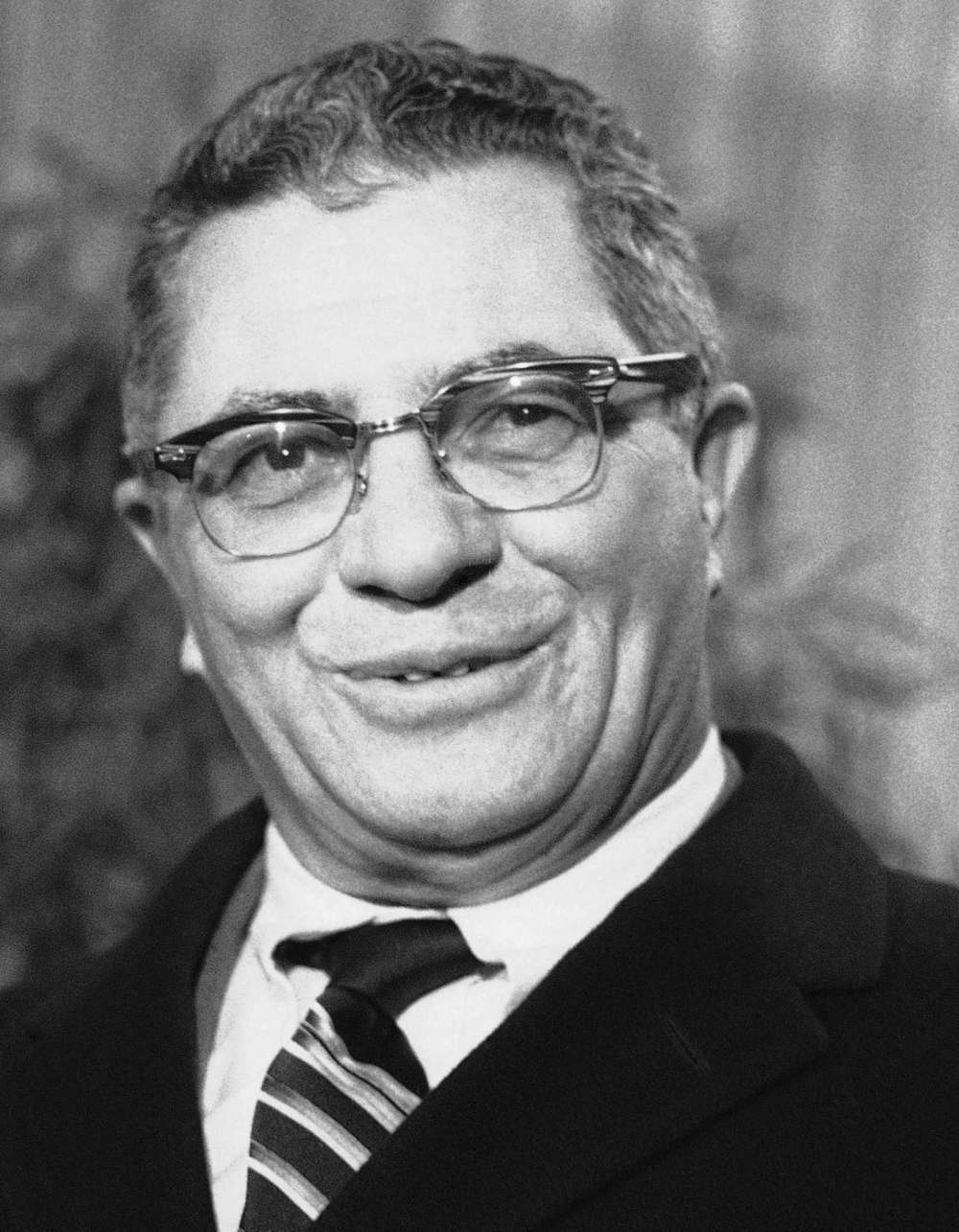
Everyone thinks it was: Vince Lombardi
But it probably was: Henry Russell “Red” Sanders
The quote confusion: Most of us grew up thinking the phrase was coined by Vince Lombardi, arguably the greatest coach in the history of professional football.
We mostly know him from his time in the 1960s coaching the Green Bay Packers, whom he led to three straight titles and a total of five NFL championships over the course of seven seasons. Before the Internet and social media, the hard-nosed coach was a human quote machine. So, yes, he did, in fact, say the words “Winning isn’t everything,” but then again so did every other guy coaching football at the time. But Lombardi is not the guy who came up with that fiery adage.
That was the legendary UCLA football coach Henry Russell “Red” Sanders, who, at a 1950 phys-ed workshop, told his group: “Men, I’ll be honest. Winning isn’t everything (long pause for dramatic effect) Men, it’s the only thing.” He said it frequently after that and the phrase even found its way into a Hollywood film, Trouble Along the Way.
So Lombardi picked it up from Red and famously spouted it in 1959 on the first day of Packers’ training camp. The quotation became entwined with North American pop culture, gracing the walls of countless locker rooms and is still spit out during pre-game pep talks today. For his part, Lombardi once said he’d been misquoted and had intended to say: “Winning isn’t everything. The will to win is the only thing.”
By the way, when asked about the famed UCLA-USC rivalry, Sanders came up with another gem: “Beating ‘SC is not a matter of life or death, it’s more important than that’.”
The point is, a lot of the famous things people have said were not, in fact, said by the people we thought said them, if that makes any sense. Or as Albert Einstein famously said on a poster we just saw online: “I never said half the crap people said I did.”
At least it sounds like Einstein.
doug.speirs@freepress.mb.ca
History
Updated on Sunday, February 19, 2017 10:43 AM CST: Removes repeating paragraphs.