The substance beneath Clooney’s style
Human-rights lawyer not to be lost in celebrity shadow
Advertisement
Read this article for free:
or
Already have an account? Log in here »
To continue reading, please subscribe:

Digital Subscription
One year of digital access for only $205*
- Enjoy unlimited reading on winnipegfreepress.com
- Read the E-Edition, our digital replica newspaper
- Access News Break, our award-winning app
- Play interactive puzzles
*First annual payment billed as $205.00 + GST for one year. This annual subscription will automatically renew at $233.00 + GST every 52 weeks (10% off the regular annual price of $259.35). Offer available to new and qualified returning subscribers only. Cancel any time.
To continue reading, please subscribe:
Add Free Press access to your Brandon Sun subscription for only an additional
$1 for the first 4 weeks*
- Enjoy unlimited reading on winnipegfreepress.com
- Read the E-Edition, our digital replica newspaper
- Access News Break, our award-winning app
- Play interactive puzzles
*Your next Brandon Sun subscription payment will increase by $1.00 and you will be charged $17.95 plus GST for four weeks. After four weeks, your payment will increase to $24.95 plus GST every four weeks.
Read unlimited articles for free today:
or
Already have an account? Log in here »
Hey there, time traveller!
This article was published 14/04/2018 (3029 days ago), so information in it may no longer be current.
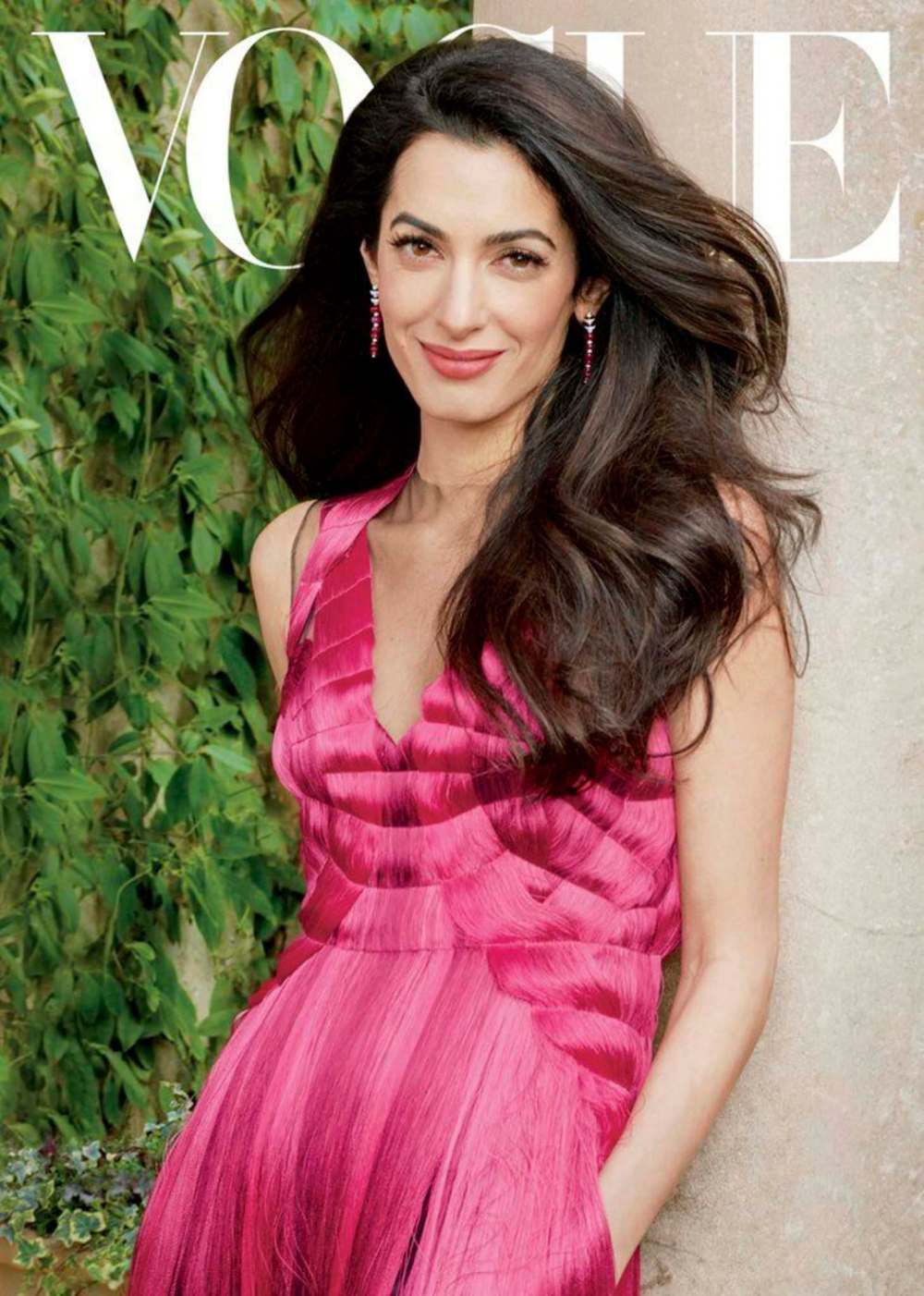
Amal Clooney is photographed on the cover of May’s Vogue magazine looking as she always does, which is extraordinarily stylish, extremely pretty and vaguely amused that you are staring at her. She is the world’s most famous human-rights lawyer, whose work the average person knows very little about. She is a celebrity by marriage — to actor George Clooney, whose work everyone knows a lot about.
Inside the magazine, a story written by Nathan Heller focuses on Amal Clooney’s professional sphere, where she was a notable presence long before the fashion industry began to track her wardrobe in a stream of media alerts and before popular culture began to view her life as charmed.
Today, Clooney mostly works from an office in her home, which in this story is a lovely English countryside estate where a March snowfall is said to lend the landscape “a touch of magic” rather than mere unseasonably cold misery. At home, she wears Balmain and Oscar de la Renta sweaters, leopard-print boots and other stylish gear that apparently includes neither yoga pants nor fancy sneakers.
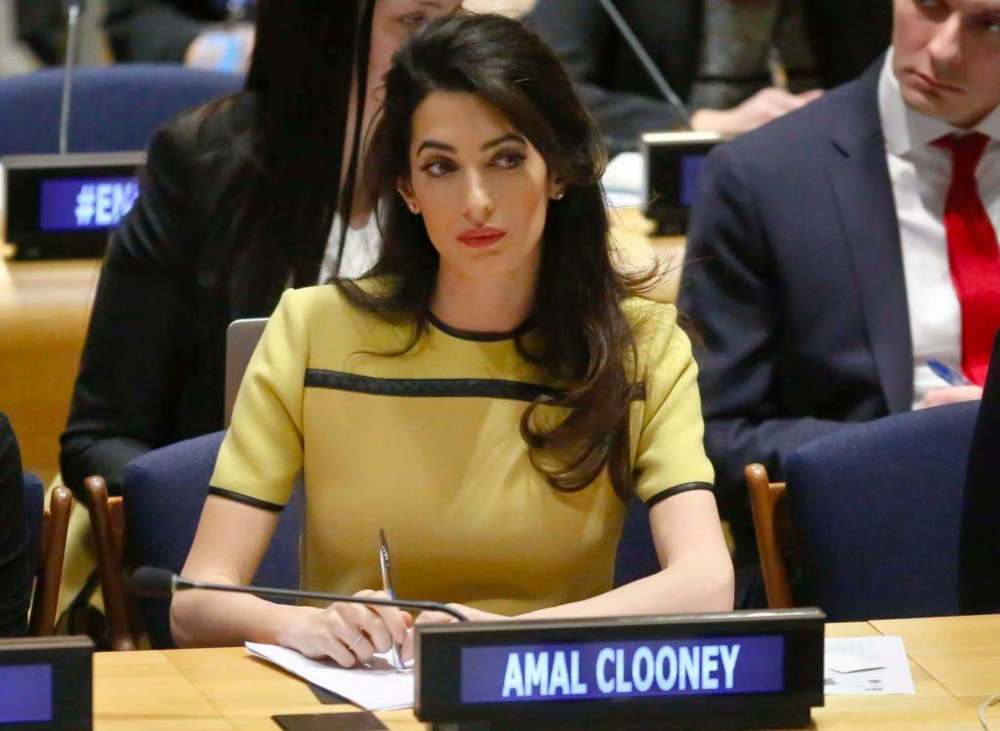
Heller, however, quickly moves beyond the magic and charm to get down to a discussion of Clooney’s legal work. But explaining to a layperson, in a few paragraphs, what Clooney does is challenging. Her work is complex, her goals seem impossible. And in today’s short-attention-span news, there’s always something else easier or more pleasant to digest.
Vogue readers are introduced to a young woman named Nadia Murad, who has fled Iraq after being beaten and raped by members of the Islamic State group and whose case Clooney has taken up before the United Nations. There is a beautiful portrait of the two seated together in Clooney’s home. Murad’s gaze is cast downward and Clooney, in a Fendi sweater, is gently holding her hand.
The mention of the brand of Clooney’s sweater and the details of her various ensembles, offered up by Vogue, are not meant as a snide suggestion that fashion and human rights work cannot comfortably coexist in a single story. They can. And in the case of Clooney, fashion and style are in service to substance. They don’t overshadow her accomplishments or distract from them. Fashion makes them stand out. Fashion makes us look.
Clooney is a serious woman who uses style to contradict the stereotypes associated with the brainy, righteous realm of human rights work. A woman who wears Lanvin and Giambattista Valli understands the impact of a high-fashion image. Clooney recognizes the power in a single, perfectly styled picture and she has used that to her advantage.
She has not only made it clear that she will not be lost in the celebrity glow emanating from her husband — she has made it plain that she will glow on her own. She has crafted a remarkable visual narrative about herself. Who is Amal Clooney? She is not simply an experienced lawyer. She is the glamorous and brilliant human-rights attorney who can go head to head with any boldface name on the red carpet. In the paparazzi shot. On the cover of Vogue.
Photographer Annie Leibovitz captures a comfortably glamorous Clooney who exudes femininity and confidence, but not necessarily ferocity. She may be precisely that in legal proceedings, but her style of dress favours soft lines over hard edges. Bold colours over no-nonsense black. Style over forgettable uniforms.
The raspberry-coloured dress by Alexander McQueen that she wears on the cover is like a wall of fringe that has been moulded around the torso. It isn’t excessively body-conscious and it’s not revealing. It is discreet, but dynamic. There’s something intriguing and fascinating about the dress. You want to lean in to examine it more closely, but even when you do, nothing more is revealed.
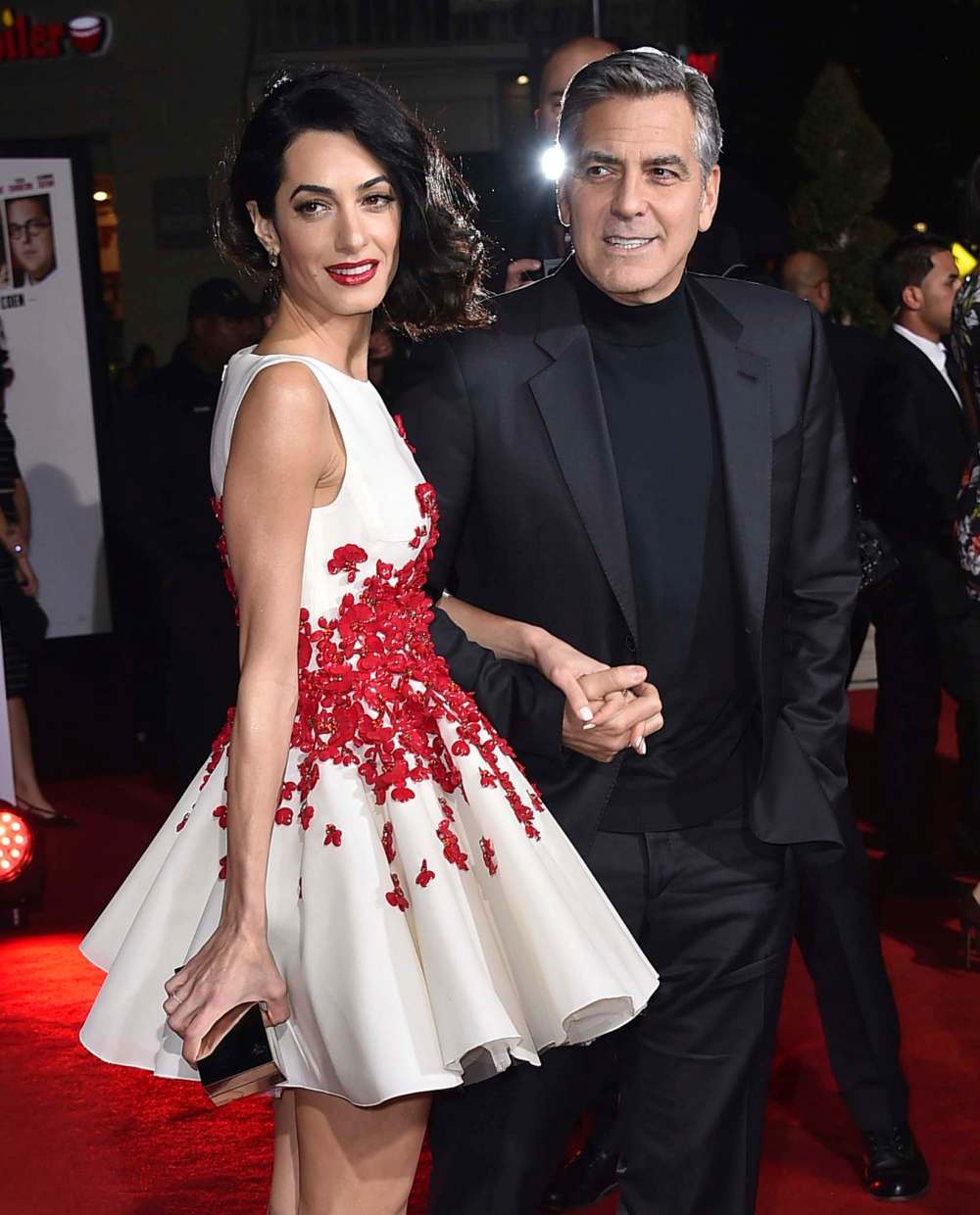
Clooney recognizes the power of the fashion spotlight and of the pop-culture gaze. If you are willing to settle into it and embrace it, then whenever it illuminates you, it also shines a light on the issues and causes with which you are associated. Fashion has brought her to Vogue. It has led to her being one of the co-chairs of the annual Costume Institute gala, alongside editor Anna Wintour, Rihanna and designer Donatella Versace. And it means she can talk about refugees when interviewed for the magazine’s pages.
But even as Clooney’s work is detailed, her professional life is not articulated with as much clarity and force as her fashion. Her work is earnest and righteous. The facts of it flow out like endless bullet points of injustices. Her fashion message, meanwhile, is succinct and focused: I am here.
As with a lot of politicians who come to Vogue, the goal is to reach a new audience, emphasize that they’re more than a drab bureaucrat and give their earnest work (public service, community organizing) a brush of gloss that can draw attention. Clooney is no different. For an international lawyer, Vogue presents a new audience. And being photographed for its pages in high-gloss glamour is valuable. It’s a form of cultural power.
Do we learn more about the “real” Clooney? No. She is funny, Heller writes, but presumably it’s not the sort of funny that translates well to print because the story offers no notable examples of her wit. Her friends and family think quite highly of her, we learn, and seem even a little bit in awe. She thinks her white horsehair courtroom wig is unflattering. She makes tea. She calls George “my love.”
She is a compelling character who draws your admiring gaze, even if you’re not quite sure precisely what it is that you’re admiring.
But Vogue is not where one goes to bare one’s soul or to dive into the thick of education, freedom of speech or refugee rights. It’s where one goes to engage in a form of alchemy. It’s where one goes to put glamour to work.
Vogue, by the way, needs Clooney. Fashion needs her. In this moment, to be relevant, magazines — fashion magazines — need women of substance and of diverse backgrounds who are engaged with the world. Clooney is not a subversive cover choice, but she’s not a blond starlet, a Kardashian or a Beyonce-Rihanna-Serena either.
Clooney has crafted a fascinating exterior shell: the great clothes, the tousle of hair, the slash of red lipstick, the barrister wig. Who is she really? That’s none of your business. Besides, if you’re glamorous enough, you’ve already got everyone’s attention.
— Washington Post