Fantastic finds
Radar has helped unearth everything from royal remains to Viking vessels
Advertisement
Read this article for free:
or
Already have an account? Log in here »
To continue reading, please subscribe:

Digital Subscription
One year of digital access for only $205*
- Enjoy unlimited reading on winnipegfreepress.com
- Read the E-Edition, our digital replica newspaper
- Access News Break, our award-winning app
- Play interactive puzzles
*First annual payment billed as $205.00 + GST for one year. This annual subscription will automatically renew at $233.00 + GST every 52 weeks (10% off the regular annual price of $259.35). Offer available to new and qualified returning subscribers only. Cancel any time.
To continue reading, please subscribe:
Add Free Press access to your Brandon Sun subscription for only an additional
$1 for the first 4 weeks*
- Enjoy unlimited reading on winnipegfreepress.com
- Read the E-Edition, our digital replica newspaper
- Access News Break, our award-winning app
- Play interactive puzzles
*Your next Brandon Sun subscription payment will increase by $1.00 and you will be charged $17.95 plus GST for four weeks. After four weeks, your payment will increase to $24.95 plus GST every four weeks.
Read unlimited articles for free today:
or
Already have an account? Log in here »
Hey there, time traveller!
This article was published 20/10/2018 (2828 days ago), so information in it may no longer be current.
You could call it a modern archeologist’s best friend.
We’re talking about ground-penetrating radar, a high-tech device resembling an oversized lawn mower that bounces pulses of microwave energy off buried objects to create a subterranean snapshot.
It can help scientists detect rocks, soil, ice, pockets of water and man-made structures and enable them to map underground sites before they begin to dig.
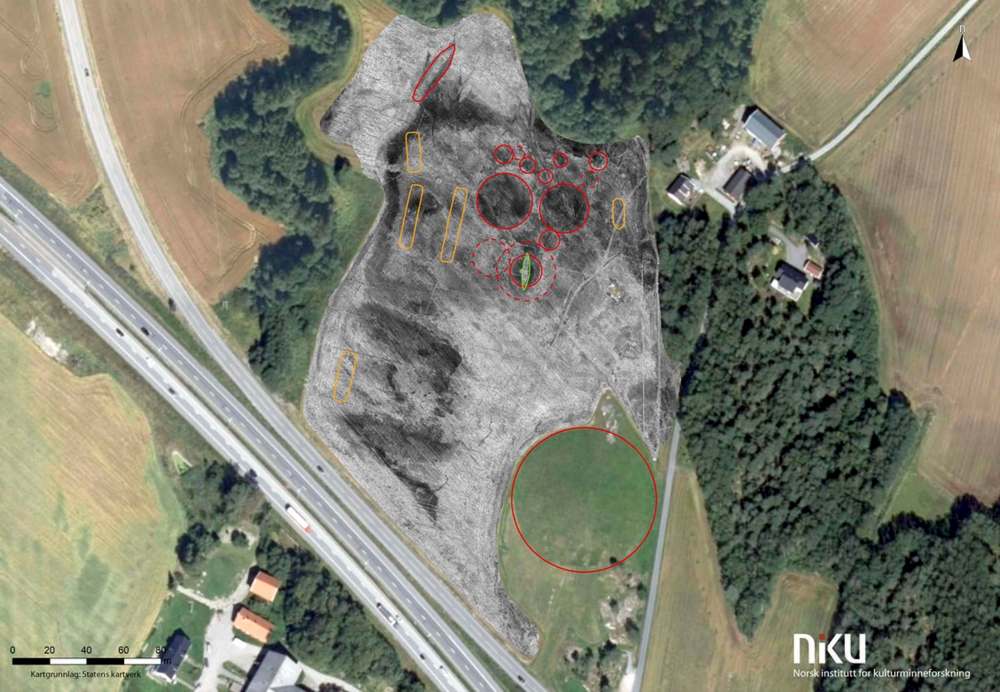
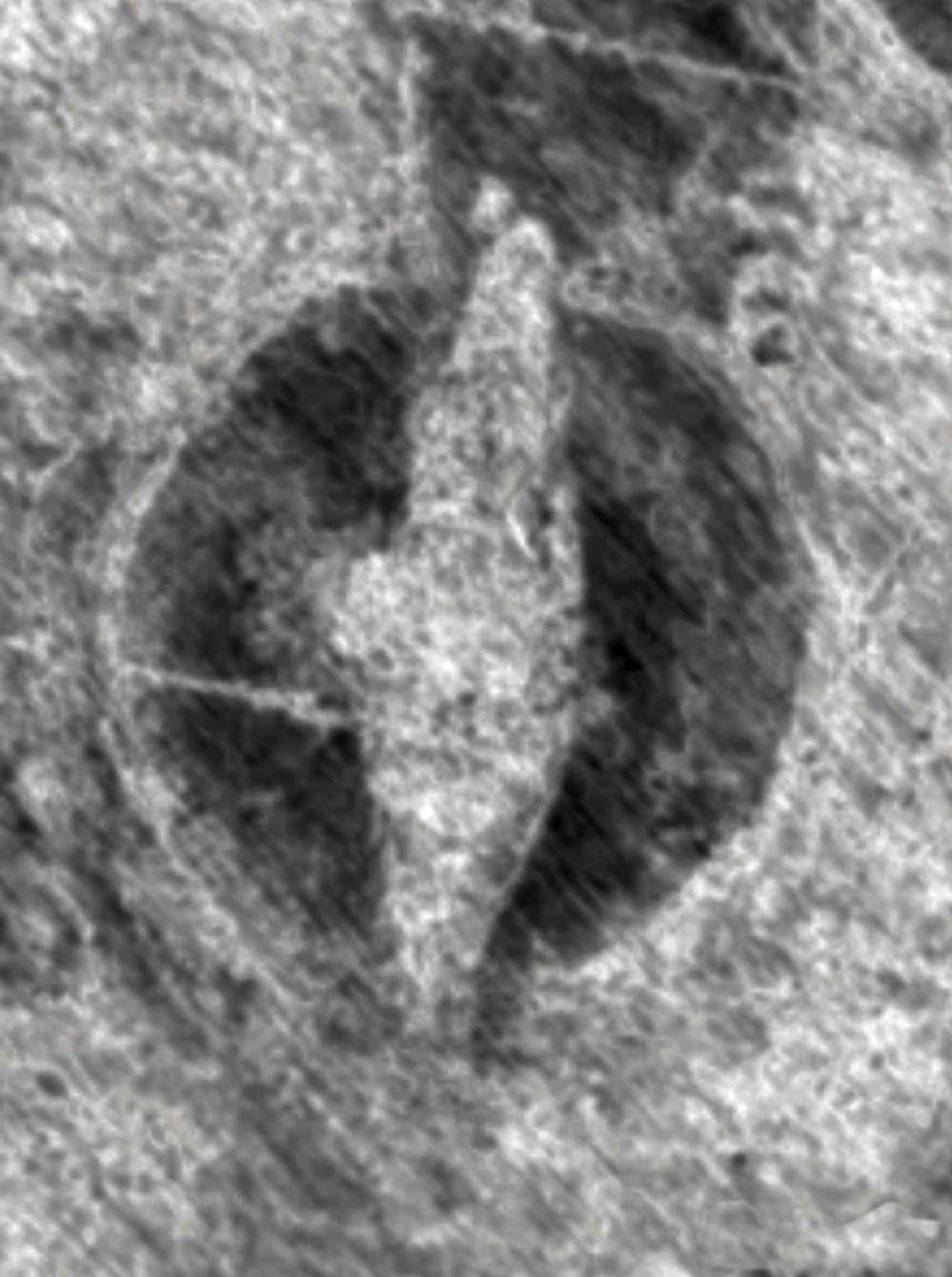
For example, archeologists armed with ground-penetrating radar made headlines around the world last week when they discovered one of the world’s largest Viking ship graves not far from the Norwegian capital of Oslo.
The digital scan revealed a large, possibly well-preserved ship, 20 metres long, resting a mere 0.5 metres beneath the surface, encased in a complex of at least eight other burial mounds, beneath which lay five longhouses.
“This find is incredibly exciting as we only know three well-preserved Viking ship finds in Norway excavated a long time ago,” Dr. Knut Paasche, head of the department of digital archeology at the Norwegian Institute for Cultural Heritage Research, said in a news release.
The ship was likely dragged ashore from the nearby Oslo fiord more than 1,000 years ago to serve as the final resting place of a prominent Viking king or queen. “Ships like this functioned as a coffin,” Paasche said. “There was one king or queen or local chieftain on board.”
It’s far from the first subterranean discovery, as we see from today’s recently unearthed list of Five Famous Underground Discoveries Revealed by Radar:
5) What they uncovered: A 2,500-year-old lost city
Going underground: As buried treasures go, an entire city is a pretty big one. In 2016, archeologists using ground-penetrating radar revealed they had uncovered the ruins of an ancient underground Greek city called Vlochos about 560 kilometres north of Athens.
According to sciencealert.com and Britain’s Independent newspaper, the ancient city was buried at the top of a hill in central Greece and had gone unnoticed until now because it was assumed to be the remains of a small village of little interest.
“What used to be considered remains of some irrelevant settlement on a hill can now be upgraded to remains of a city of higher significance than previously thought, and this after only one season,” research leader Robin Ronnlund, from the University of Gothenburg in Sweden, said. “A colleague and I came across the site in connection with another project last year, and we realized the great potential right away. The fact that nobody has never explored the hill before is a mystery.”
After stumbling on the site, researchers began exploring the area in depth with ground-penetrating radar arrays, quickly revealing evidence of a town square and a much larger urban sprawl than previously thought. “We found a town square and a street grid that indicate that we are dealing with quite a large city. The area inside the city wall measures over 40 hectares,” Ronnlund said. “We also found ancient pottery and coins that can help to date the city. Our oldest finds are from around 500 BC, but the city seems to have flourished mainly from the fourth to the third century BC before it was abandoned for some reason, maybe in connection with the Roman conquest of the area.”
The team plans to continue using radar instead of excavating the area in an effort to leave it in the same condition in which it was found.
4) What they uncovered: More Stonehenge stones
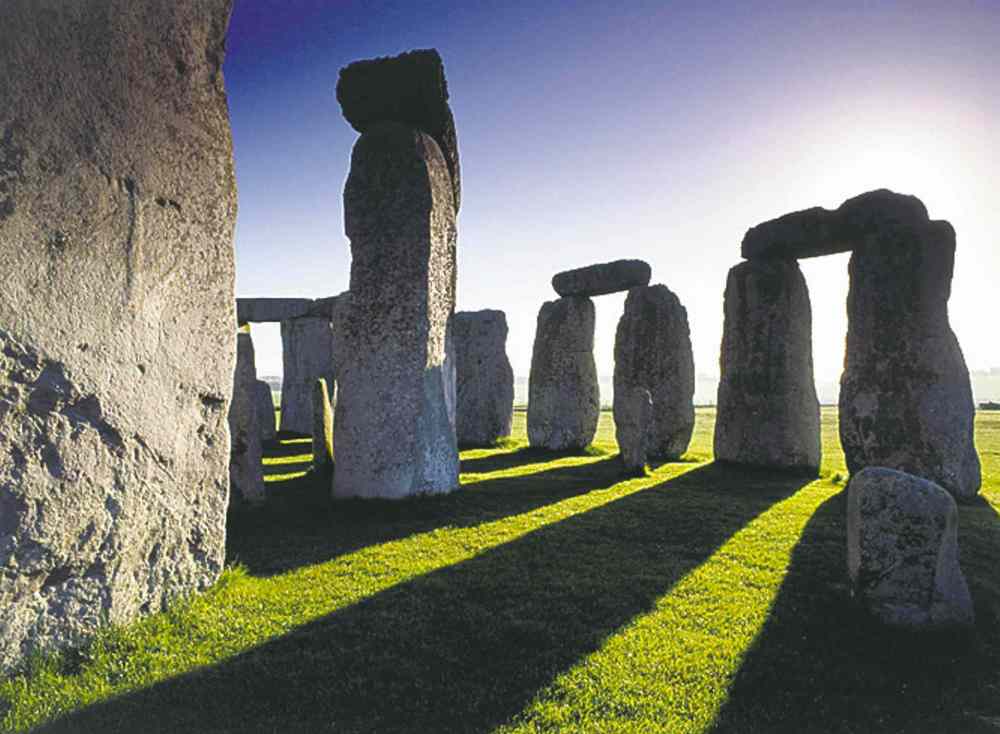
Going underground: The mystery of Stonehenge, arguably the world’s most famous prehistoric monument, has occupied the world’s brightest minds for centuries. Every year, more than a million visitors come to an isolated field in southwest England to gape at the legendary ring of mammoth stones, each around four metres high, 2.1 metres wide and weighing around 25 tons.
In 2015, however, the mystery deepened when researchers equipped with ground-penetrating radar made an amazing discovery — they peeked beneath the surface and found more stones. A lot more stones. Archeologists with the Stonehenge Hidden Landscape Project team say their radar imaging revealed traces of larger stone monuments less than three kilometres from the main Stonehenge site. The discovery was made beneath Durrington Walls, also known as “Superhenge” — one of the largest-known henge monuments built before Stonehenge.
According to CBS News, the stones were apparently erected to delineate an area of special significance — some sort of temple or public forum, or both. But the radar also revealed the stones were then knocked down and covered with an earthen mound. The new structures are believed to be 4,500 years old, CNN reported. “Our high-resolution ground-penetrating radar data has revealed an amazing row of up to 90 standing stones, a number of which have survived after being pushed over, and a massive bank placed over the stones,” Prof. Wolfgang Neubauer, director of the Ludwig Boltzmann Institute for Archaeological Prospection and Virtual Archaeology, told CNN. “In the east, up to 30 stones, measuring up to size of 4.5 x 1.5 x one metres, have survived below the bank, whereas elsewhere, the stones are fragmentary or represented by massive foundation pits,” he said.
Chimed in Paul Garwood, an archeologist and lead historian on the project at the University of Birmingham: “Everything written previously about the Stonehenge landscape and the ancient monuments within it will need to be rewritten.”
3) What they uncovered: Shakespeare’s skull is missing
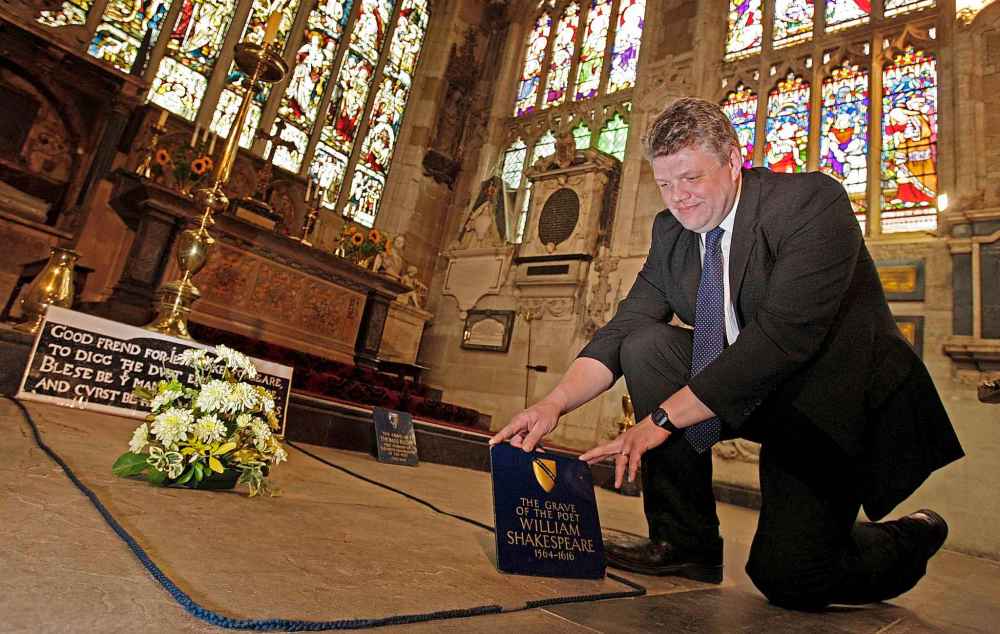
Going underground: Sometimes it’s not what you find that’s important — it’s what you don’t find. According to researchers who conducted the first archeological investigation of Shakespeare’s grave at Holy Trinity Church in Stratford-upon-Avon for a TV documentary in 2016, it appears 18th-century grave robbers stole the legendary playwright’s skull.
The researchers used state-of-the-art ground-penetrating radar to explore the tomb in a non-invasive manner, and what they found supports a claim — first made in 1879 in the British magazine Argosy but long dismissed as myth — the Bard’s skull was stolen by grave robbers in 1794. Staffordshire University archeologist Kevin Colls, who led the study, told reporters the radar scans found “an odd disturbance at the head end” of the tomb.
“It is very likely to me that the skull is not there,” Colls said. “Grave-robbing was a big thing in the 17th and 18th century. People wanted the skull of famous people so they could potentially analyze it and see what made them a genius. It is no surprise to me that Shakespeare’s remains were a target.” The radar uncovered “a change of material in the burial,” said Colls, adding that the discovery suggested this foreign material was used to repair damage at the head end of the grave. It would appear the inscription on Shakespeare’s gravestone — “Blessed be the man that spares these stones, and cursed be he that moves my bones” — wasn’t enough to deter historical souvenir hunters.
The radar also debunked several myths, such as the notion he was buried in a vertical position, or that he was buried in a vault along with wife Anne Hathaway and other family members. Instead, Shakespeare is buried in a simple and shallow tomb, about one metre deep, and probably wrapped in a shroud, the scientists say.
As for the Bard’s noggin, Colls said: “William’s skull is still out there. And we are going after it.” Which is definitely one way to get a head.
2) What they uncovered: A missing U.S. warplane
Going underground: Finding something hidden under a few metres of soil is one thing, but tracking down an object entombed under 91 metres of glacial ice is quite another thing entirely. This summer, a search team used ground-penetrating radar fitted to a heavy-lift aerial drone to locate the wreck of a P-38 Lightning fighter aircraft buried deep within a glacier in Greenland, more than 70 years after a famed “Lost Squadron” of U.S. warplanes crash-landed on the ice during the Second World War.
According to the Live Science website and GPS World magazine, it all began on July 15, 1942, when six P-38 Lightnings and two B-17 Flying Fortress bombers encountered a blizzard while travelling through a chain of secret airbases in Newfoundland, Greenland and Iceland known as the Snowball Route. The so-called Lost Squadron was forced to conduct an emergency landing on the glaciers of Greenland, and though all the crew members were rescued nine days later, the planes were left behind. Search leader Jim Salazar told Live Science the radar-equipped drone was scanning a part of the glacier where hints of the entombed warplane were detected in 2011.
Salazar said the radar-toting drone located the warplane in a few minutes of flight time, while a ground crew would have taken six or seven hours to cover the same area with a radar sled. The buried plane was in a remote region made dangerous by hidden ice crevasses, sudden storms and hungry polar bears.
“This is a very cold-weather region and an inhospitable location,” Salazar said. A ground team then used a thermal probe to melt through the thick ice, and it extracted hydraulic fluid from the P-38 “Echo” piloted by Lt.-Col. Robert Wilson. In 1992, another P-38 was recovered from the ice and returned to flying condition under the name “Glacier Girl.”
The search team plans to return to the glacier next summer to dig and melt the rediscovered fighter out of the ice.
1) What they uncovered: One king (possibly two)
Going underground: History buffs were over the moon in September 2016 when archeologists announced they may have located the remains of King Henry I — the youngest and most able son of William the Conqueror — languishing beneath a Ministry of Justice parking lot on the site of Reading prison.
According to Britain’s Telegraph newspaper, they came across the remains while using ground-penetrating radar to scan the parking lot, which sits on top of the ruins of Reading Abbey — a huge church that Henry built during his reign.
“A series of graves has been discovered by archeologists using ground-penetrating radar (GPR), during an exploration of the site containing the ruins of Reading Abbey,” the paper reported at the time. “They came across the graves, along with a number of other potentially significant archeological finds, while scanning tarmacked land close to the abbey’s high altar.”
Henry I founded Reading Abbey intending it to be his final resting place. When he died in Normandy in December 1135, his body was embalmed and sewn into a bull’s hide for the journey to Reading, where he was buried the following month. But the king’s remains have so far eluded discovery.
Reading Borough Coun. Tony Page told the BBC: “With these tantalizing initial results available, there is now much work to be done.” What was truly astonishing was the fact the announcement came four years after archeologists from Leicester University stunned the world in September 2012 — revealing they had found the bones of Richard III, beneath the Greyfriars car park in that city. The remains were found even though the GPR survey had been inconclusive.
The remains were later confirmed to be those of the Plantagenet king following DNA analysis of the bones, which matched that of living descendants. As a condition of being allowed to disinter the skeleton, the archeologists agreed that, if Richard were found, his remains would be reburied in Leicester Cathedral. The remains of the last English king killed in battle were ultimately reinterred at the cathedral on March 26, 2015.
No doubt the car park was full.
doug.speirs@freepress.mb.ca