Flu cases starting to surge, with kids and teens especially vulnerable: doctors
Advertisement
Read this article for free:
or
Already have an account? Log in here »
To continue reading, please subscribe:

Digital Subscription
One year of digital access for only $205*
- Enjoy unlimited reading on winnipegfreepress.com
- Read the E-Edition, our digital replica newspaper
- Access News Break, our award-winning app
- Play interactive puzzles
*First annual payment billed as $205.00 + GST for one year. This annual subscription will automatically renew at $233.00 + GST every 52 weeks (10% off the regular annual price of $259.35). Offer available to new and qualified returning subscribers only. Cancel any time.
To continue reading, please subscribe:
Add Free Press access to your Brandon Sun subscription for only an additional
$1 for the first 4 weeks*
- Enjoy unlimited reading on winnipegfreepress.com
- Read the E-Edition, our digital replica newspaper
- Access News Break, our award-winning app
- Play interactive puzzles
*Your next Brandon Sun subscription payment will increase by $1.00 and you will be charged $17.95 plus GST for four weeks. After four weeks, your payment will increase to $24.95 plus GST every four weeks.
Read unlimited articles for free today:
or
Already have an account? Log in here »
Hey there, time traveller!
This article was published 08/01/2019 (2810 days ago), so information in it may no longer be current.
TORONTO – Cases of influenza are continuing to ramp up across the country, with kids and teens bearing much of the brunt of the dreaded winter bug, say infectious diseases experts, predicting that the peak of the annual sneezing-coughing-feeling-miserable season is likely still several weeks away.
This year’s flu season has a far different profile than last year’s: it began earlier and the predominant circulating A strain is H1N1, the viral type that caused the pandemic in 2009-2010 but hasn’t made much of an appearance for the last few years.
Those previous seasons were dominated by H3N2, an influenza A strain that is particularly hard on older adults and which typically carries a higher risk of complications like pneumonia that can lead to hospitalization or death, said Dr. Danuta Skowronski, epidemiology lead of influenza and emerging respiratory pathogens at the BC Centre for Disease Control.
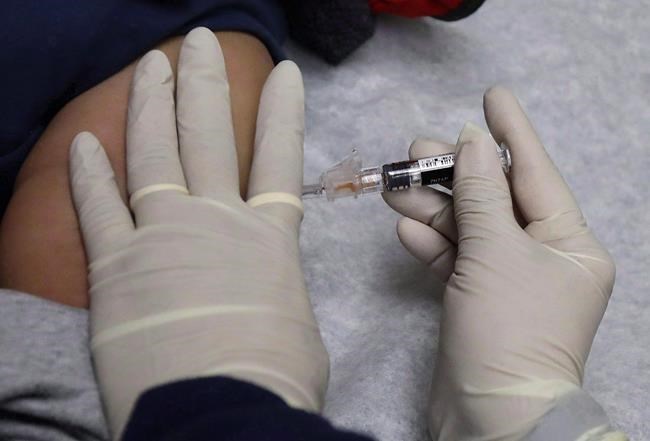
In contrast, H1N1 tends to target children and younger adults more than seniors — and flu-trackers like Skowronski say this season is no exception.
“This year in particular, we have expected that children under nine years of age and non-elderly adults will be disproportionately affected … children because they are less likely to have protection (built-in immunity) from prior epidemics of H1N1.”
Indeed, the BCCDC’s surveillance of lab-confirmed cases of flu show that about one-third of all H1N1 detections so far this season have been in children nine years of age or younger, even though kids in that age range make up just 10 per cent of the province’s population.
While H1N1-predominant seasons tend to be milder overall at the population level compared to those characterized primarily by H3N2, individuals who get hit with either strain won’t detect much of a difference — both bring on fever, cough, general malaise and achy muscles and joints, she said from Vancouver.
“It’s a different season, different profile. I think this year we can anticipate that emergency rooms, out-patient visits will be greater because younger people are being affected by H1N1, but the overall impact of serious outcomes should be less this year compared to the last couple of seasons.”
As of Dec. 29, the most recent data available from the Public Health Agency of Canada shows there were 13,796 laboratory-confirmed influenza cases across the country, with the provinces and territories reporting 1,046 hospitalizations and 24 deaths. Most cases occurred in people under age 65.
Last season at that point, 11,275 cases of lab-confirmed flu had been reported.
Since September, PHAC says 414 children under age 16 have been hospitalized for flu, with the highest estimated rate of admission among kids under five years of age. That’s more than double the 195 logged during the same period in 2017.
Seventy-one of those kids had to be admitted to the ICU. At least one death has been documented by the network of 12 pediatric hospitals across the country that reports to PHAC, but for privacy reasons the agency does not release the exact number, saying only that there have been fewer than five.
However, these figures reflect only cases in which testing was performed; many more people who come down with the flu don’t seek medical assistance and therefore aren’t tested. That applies to data collected on both adults and children.
Ontario got off to slower start to the season compared to Alberta, for instance, which began getting hit with the respiratory illness in late October, early November.
“We’re really just now getting into our flu season,” said Dr. Michelle Murti of Public Health Ontario, noting that the proportion of tests on people with respiratory bugs that came back positive for influenza had doubled to 16 per cent in the week ending Dec. 29, compared to eight per cent the week before.
“So we’re probably on track to coming up to more of our peak activity in the next couple of weeks or so.”
New Brunswick’s peak might come somewhat sooner, as cases there began spreading in late November. Typically, the Atlantic province begins seeing a surge of flu in late December, following the close-quarters socializing of the Christmas holidays when the virus finds lots of hosts to infect.
As of Dec. 29, New Brunswick had 579 lab-confirmed cases, 577 of them influenza A and two of influenza B. Of those, 71 people were hospitalized, 15 were admitted to the ICU and there were three deaths.
“What I can tell you is that the people who have been hospitalized and the deaths that were associated with the flu this year are people who have not been immunized, a majority of them have not been immunized,” said Dr. Jennifer Russell, chief medical officer of health for New Brunswick.
While last season’s vaccine turned out to be a poor match for the circulating strains — especially for the prevailing H3N2 type — the 2018-2019 flu shot is expected to be far more effective in preventing the infectious disease.
Traditionally, the H1N1 component is better at halting the spread of that strain of the virus, compared to H3N2, which has a greater propensity to genetically mutate, often in the manufacturing process.
“So there is no reason why people should not get the flu shot this year. It’s the best protection that we have to give people against the flu,” said Russell, adding that children and adolescents, adults with underlying lung or heart conditions and the elderly should make sure they are immunized.

That also goes for healthy adults who are in close contact with people in those groups or with babies under six months of age who are too young to be inoculated against influenza, she said.
“So we would like everybody who’s eligible to get the vaccine,” said Russell, noting that it takes about two weeks for antibodies induced by the shot to come into full effect.
“It’s not too late.”
— Follow @SherylUbelacker on Twitter.
Note to readers: This is a corrected story. A previous version misstated the age of children affected by the flu in a quote from Dr. Danuta Skowronski. It also misstated the percentage of children that make up B.C.’s population.