Furry relief for depression, anxiety
More college students turning to emotional-support animals
Advertisement
Read this article for free:
or
Already have an account? Log in here »
To continue reading, please subscribe:

Digital Subscription
One year of digital access for only $205*
- Enjoy unlimited reading on winnipegfreepress.com
- Read the E-Edition, our digital replica newspaper
- Access News Break, our award-winning app
- Play interactive puzzles
*First annual payment billed as $205.00 + GST for one year. This annual subscription will automatically renew at $233.00 + GST every 52 weeks (10% off the regular annual price of $259.35). Offer available to new and qualified returning subscribers only. Cancel any time.
To continue reading, please subscribe:
Add Free Press access to your Brandon Sun subscription for only an additional
$1 for the first 4 weeks*
- Enjoy unlimited reading on winnipegfreepress.com
- Read the E-Edition, our digital replica newspaper
- Access News Break, our award-winning app
- Play interactive puzzles
*Your next Brandon Sun subscription payment will increase by $1.00 and you will be charged $17.95 plus GST for four weeks. After four weeks, your payment will increase to $24.95 plus GST every four weeks.
Read unlimited articles for free today:
or
Already have an account? Log in here »
Hey there, time traveller!
This article was published 29/01/2019 (2735 days ago), so information in it may no longer be current.
Sometimes Liv Tempesta feels like she doesn’t have any emotions. That comes with the territory when you’re coping with clinical depression.
The 19-year-old sophomore at Temple University in Philadelphia last year tried a new type of treatment: a cat. Skittles, her eight-year-old tabby and her first emotional-support animal, lived on campus with her in Johnson Hall her freshman year, forcing her into a routine and snuggling up with her when she was affected.
Now, in some ways, he’s made her feel whole.
“If I have feelings for this animal,” she said, “that means I’m still human.”
Emotional-support animals, or ESAs, are owned by people with mental health disorders and deemed necessary by medical professionals. The animals, which typically have not had special training, gained popularity in 2015 when they prompted a federal guideline for housing providers, but they seemed to go viral last year following news stories about someone trying to take a dog or a peacock or a goat onto an airplane — sometimes with success.
Ever since, ESAs have become the target of ridicule: Popeyes released an “emotional support chicken” carrier available only in airports. Ellen DeGeneres poked fun at them in her recent Netflix special. Some talking heads have questioned whether ESAs are just elaborate scams.
But despite the cries of “they’re just trying to bring their pet everywhere for free,” people — particularly those of the younger variety — are still turning to emotional-support animals as a means of treating depression and anxiety.
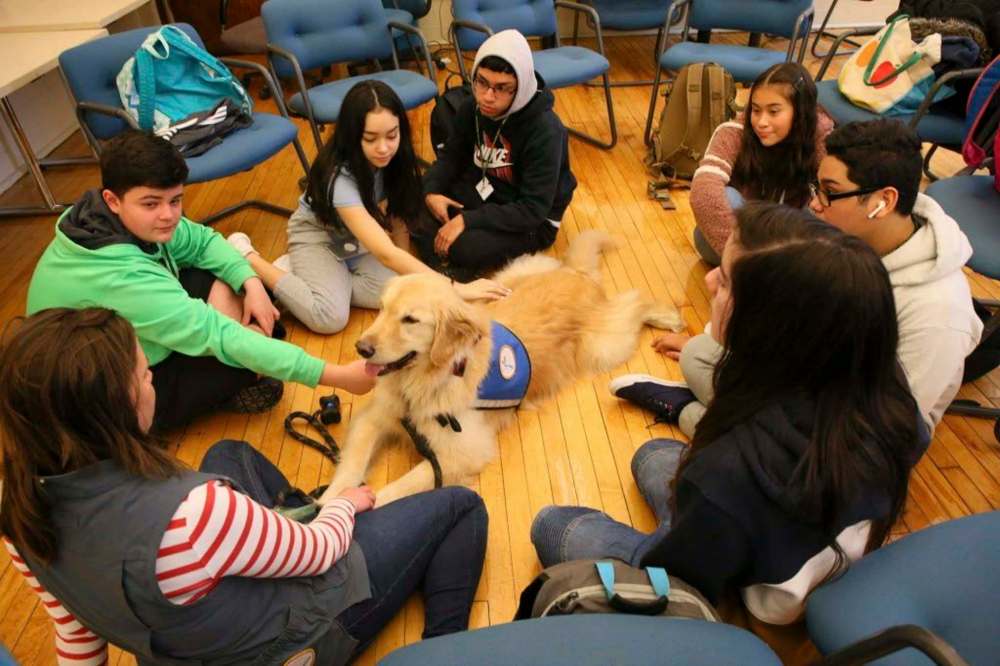
Besides perhaps airports, nowhere is the trend more apparent than on college campuses, some of which have seen residence halls turn into animal houses, as more students file paperwork to keep an emotional-support cat, dog or hamster in their dorm room. The ESA trend took hold over the past several years while rates of anxiety and depression among college students have soared in the past decade.
In the 2017-18 school year at Temple, six students requested permission to keep such animals on campus. This school year? Twenty.
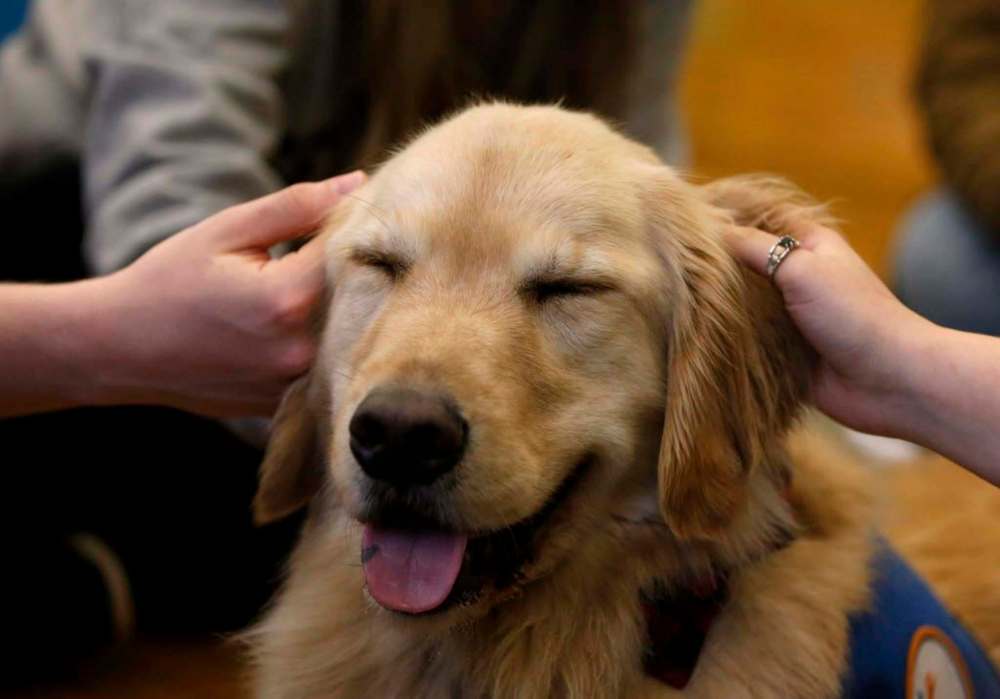
ESAs, also sometimes called “assistance animals,” usually aren’t trained as such and serve the purpose of comforting their owner, making them indistinguishable from a regular pet to an outside observer. At most schools, students must show that the animal was designated necessary by a medical provider.
In 2016, St. Joseph’s University in Philadelphia implemented an emotional-support animal policy, stating students must notify the school’s office of student disability services of their need and accept responsibility for the animal’s actions, said Christine Mecke, director of student disability services at St. Joe’s.
Likewise, Drexel, another Philadelphia college, put in place a policy including emotional-support animals in 2015, while Villanova’s emotional-support animal policy went into effect last summer.
The permission needed to bring an ESA on campus isn’t difficult to obtain, and those who can’t get a “prescription” from a doctor turn to the internet. CertaPet, one of the most recognized companies that certifies ESAs, connects clients with mental health providers from across the country who conduct a clinical assessment via phone and, if they deem it medically appropriate, email a letter that satisfies ESA housing or travel requirements. The whole process can be done in a matter of hours and for about US$150.
Prairie Conlon, the clinical manager at CertaPet, said she knows some people may feign a mental health disorder so they can bring their pooch to college or the grocery store or another country with them for free. She admits there’s “a lot of fraud out there.”
She says ESAs are medically legitimate, though, and “animal-assisted intervention” is her specialty as a therapist.
Problem is, the research on ESAs is scant and many therapists won’t “prescribe” them. Therapist Madeleine May said she’s only ever written one ESA letter for a client and instead refers patients to third parties. She questions whether ESAs can help patients expand social skills or if they instead function as a “crutch,” but she said an increase in college students requesting them makes sense.
“Depression, loneliness and anxiety, they’re on the rise on college campuses, and even if you don’t have one of those diagnosed illnesses, transitioning can be hard,” she said. “I think about people who are soothed by touch and tapping into a sensory experience. Dogs could be a good thing.”
Benjamin Daniels, a Philadelphia psychologist, said ESAs may help reduce anxiety for some people, but there’s a risk the animal serves as a “safety signal,” meaning the person believes they’re safe only because the animal is around.
“Then a person becomes dependent on that animal to be able to function in the world,” he said. “It’s a double-edged sword in that way.”
Tempesta said her emotional-support cat helped her socially — his presence forced her to meet other people on her floor who wanted to play with him. Additionally, she said, “it’s nice to know that you’re wanted.”
“If I’m stressed about doing homework or if I had a bad day and I’m crying on my bed,” she said, “he will come up and lay on me and start purring.”
Emotional-support dogs that need to be taken outside regularly can also provide a reason to get up, which can be especially effective for owners with clinical depression, according to a junior at Eastern University in St. Davids, Pa., who’s had a dog for several years that helps her cope with depression and anxiety. The woman, who is studying social work, didn’t want to be named because she didn’t want future employers and clients to judge her use of an emotional-support dog if they found her in a Google search.
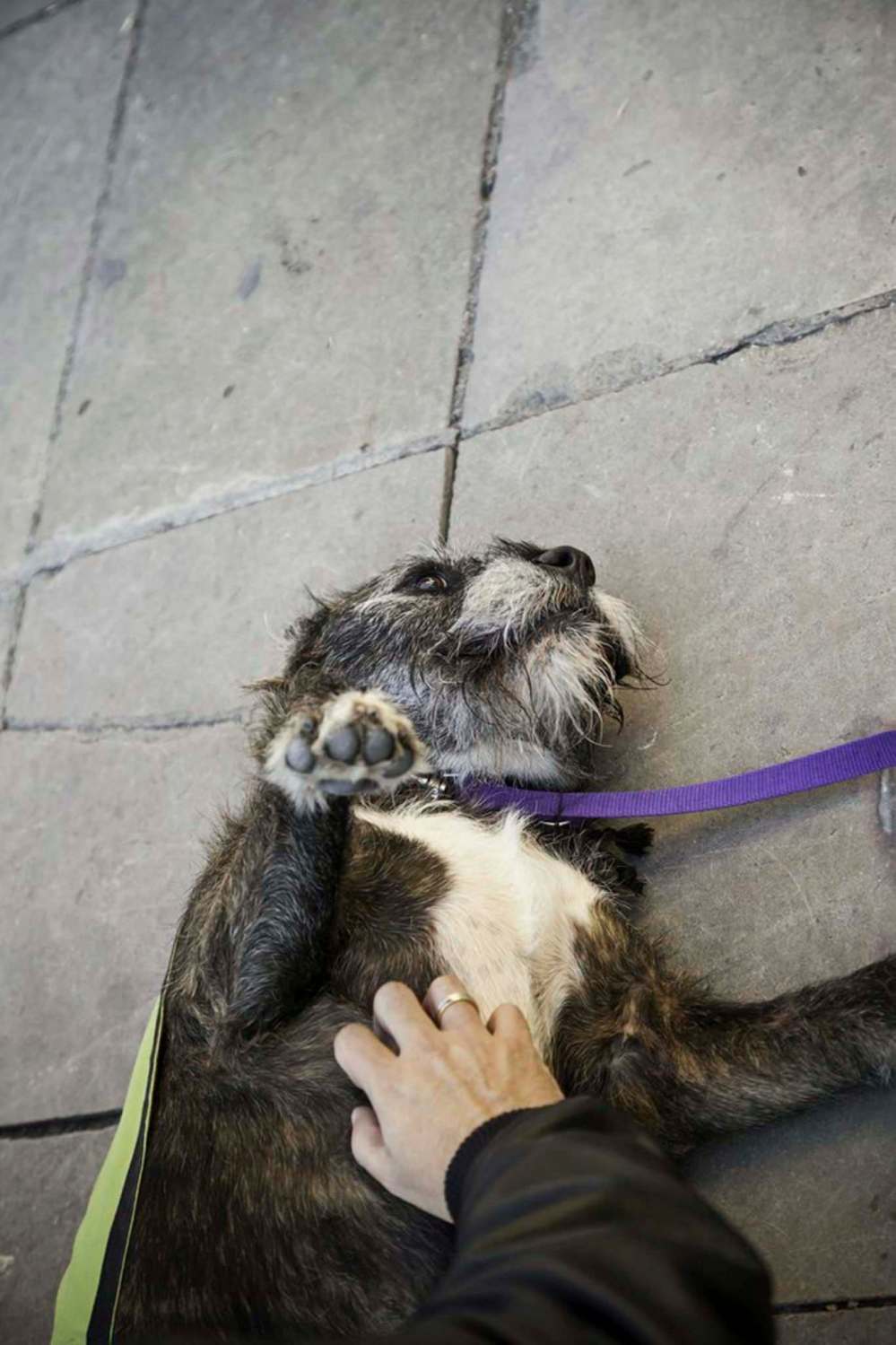
Minnie, a three-year-old Jack Russell terrier/chihuahua mix that lives in the woman’s dorm room, was initially trained as a service dog that can recognize when her owner is having a panic attack or engaging in self-harm. Over the past several years, Minnie’s owner’s health has improved, and now the dog acts more as an emotional-support dog, providing a comforting presence and a sense of routine.

“It’s almost like a security blanket,” the woman said. “Especially when you go into a new place or go away from home. Although it’s not an actual family member, you have each other, and you take care of them and they take care of you.”
Plenty of research has showed therapy dogs can relieve stress for people they interact with. But Molly Crossman, a researcher at Yale who focuses on human-animal interaction, said that research has been limited to short-term interactions and there have been few studies that conclude if, how or why ESAs work.
If they do, there’s not likely to be just one “active ingredient.” Some people respond to the soft, soothing touch. Others feel like the animal is a presence that won’t judge them.
“It’s a number of different things,” she said, “just like friends aren’t helpful just for one thing.”
— Philadelphia Inquirer
History
Updated on Tuesday, January 29, 2019 7:40 AM CST: Adds photos