What the FDA’s actions mean for dietary supplements

Advertisement

Advertise with us

NEW YORK - The Food and Drug Administration announced plans Monday to step up its policing of dietary supplements, which it said has mushroomed into a $40 billion industry with more than 50,000 products. The agency warned 17 companies for illegally making claims about their products' ability to treat diseases.

Read this article for free:


or

Already have an account? Log in here »

To continue reading, please subscribe:

Subscribe and receive a limited-edition Free Press branded hat or tote.

Digital Subscription

One year of digital access for only $205*

  • Enjoy unlimited reading on winnipegfreepress.com
  • Read the E-Edition, our digital replica newspaper
  • Access News Break, our award-winning app
  • Play interactive puzzles

*First annual payment billed as $205.00 + GST for one year. This annual subscription will automatically renew at $233.00 + GST every 52 weeks (10% off the regular annual price of $259.35). Offer available to new and qualified returning subscribers only. Cancel any time.

To continue reading, please subscribe:

Add Free Press access to your Brandon Sun subscription for only an additional

$1 for the first 4 weeks*

  • Enjoy unlimited reading on winnipegfreepress.com
  • Read the E-Edition, our digital replica newspaper
  • Access News Break, our award-winning app
  • Play interactive puzzles
Start now

*Your next Brandon Sun subscription payment will increase by $1.00 and you will be charged $17.95 plus GST for four weeks. After four weeks, your payment will increase to $24.95 plus GST every four weeks.

Hey there, time traveller!
This article was published 11/02/2019 (2734 days ago), so information in it may no longer be current.

NEW YORK – The Food and Drug Administration announced plans Monday to step up its policing of dietary supplements, which it said has mushroomed into a $40 billion industry with more than 50,000 products. The agency warned 17 companies for illegally making claims about their products’ ability to treat diseases.

Here’s a look at what the FDA’s announcement means:

Q: How are dietary supplements regulated?
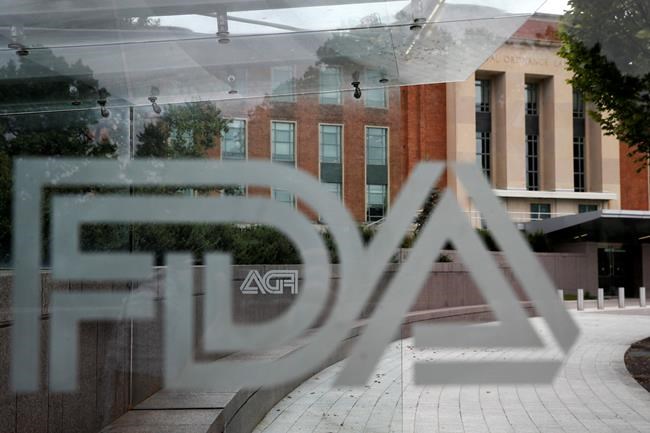
FILE - This Aug. 2, 2018 file photo shows the U.S. Food and Drug Administration building behind FDA logos at a bus stop on the agency's campus in Silver Spring, Md. The FDA announced plans Monday, Feb. 11, 2019, to step up its policing of dietary supplements, which it said has mushroomed into a $40 billion industry with more than 50,000 products. (AP Photo/Jacquelyn Martin)

A: Dietary supplements, including vitamins, are regulated more like foods than drugs. They can make claims similar to what’s found on cereals or snack bars such as “calcium builds strong bones.” But they can’t contain drug ingredients or make claims about treating diseases like Alzheimer’s, cancer or diabetes.

Q: Does the FDA plan to change that rule?

A: No. FDA Commissioner Scott Gottlieb said the agency isn’t questioning what’s permitted under the dietary supplements law of 1994. He said dietary supplements are regulated like foods because they pose less of a risk than drugs.

“Nothing in what we’re doing would try to attempt to re-contemplate” the existing standard, he said.

Instead, the agency is addressing criticism that it hasn’t enforced rules prohibiting supplements from containing drugs or being marketed like them. Gottlieb said the risk posed by such illegal products has grown with the industry.

The FDA’s dietary supplements review group has 23 employees, he said, and is planning more oversight on products that make illegal health claims.

Q: What about supplements that don’t make disease claims?

A: Qualified health claims on dietary supplements may lead people to think they’re more effective than they are, said Peter Lurie, a former FDA official who now heads the Center for Science in the Public Interest. Lurie noted the FDA doesn’t review such claims before they’re marketed.

“It’s very hard to take on this industry comprehensively when the law shackles the agency to the extent that it does,” he said.

Dr. Pieter Cohen, an associate professor at Harvard Medical School, said dietary supplements are unnecessary for most people unless a doctor recommends them for a specific reason. He noted there are exceptions, such as women who may be planning to become pregnant.

Q: Is the FDA considering any changes to the rules for supplements?

A: The FDA is still figuring out exactly how it might tighten oversight, but one possibility is a mandatory database for dietary supplements to improve transparency and make enforcement easier. It also said it’s developing a way to more quickly and consistently alert people about supplements that might have illegal ingredients.

The dietary supplements industry group, the Council for Responsible Nutrition, said it looked forward to working with the FDA, and praised Gottlieb for “rooting out bad actors.”

___

The Associated Press Health and Science Department receives support from the Howard Hughes Medical Institute’s Department of Science Education. The AP is solely responsible for all content.
Report Error Submit a Tip

More Stories

Walk on Portage Avenue reveals difficult present, some cause for optimism

Dan Lett 5 minute read Preview

Walk on Portage Avenue reveals difficult present, some cause for optimism

Dan Lett 5 minute read Updated: Yesterday at 3:23 PM CDT

On a recent visit back to Winnipeg, I got to witness the multitudes of Portage Avenue.

From my Airbnb on Hargrave Street, I had the opportunity to do quite a bit of walking on Portage Avenue, from Portage and Memorial all the way down to the recently opened intersection at Portage and Main.

Along the way, I saw it all: huge and dynamic construction projects, persistent urban decay and the occasional oasis of revitalization.

All in the space of 10 blocks.

Read
Updated: Yesterday at 3:23 PM CDT

No critical incidents, adverse public safety events resulted from July 911 outage, Bell says in report to CRTC

Erik Pindera 4 minute read Preview

No critical incidents, adverse public safety events resulted from July 911 outage, Bell says in report to CRTC

Erik Pindera 4 minute read 2:29 PM CDT

The telecommunications outage that prevented Manitobans outside Winnipeg from contacting 911 for several hours last month did not result in “critical incidents or adverse public safety outcomes,” Bell Canada says.

Bell, which runs Manitoba’s 911 network, issued its post-incident report on the July 22 outage to the Canadian Radio-television and Telecommunications Commission on Thursday.

In total, calls to 911 made by 84 people from 11:40 a.m. to 3:25 p.m. could not be routed to the public safety call centre in Brandon. That facility answers 911 calls for most of the province outside Winnipeg.

Officials at the 911 call centre in Brandon advised Bell that, as of Thursday, there had been no reported critical incidents or public-safety issues as a result of the missed calls, the telecom company said in its report.

Read
2:29 PM CDT

Manitoba pharmacists able to prescribe birth control: minister

Free Press staff 2 minute read Preview

Manitoba pharmacists able to prescribe birth control: minister

Free Press staff 2 minute read 2:37 PM CDT

Manitoba pharmacists will have the authority to assess for, prescribe and administer birth control.

Health Minister Uzoma Asagwara announced the expanded scope of practice on Friday.

Pharmacists must complete approved training before providing contraceptive assessments and prescribing contraceptives, the province said.

Pharmacists who have taken the training can issue several prescription contraceptives, including oral contraceptive pills, hormonal patches, vaginal rings and intramuscular contraceptive injections, the province said.

Read
2:37 PM CDT

Police resuming drug-enforcement crackdown, working with outreach community

Chris Kitching 7 minute read Preview

Police resuming drug-enforcement crackdown, working with outreach community

Chris Kitching 7 minute read Updated: Yesterday at 5:35 PM CDT

Winnipeg police are relaunching a drug enforcement campaign in some neighbourhoods Friday after they say a 10-day sweep led to more than 100 arrests and a drop in reported crime earlier this summer.

Police said the renewed initiative, targeting open drug use and trafficking, will continue into November with an outreach-first approach and a partnership with a coalition of community groups in response to criticism of the initial campaign.

“While there was a great deal of support for the enforcement actions we undertook to address public safety issues, there was also criticism about the lack of collaboration,” Winnipeg Police Service Chief Gene Bowers told reporters.

“At that time, I acknowledged that community organizations should have been part of our efforts. Hence, we’re here today.”

Read
Updated: Yesterday at 5:35 PM CDT

Can federal legislation effectively rein in social media’s opaque algorithms and deceptive design features?

Marsha McLeod 12 minute read Preview

Can federal legislation effectively rein in social media’s opaque algorithms and deceptive design features?

Marsha McLeod 12 minute read 1:44 PM CDT

In June, when Ottawa introduced Bill C-34, the Safe Social Media Act, one element — plans to block children under the age of 16 from certain social media platforms — dominated headlines and fuelled debates.

But this marks just one component of a complex, 92-page bill that would enact two separate pieces of legislation: the Digital Safety Act and the Digital Safety Commission of Canada Act.

The Free Press took a close look at the tabled bill, breaking down the changes it would make, if passed.

Heritage Minister Marc Miller, whose department is responsible for the file, told reporters in June the bill meant to ramp up Canada’s oversight of Big Tech.

Read
1:44 PM CDT

City puts Osborne Village lot up for sale third time

Joyanne Pursaga 5 minute read Preview

City puts Osborne Village lot up for sale third time

Joyanne Pursaga 5 minute read Yesterday at 4:57 PM CDT

The city is making a third attempt to sell a seemingly prime Osborne Street property, after an offer for the surface parking lot fell through earlier this year.

The 772-square-metre space at 145 Osborne St., which formerly operated as an official paid city parking lot, has been posted for sale once again.

It may puzzle some Winnipeggers to see the site in the heart of Osborne Village remain empty so long after the city declared it surplus in 2020.

However, a few different challenges may limit its appeal to potential buyers, alocal real estate agent said.

Read
Yesterday at 4:57 PM CDT