Newer heart valves may let more people avoid surgery

Advertisement

Advertise with us

Surgery for certain bad heart valves may soon become a thing of the past. New studies suggest it's OK and often better to have a new valve placed through a tube into an artery instead.

Read this article for free:


or

Already have an account? Log in here »

To continue reading, please subscribe:

Subscribe and receive a limited-edition Free Press branded hat or tote.

Digital Subscription

One year of digital access for only $205*

  • Enjoy unlimited reading on winnipegfreepress.com
  • Read the E-Edition, our digital replica newspaper
  • Access News Break, our award-winning app
  • Play interactive puzzles

*First annual payment billed as $205.00 + GST for one year. This annual subscription will automatically renew at $233.00 + GST every 52 weeks (10% off the regular annual price of $259.35). Offer available to new and qualified returning subscribers only. Cancel any time.

To continue reading, please subscribe:

Add Free Press access to your Brandon Sun subscription for only an additional

$1 for the first 4 weeks*

  • Enjoy unlimited reading on winnipegfreepress.com
  • Read the E-Edition, our digital replica newspaper
  • Access News Break, our award-winning app
  • Play interactive puzzles
Start now

*Your next Brandon Sun subscription payment will increase by $1.00 and you will be charged $17.95 plus GST for four weeks. After four weeks, your payment will increase to $24.95 plus GST every four weeks.

Hey there, time traveller!
This article was published 16/03/2019 (2702 days ago), so information in it may no longer be current.

Surgery for certain bad heart valves may soon become a thing of the past. New studies suggest it’s OK and often better to have a new valve placed through a tube into an artery instead.

The results are expected to quickly transform treatment of a problem that affects millions of people — a stiff or narrowed aortic valve that doesn’t let blood pass as it should. Until recently, fixing severe cases required a major operation using a heart-lung machine while surgeons cut out the old valve and sewed in a new one.

A decade ago, expandable aortic valves were developed that can be guided to the heart through a catheter into a blood vessel and placed inside the old valve. But they’re only used now in people at high or moderate risk of dying from surgery. The new studies tested these valves in people at low risk for the operation, as most patients are, and found them as good or superior to surgical ones.
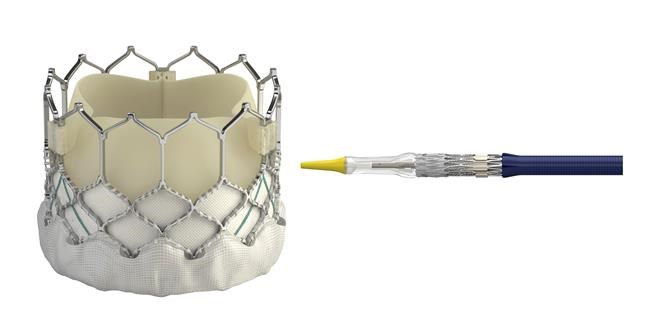
This combination of images provided by Edwards Lifesciences in March 2019 shows the Sapien 3 heart valve expanded, left, and crimped for insertion. Surgery for certain bad heart valves may soon become a thing of the past. New studies published by the New England Journal of Medicine on Saturday, March 16, 2019, suggest it's OK and often better to have a new valve placed through a tube into an artery instead. (Edwards Lifesciences via AP)

“This is our last frontier” to make these devices a standard of care, said Dr. Joseph Cleveland, a University of Colorado heart surgeon with no role in the studies or ties to the companies that sponsored them. “It’s a great thing” for patients to be able to avoid major surgery, he said.

Results were published by the New England Journal of Medicine on Saturday and were to be discussed at an American College of Cardiology conference in New Orleans on Sunday.

In one study, about 1,000 patients were given standard surgery or an expandable Edwards Lifesciences valve. After one year, 15 per cent of the surgery group and 8.5 per cent of the others had died, suffered a stroke or needed to be hospitalized again.

In the other study, 1,400 patients were given surgery or a Medtronic expandable valve. Based on partial results, researchers estimated that after two years, 6.7 per cent of the surgery group and 5.3 per cent of the others had died or suffered a disabling stroke.

In both studies, certain problems were more common with surgery, including major bleeding and development of a fluttering heartbeat called atrial fibrillation. In the Medtronic study, 17 per cent of expandable valve recipients later required a pacemaker versus 6 per cent of people who had surgery.

Previous research suggests that overall costs are lower with expandable valves, which cost about $30,000 versus $5,000 for surgical ones, largely because they require much shorter hospital stays and caused fewer complications, said Cleveland, who also is a spokesman for the College of Cardiology.

In the United States, surgeries to replace aortic valves have been falling. Only about 25,000 are expected to be done this year and Cleveland expects that to drop by half next year and by half again in 2021.

He and other doctors say the expandable valves still need longer study to see if they hold up as well as surgical ones. Catheter-based approaches for problems with some other heart valves, such as the mitral valve, also have been developed or are in testing.

___

Marilynn Marchione can be followed at http://twitter.com/MMarchioneAP

___

The Associated Press Health & Science Department receives support from the Howard Hughes Medical Institute’s Department of Science Education. The AP is solely responsible for all content.
Report Error Submit a Tip

More Stories

Mayoral race grows to 11 candidates

Joyanne Pursaga 2 minute read Yesterday at 3:21 PM CDT

Realtor Brad Gross is the 11th candidate to register for the race to become Winnipeg’s next mayor.

Gross, 60, said improving public safety and renewing roads will be key goals in his campaign.

“I just don’t like the direction the city’s going and it doesn’t seem to be getting better…. A lot of seniors, a lot of people are worried about crime. (And) the streets are just horrible again,” he said.

He said the city should not invest in bike lanes until Winnipeg’s roads are in better condition. He also hopes to provide free bus fares for seniors and gradually add security cameras at all bus shacks with known safety concerns, if elected.

The view from here: Phyllis Green. Boob Tree, 1975

2 minute read Preview

The view from here: Phyllis Green. Boob Tree, 1975

2 minute read 2:01 AM CDT

Staycation: The Art of Being Here feautres more than 100 Manitoba-related artworks from the Winnipeg Art Gallery-Qaumajuq collection, spanning the past 50 years. These pieces reveal how the places around us are layered with memory, story and lived experience. Over the coming weeks, the Free Press will spotlight works from this eclectic exhibition, each one offering a new way of seeing home. Experience it in person and enjoy some staycation time at the gallery, on view until December.

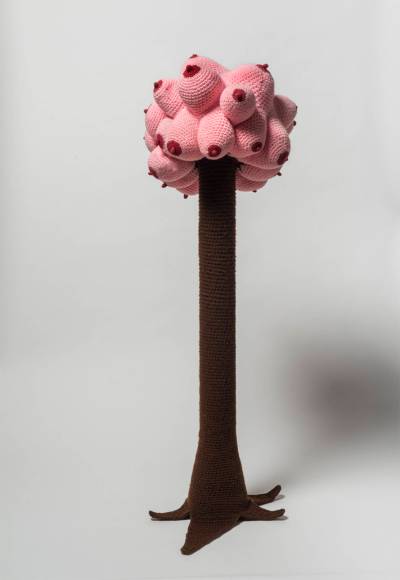
Phyllis Green. Boob Tree, 1975

(Yarn, wood. Collection of the Winnipeg Art Gallery; Acquired with funds from the Estate of Mr. and Mrs. Bernard Naylor, funds administered by The Winnipeg Foundation, 2014-128. Photo: Ernest Mayer.)

The year 1975 was designated International Women’s Year by the United Nations, and in celebration, the WAG staged the show Images of Women, which explored how women had historically been depicted, an impressive selection but by mostly male artists. Amid pushback from the community, Sharron Zenith Corne and Marian Yeo organized a second exhibition, Woman as Viewer, which challenged those portrayals by only featuring works by women. It was called the first Canadian exhibition of feminist art. American artist Phyllis Green’s Boob Tree, a four-foot-tall crochet sculpture of a cluster of breasts, adorned the exhibit posters, which were so popular they were snatched by passersby! The sculpture is playful and unsettling, re-appropriating the objectification of women’s bodies.

Read
2:01 AM CDT

New sci-fi/fantasy bookstore a welcome addition

Ben Sigurdson 5 minute read Preview

New sci-fi/fantasy bookstore a welcome addition

Ben Sigurdson 5 minute read Thursday, Aug. 6, 2026

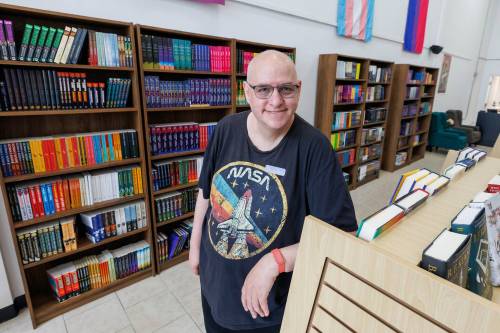
A new chapter has begun in Winnipeg’s literary landscape with the opening of science fiction and fantasy bookstore Other Places Books.

Located at 436 Graham Ave., the queer-owned and operated shop is the latest in a host of genre bookstores to have opened in the city over the last few years. In addition to longtime mainstay Whodunit? Mystery Bookstore (163 Lilac St.), the local scene now also features a horror bookstore (Raven’s End Books, which opened at 1859 Portage Ave. in 2024) and a shop focused on romance (Bound to Please, which opened at 995 McPhillips St. earlier this year).

The 900 titles currently in stock at Other Places, which opened Tuesday, span a range of sci-fi and fantasy sub-genres, with a particular focus on queer writers and storylines. The bookstore is the brainchild of Didi Chanoch, who moved to Winnipeg from Israel in 2025 after the Canadian federal government began offering work permits to those in Israel and Palestine looking to leave the area due to the conflict.

Winnipeg ended up on Chanoch’s radar in large part due to a more reasonable cost of living than other Canadian cities.

Read
Thursday, Aug. 6, 2026

Vibrant Norwood apartment garden a labour of love to honour green thumb’s late partner

David Sanderson 7 minute read Preview

Vibrant Norwood apartment garden a labour of love to honour green thumb’s late partner

David Sanderson 7 minute read 6:00 AM CDT

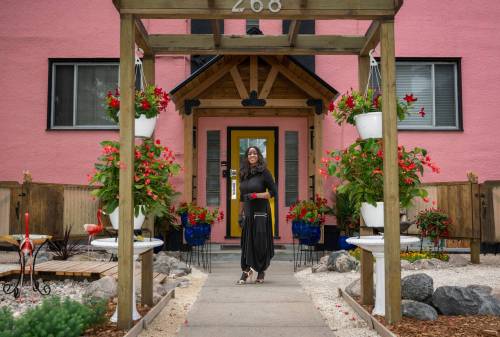
St. Vital resident Rob Duncan can’t pinpoint when he first noticed an award-winning garden blanketing the grounds of a two-storey St. Mary’s Road apartment block, near Coniston Street.

Perhaps he was on his way home from work and caught a glimpse of it out of the corner of his eye. Or maybe he was running errands in the Norwood Flats area and paused to admire the array of annuals, perennials and potted plants that extends from the block’s doorway to the front curb.

What Duncan does know for certain is that after spying the urban oasis, twice fêted in Take Pride Winnipeg’s annual Winnipeg in Bloom competition, he couldn’t unsee it.

“First of all, the pink building really stands out,” Duncan says, referring to the brightly painted California Apartments complex at 268 St. Mary’s Rd. “But then you have the pergola, the rock garden, the flowers and trees… a sea of colour on a very busy street.”

Read
6:00 AM CDT

Poilievre’s lips moving, but Canadians aren’t interested in what he’s saying

Tom Brodbeck 5 minute read Preview

Poilievre’s lips moving, but Canadians aren’t interested in what he’s saying

Tom Brodbeck 5 minute read Thursday, Aug. 6, 2026

Pierre Poilievre’s biggest political challenge right now isn’t Prime Minister Mark Carney’s popularity.

It’s the fact that he still seems to be campaigning against a political landscape that no longer exists.

More than a year after the 2025 federal election, the Conservative leader is still relying on the same message, the same themes and the same attacks that defined his party’s campaign before voters went to the polls.

And Canadians appear to be tuning it out.

Read
Thursday, Aug. 6, 2026

Sending the wrong message

Andrea Charron 4 minute read 2:01 AM CDT

The U.S. State Department has announced plans to close five overseas diplomatic posts approved by Congress: Douala, Cameroon (a branch office); St. George’s, Grenada (an embassy); Nagoya, Japan (a consulate); Medan, Indonesia (a consulate); and Winnipeg, Canada (a consulate).

All are located in countries that are partners or allies of the United States.

It is unusual for the United States to reduce its diplomatic footprint. With the exception of some retrenchment efforts during the Trump administration, Washington has generally viewed diplomacy as a force multiplier. Diplomacy is not simply a matter of authority and leverage. It requires sustained local engagement, relationships and presence.

Consulates and branch offices are not the same as embassies. They are smaller missions, headed by consuls or consuls general rather than ambassadors and often provide a more limited range of services. Yet they play a vital political, economic and cultural role, supporting both local populations and American citizens abroad.