Instagram launches test to make ‘like’ counts private for some Canadian users

Advertisement

Advertise with us

TORONTO - Instagram is launching a test in Canada this week that will make the "like" counts on posts private for some users in a purported effort to rein in competition for online clout, but experts caution the social media giant may have ulterior motives.

Read this article for free:


or

Already have an account? Log in here »

To continue reading, please subscribe:

Subscribe and receive a limited-edition Free Press branded hat or tote.

Digital Subscription

One year of digital access for only $205*

  • Enjoy unlimited reading on winnipegfreepress.com
  • Read the E-Edition, our digital replica newspaper
  • Access News Break, our award-winning app
  • Play interactive puzzles

*First annual payment billed as $205.00 + GST for one year. This annual subscription will automatically renew at $233.00 + GST every 52 weeks (10% off the regular annual price of $259.35). Offer available to new and qualified returning subscribers only. Cancel any time.

To continue reading, please subscribe:

Add Free Press access to your Brandon Sun subscription for only an additional

$1 for the first 4 weeks*

  • Enjoy unlimited reading on winnipegfreepress.com
  • Read the E-Edition, our digital replica newspaper
  • Access News Break, our award-winning app
  • Play interactive puzzles
Start now

*Your next Brandon Sun subscription payment will increase by $1.00 and you will be charged $17.95 plus GST for four weeks. After four weeks, your payment will increase to $24.95 plus GST every four weeks.

Hey there, time traveller!
This article was published 01/05/2019 (2656 days ago), so information in it may no longer be current.

TORONTO – Instagram is launching a test in Canada this week that will make the “like” counts on posts private for some users in a purported effort to rein in competition for online clout, but experts caution the social media giant may have ulterior motives.

A spokesman for Facebook, which owns Instagram, says a select group of Canadian users will see the number of likes and video views removed from their Instagram feeds, permalink pages and profiles.

Users involved in the test will not be able to see like counts — normally displayed beneath every photo and video — on other people’s posts, the spokesman said. The users can still click to see a list of people who liked a post but not the total number, and will have the option of seeing how many likes their own uploads have received, he said.

A feature which Instagram is testing is to show how users see
A feature which Instagram is testing is to show how users see "likes" is shown in a handout. Instagram is launching a test in Canada this week that will make the 'like' counts on posts private for some users. THE CANADIAN PRESS/HO-Instagram MANDATORY CREDIT

He said the move, which was first announced at Facebook’s annual developer conference, F8, is meant to encourage users to focus on the photos and videos being shared, rather than how many likes they receive.

“We don’t want Instagram to feel like a competition. We want to make it a less pressurized environment,” Adam Mosseri, head of Instagram, told F8 on Tuesday.

“We want people to worry a little bit less about how many likes they’re getting on Instagram, and spend a bit more time connecting with the people that they care about.”

The Facebook spokesman would not reveal how many people will be part of the test group, but said it would be business as usual for all other Canadian users. He said the feature is being introduced in Canada due to the high level of engagement among users compared to other countries.

The spokesman described the trial run as exploratory, but noted that Instagram doesn’t always roll out features it tests.

Richard Lachman, a professor in Ryerson University’s school of media, expressed doubt that the change will stick or be spread more widely.

Like counts feed into the human desire for social acceptance, said Lachman, serving as a quantifiable measure of one’s status among their peers.

While it’s hard to put that digital genie back in the bottle, Lachman said Instagram’s willingness to experiment may be a response to the growing body of research on the damaging effects of social media metrics on mental health.

“There’s sort of this performative aspect to likes, to consuming one another’s content, and there’s negative effects on our psychological well-being,” he said. “It’s like we’re constantly checking, ‘Am I loved? Do you like me? How much do you like me?'”

But even if Instagram takes steps to mitigate that harm, Lachman said the company’s priorities will remain the same: to make the platform as “addictive” as possible in order to bolster its bottom line.

“They’re not trying to make it perfectly healthy. They’re trying to get enough hook that it’s not … getting users up in arms, but (the company) still has to make money.”

Jaigris Hodson, an associate professor at Royal Roads University in Victoria who researches digital media, said Instagram may even have a financial incentive for concealing like counts from users.

Many Instagram influencers have managed to convert the social media currency of likes into cash through sponsored posts and partnerships, Hodson said. If Instagram claims a monopoly over like counts, it can monetize that data to the detriment of entrepreneurs, artists and other “mom-and-pop influencers” looking to leverage their digital reach.

“(The company says) they want it to be all about the photo and video, and that seems disingenuous to me,” said Hodson. “There are the people for whom seeing the likes might matter for their careers, and now Facebook has completely taken that away.”
Report Error Submit a Tip

More Stories

Federal government to build $267-M emergency research lab in Winnipeg

Chris Kitching 6 minute read Preview

Federal government to build $267-M emergency research lab in Winnipeg

Chris Kitching 6 minute read Wednesday, Aug. 5, 2026

The federal government says it will build a $267-million medical countermeasures laboratory in Winnipeg with the goal of preparing Canada for future pandemics or outbreaks.

Expected to open in 2033, the national site will help the country develop vaccines, therapeutics and diagnostic tools, Winnipeg Liberal MP Terry Duguid said.

“This is a big deal for our city and for our province, a big deal for life sciences in Canada,” he told reporters Wednesday. “This facility is going to help protect the nation and help protect the world.”

Ottawa said the site — to be located next to the National Microbiology Laboratory’s Canadian Science Centre for Human and Animal Health on Arlington Street, just north of William Avenue — draws on lessons learned during the COVID-19 pandemic.

Read
Wednesday, Aug. 5, 2026

Minago mining project under review with First Nation seeking funding options

Gabrielle Piché 5 minute read Preview

Minago mining project under review with First Nation seeking funding options

Gabrielle Piché 5 minute read 7:54 PM CDT

A MULTI-MILLION-DOLLAR mining project in northern Manitoba is under review as its First Nation owner undergoes mass restructuring.

“All options are on the table” for the Minago Critical Minerals Project, said Blake Russell, senior adviser to Norway House Cree Nation’s chief.

The First Nation, north of Lake Winnipeg, had a leadership change following a May election. Chief Season Roulette pledged that all the nation’s programs would be reviewed to ensure they’re in-budget and providing value.

Norway House bought the Minago project for $10 million in 2024. The mining venture spans a swath of land along Highway 6, south of Ponton and north of Grand Rapids.

Read
7:54 PM CDT

Walk on Portage Avenue reveals difficult present, some cause for optimism

Dan Lett 5 minute read Preview

Walk on Portage Avenue reveals difficult present, some cause for optimism

Dan Lett 5 minute read Updated: Yesterday at 3:23 PM CDT

On a recent visit back to Winnipeg, I got to witness the multitudes of Portage Avenue.

From my Airbnb on Hargrave Street, I had the opportunity to do quite a bit of walking on Portage Avenue, from Portage and Memorial all the way down to the recently opened intersection at Portage and Main.

Along the way, I saw it all: huge and dynamic construction projects, persistent urban decay and the occasional oasis of revitalization.

All in the space of 10 blocks.

Read
Updated: Yesterday at 3:23 PM CDT

Family hopes police alert will bring missing woman home

Morgan Modjeski 3 minute read Preview

Family hopes police alert will bring missing woman home

Morgan Modjeski 3 minute read Yesterday at 6:59 PM CDT

The family of Ashley Arason has made a desperate plea for her to come home.

The 41-year-old last had contact with her family on April 6, 2019, which was her 34th birthday.

“I’ve got a place for her,” said her older sister, Pamela Arason, through tears on Thursday. “She has a place to go, a home to come to.”

On Thursday, Winnipeg Police Service renewed the call for help from the public to solve the missing person case.

Read
Yesterday at 6:59 PM CDT

New sci-fi/fantasy bookstore a welcome addition

Ben Sigurdson 5 minute read Preview

New sci-fi/fantasy bookstore a welcome addition

Ben Sigurdson 5 minute read Yesterday at 4:46 PM CDT

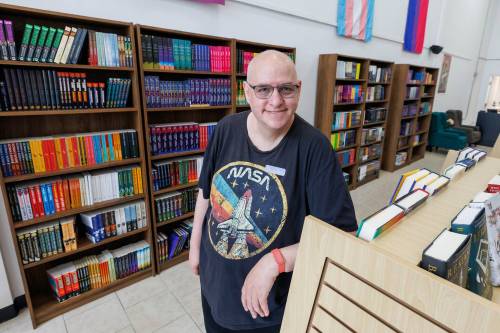
A new chapter has begun in Winnipeg’s literary landscape with the opening of science fiction and fantasy bookstore Other Places Books.

Located at 436 Graham Ave., the queer-owned and operated shop is the latest in a host of genre bookstores to have opened in the city over the last few years. In addition to longtime mainstay Whodunit? Mystery Bookstore (163 Lilac St.), the local scene now also features a horror bookstore (Raven’s End Books, which opened at 1859 Portage Ave. in 2024) and a shop focused on romance (Bound to Please, which opened at 995 McPhillips St. earlier this year).

The 900 titles currently in stock at Other Places, which opened Tuesday, span a range of sci-fi and fantasy sub-genres, with a particular focus on queer writers and storylines. The bookstore is the brainchild of Didi Chanoch, who moved to Winnipeg from Israel in 2025 after the Canadian federal government began offering work permits to those in Israel and Palestine looking to leave the area due to the conflict.

Winnipeg ended up on Chanoch’s radar in large part due to a more reasonable cost of living than other Canadian cities.

Read
Yesterday at 4:46 PM CDT

Chrysler refines Pacifica and Grand Caravan as buyers return to practical family hauler

Kelly Taylor 5 minute read Preview

Chrysler refines Pacifica and Grand Caravan as buyers return to practical family hauler

Kelly Taylor 5 minute read 3:00 AM CDT

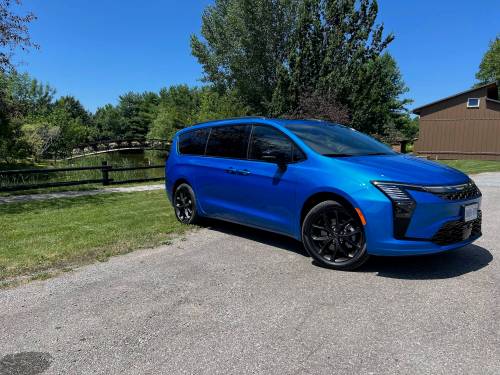
BURLINGTON, Ont. — The mighty minivan — relegated to the scrap heap by the rush to crossovers and SUVs — is making a comeback, and Chrysler hopes to lead the way with its top-selling, Canadian-made Grand Caravan and Pacifica models.

While many manufacturers — Mazda, Ford, GM, Hyundai and Nissan — abandoned the once-popular family hauler, Chrysler has continued to play in the segment since it was launched by Lee Iacocca in 1983.

For 2027, the Pacifica gets a cosmetic refresh and the Grand Caravan is a holdover, but new this year are price savings of up to $7,200, Chrysler product planner Mike Szymkiewicz told journalists assembled here for the launch of the two vehicles.

“It’s primarily that we’re taking less margin, but we’re also adding content,” he said. “So less margin but we hope more volume.”

Read
3:00 AM CDT