Survey suggests Canadians more uncertain about cannabis in wake of legalization
Advertisement
Read this article for free:
or
Already have an account? Log in here »
To continue reading, please subscribe:

Digital Subscription
One year of digital access for only $205*
- Enjoy unlimited reading on winnipegfreepress.com
- Read the E-Edition, our digital replica newspaper
- Access News Break, our award-winning app
- Play interactive puzzles
*First annual payment billed as $205.00 + GST for one year. This annual subscription will automatically renew at $233.00 + GST every 52 weeks (10% off the regular annual price of $259.35). Offer available to new and qualified returning subscribers only. Cancel any time.
To continue reading, please subscribe:
Add Free Press access to your Brandon Sun subscription for only an additional
$1 for the first 4 weeks*
- Enjoy unlimited reading on winnipegfreepress.com
- Read the E-Edition, our digital replica newspaper
- Access News Break, our award-winning app
- Play interactive puzzles
*Your next Brandon Sun subscription payment will increase by $1.00 and you will be charged $17.95 plus GST for four weeks. After four weeks, your payment will increase to $24.95 plus GST every four weeks.
Read unlimited articles for free today:
or
Already have an account? Log in here »
Hey there, time traveller!
This article was published 08/05/2019 (2705 days ago), so information in it may no longer be current.
HALIFAX – A new survey suggests Canadians have become less accepting of recreational cannabis since 2017, despite legalization last October.
Researchers at Dalhousie University say they’re surprised by the findings, which also suggests a high degree of stigma persists.
While the majority of Canadians still support legalization, the research suggests support has dropped to 50.1 per cent from 68.6 per cent in 2017.
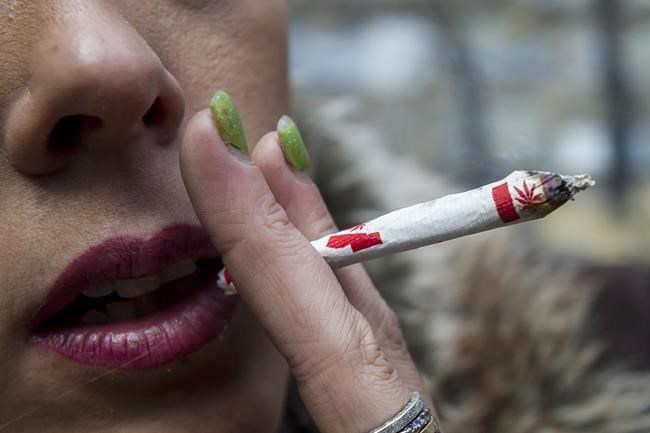
Meanwhile, the number of people who neither agree nor disagree with legalization appears to have increased to 20.3 per cent from 6.9 per cent.
Lead author Sylvain Charlebois says respondents also reported concern over the risks cannabis pose to children, young adults and pets who may have more access to cannabis products.
The survey questioned 1,051 adults over four days in April and has an estimated margin of error 3.1 per cent, 19 times out of 20. It’s a followup to a 2017 survey on attitudes surrounding cannabis before legalization. The findings were made public Thursday.
“I think the study actually points to the fact that Canadians are still cannabis-illiterate, to a certain extent,” Charlebois says by phone from Halifax.
“A lot has to do with messaging, how governments have been engaging with the public. The focus has been on distribution, of course, and keeping Canadians protected, I guess, but I would say that Health Canada really hasn’t done a good job in explaining to people what is cannabis, what cannabinoids are.”
Then there are the media stories about children being hospitalized after inadvertently ingesting cannabis, and reports about pets falling ill from encounters with weed.
“The majority of Canadians are still in agreement with the legalization of marijuana but not as much,” he says. “There are more and more people unsure whether this is a good idea.”
Stigma appears to remain high.
Almost one-fifth, or 18.8 per cent, of respondents said they were concerned about being seen buying legal cannabis, and 26.2 per cent wouldn’t want coworkers to know they use recreational cannabis. Meanwhile, 33.8 per cent said they wouldn’t want to work with a regular recreational user.
Still, significant numbers have used weed, and have even cooked with it.
The survey found that 37 per cent of respondents use cannabis, and out of those people, 35 per cent used it daily, which is about 13 per cent of the general population.
Almost half, or 46 per cent, said they use it primarily for medicinal reasons, while 32 per cent said it was recreational, 10 per cent cited social reasons, 7 per cent said wellness and 4 per cent said their reason was spiritual.
A recent StatCan study suggests cannabis use is on the rise.
About 5.3 million, or 18 per cent of Canadians aged 15 years and older, reported using cannabis in January, February and March of 2019 — higher than the 14 per cent who reported using just one year earlier, before legalization. The data also found that first-time users nearly doubled during that period, to 646,000 Canadians.
When asked in the Dalhousie study if they ever cook with cannabis at home, 82.5 per cent said never, while 17.4 per cent — or 182 people — said they’ve cooked with cannabis at least once in their lives.
Researchers found just 2.3 per cent cook regularly with weed.
“People think that cannabis or edibles are all about getting high and not getting healthy but I actually do see a little trend in terms of Canadians seeing cannabis as a healthy product,” says Charlebois, adding, however, there hasn’t been a big attitude shift.
“Edibles will eventually be socially normalized but it will take probably much longer than what companies expect.”
The survey also hints at caution around edibles.
At 25.5 per cent, fewer people were willing to order a dish with cannabis at a restaurant, down from 38.5 per cent in 2017. And 15.8 per cent were willing to give up an alcoholic drink in order to have a cannabis-infused dish at a restaurant, down from 26.6 per cent in 2017.
The other issue at play is the black market, says Charlebois, noting it has not gone away. The data found 60.4 per cent of cannabis users continued to use their previous supplier after legalization, with the top reasons being price, quality and convenience.
“Perhaps some of these people were expecting higher quality products at an affordable price but we are seeing some indication that the legal price is much higher than the illegal one in many markets.”
A recent StatCan study found cannabis use on the rise.
About 5.3 million, or 18 per cent of Canadians aged 15 years and older, reported using cannabis in January, February and March of 2019 — higher than the 14 per cent who reported using just one year earlier before legalization.
The data also found that new users nearly doubled during that period, to 646,000 Canadians trying cannabis for the first time.
— By Cassandra Szklarski in Toronto
Note to readers: This is a corrected story. A previous version misstated date of legalization in the first paragraph.