Therapist finds teenagers benefit from outdoor sessions
Advertisement
Read this article for free:
or
Already have an account? Log in here »
To continue reading, please subscribe:

Digital Subscription
One year of digital access for only $205*
- Enjoy unlimited reading on winnipegfreepress.com
- Read the E-Edition, our digital replica newspaper
- Access News Break, our award-winning app
- Play interactive puzzles
*First annual payment billed as $205.00 + GST for one year. This annual subscription will automatically renew at $233.00 + GST every 52 weeks (10% off the regular annual price of $259.35). Offer available to new and qualified returning subscribers only. Cancel any time.
To continue reading, please subscribe:
Add Free Press access to your Brandon Sun subscription for only an additional
$1 for the first 4 weeks*
- Enjoy unlimited reading on winnipegfreepress.com
- Read the E-Edition, our digital replica newspaper
- Access News Break, our award-winning app
- Play interactive puzzles
*Your next Brandon Sun subscription payment will increase by $1.00 and you will be charged $17.95 plus GST for four weeks. After four weeks, your payment will increase to $24.95 plus GST every four weeks.
Read unlimited articles for free today:
or
Already have an account? Log in here »
Hey there, time traveller!
This article was published 01/06/2019 (2680 days ago), so information in it may no longer be current.
Therapist Jennifer Udler was in the middle of a 50-minute session with a patient when it started to rain. Instead of being in her office, however, she and her teenage patient were outside, walking and talking about anxiety and stress — so they got soaked. But the torrent had an upside. When they made it back indoors, Udler said, “Hey, look at us! We’re fine! We’re a little wet, but, oh well! We got through it! Now you can use that next time you have anxiety before and during an event.” This kind of insight is key to her practice.
Udler, a clinical social worker whose practice focuses on adolescents, has been a therapist for 20 years. For most of that time, she practised in a traditional office. She was running and training with a running club when she noticed how easy it was for her running partners to open up about their problems, and one of the women she was running with suggested she combine therapy with walking. After doing some research, in 2013, Udler founded Positive Strides Therapy, where she conducts sessions while walking outdoors, in nature.
“When somebody asks me if I specialize in walking therapy, I say, ‘No, that’s how I practise,’” Udler said. “I specialize in cognitive behavioural therapy, in mindfulness, in family systems theory. Walking in the park is just where I practise.”
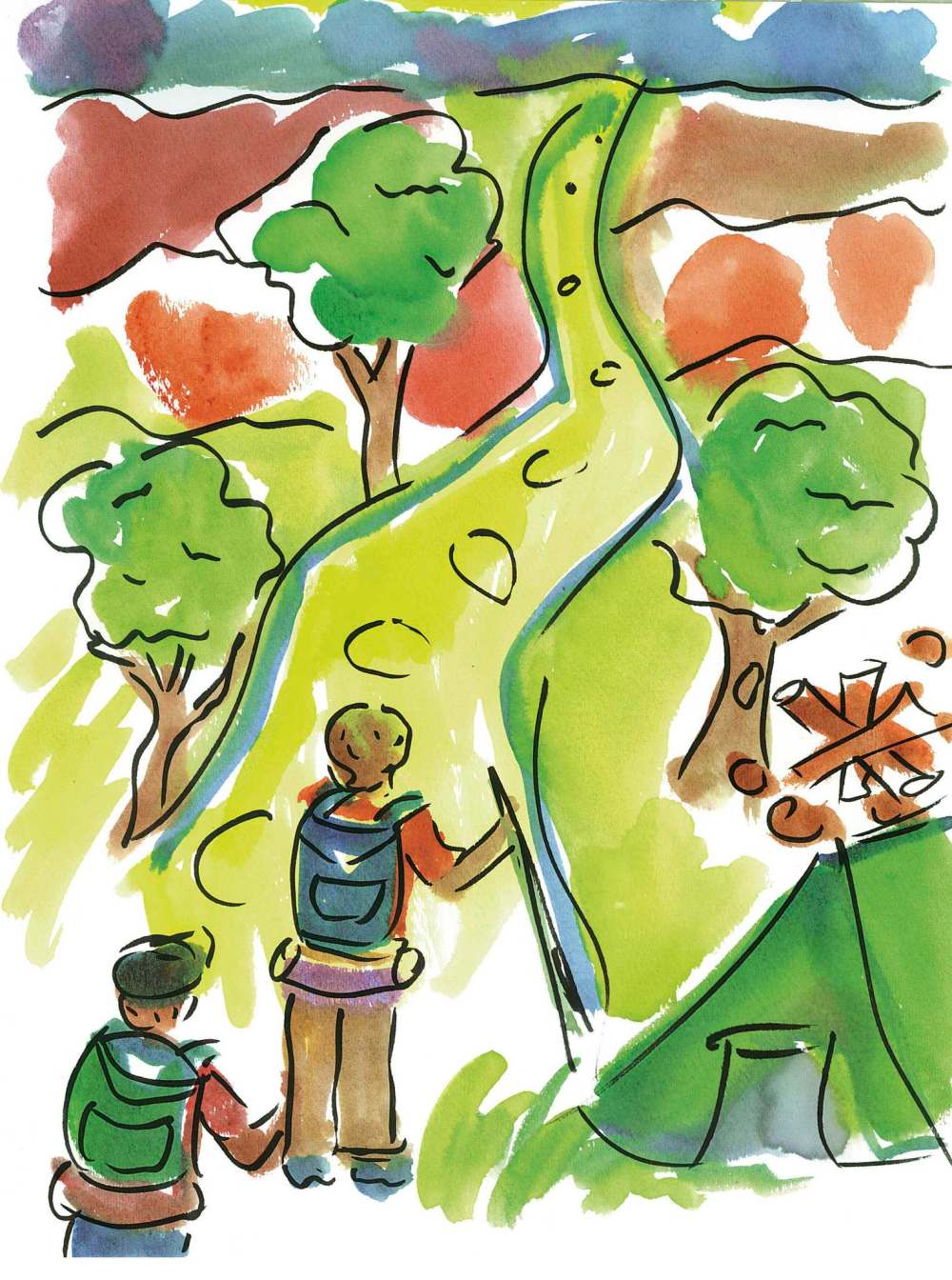
Udler conducts all of her sessions outdoors and in all kinds of weather. If it’s icy, or if the weather forecast predicts thunder and lightning, she’ll reschedule. The only time Udler meets clients from behind a desk is when she has an initial consultation with parents.
Though there is a large body of research supporting the separate therapeutic benefits of talk therapy, nature and exercise for mental health, there is little research on the effect of all three together. C. Vaile Wright, a licensed psychologist and director of research and special projects at the American Psychological Association, said that’s because walking therapy is an emerging therapeutic approach. But, she added, there has been “real increasing interest in recent years in walk-and-talk therapy,” which may lead the APA to develop research-informed guidelines and training opportunities.
According to Wright, one of the challenges is addressing issues of privacy and confidentiality. But Udler said that when she discusses establishing a plan for maintaining her clients’ privacy when they’re out in public, few teens and parents are concerned about this. She sees this as a positive signal that the stigma of therapy is fading. “It’s the idea that you don’t have to hide in therapy or duck into a building so no one sees you meeting with a therapist.”
Despite the lack of formal research, Udler believes strongly in the benefits of walk-and-talk therapy for teens. She finds that teens are more comfortable walking alongside her rather than sitting face to face. (Having face-to-face conversations with teens can be awkward in any situation, she added, noting that many parents find that they have better talks side by side in the car, while the parent is driving.) And, she said, being in a park or in nature helps in other ways: “With teenagers, it’s helpful to have visuals.”
Tammie Singer Rosenbloom, who practises at Minnetonka Counseling in Minnetonka, Minn., and is the founder of Walk Talk Therapy, also said she finds side-by-side communication is especially effective for teens, many of whom bring their dogs with them for their session. “Teens that have trouble sitting still, and those that are anxious and depressed, find they feel better after walking and talking,” she wrote to me. “The movement helps them process feelings and thoughts more clearly.”
Amanda Stemen, who works as an outdoor and mindful movement therapist in Los Angeles, wrote that although she hasn’t conducted research, “I’ve noticed a significant reduction in symptoms in terms of intensity and duration when comparing my outdoor clients versus in office/video conference clients. Teenagers seem to have an easier time opening up in a more organic way being outdoors and moving as well.”
Udler said that when a teen is seeking strategies to manage stress and anxiety, walking — literally “moving forward” — as the teen sheds anxiety can be helpful. “We’ll be talking about ‘moving forward’ as we are actually moving forward on the path, building muscle memory of how they can move forward and leave the anxiety behind.”
For example, Udler was treating a teen who was struggling with the death of his father, along with feelings of rejection and trauma. “He’d use our therapy session to talk about his memories, and then he’d say, ‘I’m going to leave the difficult ones on the path behind us.’ Using the path, or the woods next to the path, as a place to put the unpleasant memories allowed him to let go of them. He felt a sense of relief after doing this.”
And at times when the grief was so heavy that it was hard for the teen to move forward, Udler would use mindfulness exercises to bring him back to the present. It’s especially easy to access mindfulness in walk-and-talk therapy outdoors, she said, with prompts such as, “What do I smell? I smell flowers. What do I feel? I feel the mist of the rain. What do I hear? I hear the birds.” This can bring a teen back and give them a tool to use on their own.
Though many of Udler’s patients participate in school sports and are naturally drawn to the idea of walk-and-talk therapy because it’s physical, she also sees teens who are not getting enough exercise, which could be contributing to their anxiety, she said. Just the physical act of walking can help ease their stress.
Of course, walk-and-talk therapy might not be right for every teen or remain the right approach. For example, though Stemen thinks anyone can benefit from walking therapy, she also told me she believes there are some issues for which “some in-office work is more helpful, particularly around trauma, in order to create a safe and secure place to process it.” Wright said it’s critical that the therapist continually evaluate whether the therapy is helping a patient progress.
And outdoor walking therapy doesn’t just benefit teens. Udler said the adults in her practice welcome the humanizing effect of taking therapy outdoors and are typically hoping to multitask by incorporating their therapy session with exercise. “The power dynamic shifts in a walking session versus an office setting,” Udler said. “If you’re the client and you’re coming in to see me in my office, it’s my space. It’s my chair. You have your chair. It’s my decorations. It’s my family photos. Outside, it’s our space.”
— Washington Post