

Some common garden plants might help keep bugs away
Advertisement
Read this article for free:
or
Already have an account? Log in here »
To continue reading, please subscribe:
Digital Subscription
One year of digital access for only $75*
- Enjoy unlimited reading on winnipegfreepress.com
- Read the E-Edition, our digital replica newspaper
- Access News Break, our award-winning app
- Play interactive puzzles
*Billed as $5.77 plus GST every four weeks. After 52 weeks, price increases to the regular rate of $19.95 plus GST every four weeks. Offer available to new and qualified returning subscribers only. Cancel any time.
Monthly Digital Subscription
$4.99/week*
- Enjoy unlimited reading on winnipegfreepress.com
- Read the E-Edition, our digital replica newspaper
- Access News Break, our award-winning app
- Play interactive puzzles
*Billed as $19.95 plus GST every four weeks. Cancel any time.
To continue reading, please subscribe:
Add Free Press access to your Brandon Sun subscription for only an additional
$1 for the first 4 weeks*
- Enjoy unlimited reading on winnipegfreepress.com
- Read the E-Edition, our digital replica newspaper
- Access News Break, our award-winning app
- Play interactive puzzles
*Your next Brandon Sun subscription payment will increase by $1.00 and you will be charged $17.95 plus GST for four weeks. After four weeks, your payment will increase to $24.95 plus GST every four weeks.
Read unlimited articles for free today:
or
Already have an account? Log in here »
Hey there, time traveller!
This article was published 06/08/2019 (2482 days ago), so information in it may no longer be current.
If mosquitoes, gnats, black flies and no-see-ums are driving you buggy, then consider cozying up to some lavender, marigolds or basil. Scientists question their overall effectiveness, but many fragrant ornamental flowers and herbs grown around the home have properties that can repel insects.
Insect repellents are divided into two primary chemical classes: natural and synthetic. How effective they are depends on the targeted insects and the host plants’ essential oils.
“Plant-derived insect repellents are very volatile compounds that work but exhaust themselves very quickly,” said Walter Leal, a biochemist and distinguished professor at the University of California, Davis. “They’re good, but they should last for a longer time.”
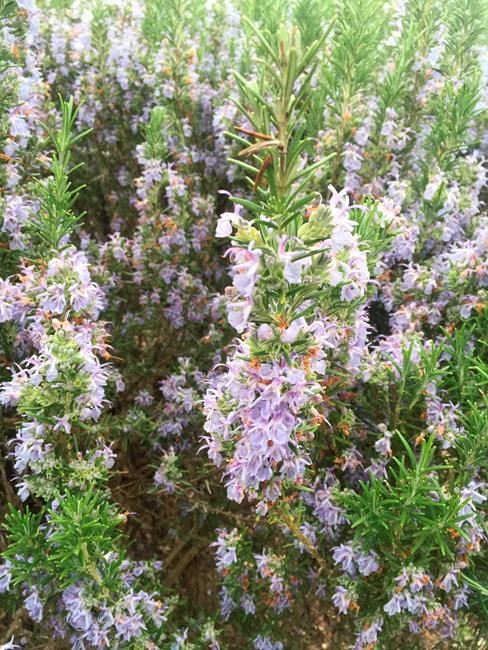
The most frequently cited plant-based repellents include the oil of lemon eucalyptus (OLE) and oil of citronella.
DEET (N,N-Diethyl-meta-toluamide), on the other hand, is a strong synthetic repellent considered the yardstick for protection from insects, but often is confused with DDT, the insecticide blamed for so many environmental problems, Leal said.
“DEET is not an insecticide, and it’s a chemical of low volatility so it lasts longer,” Leal said. “People are not interested in reapplying something every few hours.”
If you do plan to try natural repellents, then the top herbs for which there is scientific evidence of mosquito deterrence are lemongrass, lemon balm, bee balm and lemon thyme, said Gary Bachman, an Extension horticulturist with Mississippi State University.
Rosemary, lavender, basil, mint, citronella and catnip also may help discourage insect pests, he said.
Ornamental flowers believed to be effective at deterring troublesome bugs include marigolds, alliums, chrysanthemums, petunias and geraniums.
There are “a lot of plants that if you rub against them release vital oils,” Bachman said. “I think that’s probably of some benefit in repelling insects. But if you just have those plants sitting in a pot, I don’t think there’s much chance of keeping troublesome insects away. You have to put some effort into it, like rubbing crushed plant material onto your clothing or skin.”
Bachman cautions, however, that some of the volatile oils produced by those plants could be irritating.
Most insect repellents designed for use on the skin must be registered by the U.S. Environmental Protection Agency before they can be sold in stores. EPA registration means the repellent has been tested and approved for human safety and is effective when used according to label directions.
Synthesized OLE is an effective insect deterrent although “pure” oil of eucalyptus is not recommended. “It has not undergone validated testing for safety and effectiveness and is not registered with EPA as an insect repellent,” the Centers for Disease Control says.
Insects can be more than annoying. Some can be downright dangerous, transmitting viruses (yellow fever, encephalitis, dengue fever, West Nile disease), bacteria (Lyme disease, typhus) or parasites (malaria, sleeping sickness). Bug sprays generally are the first line of defence for long-lasting protection.

Does that mean ornamental plants and herbs containing natural insect repellents are practical additions for residential settings?
“Botanical repellents are a nice idea, but I don’t think they’re the best solution for discouraging insects,” Bachman said.

___
Online:
For more about botanical insect repellants, see this review from the National Institutes of Health:
https://www.ncbi.nim.nih.gov/pmc/articles/PMC3059459/
You can contact Dean Fosdick at deanfosdick@netscape.net