Frustration rising over lack of access to coronavirus tests
Advertisement
Read this article for free:
or
Already have an account? Log in here »
To continue reading, please subscribe:

Digital Subscription
One year of digital access for only $205*
- Enjoy unlimited reading on winnipegfreepress.com
- Read the E-Edition, our digital replica newspaper
- Access News Break, our award-winning app
- Play interactive puzzles
*First annual payment billed as $205.00 + GST for one year. This annual subscription will automatically renew at $233.00 + GST every 52 weeks (10% off the regular annual price of $259.35). Offer available to new and qualified returning subscribers only. Cancel any time.
To continue reading, please subscribe:
Add Free Press access to your Brandon Sun subscription for only an additional
$1 for the first 4 weeks*
- Enjoy unlimited reading on winnipegfreepress.com
- Read the E-Edition, our digital replica newspaper
- Access News Break, our award-winning app
- Play interactive puzzles
*Your next Brandon Sun subscription payment will increase by $1.00 and you will be charged $17.95 plus GST for four weeks. After four weeks, your payment will increase to $24.95 plus GST every four weeks.
Read unlimited articles for free today:
or
Already have an account? Log in here »
Hey there, time traveller!
This article was published 03/03/2020 (2412 days ago), so information in it may no longer be current.
WASHINGTON – Frustration over lack of access to coronavirus testing boiled over Tuesday as Trump administration officials sought to reassure skeptical lawmakers the nation will have the capacity for 1 million tests within days.
“I’m hearing from people who are sick, who want to get tested, and don’t know where to go,” Sen. Patty Murray, D-Wash., told senior administration officials at a hearing. Her state has seen a cluster of deaths among patients in a nursing home, and Murray called the situation “unacceptable,” adding that “families deserve to know when testing is going to scale up.”
Delays and missteps have put the U.S. behind other nations conducting thousands of tests.
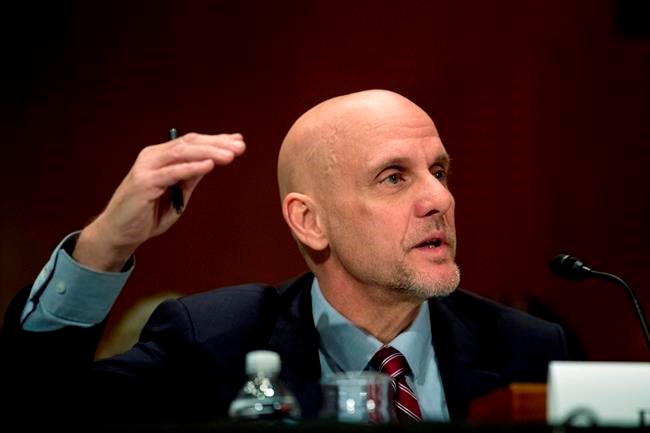
The head of the U.S. Food and Drug Administration, Dr. Stephen Hahn, responded that the FDA has been working with a private company to get as many as 2,500 test kits out to labs by the end of the week. Each kit should allow a lab to run about 500 tests, he said. That would work out to 1.25 million tests.
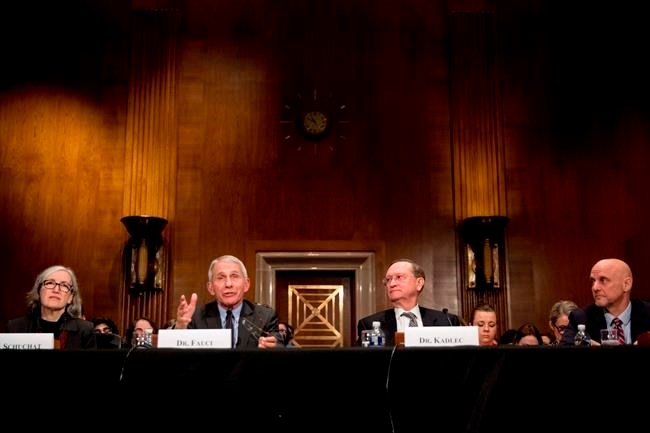
But when senators on the Health, Education, Labor and Pensions committee pressed on whether the government will meet its self-imposed deadline, health officials avoided making hard promises.
“I am optimistic but I want to remain humble,” said Dr. Anne Schuchat of the Centers for Disease Control and Prevention.
Independent experts said they can’t assess whether the Trump administration will meet its goal, but they commended health agencies for the effort.
“The U.S. public and private sectors have the capacity to produce and distribute a large volume of tests, and I hope they meet the goal,” said Dr. Tom Frieden, the former CDC chief and current president of Resolve to Save Lives, a non-profit that works to prevent epidemics.
The CDC is clearly moving in the right direction, said John Auerbach, president of the Trust for America’s Health, calling the goal “admirable and ambitious.”
Nancy Foster, of the American Hospital Association, said the group recommends that people who have possible symptoms of the virus contact their doctor or hospital before visiting a clinic. That will enable staff to meet the person outside and take steps to prevent exposure to other patients.
The virus has infected more than 90,000 people worldwide and killed more than 3,100. But the U.S. has trailed other countries in rolling out tests, because of problems with its test kits and because the CDC initially limited the number of eligible people.
In January, the CDC said it had developed a test kit and sent it to state and big city public health labs, so they could test more people. But most of the kits proved to be faulty, providing inconclusive results to test samples that should have tested positive.
The problem was blamed on one of three chemical reagents used in the testing, and the CDC moved to fix it.
In a call with reporters on Tuesday, one CDC official acknowledged contamination was one possible explanation, but not the only one. Dr. Nancy Messonnier refused to say more, except that the agency was ensuring test kits being sent out now “meet the high quality standards that we and FDA hold ourselves to.”
Whatever the reason for the earlier problem, only about a half dozen state and local public health labs had fully functional kits as of early last week. Late last week, the CDC said labs could go ahead and do testing with just two of the reagents. As of Tuesday, 54 state and local labs were able to do tests, according to the Association of Public Health Laboratories.
That will be a small part of the total testing that should be coming online, officials said.
The CDC only recently broadened testing criteria. It initially had advised testing people who had travelled to China and had fever and certain other symptoms, or their close contacts. It now says testing is appropriate if such symptoms exist and other respiratory illnesses have been ruled out, even if no source of possible exposure has been identified.
The count in the U.S. has begun to grow rapidly in the last several days, after more labs started testing and the eligibility grew. More than 100 U.S. cases have been reported, and at least nine deaths.
The new virus is a member of the coronavirus family that can cause colds or more serious illnesses such as SARS and MERS.
The virus can cause fever, coughing, wheezing and pneumonia. Health officials think it spreads mainly from droplets when an infected person coughs or sneezes, similar to how the flu spreads.
Officials are advising people to take steps to avoid infection with coronavirus or other respiratory infections like colds or the flu, including washing hands with soap and water and avoiding close contact with people who are sick.
Most people get only mild illnesses and many have recovered.
Meanwhile, acting Department of Homeland Security Secretary Chad Wolf told lawmakers Tuesday that the agency closed a facility in King County, Washington, because an employee became ill after visiting a family member at a Kirkland nursing home where five of the U.S. deaths occurred.
He did not specify the type of facility or say how many employees work there. The employees were told to work from home for 14 days, and all were told to “self-quarantine” during that time.
___
Stobbe reported from New York.
___
The Associated Press Health and Science Department receives support from the Howard Hughes Medical Institute’s Department of Science Education. The AP is solely responsible for all content.

Advertisement Advertise With Us
Advertisement Advertise With Us