Officials weigh infection control against risk of isolation at nursing homes
Advertisement
Read this article for free:
or
Already have an account? Log in here »
To continue reading, please subscribe:

Digital Subscription
One year of digital access for only $205*
- Enjoy unlimited reading on winnipegfreepress.com
- Read the E-Edition, our digital replica newspaper
- Access News Break, our award-winning app
- Play interactive puzzles
*First annual payment billed as $205.00 + GST for one year. This annual subscription will automatically renew at $233.00 + GST every 52 weeks (10% off the regular annual price of $259.35). Offer available to new and qualified returning subscribers only. Cancel any time.
To continue reading, please subscribe:
Add Free Press access to your Brandon Sun subscription for only an additional
$1 for the first 4 weeks*
- Enjoy unlimited reading on winnipegfreepress.com
- Read the E-Edition, our digital replica newspaper
- Access News Break, our award-winning app
- Play interactive puzzles
*Your next Brandon Sun subscription payment will increase by $1.00 and you will be charged $17.95 plus GST for four weeks. After four weeks, your payment will increase to $24.95 plus GST every four weeks.
Read unlimited articles for free today:
or
Already have an account? Log in here »
Hey there, time traveller!
This article was published 10/03/2020 (2396 days ago), so information in it may no longer be current.
Public health officials are urging people take extra infection control steps around older Canadians most at risk of developing COVID-19 complications, with the death of a Vancouver senior providing fresh imperative for vigilance in long-term care facilities.
News that the man in his 80s had died over the weekend coincided with assurances by various provinces that the well-being of nursing home residents was paramount.
Ontario’s health minister announced ramped-up screening and testing procedures, while Nova Scotia outlined a two-week waiting period for any out-of-country traveller who wanted to visit a nursing home.
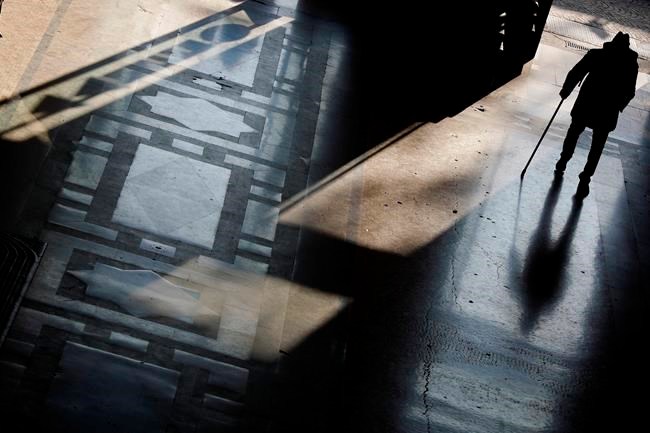
Laura Tamblyn Watts, policy director at the National Initiative for Care of the Elderly (NICE), welcomed additional precautions but was wary of restrictions that “can be just as damaging” to a population prone to social isolation.
“It is such a vulnerable population to many forms of illness but in particular this COVID-19,” acknowledged Tamblyn Watts.
“We will certainly see increased protocols, I think across the board, for long-term care. The challenge, however, is when you have older people who are at risk of social isolation — it’s very upsetting for them to be in isolation in many instances. And if you have people with cognitive impairment, they may not understand why no one is coming to visit them.”
Ontario’s health ministry said Monday it was introducing “active surveillance” in which staff, volunteers, visitors and residents who come and go would be screened for symptoms and asked about travel history.
In addition, any specimens sent for standard respiratory testing will automatically be tested for COVID-19, said a provincial memo to the long-term care homes sector.
Chief medical officer of health Dr. David Williams stressed the need for the general public to take precautions that include washing hands frequently to protect the most vulnerable residents.
“If people are casual about their travel protection, casual about their contact protection and are less than vigilant on staying home when they’re ill and that kind of thing, then we can put that population at risk,” he said.
“By being vigilant, by keeping at that, you can protect them.”
Doris Grinspun, chief executive officer of the Registered Nurses’ Association of Ontario, said Tuesday that she wanted assurances from the province that retirement homes would be held to the same guidelines.
“It is my understanding from the ministry that they meant this to be also for retirement homes and we have asked that to be in writing,” said Grinspun.
She also repeated her organization’s call for increased nursing-home staff, noting each facility typically has just one or two registered nurses, and three registered practical nurses.
“The rest — 75 per cent of our workforce in nursing homes — are personal support workers (and) as much as they try to do what they can do, they don’t have the same expertise and knowledge and training as RNs or RPNs. And then on top of that, we don’t have the right numbers in terms of each one of these categories of workers,” said Grinspun.
“Nursing homes are extremely strained as we speak, and have been for years and years and years.”
In Nova Scotia, the province’s chief medical officer of health drew attention to new national screening protocols for the novel coronavirus and stressed that those who travel out-of-country monitor themselves for two weeks.
Dr. Robert Strang also announced that nursing home visitors who have travelled outside the country in the last 14 days would not be allowed entry, a measure the president of the Nova Scotia Nurses’ Union doubted could be monitored or enforced.
“I wouldn’t see that as the role of the nursing staff,” says Janet Hazelton, who instead called for guidance on what to do if a resident contracts COVID-19.
“We don’t have the staff in long-term care that we have in acute care. We don’t have the cleaning staff… We have no security. So if security was more who they thought would police this, there is no in security long-term care.”
There are currently no confirmed cases of COVID-19 in Nova Scotia.
In British Columbia, provincial health officer Dr. Bonnie Henry says people should continue seeing their loved ones in nursing homes, but must take preventative measures.
“We want to have enhanced screening of visitors who are coming in and out of long-term care (homes) so if you are going to visit someone don’t go with a large group, go one by one. Only go to visit the person you are there to see. If you have any concerns about respiratory illnesses stay away.”
— With files from Allison Jones in Toronto, Keith Doucette in Halifax, and Camille Bains in Vancouver.