More than a dance craze: It’s a global sensation
#JerusalemaDanceChallenge goes viral
Advertisement
Read this article for free:
or
Already have an account? Log in here »
To continue reading, please subscribe:

Digital Subscription
One year of digital access for only $205*
- Enjoy unlimited reading on winnipegfreepress.com
- Read the E-Edition, our digital replica newspaper
- Access News Break, our award-winning app
- Play interactive puzzles
*First annual payment billed as $205.00 + GST for one year. This annual subscription will automatically renew at $233.00 + GST every 52 weeks (10% off the regular annual price of $259.35). Offer available to new and qualified returning subscribers only. Cancel any time.
To continue reading, please subscribe:
Add Free Press access to your Brandon Sun subscription for only an additional
$1 for the first 4 weeks*
- Enjoy unlimited reading on winnipegfreepress.com
- Read the E-Edition, our digital replica newspaper
- Access News Break, our award-winning app
- Play interactive puzzles
*Your next Brandon Sun subscription payment will increase by $1.00 and you will be charged $17.95 plus GST for four weeks. After four weeks, your payment will increase to $24.95 plus GST every four weeks.
Read unlimited articles for free today:
or
Already have an account? Log in here »
Hey there, time traveller!
This article was published 14/10/2020 (2121 days ago), so information in it may no longer be current.
Somebody more famous than me once said you should dance like nobody is watching.
That’s easy for me to do because, when I dare to dance, I make (bad word) sure no one is watching, because I am to dancing what a hippopotamus is to pole vaulting.
Out of journalistic fairness, I will confess that I once danced with several hundred people watching — in 2010, at the Dancing with Celebrities fundraiser in support of the Society for Manitobans with Disabilities, I performed a painfully awkward version of the rumba.
But, with the exception of events meant to help worthy charities, I am not one for moving my feet in an organized manner — or at least I wasn’t until a couple of weeks ago.
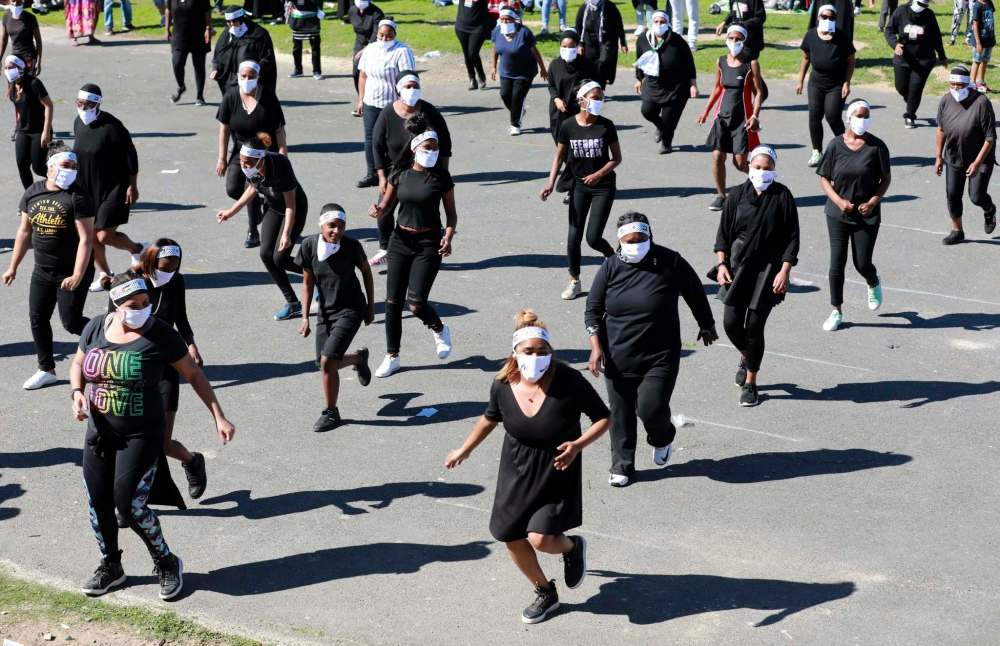
That’s when, by sheer accident, I stumbled on a video of a South African song called Jerusalema, a kind of gospel-style pop anthem infused with tribal rhythms that has become a global earworm and spawned an international dance challenge that is threatening to break the internet.
Today, when I park myself in front of the home computer to churn out a column, I first feel compelled to watch the official Jerusalema music video on YouTube — which now has well over 180 million views, if you can imagine that — at which point I will hop out of my office chair and, with only our two dogs looking on, hop around the dining room with a pained — albeit joyful — expression on my face.
If you are unaware of this highly infectious song, then I am slightly ashamed of you because what we are talking about here is something the world has never seen — a tune sung in the Zulu language that has become the most Shazammed song in history, topping the list of searches for the popular music identification app.
It’s hard not to liken this tune to COVID-19, in the sense it is phenomenally infectious — it has been streamed more than 96 million times on Spotify and sparked a seemingly irresistible dance phenomenon that has lapped the globe, jumping borders and becoming an uplifting antidote for the pandemic weary, everyone from health-care workers to celebrities and world leaders.
It all began in late 2019 when South African DJ Master KG wrote a new track, then called a friend, Nomcebo Zikode, a longtime backup singer who was thinking of leaving the music business, and demanded she come up with some lyrics.
After hearing the track a few times, the words came to her, a plea in Zulu for God to hear her prayer and take her away from the troubles of the world, a message that resonated amid the tragedies of the coronavirus pandemic. “Jerusalem is my home/Guide me/Take me with You/Do not leave me here,” Nomcebo hauntingly sings in the opening lines.
It quickly became a huge hit in South Africa, but the match was lit for the rest of the world in February, amid the lockdown, when Fenomenos do Semba, an Angolan dance studio, posted a video of its members dancing to the track while carrying plates of food and eating.
Their casual air while eating and dancing in a modest neighbourhood struck a chord and the #JerusalemaDanceChallenge was born — an online foot-tapping frenzy that has seen health-care staff, prison officials, monks and nuns, Latino dancers, fire crews, lawyers, cops, school students and countless others posting videos of themselves moving and grooving to the beat.
There have been Jerusalema dances from the Catholic Archdiocese of Montreal and a group of novice nuns in rural South Africa, among others. In September, one Swedish Lutheran church announced it would be closing services with a surprise song — “So let us not only go, but also dance in peace,” a voice announced, as the track began to pump from the church’s speakers.
The dance craze got a ringing endorsement from South Africa’s president as a sign of the country’s positive spirit and courage in the face of the pandemic. “We are the nation that is taking the world by storm with the #JerusalemaChallenge, as young and old in France, the U.K., Jamaica, Angola and even in Palestinian East Jerusalem itself are getting in on the craze,” President Cyril Ramaphosa boasted last month.
Personally, I couldn’t care less that celebrities like soccer star Cristiano Ronaldo and singer Janet Jackson have posted their love for this phenomenon; what got this dance-averse columnist openly tapping his pudgy toes while hunkering down at home was watching an online video in which staff at Zimbabwe’s Wild Is Life animal sanctuary — decked out in green uniforms, gumboots and pink ball caps — gyrated to the song along with assorted elephants, giraffes and other wild animals.

Roxy Danckwerts, the founder of Wild Is Life, told reporters they used their smartphones to record the now-viral video in a bid to ease lockout boredom during a second wave of the virus.
“We didn’t expect that to happen at all, that it would go viral. I hope it will spread further and get more people involved in the challenge. But really, it is about — for us particularly — it is about spreading awareness about animals and the sentience of animals and the importance of animals for national heritage, basically for our children and for our country,” she said.
If a baby elephant can shake his trunk to the #JerusalemaDanceChallenge and make the world a better place, then why can’t you?
Go ahead and give it a try, Winnipeg. See, your feet are already tapping in time to the music… OK, sorry, I wasn’t supposed to be watching, was I?
doug.speirs@freepress.mb.ca