2nd study testing a COVID-19 antibody drug has a setback
Advertisement
Read this article for free:
or
Already have an account? Log in here »
To continue reading, please subscribe:

Digital Subscription
One year of digital access for only $205*
- Enjoy unlimited reading on winnipegfreepress.com
- Read the E-Edition, our digital replica newspaper
- Access News Break, our award-winning app
- Play interactive puzzles
*First annual payment billed as $205.00 + GST for one year. This annual subscription will automatically renew at $233.00 + GST every 52 weeks (10% off the regular annual price of $259.35). Offer available to new and qualified returning subscribers only. Cancel any time.
To continue reading, please subscribe:
Add Free Press access to your Brandon Sun subscription for only an additional
$1 for the first 4 weeks*
- Enjoy unlimited reading on winnipegfreepress.com
- Read the E-Edition, our digital replica newspaper
- Access News Break, our award-winning app
- Play interactive puzzles
*Your next Brandon Sun subscription payment will increase by $1.00 and you will be charged $17.95 plus GST for four weeks. After four weeks, your payment will increase to $24.95 plus GST every four weeks.
Read unlimited articles for free today:
or
Already have an account? Log in here »
Hey there, time traveller!
This article was published 30/10/2020 (2129 days ago), so information in it may no longer be current.
For the second time, a study testing an experimental antibody drug for COVID-19 has been paused to investigate a possible safety issue in hospitalized patients.
Regeneron Pharmaceuticals Inc. said Friday that independent monitors had recommended placing on hold enrolment of the most severely ill patients — those who need intense oxygen treatment or breathing machines — because of a potential safety problem and unfavourable balance of risks and benefits.
The study can continue to test the two-antibody drug combo in hospitalized patients who need little or no extra oxygen, the monitors said. Other studies in mild or moderately ill people also are continuing.
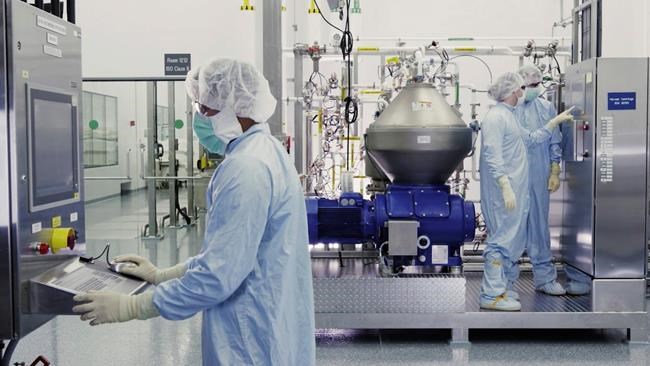
Antibodies are proteins the body makes when an infection occurs; they attach to a virus and help it be eliminated. But it can take several weeks for the most effective ones to form. The experimental drugs aim to help immediately, by supplying concentrated versions of one or two antibodies that worked best against the coronavirus in lab and animal tests.
Earlier this month, a different group of monitors recommended pausing enrolment in a U.S. National Institutes of Health study testing an Eli Lilly antibody drug to investigate a possible safety issue in hospitalized patients. On Monday, the NIH said no safety problem had been verified, but they stopped the study because the drug didn’t seem to work in that situation.
“These kinds of results are informing us about the timing of the benefit,” said Dr. Myron Cohen, a University of North Carolina virologist who advises the government on COVID-19 treatments.
Tests in animals suggest that antibody drugs work best when given early in infection to lower the amount of virus, he said. Once someone is very sick, the drugs may not help, but it’s too soon to know if that’s the case, he said.

Doctors already know that timing can matter when it comes to COVID-19 treatments. Studies suggest that dexamethasone and other steroids can lower the risk of death when given to very sick patients to tamp down an over-active immune system, but they may be harmful for those who are only mildly ill.
Lilly and Regeneron have asked the Food and Drug Administration to allow emergency use of their experimental antibody drugs for mild and moderately ill patients who don’t need hospitalization. President Donald Trump got the Regeneron drug when he was sickened earlier this month.
Regeneron said it would share Friday’s advice from independent monitors with the FDA and leaders of a separate study in the United Kingdom testing its drug in hospitalized patients.
___
The Associated Press Health and Science Department receives support from the Howard Hughes Medical Institute’s Department of Science Education. The AP is solely responsible for all content.