Canada approves first HIV self-test in long-awaited move to reduce screening barriers
Advertisement
Read this article for free:
or
Already have an account? Log in here »
To continue reading, please subscribe:

Digital Subscription
One year of digital access for only $205*
- Enjoy unlimited reading on winnipegfreepress.com
- Read the E-Edition, our digital replica newspaper
- Access News Break, our award-winning app
- Play interactive puzzles
*First annual payment billed as $205.00 + GST for one year. This annual subscription will automatically renew at $233.00 + GST every 52 weeks (10% off the regular annual price of $259.35). Offer available to new and qualified returning subscribers only. Cancel any time.
To continue reading, please subscribe:
Add Free Press access to your Brandon Sun subscription for only an additional
$1 for the first 4 weeks*
- Enjoy unlimited reading on winnipegfreepress.com
- Read the E-Edition, our digital replica newspaper
- Access News Break, our award-winning app
- Play interactive puzzles
*Your next Brandon Sun subscription payment will increase by $1.00 and you will be charged $17.95 plus GST for four weeks. After four weeks, your payment will increase to $24.95 plus GST every four weeks.
Read unlimited articles for free today:
or
Already have an account? Log in here »
Hey there, time traveller!
This article was published 03/11/2020 (2129 days ago), so information in it may no longer be current.
Federal regulators have approved the first HIV self-test in Canada in a long-awaited move that experts say is critical to diagnosing people who don’t know they have the virus.
Health Canada granted a medical device licence on Monday to a one-minute, finger-prick blood test manufactured by Richmond, B.C.-based bioLytical Laboratories.
While researchers and community organizers have welcomed the move, some say regulatory approval only marks the first step toward an accessible HIV self-testing strategy.
Canada follows dozens of other countries that have adopted HIV self-testing technology, which has been endorsed by the World Health Organization as a tool to reduce the number of undetected infections.
As of 2016, there were more than 63,000 Canadians living with HIV, one in seven of whom were unaware of their condition, according to estimates by the Public Health Agency of Canada. The agency has reported a rise in HIV diagnoses in Canada in recent years, counting 2,561 new cases in 2018. In contrast, other G7 countries have largely seen a downward trend in infections.
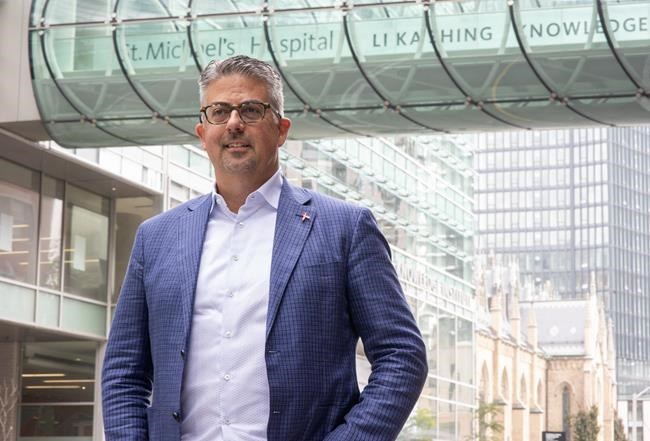
Dr. Sean Rourke, who led a clinical trial that regulators assessed as part of their review of bioLytical’s self-test kit, said the approval could be the “missing piece” to reaching the roughly 9,000 people in Canada with undiagnosed HIV, allowing them to access life-extending treatment and preventing further transmission of the disease.
“It opens up some incredible doors,” said Rourke, a scientist with the Centre for Urban Health Solutions at St. Michael’s Hospital in Toronto.
“We’ve had for a number of years traditional opportunities for testing … but self-testing allows people to test at home or where they live.”
According to bioLytical, the INSTI HIV Self Test is more than 99 per cent accurate compared to traditional laboratory results. The question was whether people would understand how to use it, said Rourke.
He helped launch a study in August 2019 involving roughly 700 participants at four sites across Ontario, Quebec and Manitoba to assess whether users could follow the test’s instructions and accurately interpret the results.
The findings, which are being reviewed for publication, suggest that more than 92 per cent of participants successfully performed the “critical” steps to complete the test, which involves drawing a drop of blood and mixing it with solutions.
BioLytical’s chief scientific officer Michelle Zaharik said the research indicates the self-test is accessible to people of all backgrounds in all parts of Canada. The device’s instructions have been tweaked to further reduce room for user error, she said.
Zaharik said the next step will be sitting down with stakeholders and government officials to determine a strategy to bring the product to market.
The diagnostics company is also working with U.S. regulators in hopes of making the device available on both sides of the border, said Zaharik.
While she couldn’t pinpoint a price, Zaharik said bioLytical is aiming for the self-test to be “affordable and accessible” for every Canadian.
Rourke said the rollout couldn’t come soon enough as the COVID-19 crisis has heightened the hurdles that prevent people from getting tested. Many clinics have closed during the crisis, compounding concerns about access to health services, travel and wait times and the stigmatization of high-risk behaviours, he said.
According to roughly 300 front-line providers he surveyed in August and September, the pandemic has cut access to clinical HIV testing services nearly in half.
He’s teaming up with community organizations to launch a telehealth program in January that will distribute 60,000 free self-tests and connect people with care providers.
But Rourke said Canada needs to establish a national self-testing strategy for the technology to help fill the gaps in the health system that have left many populations without access to HIV testing.
“There needs to be a stronger voice that it’s not acceptable in Canada, when you have the science that we have for HIV and the treatments, that we don’t do what we can to make sure everyone has access to them.”
Dr. Nitika Pant Pai, a researcher at the McGill University Health Centre, said if other countries’ rollouts are any indication, users end up paying a premium when there’s only one HIV self-test on the shelves.
In the U.S., an over-the-counter oral HIV self-test can retail for as much as US$40, said Pant Pai, noting this price point would be out of reach for many of the marginalized populations at higher risk for HIV.
To remove potential financial barriers, Pant Pai said government authorities will either need to subsidize the cost of self-test kits, or approve more devices to make the market more competitive.
“This is a historic first, but then we are looking forward to pushing more self-tests and point-of-care tests so more people can get access to it,” she said.
Doris Peltier, a publicly disclosed HIV-positive Anishinaabe advocate who works with the Canadian Aboriginal AIDS Network, said she’s hopeful self-tests will alleviate some of the stigma Indigenous people face in getting screened for HIV. But she said the strategy will only work if it’s coupled with a commensurate effort to provide culturally sensitive care.
Even if they know their status, systemic discrimination in health care can prevent Indigenous people with HIV from accessing treatment, said Peltier, so authorities need to build a “safety net” to support those who may fall through the cracks.
Francisco Ibanez-Carrasco, a community-based researcher at University of Toronto, cautions that innovation tends to bring about unforeseen complications.
For self-testing to be effective, it needs to be integrated into a broader campaign to educate community groups and the public at large about how these devices should be used, and how they’re linked to other advances in HIV care.
But as the pandemic strains public health resources, Ibanez-Carrasco wonders if HIV self-testing will get the public messaging push it needs.
“It’s like any other tool, like a pill, or even when we have a vaccination for COVID,” he said. “It still needs to be wrapped around health promotion … so people understand what to do with it.”
This report by The Canadian Press was first published Nov. 3, 2020.