Clay, sand, silt, loam: How different soils affect gardens

Advertisement

Advertise with us

By now, you probably know what kind of soil you have out there in your “back 40.” If planting that rose bush brought up wads of gummy goo, you know to call it clay. If instead you scooped up gritty particles that didn’t clump together, you have the other extreme, a sand.

Read this article for free:

or

Already have an account? Log in here »

To continue reading, please subscribe:

Subscribe and receive a limited-edition Free Press branded hat or tote.

Digital Subscription

One year of digital access for only $205*

  • Enjoy unlimited reading on winnipegfreepress.com
  • Read the E-Edition, our digital replica newspaper
  • Access News Break, our award-winning app
  • Play interactive puzzles

*First annual payment billed as $205.00 + GST for one year. This annual subscription will automatically renew at $233.00 + GST every 52 weeks (10% off the regular annual price of $259.35). Offer available to new and qualified returning subscribers only. Cancel any time.

To continue reading, please subscribe:

Add Free Press access to your Brandon Sun subscription for only an additional

$1 for the first 4 weeks*

  • Enjoy unlimited reading on winnipegfreepress.com
  • Read the E-Edition, our digital replica newspaper
  • Access News Break, our award-winning app
  • Play interactive puzzles
Start now

*Your next Brandon Sun subscription payment will increase by $1.00 and you will be charged $17.95 plus GST for four weeks. After four weeks, your payment will increase to $24.95 plus GST every four weeks.

Hey there, time traveller!
This article was published 11/05/2021 (1914 days ago), so information in it may no longer be current.

By now, you probably know what kind of soil you have out there in your “back 40.” If planting that rose bush brought up wads of gummy goo, you know to call it clay. If instead you scooped up gritty particles that didn’t clump together, you have the other extreme, a sand.

Both extremes in soil have their advantages and shortcomings.

These soils act the way they do mostly because of the size of the particles that make them up. Sand particles are relatively large (by definition from 2- to 5-hundredths of a millimeter across). At the larger end of this range, you can easily see them with your naked eye and feel them between your fingers. Clay particles are very small (by definition less than 2-thousandths of a millimeter across).

Photo caption: This undated photo shows a shovelful of soil in New Paltz, N.Y. Good care, mostly by regularly adding plenty of organic materials and avoiding compaction, results in a soil with many pore spaces, some to retain water and some for air. (Lee Reich via AP)

IT’S ALL ABOUT PORES

Tiny clay particles have tiny spaces between them — small enough to draw in water and cling to it by capillary action. That can be a bad thing this time of year, when you’re likely waiting for the soil to dry enough to become crumbly for planting, or anytime if there’s not enough pore space open for roots to get air. Don’t let clay soil get too dry before planting, though, or it becomes rock-hard.

The way clay slurps up and holds water makes it a good thing as summer weather turns dry. Some of that water, though, is held so tightly that even roots cannot get at it.

In sandy soils, the larger spaces don’t hold water. This makes for pleasant digging in spring mud season, but has plants gasping for water in dry summer weather.

Another asset to many kinds of clay particles is that they are negatively charged on their surface. That means that positively charged plant nutrients like potassium and calcium can latch onto those clay particles instead of being washed below the roots by rainfall or watering.

Sand particles are uncharged, letting plant food just wash right through and leaving these soils naturally infertile.

THE CURE-ALL

You can cure the ills of either clay or sandy soils in basically the same way: with plenty of organic matter. That includes compost, manure, leaves, peat moss, straw, hay, grass clippings, wood chips, and anything else that is or once was living.

As these materials decompose and feed microbes, a witches’ brew of natural compounds is created that affects a soil’s physical, nutritional and biological properties — all for the better. Sandy soils become more spongy so they hold water better, and charged so they retain nutrients. Gums form that stick clay particles together into larger units with larger spaces between them, from which excess water can drain away and let in air.

Be careful about tilling sandy soils. They already have plenty of air and charging them with more causes organic matter to “burn away” too quickly. And be careful about treading or driving on clay soils; compaction, especially when such soils are wet, breaks down those aggregated particles, creating a mass of small particles and pores.

Most soils, of course, are not all sand or all clay. They are a mix of different-size particles that might also include silt, which is intermediate in size between sand and clay. Silt particles make a soil feel silky.

The ideal soil is not one that is predominantly sand, silt, or clay, but one that has all these particles in amounts that let each express itself. The result is a range of pore sizes, some to hold water and some to hold air. Such soils — the holy grail to gardeners — are called loams.

It is neither practical, wise nor necessary to improve any soil by hauling in material to change the particle sizes. All soils though, even loams, benefit greatly from regular additions of organic matter.

___

http://www.leereich.com/blog. He can be reached at garden@leereich.com.
Report Error Submit a Tip

More Stories

Federal government to build $267-M emergency research lab in Winnipeg

Chris Kitching 6 minute read Preview

Federal government to build $267-M emergency research lab in Winnipeg

Chris Kitching 6 minute read Updated: Yesterday at 4:42 PM CDT

The federal government says it will build a $267-million medical countermeasures laboratory in Winnipeg with the goal of preparing Canada for future pandemics or outbreaks.

Expected to open in 2033, the national site will help the country develop vaccines, therapeutics and diagnostic tools, Winnipeg Liberal MP Terry Duguid said.

“This is a big deal for our city and for our province, a big deal for life sciences in Canada,” he told reporters Wednesday. “This facility is going to help protect the nation and help protect the world.”

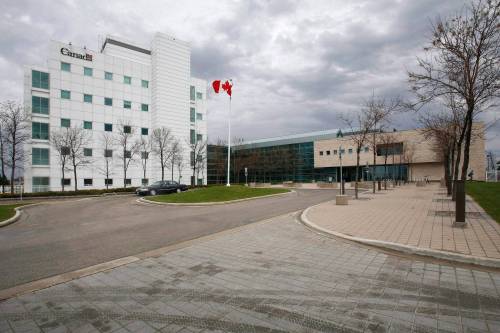
Ottawa said the site — to be located next to the National Microbiology Laboratory’s Canadian Science Centre for Human and Animal Health on Arlington Street, just north of William Avenue — draws on lessons learned during the COVID-19 pandemic.

Read
Updated: Yesterday at 4:42 PM CDT

Homegrown grub: Resto turns to the Leaf for freshest ingredients

AV Kitching 4 minute read Preview

Homegrown grub: Resto turns to the Leaf for freshest ingredients

AV Kitching 4 minute read Tuesday, Aug. 4, 2026

The term “eat local” has taken on a whole new meaning at Gather Craft Kitchen and Bar, where the journey from plot to plate is measured in footsteps rather than miles.

Head chef Mike Licharson has expanded the restaurant’s focus on local sourcing by incorporating fruit and vegetables grown in The Leaf’s biomes and outdoor kitchen garden into his menu.

Bananas from the tropical biomes star in his banana-bread French toast and accompanying banana compote. Leeks, braised slowly and paired with Manitoba-grown beluga lentils, and Swiss chard — which takes the place of grape leaves in Licharson’s play on classic meze dolmades, a nod to the chef’s Greek-Ukrainian-Irish heritage — are both grown in the outdoor kitchen garden.

The park’s produce complements the restaurant’s other locally sourced ingredients, Licharson says.

Read
Tuesday, Aug. 4, 2026

U of M researchers studying ‘digital legacy planning’ before death

Maggie Macintosh 6 minute read Preview

U of M researchers studying ‘digital legacy planning’ before death

Maggie Macintosh 6 minute read Yesterday at 6:10 PM CDT

A team of researchers at the University of Manitoba wants adults to take the cloud they leave behind into special consideration when they envision heaven and their afterlife.

Read
Yesterday at 6:10 PM CDT

Transit driver stabbed with syringe by passenger

Tyler Searle 3 minute read Preview

Transit driver stabbed with syringe by passenger

Tyler Searle 3 minute read Updated: Yesterday at 9:16 PM CDT

A Winnipeg Transit driver is recovering in hospital after a passenger stabbed him in the leg with a syringe while riding the bus early Wednesday, the Amalgamated Transit Union says.

The union said the incident occurred shortly before 1 a.m. while the operator was stopped in the northbound lanes of Isabel Street, near William Avenue. A female passenger reached around the driver’s safety shield and stabbed the driver twice before getting off the bus.

The driver was taken to the Seven Oaks Hospital in stable condition, where he is undergoing treatment and further testing, union president James Van Gerwen said in an interview.

“We spoke to the member. He is doing OK, but he is still in the hospital and he is scared — as anybody would be,” Van Gerwen said.

Read
Updated: Yesterday at 9:16 PM CDT

Asian supermarket T&T to open at Polo Park

Gabrielle Piché 5 minute read Preview

Asian supermarket T&T to open at Polo Park

Gabrielle Piché 5 minute read Updated: 4:30 PM CDT

Live seafood, more than 150 varieties of baked bread and rows of Asian produce are being promised for CF Polo Park — in two years time.

Read
Updated: 4:30 PM CDT

Canad Inns puts Portage Avenue hotel, MET, office building ‘connected campus’ up for sale

Gabrielle Piché 4 minute read Preview

Canad Inns puts Portage Avenue hotel, MET, office building ‘connected campus’ up for sale

Gabrielle Piché 4 minute read Yesterday at 5:57 PM CDT

Downtown entrepreneurs are watching with wary eyes as a prominent hotel and event centre hits the market.

Read
Yesterday at 5:57 PM CDT