

Out of the rubble
Popular murder-mystery game Clue has its roots in the destruction of the Second World War
Advertisement
Read this article for free:
or
Already have an account? Log in here »
To continue reading, please subscribe:
Digital Subscription
One year of digital access for only $1.44 a week*
- Enjoy unlimited reading on winnipegfreepress.com
- Read the E-Edition, our digital replica newspaper
- Access News Break, our award-winning app
- Play interactive puzzles
*Billed as $5.77 plus GST every four weeks. After 52 weeks, price increases to the regular rate of $19.95 plus GST every four weeks. Offer available to new and qualified returning subscribers only. Cancel any time.
To continue reading, please subscribe:
Add Free Press access to your Brandon Sun subscription for only an additional
$1 for the first 4 weeks*
- Enjoy unlimited reading on winnipegfreepress.com
- Read the E-Edition, our digital replica newspaper
- Access News Break, our award-winning app
- Play interactive puzzles
*Your next Brandon Sun subscription payment will increase by $1.00 and you will be charged $17.95 plus GST for four weeks. After four weeks, your payment will increase to $24.95 plus GST every four weeks.
Read unlimited articles for free today:
or
Already have an account? Log in here »
Hey there, time traveller!
This article was published 26/06/2021 (1798 days ago), so information in it may no longer be current.
The philosopher Carl Jung once said that “In all chaos there is a cosmos.”
For Anthony and Elva Pratt, who lived in Birmingham, England, during the 1940s, chaos was simply an everyday occurrence. Birmingham was one of Britain’s most industrial areas and a prime target of the German air force during the Second World War. The Luftwaffe continuously bombed the city in an attempt to destroy the many factories that made tanks and military equipment for the allied forces.
Over time, the Blitz turned Birmingham into a city of fire, rubble, hysteria and disorder. Every morning the Pratts would find their way through the destruction in order to report to work in a military factory for the day. Even though they were resigned to their fate, they decided to create something in spite of it — a board game whose popularity has survived until this very day. The game is Cluedo or, as it is known in the North American market, Clue.

Anthony Pratt was actually a musician by trade. He got the idea for the game from his evenings spent playing piano in hotels where murder mystery games were a regular form of entertainment. Actors and hotel guests would play characters in a plot that involved the fictitious murder of one the guests. The setting was often a mansion with many sprawling rooms, and the party had to cleverly put together clues in order to solve the mystery. This, along with Elva’s love for detective fiction from writers such as Agatha Christie, would become the perfect inspiration for a board game adaptation.
Stuck at home and driven by boredom, they decided to create something that would offer them an emotional escape, war be damned. At night, they would huddle over a kitchen table that was illuminated by candle light and create a prototype out of pen and paper. Their aim was to create a game that would play out like a murder investigation, similar to the novels they both enjoyed so much.
The primary challenge was to create a mechanism that would offer a different solution to the crime in every game. After all it was supposed to be a murder-mystery and not a predictable outcome. This, of course, has become the very reason this game has survived for so many decades. Like all popular board games, it offers a different outcome every time it’s played. What would be the fun otherwise? Mathematically, there are 324 possible outcomes to a game of Clue.
The board itself depicts nine rooms inside a country house or mansion, connected by hallways. There are six characters, each a potential suspect, and six weapons that might have been the cause of death of the victim. The goal of the game is to find out which three cards (one each of a character, weapon and room) are hidden in the solution envelope. The remaining 18 cards are dealt out to the players. The trick is to find out which cards your opponents are holding before they do the same of you. Players roll the dice, move tokens through the hallways and offer a “suggestion” upon entering a room. The other players, in clockwise fashion, disprove a suggestion by privately revealing one named card to the active player. As the game progresses, players check off more and more suspected cards until the final three remain. Whoever is able to deduct the correct cards first wins. Most editions of the game today allow for three to six players.
Anthony and Elva originally named the game Murder at Tudor Close. The game was eventually pitched to the British publisher Waddingtons, who changed it to the made-up word Cluedo — a mashup of “clue” and “Ludo” (which was the name for Parcheesi in England). In 1948 the game was presented to Waddingtons’ American partners, Parker Brothers, who changed the name to Clue.
Because of a shortage of paper in a postwar world, the game was not actually published until 1949. Today more than 200 million copies have sold worldwide. It has inspired a 1985 movie and even a musical, and has served as the basis of countless pop culture references. Who hasn’t heard the line “Colonel Mustard in the library with a candlestick”? It earned its spot in the National Toy Hall of Fame in 2017.

Not bad for an idea that was born amid rubble and destruction. Luckily the Pratts were able to witness their brainchild taking flight. Elva died in 1990 and Anthony in 1994, leaving an eternal gift to the game-playing world.
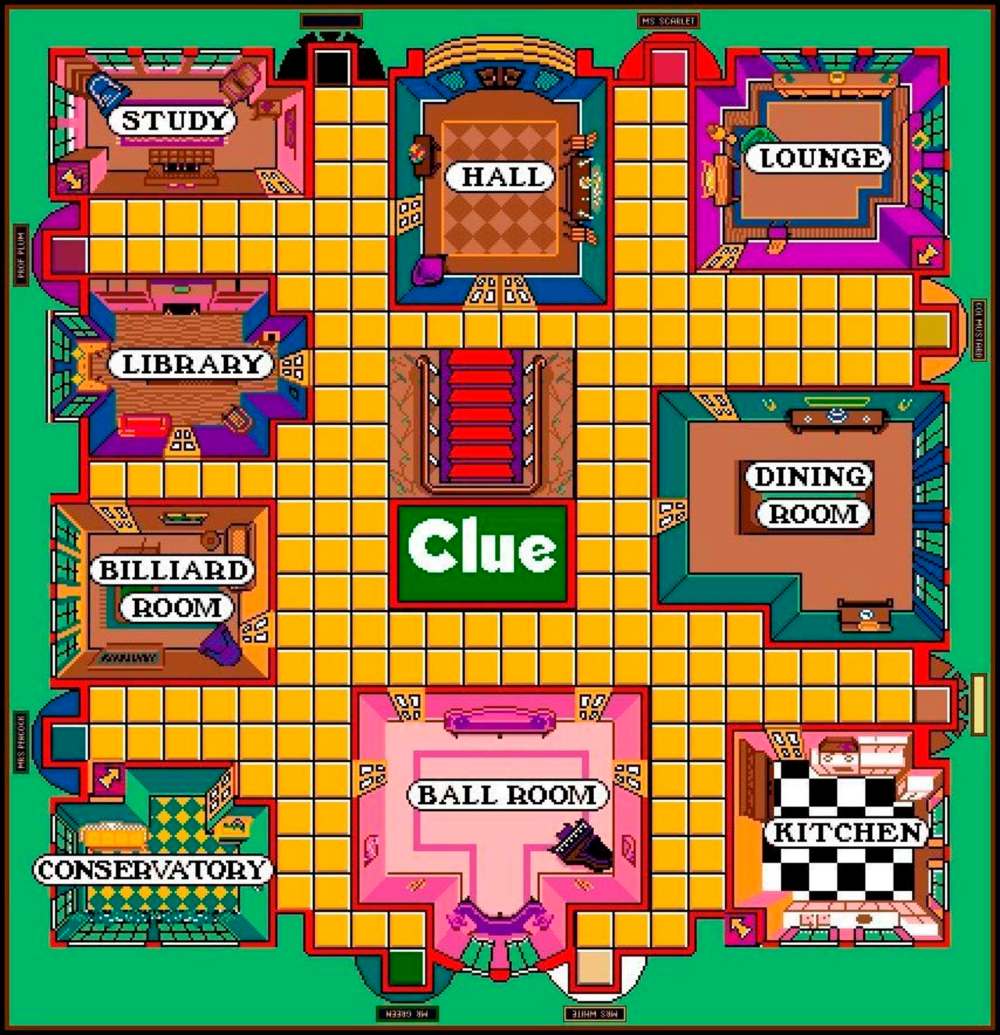
Almost 80 years later, Clue is still as popular as ever — and for good reason. Unlike other games of a similar era, Clue presents a very elegant mechanism that is both timeless and flawless in its simplicity. It still holds its charm next to many of the more modern titles of the whodunit genre. It has also spawned an endless array of adoptions, from Harry Potter Clue to The Simpson Clue to The Golden Girls Clue, all of them offering a little bit of variation that’s often worth exploring.
The history of Clue is an amazing testimony that there is cosmos in chaos. Sometimes the most beautiful and enjoyable things can come out of humanity’s most challenging times. I do hope that you will have a chance to enjoy the mystery of it all.
Olaf Pyttlik is a Winnipeg board-game enthusiast and co-owner of Across the Board Game Café. In a regular column, he looks at the renaissance of board games and shares games ideas for families and friends of all ages. Email him at olaf@acrosstheboardcafe.com.