‘The truth has been told’: Indigenous leaders call for Canada Day reflection
Advertisement
Read this article for free:
or
Already have an account? Log in here »
To continue reading, please subscribe:

Digital Subscription
One year of digital access for only $205*
- Enjoy unlimited reading on winnipegfreepress.com
- Read the E-Edition, our digital replica newspaper
- Access News Break, our award-winning app
- Play interactive puzzles
*First annual payment billed as $205.00 + GST for one year. This annual subscription will automatically renew at $233.00 + GST every 52 weeks (10% off the regular annual price of $259.35). Offer available to new and qualified returning subscribers only. Cancel any time.
To continue reading, please subscribe:
Add Free Press access to your Brandon Sun subscription for only an additional
$1 for the first 4 weeks*
- Enjoy unlimited reading on winnipegfreepress.com
- Read the E-Edition, our digital replica newspaper
- Access News Break, our award-winning app
- Play interactive puzzles
*Your next Brandon Sun subscription payment will increase by $1.00 and you will be charged $17.95 plus GST for four weeks. After four weeks, your payment will increase to $24.95 plus GST every four weeks.
Read unlimited articles for free today:
or
Already have an account? Log in here »
Hey there, time traveller!
This article was published 29/06/2021 (1878 days ago), so information in it may no longer be current.
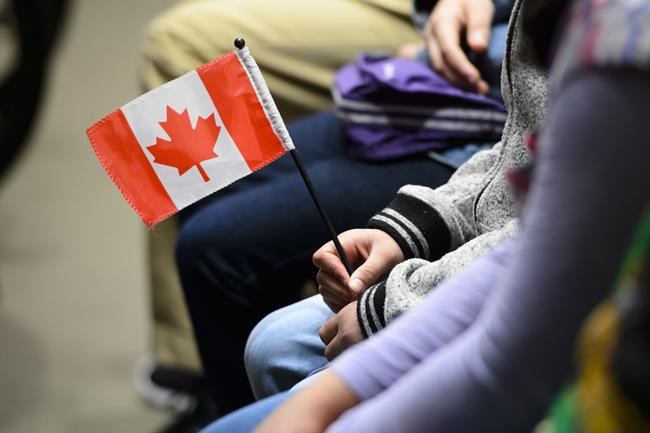
It will be a muted Canada Day in many parts of the country as grief and anger over the discovery of hundreds of unmarked graves at former residential schools have made it hard for many Canadians to stomach the usual patriotic pomp of July 1.
Rather than fireworks, parades and performances, several municipalities say they will mark the national holiday with reflection and solidarity. But Indigenous leaders, advocates and scholars say that’s just the start of broad efforts needed to reframe Canada Day as a reminder of the country’s dark past and present, and what it means to be Canadian.
“I think what this country is finally realizing and contemplating and thinking about is the lived reality of Indigenous Peoples,” said Terry Teegee, regional chief of the British Columbia Assembly of First Nations.
“Residential schools were in the past but it still resonates today in regards to the social issues we are dealing with.”
Calls to scale back or cancel Canada Day celebrations have been mounting since the remains of what are believed to be 215 children were found at a former residential school in Kamloops, B.C., last month.
Pressure intensified last week when Cowessess First Nation in Saskatchewan announced ground-penetrating radar had detected 751 unmarked graves at the site of another former residential school.
The outpouring of grief has prompted communities across the country to scrap or revise their usual Canada Day festivities, including Victoria; the New Brunswick cities of Saint John and Fredericton; St. Albert, Alta.; Wilmot Township near Waterloo, Ont.; the northern Manitoba town of Churchill and the Saskatchewan cities of Melville and Meadow.
Some activists have embraced “cancel Canada Day” as a rallying cry for protests that have been planned in many parts of the country, fuelling a pitched political debate over how the country commemorates its history.
But Teegee, who represents B.C. in the Assembly of First Nations, said the goal isn’t so much to “cancel” Canada Day, but to reconcile the occasion with the pain it evokes for Indigenous people who would rather not celebrate the country responsible for their systematic oppression.
Teegee said he would like to see a concerted effort to recognize Indigenous history in the 153 years of Canada’s existence, but also well before colonization.
As the rest of the country wakes up to the horrors of the residential school system, Canada Day could offer a chance to reckon with how that trauma reverberates across generations, he added.
“It opens that door for conversations about the current state of affairs with Indigenous people,” Teegee said.
Elmer St. Pierre, the national chief of the Congress of Aboriginal Peoples, and Glen Hare, the regional chief for the Chiefs of Ontario, called for July 1 to be declared a national day of mourning, while Ghislain Picard, the chief of the Assembly of First Nations Quebec-Labrador, said residential school casualties should be commemorated in Canada Day events to come.
Picard cautioned against letting public outrage subside, and allowing Indigenous issues to be sidelined.
“The truth has been told,” said Picard. “It’s really up to us to provide that pressure so this is not forgotten.”
The tribal chair of the United Chiefs and Council of Mnidoo Mnising, which represents several First Nations near Manitoulin Island, Ont., urged for more Indigenous perspectives to be incorporated into the Canada Day fanfare. Patsy Corbiere encouraged organizers to invite Indigenous speakers, drum groups or dancers to take part in the festivities.
The focus should be on education about Indigenous people and culture rather than barbecues and flag-waving, said Corbiere.
Cancelling the holiday is not the answer, she said, suggesting that would undermine the ultimate goal of building better relationships between Canada and First Nations.
“It’s about working together and grieving together and resolving things together,” she said.
Mary Jane Logan McCallum, a history professor at University of Winnipeg and a member of the Munsee Delaware Nation, said there’s ample precedent for efforts to ensure a national celebration tells “the other side of the story.”
In the United States, some have pushed to recast Columbus Day, which commemorates the anniversary of Christopher Columbus’ landing in the Americas in 1492, as “Native American Day” or “Indigenous Peoples’ Day,” McCallum noted.
Australia’s celebration of its national holiday in January was marked by protests denouncing what some dub “Invasion Day” because of historical wrongs committed against Indigenous people.
Back at home, said McCallum, Canada’s 150th anniversary celebrations ignited campaigns and demonstrations taking the government to task for what some critics characterized as attempt to gloss over the genocide of Indigenous Peoples.
Unlike then, a growing number of local authorities are starting to actually respond this year, said McCallum.
“There are these moments where people get more and more convinced of another story of Canada, and also that there continues to be a colonial relationship between the federal government and First Nations people that is inequitable.”
McCallum said it’s going to take more than reframing Canada Day to bring about the transformative change needed for reconciliation. “It’s part of a bigger project,” she said.
For David Robertson, a writer in Winnipeg and member of Norway House Cree Nation, it’s become harder to ignore the fractured realities of how life in this country differs depending on your identity.

As he reflects on the tragedies of this year alone — the devastating discoveries at former residential schools, last month’s attack in London, Ont., that killed a Muslim family, the racial disparities of the pandemic — Robertson says it should be clear that marginalized Canadians live in “a different country” than their more privileged counterparts.
“I think we really need to question, what country are we living in? Because I don’t think it’s the country that we think it is, or that we thought it was,” said Robertson.
“Why not work toward creating a country that is worth celebrating?”
— with a file from The Associated Press
This report by The Canadian Press was first published June 29, 2021.
Related Articles
Push to see Canada Day in new light builds strength
Advertisement Advertise With Us
Advertisement Advertise With Us