What’s bugging your garden?
Integrated plant management helps reduce insects and disease

Advertisement
Read this article for free:
or
Already have an account? Log in here »
To continue reading, please subscribe:

Digital Subscription
One year of digital access for only $205*
- Enjoy unlimited reading on winnipegfreepress.com
- Read the E-Edition, our digital replica newspaper
- Access News Break, our award-winning app
- Play interactive puzzles
*First annual payment billed as $205.00 + GST for one year. This annual subscription will automatically renew at $233.00 + GST every 52 weeks (10% off the regular annual price of $259.35). Offer available to new and qualified returning subscribers only. Cancel any time.
To continue reading, please subscribe:
Add Free Press access to your Brandon Sun subscription for only an additional
$1 for the first 4 weeks*
- Enjoy unlimited reading on winnipegfreepress.com
- Read the E-Edition, our digital replica newspaper
- Access News Break, our award-winning app
- Play interactive puzzles
*Your next Brandon Sun subscription payment will increase by $1.00 and you will be charged $17.95 plus GST for four weeks. After four weeks, your payment will increase to $24.95 plus GST every four weeks.
Read unlimited articles for free today:
or
Already have an account? Log in here »
Hey there, time traveller!
This article was published 17/07/2021 (1820 days ago), so information in it may no longer be current.
The garden in July can be both glorious and challenging. Lush blooms flourish but so can pests and disease. Are the leaves on some of your plants discoloured, distorted or stunted? Is something devouring your flowers, skeletonizing foliage and leaving behind an unsightly mess? These are signs that should not be overlooked. Your plant is trying to tell you something (usually none of it is good).
Integrated plant management (IPM) is a holistic approach that helps to minimize adverse effects while protecting the environment and fragile ecosystems. Integrated plant management differs from integrated pest management by going one step further: preventing the problem from occurring in the first place. Good soil fertility, sanitation practices, planting resistant species, proper watering, and matching site conditions to the needs of your plants will all help to reduce insect and disease problems.
Daily scouting and monitoring are effective overall strategies for controlling pests and disease in the garden. If pests and disease are wreaking havoc in your garden or you are seeing signs of nutritional deficiencies, thoughtful steps must be taken to minimize damage to plants.
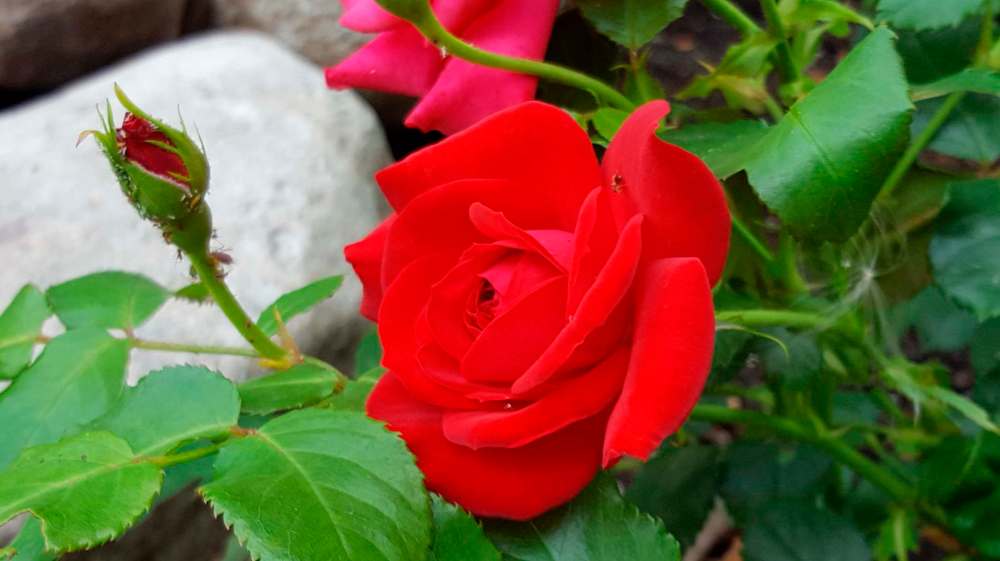
Here are some of the more common problems affecting ornamental plants at this time of the year.
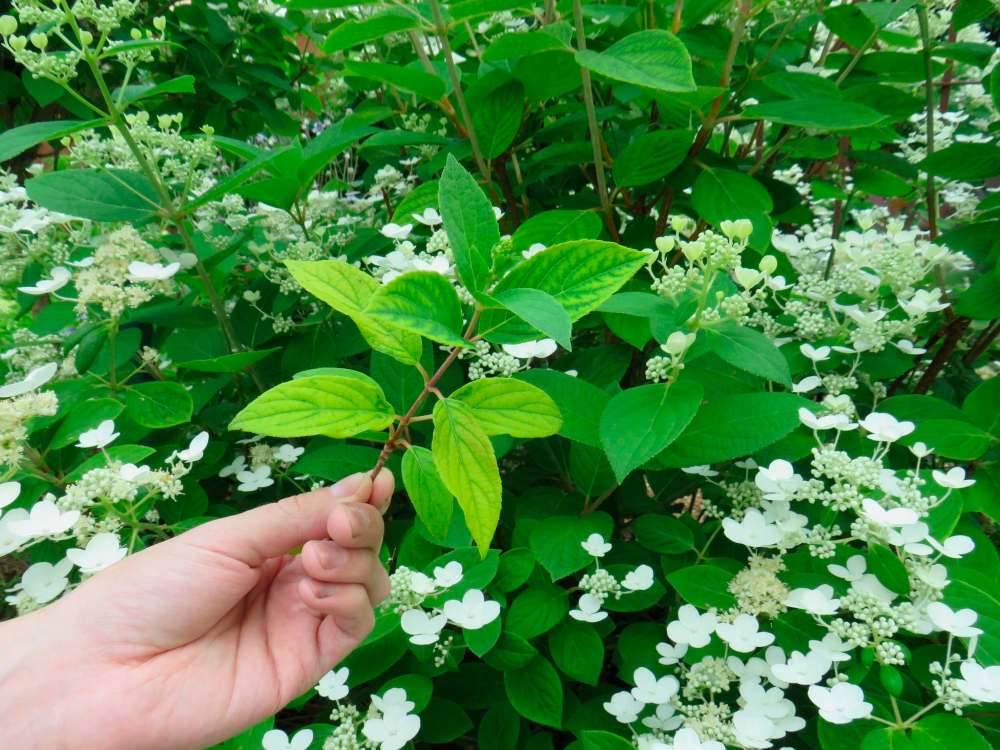
Yellowing on hydrangea leaves: Apart from ensuring adequate watering and nutrient rich soil, hydrangeas are easy to care for and have few pests or disease problems. In our area’s alkaline soil conditions, two of the most common problems affecting hydrangea plants include iron and nitrogen deficiencies. Iron deficiency appears in the plant’s younger leaves as a chlorosis or yellowing between veins that are dark green in contrast. There may also be brown necrotic areas along the leaf margins. Iron chelate can be used to correct or prevent iron deficiencies. It is easily applied as a soil drench using a watering can. Generally, two applications, spaced apart, are required.
Nitrogen deficiency in hydrangeas occurs on older or lower leaves which may be uniformly pale yellow green but which may also exhibit brown tips. It is not enough to remove the leaves. Feed your plant with an organic all-purpose fertilizer. There are many products to choose from. Gaia Green all-purpose 4-4-4, for example, includes blood meal, natural rock phosphate, fishbone meal, kelp meal, and other good things.
In the long term, however, increasing the organic content of your soil with annual additions of compost, mulching the soil surface with shredded natural bark and shredded leaves that will keep the soil evenly moist and decompose over time to feed beneficial soil microbes, as well as ensuring that your soil is not too wet or too dry will combine to give your hydrangeas what they need to be healthy and thrive.
Rose curculio and rose sawfly: Recent rose introductions (Oscar Peterson, Canadian Shield, Chinook Sunrise, Aurora Borealis, to name a few) have excellent resistance to diseases such as the dreaded black spot. But pests such as rose curculio and rose sawfly are some of the most unwanted scourges in the garden and cause epic damage if their populations are not controlled. Daily monitoring and practices such as handpicking, and squishing are critical when pests are actively feeding (June). The rose curculio (also known as rose weevil) decimates rose buds by chewing holes and feeding on the pollen inside. This nasty pest, easily identifiable by its long snout, lays its eggs inside the rose bud. Continue to inspect your plants closely and remove and destroy any rose buds that exhibit bent necks (damage to the stem below the bud) or gruesome black frass on the outside of buds as well as inside the damaged buds.
Rose sawfly has also done its worst damage by now. Rose sawfly larvae are light green with a wormlike appearance and are typically found on the undersides of leaves. Remove and destroy the severely skeletonized foliage on plants to eliminate all traces of the pest and its larvae. Your rose will recover.
The larvae of rose weevil and rose sawfly overwinter. They will be back next spring — you can count on it. Thoroughly dust your affected plant including the base of your plant with diatomaceous earth (a natural substance that consists of the fossilized remains of tiny, aquatic organisms). Next spring, begin your daily monitoring in spring. Picking and squishing daily (laborious and disgusting, yes, but also satisfying) will prevent these pests from multiplying.
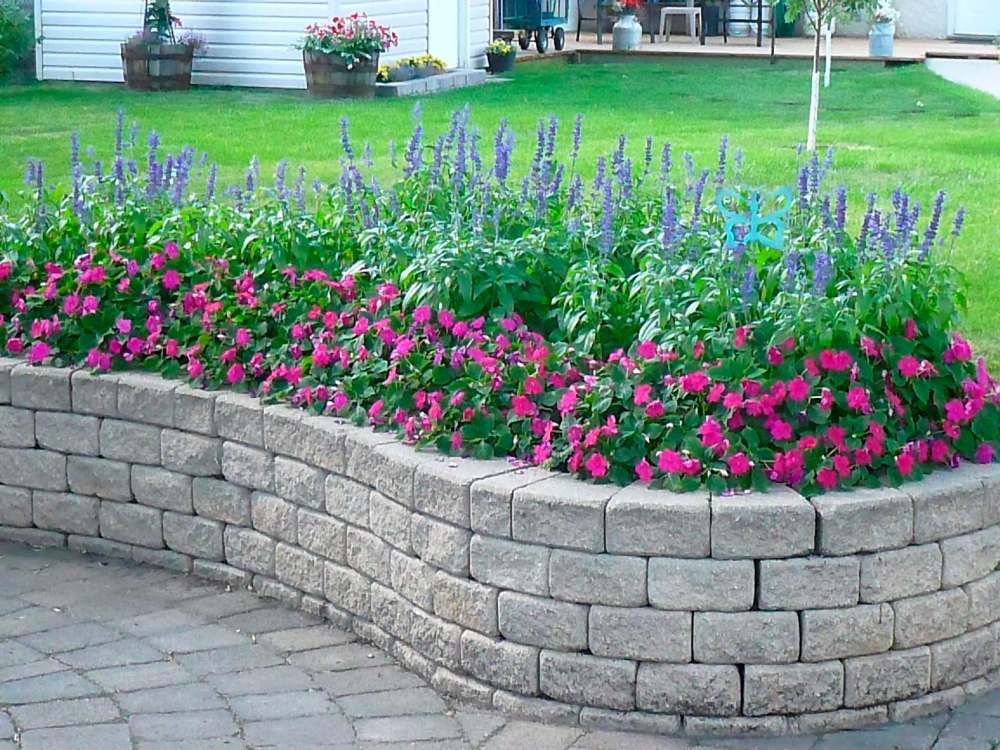
Mildew: Powdery mildew is a fungal disease that results in a white powdery fungus on the upper leaf surface of lower leaves. It can affect many plants including zinnias, phlox, begonias, and beebalm. Downy mildew differs in that it affects impatiens and results in ghastly yellowing and stunting of infected plants.
Humid weather favours conditions for mildew development. The best strategy is to choose disease-resistant plants. If you are growing a variety that is susceptible to powdery mildew, water at ground level and avoid splashing leaves. Take care to remove and destroy infected plant material. In the case of impatiens, the best variety to grow is Beacon impatiens which offers high resistance to downy mildew.
Aphids: Aphids are small insects that have piercing-sucking mouthparts. Their feeding can cause considerable damage to a wide range of plants. They excrete a sticky, sugar-containing substance. A strong blast of water from a hose equipped with a spray nozzle can be highly effective at dislodging these pests.
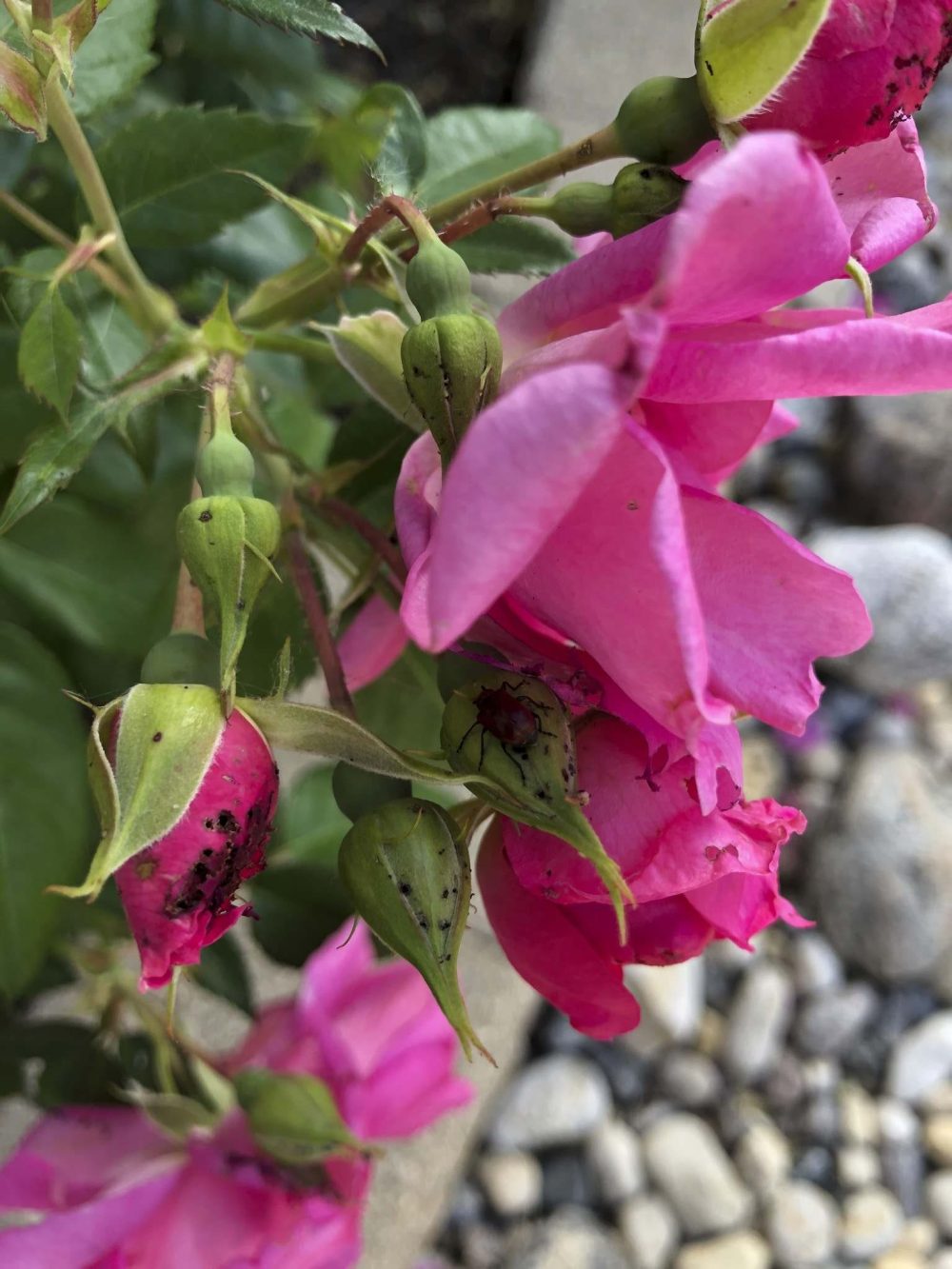
Lady beetles are natural predators that love to eat aphids but if you are not seeing as many lady beetles in your garden these days as you normally would, they may be up in the trees gorging on tree aphids.

Patricia MacKay and Robert Lamb are University of Manitoba entomologists who study aphids and their predators. Their Winnipeg garden is heavily treed and the elms and oaks are infested with aphids. “We notice that the Manitoba maples, basswoods and cottonwoods in the neighbourhood are also aphid infested. Most of the tree aphids go dormant as the summer continues and the tree leaves mature. When this happens, the lady beetles may reappear in force. However, we aren’t sure what the drought and consistently high temperatures mean for the trees, aphids or lady beetles.”
Indeed, the drought and consistently high temperatures we are experiencing this summer means that good cultural practices to reduce insect and disease problems are more important than ever. This year’s garden is always about next year’s garden. Take the necessary steps to provide your plants with the growing conditions they require. Healthy plants are better able to ward off pests and diseases than stressed plants.
If you do apply pesticides to your plants, follow the label instructions carefully and avoid application on windy days to minimize pesticide drift that can be harmful. Spraying in hot, dry conditions can cause serious damage to your plants.
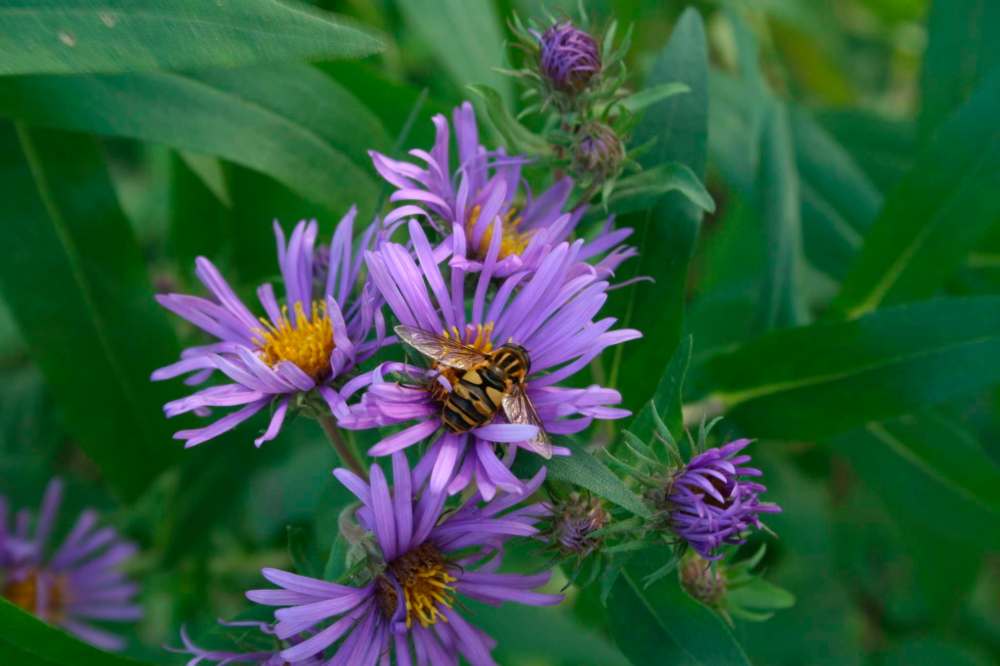
If it bugs you that your plants do not appear perfect in every single way, suck it up buttercup. In nature, nothing is perfect. It is physically impossible to eliminate all problems from the garden. Gardens are ecosystems and their healthy balance depends on the presence of insects. Control or manage pest populations safely. Avoid chemical pesticides because the ingredients they contain can be harmful to beneficial bugs such as bees, butterflies, hover flies, ladybugs, dragonflies, and more.
colleenizacharias@gmail.com
Colleen Zacharias
Gardening columnist
Colleen Zacharias writes about many aspects of gardening including trends, plant recommendations, and how-to information that is uniquely relevant to Prairie gardeners. She has written a column for the Free Press since 2010 and pens the monthly newsletter Winnipeg Gardener. Read more about Colleen.
Every piece of reporting Colleen produces is reviewed by an editing team before it is posted online or published in print — part of the Free Press‘s tradition, since 1872, of producing reliable independent journalism. Read more about Free Press’s history and mandate, and learn how our newsroom operates.
Our newsroom depends on a growing audience of readers to power our journalism. If you are not a paid reader, please consider becoming a subscriber.
Our newsroom depends on its audience of readers to power our journalism. Thank you for your support.
Colleen Zacharias
Gardening columnist
Colleen Zacharias writes about many aspects of gardening including trends, plant recommendations, and how-to information that is uniquely relevant to Prairie gardeners. She has written a column for the Free Press since 2010 and pens the monthly newsletter Winnipeg Gardener. Read more about Colleen.
Every piece of reporting Colleen produces is reviewed by an editing team before it is posted online or published in print — part of the Free Press‘s tradition, since 1872, of producing reliable independent journalism. Read more about Free Press’s history and mandate, and learn how our newsroom operates.
Our newsroom depends on a growing audience of readers to power our journalism. If you are not a paid reader, please consider becoming a subscriber.
Our newsroom depends on its audience of readers to power our journalism. Thank you for your support.
Advertisement Advertise With Us
Advertisement Advertise With Us