

The Tattooed Gardener grows in colour
Guide to hybridizing your own daylilies

Advertisement
Read this article for free:
or
Already have an account? Log in here »
To continue reading, please subscribe:
Monthly Digital Subscription
$0 for the first 4 weeks*
- Enjoy unlimited reading on winnipegfreepress.com
- Read the E-Edition, our digital replica newspaper
- Access News Break, our award-winning app
- Play interactive puzzles
*No charge for 4 weeks then price increases to the regular rate of $19.00 plus GST every four weeks. Offer available to new and qualified returning subscribers only. Cancel any time.
Monthly Digital Subscription
$4.75/week*
- Enjoy unlimited reading on winnipegfreepress.com
- Read the E-Edition, our digital replica newspaper
- Access News Break, our award-winning app
- Play interactive puzzles
*Billed as $19 plus GST every four weeks. Cancel any time.
To continue reading, please subscribe:
Add Free Press access to your Brandon Sun subscription for only an additional
$1 for the first 4 weeks*
*Your next subscription payment will increase by $1.00 and you will be charged $16.99 plus GST for four weeks. After four weeks, your payment will increase to $23.99 plus GST every four weeks.
Read unlimited articles for free today:
or
Already have an account? Log in here »
Hey there, time traveller!
This article was published 07/08/2021 (1590 days ago), so information in it may no longer be current.
Daylilies (Hemerocallis) bring colour to any perennial border. Their enchanting, carefree flowers and strappy foliage deliver an impressive performance in the garden that makes daylilies one of the most accommodating of companion plants. What doesn’t look great growing next to a daylily? Daylilies are increasingly popular because they are a well-behaved, easy-to-grow perennial that can be counted on to do well even in a tough climate. But in addition, there are endless varieties to choose from so that you can enjoy show stopping blooms from spring until frost.
In fact, the humble daylily might even be the unexpected triumph of this summer’s sizzling summer flower garden.
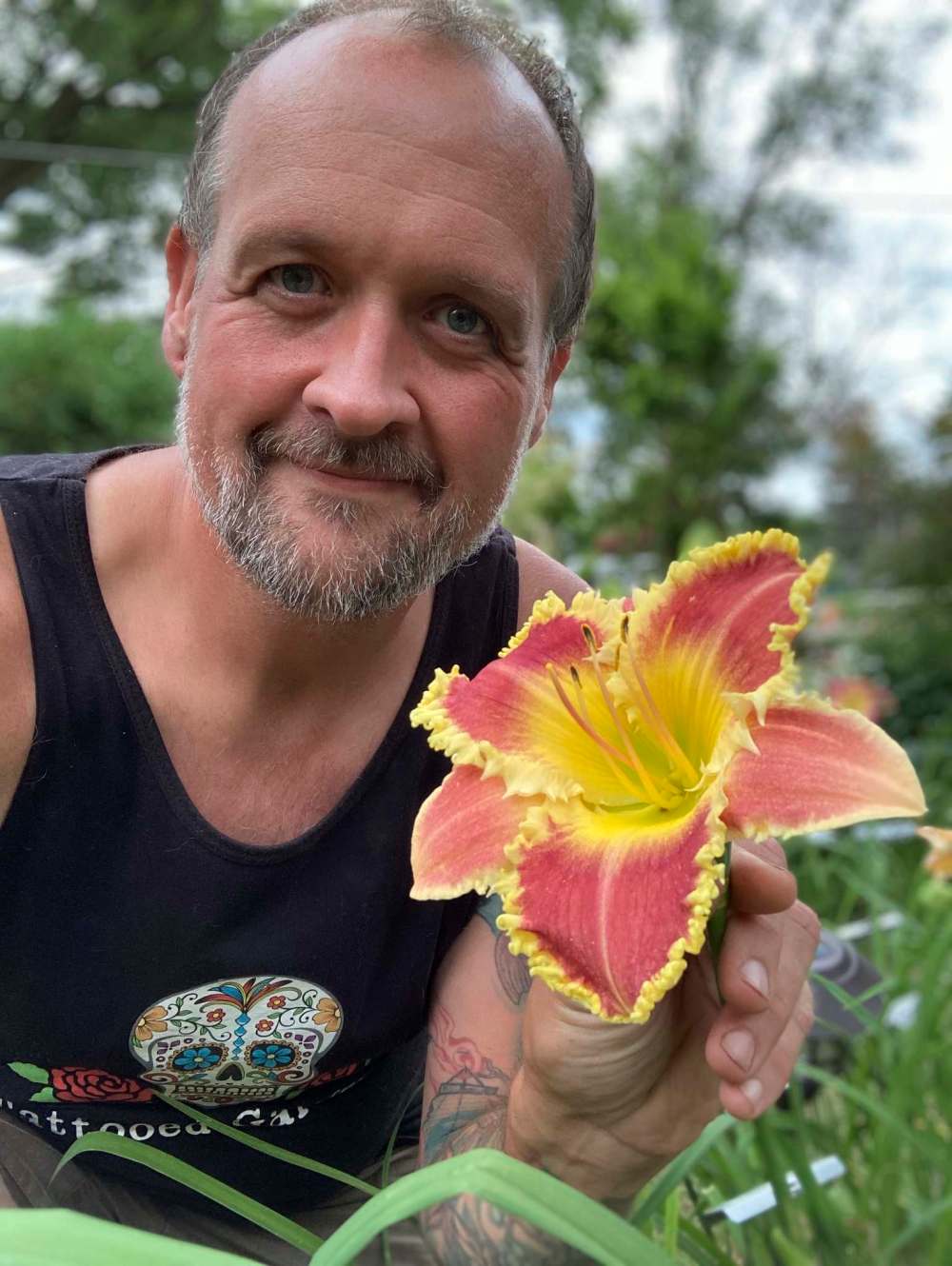
Garden expert Paul Gellatly, otherwise known as the Tattooed Gardener, certainly thinks so. Gellatly, who is an avid collector of rare and unusual plants of all types, has a passion for daylilies. He grows more than 400 daylilies in his Toronto garden which measures a modest nine by 12 metres. The former director of horticulture at Toronto Botanical Garden and former curatorial gardener at the Toronto Zoo, Gellatly is also a daylily hybridizer. He has registered 32 one-of-a-kind daylily cultivars with the American Hemerocallis Society and plans to register another five or six this year.
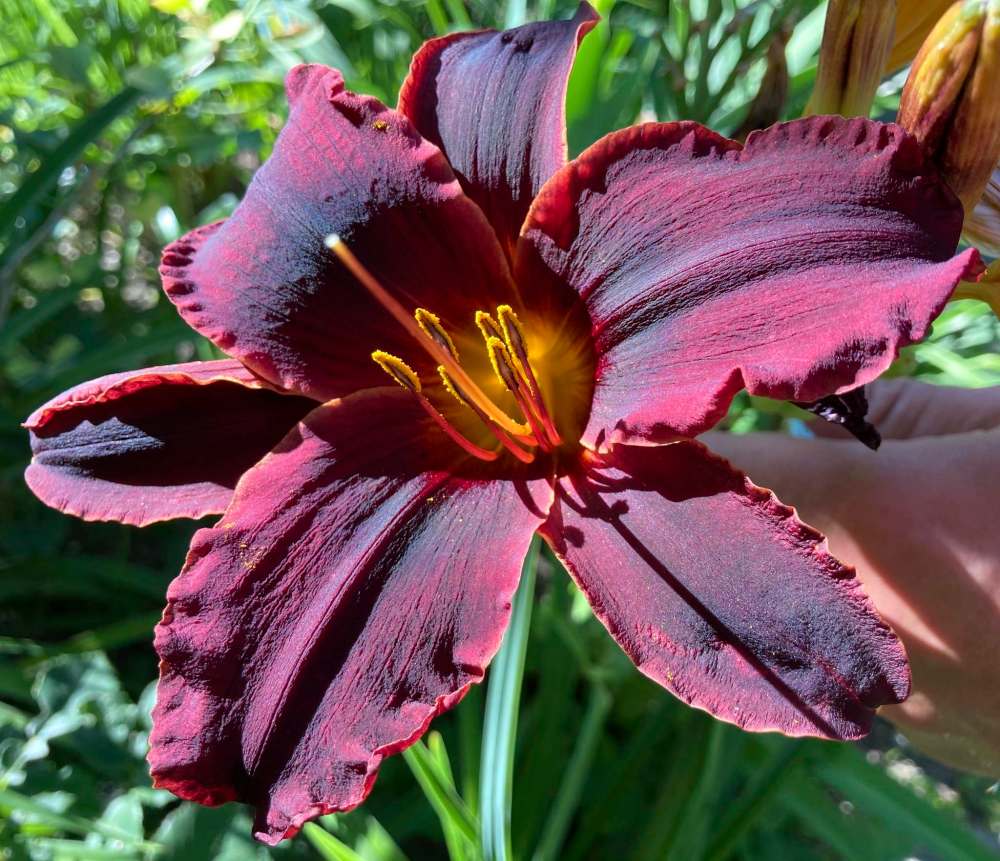
It is easy to hybridize daylilies, says Gellatly. “Anyone can do it and it will power up your curiosity. I’m a front yard gardener. When I first began hybridizing six years ago and started seeing the possibilities and very pretty flowers that were produced that I never could have imagined, I wanted to learn more.”
August is still peak daylily bloom time. Gellatly recommends that you put on your bee outfit and start dabbing some pollen so you can also create your own daylily.
Begin by selecting daylilies with characteristics you really like.
“The trick is to go into your garden first thing in the morning. You want to get out there before the bees do.” Remove the whole stamen, which is the male part of a flower. “The stamen tends to pull off fairly easily if you just lift it up,” says Gellatly. “Transfer the fluffy pollen that is on the stamen onto the pistil of another daylily flower. A little dab’ll do you. So long as the end of the pistil looks white when you start and yellow when you finish, you’ve done your job.”
He says to label the flower that you just pollinated with a tag identifying the pod parent first and the pollen parent second if you know the cultivar names (just one more reason to keep your plant tags). Hang the tag from the base of the flower (some use a paper clip) and wait to see if a seed pod forms. “If the pollen was accepted, a pod forms which means your cross was successful,” says Gellatly. If it wasn’t, the bloom will fall off and no pod will develop.
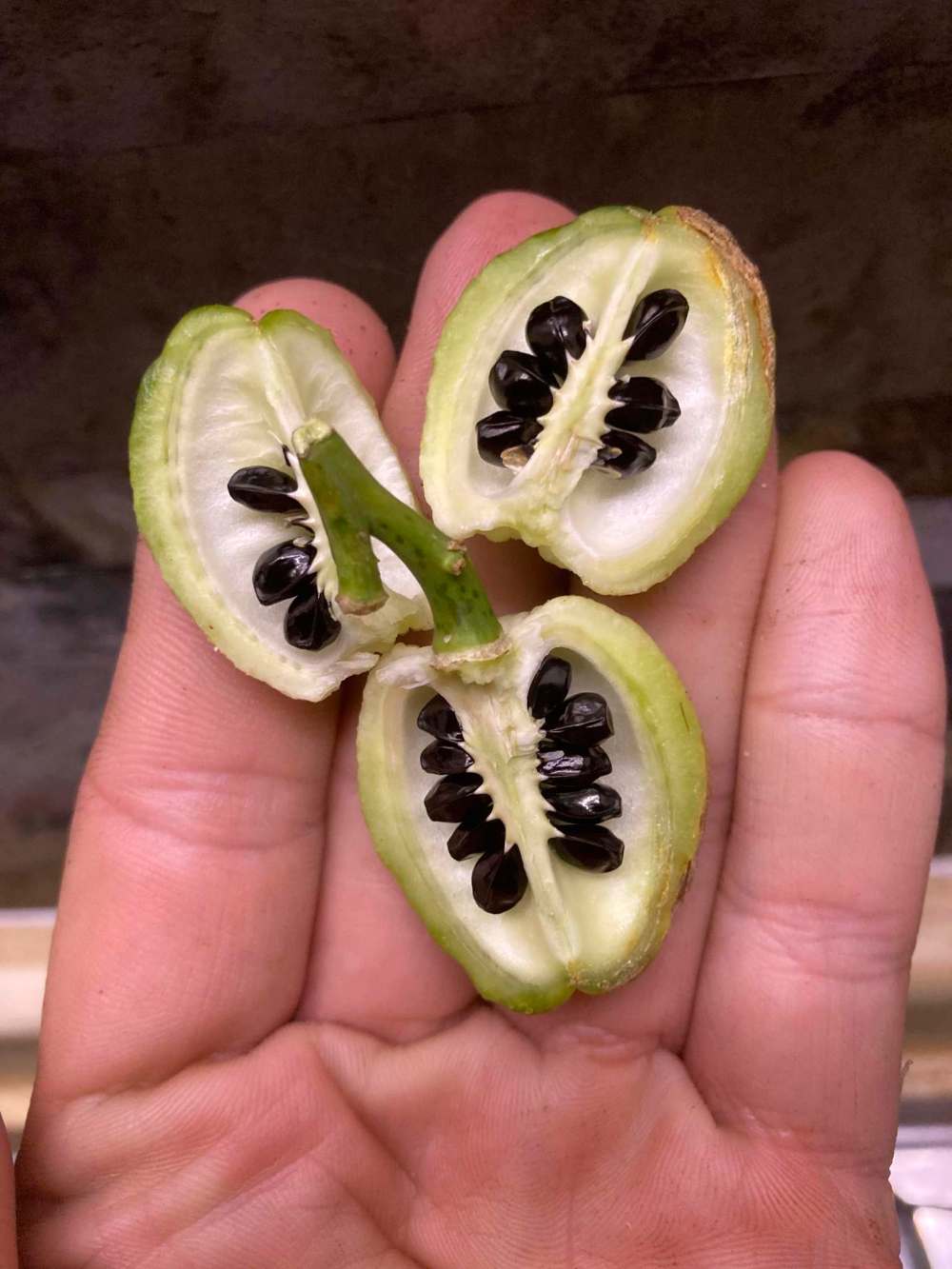
Once the seed pod starts to develop, it’s important to harvest it at the right time. “If you pick it too early, then it is ruined.” Gellatly waits until the colour of the pod begins to age and look faded in colour — usually around September — and a small crack at the top begins to appear. The crack is key, he says. “It’s much better to let the pod develop a bit longer than harvest it too early.”
Open the mature pod, remove the seeds that are inside, and allow the seeds to air dry indoors for three or four days. Gellatly puts the seeds into small, resealable sandwich bags which he labels — again, the pod parent first and the pollen parent second — and then places the bags into the vegetable crisper of his refrigerator for the winter.
“Be sure to check on the seeds every four to six weeks to ensure they are black and firm,” says Gellatly, “If any of the seeds have gone mouldy, remove them from the bag before they spoil the whole cross.”
The seeds can be sown directly into the garden in spring after the risk of frost has passed although squirrels will sometimes take them. Gellatly prefers to start his seeds in red plastic beer cups filled with fresh, soilless potting mix. He pokes holes in the bottom for drainage, writes the name of the cross on the cup, and places it outdoors, weather permitting. By June, the seeds have rooted well. Gellatly transfers the plants to his garden and lets Mother Nature do the rest. It takes two to three years before the daylily seedlings start to bloom for the first time.
“Each seed that a daylily produces, even in the same pod, is unique — which means that you can have six seeds and they are all going to give you different flowers,” says Gellatly. The flowers the seeds produce are siblings so there are similarities but there are also differences and it might be in terms of individual flower size or colour patterns, flower shape, bud count, or overall plant size. “You can do the same cross five times and get fifty different flowers and that’s what keeps me really interested,” he says.

Daylilies have a specific number of chromosomes. Tetraploid daylilies have four sets of chromosomes in their cells and are larger overall than diploid daylilies which have two sets of chromosomes. There is one crucial rule, says Gellatly. “You can only cross diploids with diploids and tetraploids with tetraploids,” says Gellatly. If you know the names of the daylilies you want to cross, look them up on the American Hemerocallis Society database which will give you all the information you need.
Characteristics from both daylily parents and any of their lineage can come out in the seedlings, says Gellatly, who added that learning about dominant and recessive traits plays a role in her decision making.

“Tetraploid daylilies, as a rule, have more complicated genetics,” she says. They have teeth, patterned eyes, and larger and thicker flowers. “It can be harder to pull out and isolate those recessive traits that you want to work with. Diploids are easier to work with because there is not as much going on. You get a lot more seeds with diploid daylilies — up to 20 seeds in a pod compared to six or eight seeds in a pod for tetraploid daylilies.”
Soon you may be exchanging seeds or trading fans of daylilies with other enthusiasts and naming your creations.
Gellatly names his daylily introductions for people who have inspired him over the years. Gellatly, who grew up singing in choirs and whose first job was in his parents’ music store, says that music and gardening are both performing arts. Recently he has started a Canadian musician series and named three of his hybridized daylilies for Canadian singer-songwriters Jann Arden, Leonard Cohen and Michael Bublé.
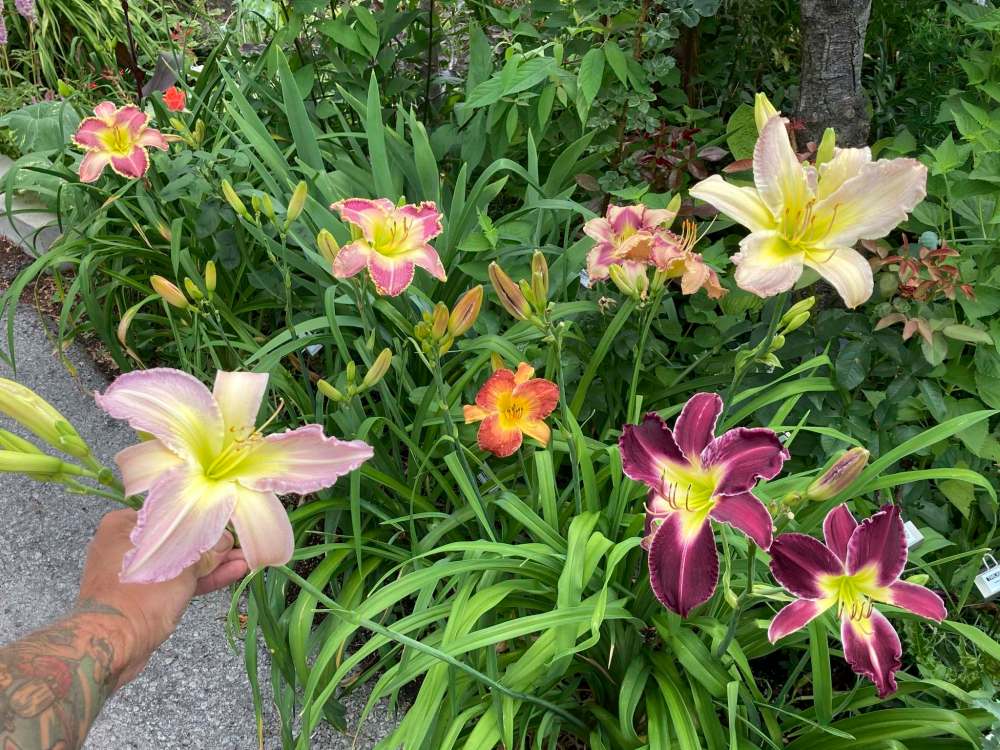
Find inspiration for different daylily cultivars to grow in your garden with a visit to Beausejour Daylily Gardens (First Street, North in Beausejour) which is recognized internationally and is the only official AHS display garden on the Canadian prairies. Unique daylily varieties will be available at the Beausejour Daylily Gardens annual fall plant sale on September 18 from 9 a.m. to 1 p.m.
colleenizacharias@gmail.com
Colleen Zacharias
Gardening columnist
Colleen Zacharias writes about many aspects of gardening including trends, plant recommendations, and how-to information that is uniquely relevant to Prairie gardeners. She has written a column for the Free Press since 2010 and pens the monthly newsletter Winnipeg Gardener. Read more about Colleen.
Every piece of reporting Colleen produces is reviewed by an editing team before it is posted online or published in print — part of the Free Press‘s tradition, since 1872, of producing reliable independent journalism. Read more about Free Press’s history and mandate, and learn how our newsroom operates.
Our newsroom depends on a growing audience of readers to power our journalism. If you are not a paid reader, please consider becoming a subscriber.
Our newsroom depends on its audience of readers to power our journalism. Thank you for your support.
Colleen Zacharias
Gardening columnist
Colleen Zacharias writes about many aspects of gardening including trends, plant recommendations, and how-to information that is uniquely relevant to Prairie gardeners. She has written a column for the Free Press since 2010 and pens the monthly newsletter Winnipeg Gardener. Read more about Colleen.
Every piece of reporting Colleen produces is reviewed by an editing team before it is posted online or published in print — part of the Free Press‘s tradition, since 1872, of producing reliable independent journalism. Read more about Free Press’s history and mandate, and learn how our newsroom operates.
Our newsroom depends on a growing audience of readers to power our journalism. If you are not a paid reader, please consider becoming a subscriber.
Our newsroom depends on its audience of readers to power our journalism. Thank you for your support.
Advertisement Advertise With Us
Advertisement Advertise With Us