

Paralympic titans
As Canadians compete at the 2020 Para Games in Tokyo, a look at the country's Top 5
Advertisement
Read this article for free:
or
Already have an account? Log in here »
To continue reading, please subscribe:
Monthly Digital Subscription
$1 per week for 24 weeks*
- Enjoy unlimited reading on winnipegfreepress.com
- Read the E-Edition, our digital replica newspaper
- Access News Break, our award-winning app
- Play interactive puzzles
*Billed as $4.00 plus GST every four weeks. After 24 weeks, price increases to the regular rate of $19.95 plus GST every four weeks. Offer available to new and qualified returning subscribers only. Cancel any time.
Monthly Digital Subscription
$4.99/week*
- Enjoy unlimited reading on winnipegfreepress.com
- Read the E-Edition, our digital replica newspaper
- Access News Break, our award-winning app
- Play interactive puzzles
*Billed as $19.95 plus GST every four weeks. Cancel any time.
To continue reading, please subscribe:
Add Free Press access to your Brandon Sun subscription for only an additional
$1 for the first 4 weeks*
*Your next subscription payment will increase by $1.00 and you will be charged $16.99 plus GST for four weeks. After four weeks, your payment will increase to $23.99 plus GST every four weeks.
Read unlimited articles for free today:
or
Already have an account? Log in here »
Hey there, time traveller!
This article was published 28/08/2021 (1680 days ago), so information in it may no longer be current.
It would be fair to say Canada got off to a hot start at the pandemic-delayed Paralympic Games in Tokyo.
On the first day of competition, Canada’s athletes didn’t waste any time clinching spots on the podium at the 16th Paralympics, which will see some 4,400 athletes and guides from 162 countries — including 128 Canadians — compete in 22 sports.
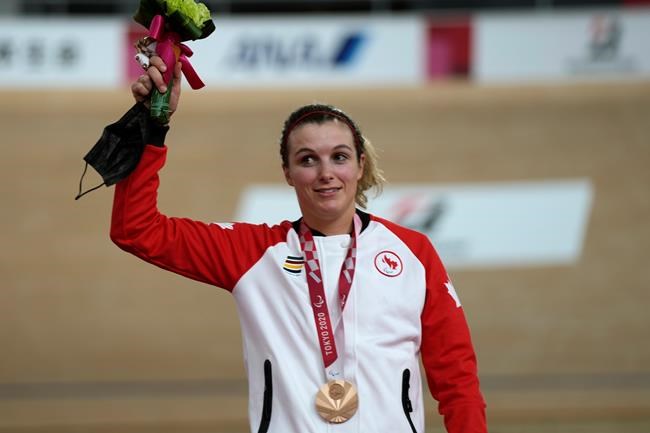
Canadian track cyclist Keely Shaw raced to a bronze-medal finish in the women’s C4 3,000-metre individual pursuit Wednesday — becoming the first Canadian to earn a medal at the Tokyo Paralympics.
“I’m so excited to be able to show off all the work the entire team has done in the last five years and have that come out with a bronze medal for Canada,” said Shaw, who played ice hockey before a 2009 accident when she fell off a horse, resulting in left-side paralysis.
Then, decorated swimmer Aurélie Rivard won a bronze in the S10 50-metre freestyle final. The Saint-Jean-Sur-Richelieu, Que., native entered the race as the defending champion, having earned gold — plus three other medals — at the Rio Games in 2016.
“Just standing on the podium at the Games is something really special regardless of the position and the colour of the medal,” Rivard said after the final. She entered the Tokyo Games after having not competed in a meet for 18 months due to the pandemic.
Canada’s hot start makes this the perfect time for today’s medal-winning list of Five Amazing Current and Former Canadian Paralympians Every Sports Fan Needs to Know:
5) The Paralympic star: Wheelchair hoopster Patrick Anderson
The golden resume: Among people who know the game, the Canuck superstar is considered to be the greatest wheelchair basketball player of all time. To call his hoop resumé impressive would be a bit of an understatement.
The 42-year-old Anderson, now a five-time Paralympian, led Canada to gold medals in 2000, 2004 and 2012, and silver in 2008.
In an interview with the Toronto Star, he was philosophical in discussing his place among the all-time greats in the sport. “Some days it puts a little air in my tires and other days it feels more like pressure, expectation,” the Edmonton-born, Fergus, Ont.-raised Anderson said. “I dunno, I feel kind of free at this point in my career… I don’t feel like I sort of have anything to prove. But in my heart, I guess I’ll never be able to shed that, ‘OK, I’m supposed to be that guy.’ (It) depends on the day but… it feels like it’s a big privilege because I’ve been dealing with those expectations for 20 years, it’s really driven me.”
According to the Star, Anderson’s last Paralympics might have been the best tournament a player has ever had. He averaged 25 points a game, had two triple-doubles in eight straight Canadian wins and punctuated his performance with a 34-point, 10-rebound, eight-assist gem in the gold-medal win over Australia. He took a hiatus to work on his music career and missed the 2016 Games, but he’s back in Tokyo and hoping to propel Canada onto the podium.
It won’t be easy because Canada, thanks to the pandemic quashing any exhibition games, is only ranked No. 18 in the world. “Yeah, feel like we’re in a good place but at the same time it feels like we’re coming in a bit blind because it’s been 500-or-something days since we played a game,” Anderson said.
4) The Paralympic star: Judo athlete Priscilla Gagné
The golden resume: For Canada’s Priscilla Gagné, a serious medal contender in Para judo, the Paralympic Games are all about gold. We’re not talking about gold medals, although there’s no doubt Gagné has one of those squarely in her sights. We’re talking about the legendary golden track spikes sported by famed American sprinter Michael Johnson at the 1996 Atlanta Olympics. Gagné, who has retinitis pigmentosa, a visual impairment affecting her central vision, was 10 years old during the Atlanta Games.
According to news reports, she had to stand close to her TV to make out the white stripes of the track lanes, the “whitish blobs”of runners going around it, and athletes’ faces during close-ups. It was her aunt who explained that Johnson wore gold spikes.
“I remember thinking, ‘Wow, he’s gutsy to wear gold running shoes. I hope he wins just because that would be horrible if he didn’t and he wore gold shoes,’” Gagne told the Canadian Press. “That was my little 10-year-old thought, and he won (both the 200 and 400 metres). And seeing the smile on his face. So that inspired me. That was my start. I thought I’d go to the Olympics as a runner.”
Gagné is one of the world’s finest Para judo athletes, and carried Canada’s flag into Tuesday’s opening ceremony in Tokyo. The 35-year-old from Sarnia, Ont., is ranked No. 2 in the world in the 52 kg category. She finished fifth in her Paralympic debut in Rio in 2016, and in 2018 became the first Canadian woman to climb the medal podium at the Para judo world championships, winning bronze. Gagné said being flag-bearer was a huge honour.
“I really hope that for kids living with disabilities, this inspires them to never stop dreaming, to never listen to somebody who tells them no, and to stand together with people who believe in them,” she said.
3) The Paralympic star: Swimmer Tim McIsaac
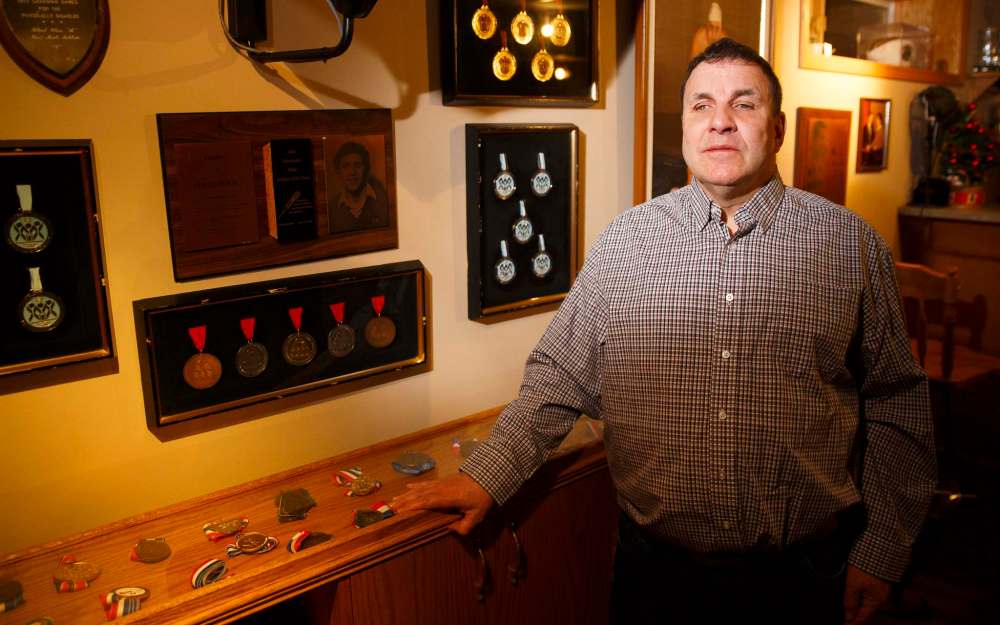
The golden resume: Throughout an amazing career, the Winnipeg swimming legend, who was born blind, was a gold-medal factory.
According to Swimming Canada records, McIsaac was named to the Canadian team that competed at the 1976 Olympiad for the Physically Disabled in Toronto, where he won one gold, two silver and two bronze medals. While competing at three Paralympic Games, McIsaac won 14 gold, four silver and five bronze medals. Nationally, McIsaac won 19 gold medals at two Canadian Games; 12 gold at two Canadian Indoor Games; and 28 gold at four Canadian Summer Nationals.
His resumé also includes being named Canada’s junior male athlete of the year in 1976 and Manitoba’s athlete of year in 1982. McIsaac was inducted into the Manitoba Sports Hall of Fame in 2000 and Swimming Canada’s Circle of Excellence in 2012. He was inducted into the Canadian Paralympic Committee Hall of Fame in 2013. He also achieved fame as the first blind swimmer to use the tumble turn used by sighted athletes.
Not bad for a guy who began swimming as a Winnipeg youngster in his uncle’s backyard pool. McIsaac, who retired from competitive swimming in 1992 and now works as an accessibility co-ordinator for the Manitoba government, said the accomplishments of Paralympians are often downplayed.
“I always wanted to be in a sighted club. I think it’s great they have the Paralympics because I don’t think you can compare an athlete with a disability against an able-bodied person any more than you can compare a man against a woman because of the physiology, but that doesn’t mean their accomplishments are any less,” he said in an interview with the Free Press in 2020.
2) The Paralympic star: Swimmer Kirby Cote

The golden resume: A graduate of Winnipeg’s Kelvin High School, legally blind swimmer Kirby Cote’s remarkable accomplishments in the pool put her in a class of her own. Cote is one of just seven Canadian women who have reached double-digit medal totals in their Paralympic career. This world-class athlete competed in three Paralympic Games, winning a total of seven gold medals, six silver medals, and setting two world records in the process.
She was named Manitoba’s Youth Athlete of the Year and Female Athlete of the Year for 2000. Cote was just 16 when she competed in the 2000 Paralympics in Sydney, winning gold in the 100 metre breaststroke and the 200m individual medley, setting world record times. She also earned silver in the 50m and 100m freestyle. After being inducted into the Manitoba Sports Hall of Fame, Cote recalled winning her first Paralympic gold in Sydney and the image of her family waiting over an hour for her in the stands while she finished mandatory drug testing and media interviews.
“By the time I was done and got to see them, it was empty. There had been 50,000 people in there; it was a huge venue, and it was completely sold out. They were still waiting to see me and we just sat all in a row and it was just a massive exhale,” Cote said. At the 2004 Paralympics in Athens, she swept through the pool like a tidal wave, earning five gold medals — 50m, 100m and 400m freestyle, 100 m butterfly and 200m individual — and two silver medals in the 100m backstroke and the 100m breaststroke.
After Athens, she quit swimming for a year, then returned for her final Paralympic appearance in 2008 in Beijing, winning silver medals in the 100m butterfly and the 200m individual medley. Now a professional massage therapist, one of the most decorated Canadian swimmers hopes the Paralympics will one day receive the same recognition as the Olympic Games.
1) The Paralympic star: Wheelchair racer Chantal Petitclerc
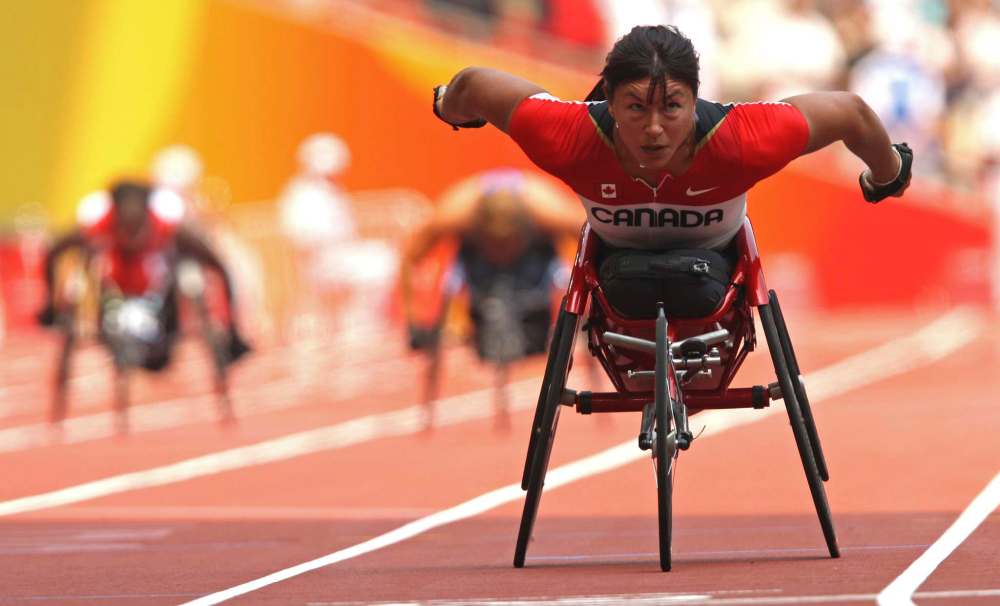
The golden resume: As an independent Canadian senator, Chantal Petitclerc uses her voice to advocate for people with disabilities. As one of the highest profile Paralympic athletes in Canadian history, Petitclerc was focused on shattering world records and winning gold medals. It’s something she did better than any other Canadian female Paralympian in history.
She competed in wheelchair racing at five Paralympic Games — 1992 through 2008 — and won an astonishing 21 medals, including 14 gold, five silver, and two bronze. The native of Saint-Marc-des-Carrières, Que., also broke numerous world records in her sport. She received the prestigious Lou Marsh Award in 2008 as Canada’s top athlete of the year, only the third athlete with a disability after Terry Fox and Rick Hansen to receive the honour.
At the age of 13, Petitclerc lost the use of her legs when a barn door fell on her at a friend’s farm, fracturing her spine. She discovered her fierce competitive drive after a high school phys-ed teacher encouraged her to take up swimming. At 18, she tried wheelchair racing and there was no looking back.
“When she came home following the 2004 Paralympics in Athens, where she won five gold medals and set several world records, Petitclerc was named the co-winner of Athletics Canada Athlete of the Year award along with an Olympian. She spoke out about sharing the award with the Olympian, who in her mind had not performed as well, feeling her accomplishments deserved to stand alone,” according to paralympic.org.
Asked about why she went public, she said: “I trained as much as Olympians. I worked as hard. I have the same amount of pressure. My performance should have equal value.” On March 18, 2016, Petitclerc was named to the Canadian Senate. “I’m always trying to bring a person with a disability lens so I can be that voice. I make sure that I speak out and that we are taken into consideration,” she said of her role as a senator.
doug.speirs@freepress.mb.ca