Mental health hovers over Olympics, on its way to mainstream
Advertisement
Read this article for free:
or
Already have an account? Log in here »
To continue reading, please subscribe:

Digital Subscription
One year of digital access for only $205*
- Enjoy unlimited reading on winnipegfreepress.com
- Read the E-Edition, our digital replica newspaper
- Access News Break, our award-winning app
- Play interactive puzzles
*First annual payment billed as $205.00 + GST for one year. This annual subscription will automatically renew at $233.00 + GST every 52 weeks (10% off the regular annual price of $259.35). Offer available to new and qualified returning subscribers only. Cancel any time.
To continue reading, please subscribe:
Add Free Press access to your Brandon Sun subscription for only an additional
$1 for the first 4 weeks*
- Enjoy unlimited reading on winnipegfreepress.com
- Read the E-Edition, our digital replica newspaper
- Access News Break, our award-winning app
- Play interactive puzzles
*Your next Brandon Sun subscription payment will increase by $1.00 and you will be charged $17.95 plus GST for four weeks. After four weeks, your payment will increase to $24.95 plus GST every four weeks.
Read unlimited articles for free today:
or
Already have an account? Log in here »
Hey there, time traveller!
This article was published 12/02/2022 (1674 days ago), so information in it may no longer be current.
ZHANGJIAKOU, China (AP) — At the Tokyo Olympics, mental health was the breakout star. Amplified by some of the world’s top athletes, it shook up those Games and made everyone take notice.
Six months later, in Beijing, the conversation has evolved: The subject pops up regularly, but no one is shocked when it does.
Many athletes have spoken about their struggles, but often in a no-biggie, nothing-to-see-here way. A difficulty is mentioned, then the conversation moves on. After star gymnast Simone Biles pulled out of competition in Tokyo because she wasn’t in the right headspace, retired Olympic swimming phenom Michael Phelps memorably said that “It’s OK to not be OK.”
And now, thanks in part to people like Biles, it seems it’s OK to talk about it, too.
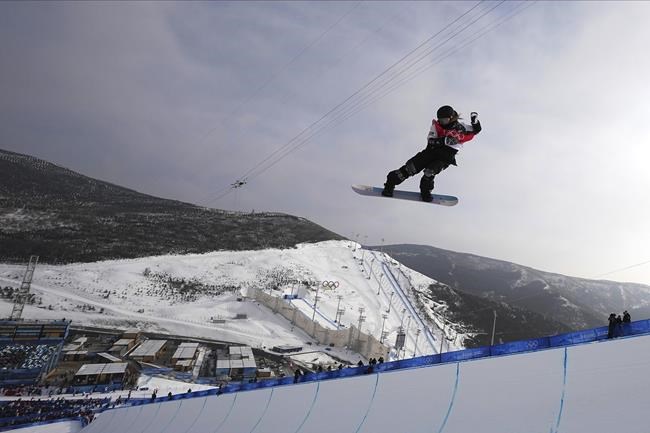
“I think the biggest lesson I’ve learned after the last Olympics is being as open as possible,” snowboarding sensation Chloe Kim told reporters after she took the gold medal on Thursday in the halfpipe competition.
It was Kim’s second gold at an Olympics. She initially threw that first one, earned in Pyeongchang four years ago, in the trash — a story that epitomizes the dissonance between the cheery face many champions show the world and the torments they face behind the scenes.
“After my last Olympics, I put that pressure on myself to be perfect at all times, and that would cause a lot of issues at home. I would be really sad and depressed all the time when I was home,” Kim told reporters after easily securing the top spot on the podium — but also failing to land a new trick she is working on.
“I’m happy to talk about whatever I’ve been experiencing,” she said. “Honestly, it’s really healthy for me.”
It wasn’t just Kim who was talking about it. After snowboarder Jamie Anderson, who came to Beijing as the two-time defending slopestyle champion, finished ninth, she posted on Instagram that her “mental health and clarity just hasn’t been on par.”
Skier Mikaela Shiffrin was particularly honest after she failed to finish either of her first two races in events that are specialties of hers. She said that she had been feeling pressure, something every elite athlete feels and is distinct from the more complicated mental health challenges many have been talking about.
But Shiffrin also plumbed greater depths, acknowledging that she was angry with her dad, who died in 2020, for not being there to support her.
After finally managing to complete a race on Friday — shockingly, even that had become an open question for the star — she posted on Instagram about the ups and downs of competition.
“There’s a lot of disappointment and heartbreak going around in the finish area,” she wrote.
As several elite athletes stumbled in Beijing, they were often quick to remind the world that they’re human, too. Shiffrin even has a paid post on Instagram, in which the tagline is: “Yeah, I am human.” A far cry from the usual vaunting of athletes as something much more than that.
This is what many hoped for after Tokyo — that as more athletes acknowledged what they face behind the scenes, the stigma around talking about mental health would recede and the issue would merely become one more challenge in the mix.
“I think that it really has become normalized with so many athletes talking about their mental health, and there has been such a push for parity with mental health and physical health,” said Jess Bartley, director of mental health services for Team USA.
“I think, in the experience I’ve had with a lot of these athletes, it’s really relieving to be able to talk about it, to have folks understand, to have the audience understand what may be coming up that might have impacted their performance,” she said. “Just in the same way that you hear about a sprained ankle.”
Bartley works with athletes to prepare how they’ll respond to questions about their mental health just as she works with them on preparing their performance. Some feel comfortable revealing those struggles; others don’t.
Louie Vito, a snowboarder who competed for Italy in Beijing, puts himself in the latter camp. He’s glad that mental health is being talked about more openly — he readily admits framing some of his struggles in that way was eye-opening for him — but he would prefer to keep much of that private.
“I think some people would rather deal with their mental battles in their inner circle,” he said. “To me, it’s not a right or a wrong on how you deal with it as long as you’re aware and it doesn’t become detrimental to you. I don’t think you have to talk about in public.”
And he acknowledged that many people are still embarrassed to talk about these issues.
Yet so many do keep talking — encouraged by a generation of younger athletes determined not only to be heard but to ensure that this subject is no longer something to be dramatically revealed, but simply addressed like anything else important.
Amanda Fialk, who is the chief clinical officer at The Dorm, a mental health treatment program for young people, is heartened by the increasingly open conversations happening. But she warns that true change will take much more time to take hold.
She underscores that there are vast cultural differences — across countries and between communities within any given country — that affect access to and the stigma around mental health care.
“I am also mindful that old habits die hard,” said Fialk, who was a competitive figure skater when she was younger. “It is going to take continued talking about these issues and continued efforts to normalize talking about all these issues for the change to not just be a change, but to become a new normal.”
___
Sarah DiLorenzo, a London-based journalist for The Associated Press, is on assignment at the Beijing Olympics. Follow her on Twitter at http://twitter.com/sdilorenzo
___
More AP Olympics: https://apnews.com/hub/winter-olympics and https://twitter.com/AP_Sports
Related Articles
True test of love: Engaged ice dancers face off at Olympics





Advertisement Advertise With Us
Advertisement Advertise With Us