WHO: Nearly 15 million deaths associated with COVID-19

Advertisement

Advertise with us

LONDON (AP) — The World Health Organization estimates that nearly 15 million people were killed either by coronavirus or by its impact on overwhelmed health systems during the first two years of the pandemic, more than double the current official death toll of over 6 million.

Read this article for free:


or

Already have an account? Log in here »

To continue reading, please subscribe:

Subscribe and receive a limited-edition Free Press branded hat or tote.

Digital Subscription

One year of digital access for only $205*

  • Enjoy unlimited reading on winnipegfreepress.com
  • Read the E-Edition, our digital replica newspaper
  • Access News Break, our award-winning app
  • Play interactive puzzles

*First annual payment billed as $205.00 + GST for one year. This annual subscription will automatically renew at $233.00 + GST every 52 weeks (10% off the regular annual price of $259.35). Offer available to new and qualified returning subscribers only. Cancel any time.

To continue reading, please subscribe:

Add Free Press access to your Brandon Sun subscription for only an additional

$1 for the first 4 weeks*

  • Enjoy unlimited reading on winnipegfreepress.com
  • Read the E-Edition, our digital replica newspaper
  • Access News Break, our award-winning app
  • Play interactive puzzles
Start now

*Your next Brandon Sun subscription payment will increase by $1.00 and you will be charged $17.95 plus GST for four weeks. After four weeks, your payment will increase to $24.95 plus GST every four weeks.

Hey there, time traveller!
This article was published 05/05/2022 (1591 days ago), so information in it may no longer be current.

LONDON (AP) — The World Health Organization estimates that nearly 15 million people were killed either by coronavirus or by its impact on overwhelmed health systems during the first two years of the pandemic, more than double the current official death toll of over 6 million.

Most of the deaths occurred in Southeast Asia, Europe and the Americas, according to a WHO report issued Thursday.

The U.N. health agency’s director-general, Tedros Adhanom Ghebreyesus, described the newly calculated figure as “sobering,” saying it should prompt countries to invest more in their capacities to quell future health emergencies.

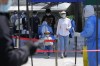
FILE - A worker in a protective suit swabs a man's throat for a COVID-19 test at a testing site in an office complex in Beijing, Friday, April 29, 2022. The World Health Organization on Thursday, May 5, 2022 is estimating that nearly 15 million people were killed either by the coronavirus or by its impact on overwhelmed health systems in the past two years, more than double the official death toll of 6 million. (AP Photo/Mark Schiefelbein, File)

WHO tasked scientists with determining the actual number of COVID-19 deaths between January 2020 and the end of last year. They estimated that between 13.3 million and 16.6 million people died either due to the coronavirus directly or because of factors somehow attributed to the pandemic’s impact on health systems, such as cancer patients who were unable to seek treatment when hospitals were full of COVID patients.

Based on that range, the scientists came up with an approximated total of 14.9 million.

The estimate was based on country-reported data and statistical modeling, but only about half of countries provided information. WHO said it wasn’t yet able to break down the data to distinguish between direct deaths from COVID-19 and those related to effects of the pandemic, but the agency plans a future project examining death certificates.

“This may seem like just a bean-counting exercise, but having these WHO numbers is so critical to understanding how we should combat future pandemics and continue to respond to this one,” said Dr. Albert Ko, an infectious diseases specialist at the Yale School of Public Health who was not linked to the WHO research.

For example, Ko said, South Korea’s decision to invest heavily in public health after it suffered a severe outbreak of MERS allowed it to escape COVID-19 with a per-capita death rate around a 20th of the one in the United States.

Accurately counting COVID-19 deaths has been problematic throughout the pandemic, as reports of confirmed cases represent only a fraction of the devastation wrought by the virus, largely because of limited testing. Government figures reported to WHO and a separate tally kept by Johns Hopkins University show more than 6.2 million reported virus deaths to date.

Scientists at the Institute of Health Metrics and Evaluation at the University of Washington calculated for a recent study published in the journal Lancet that there were more than 18 million COVID deaths from January 2020 to December 2021.

A team led by Canadian researchers estimated there were more than 3 million uncounted coronavirus deaths in India alone. WHO’s new analysis estimated that missed deaths in India alone ranged between 3.3 million to 6.5 million.

In a statement following the release of WHO’s data, India disputed the U.N. agency’s methodology. India’s Health and Family Welfare Ministry called the analysis and data collection methods “questionable” and complained that the new death estimates were released “without adequately addressing India’s concerns.”

FILE - World Health Organisation (WHO) director-general Dr. Tedros Adhanom Ghebreyesus speaks at a news conference in Cape Town, South Africa, Friday, Feb. 11, 2022. The World Health Organization on Thursday, May 5, 2022 is estimating that nearly 15 million people were killed either by the coronavirus or by its impact on overwhelmed health systems in the past two years, more than double the official death toll of 6 million. (AP Photo/Nardus Engelbrecht, File)

Samira Asma, a senior WHO director, acknowledged that “numbers are sometimes controversial” and that all estimates are only an approximation of the virus’ catastrophic effects.

“It has become very obvious during the entire course of the pandemic, there have been data that is missing,” Asma told reporters during a press briefing on Thursday. “Basically, all of us were caught unprepared.”

Ko said the new figures from WHO might also explain some lingering mysteries about the pandemic, like why Africa appears to have been one of the least affected by the virus, despite its fragile health systems and low vaccination rates.

“Were the mortality rates so low because we couldn’t count the deaths, or was there some other factor to explain that?” he asked, citing the far higher mortality rates in the U.S. and Europe.

Dr. Bharat Pankhania, a public health specialist at Britain’s University of Exeter, said the world may never get close to measuring the true toll of COVID-19, particularly in poor countries.

“When you have a massive outbreak where people are dying in the streets because of a lack of oxygen, bodies were abandoned or people had to be cremated quickly because of cultural beliefs, we end up never knowing just how many people died,” he explained.

Pankhania said that while the estimated COVID-19 death toll still pales in comparison to the 1918 Spanish flu pandemic, which experts estimate caused up to 100 million deaths, the fact that so many people died despite the advances of modern medicine, including vaccines, is shameful.

He also warned that the cost of COVID-19 could be far more damaging in the long term, given the increasing burden of caring for people with long COVID.

“With the Spanish flu, there was the flu and then there were some (lung) illnesses people suffered, but that was it,” he said. “There was not an enduring immunological condition that we’re seeing right now with COVID.”
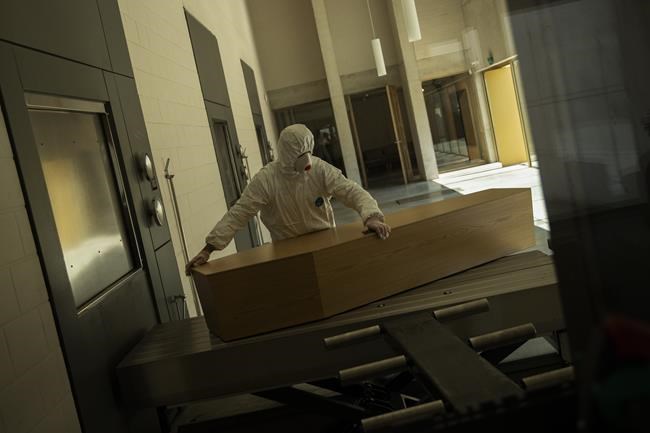
FILE - A worker, wearing full protective gear, moves the casket of a victim of COVID-19 to be cremated during a partial lockdown to prevent the spread of coronavirus at the Pontes crematorium center in Lommel, Belgium, Thursday, April 16, 2020. The World Health Organization is estimating that nearly 15 million people were killed either by the coronavirus or by its impact on overwhelmed health systems in the past two years. That is more than double its official death toll. The U.N. health agency says most of the fatalities were in Southeast Asia, Europe and the Americas. In a report released Thursday, May 5, 2022 WHO chief Tedros Adhanom Ghebreyesus describes the figure as “sobering.
FILE - A worker, wearing full protective gear, moves the casket of a victim of COVID-19 to be cremated during a partial lockdown to prevent the spread of coronavirus at the Pontes crematorium center in Lommel, Belgium, Thursday, April 16, 2020. The World Health Organization is estimating that nearly 15 million people were killed either by the coronavirus or by its impact on overwhelmed health systems in the past two years. That is more than double its official death toll. The U.N. health agency says most of the fatalities were in Southeast Asia, Europe and the Americas. In a report released Thursday, May 5, 2022 WHO chief Tedros Adhanom Ghebreyesus describes the figure as “sobering." (AP Photo/Francisco Seco, File)

“We do not know the extent to which people with long COVID will have their lives cut short and if they will have repeated infections that will cause them even more problems,” Pankhania said.

____

Krutika Pathi and Ashok Sharma in New Delhi contributed to this report.

___

Follow AP’s coverage of the pandemic at https://apnews.com/hub/coronavirus-pandemic

Report Error Submit a Tip

More Stories

City rapped for taking five days to remove animal carcass

Morgan Modjeski 2 minute read Yesterday at 8:34 PM CDT

A Winnipeg resident said she’s upset it took the city five days to retrieve a dead fawn from her yard after she reported it to 311.

Amy Gelhorn said she and her family noticed the animal carcass in her garden on Saturday. She called 311 and was told it would be picked up after the long weekend.

“It was removed this afternoon,” the north River Heights resident said Thursday. “So it took six days to remove it and we had to basically phone every day.”

She said neighbours on both sides of her house told her they saw the animal acting strangely on Friday and reported their concerns to 311. It’s believed the animal died overnight. As the days dragged on, the body continued to rot.

Education minister’s reasons for revoking teacher’s licence ‘not good enough,’ judge decides

Maggie Macintosh 5 minute read Preview

Education minister’s reasons for revoking teacher’s licence ‘not good enough,’ judge decides

Maggie Macintosh 5 minute read Updated: 9:14 AM CDT

A Manitoba judge has rejected the education minister’s decision to end a teacher’s career because he repeatedly messaged with a 13-year-old girl on social media.

Read
Updated: 9:14 AM CDT

What it means to be green… in a city beholden to the blue and gold

David Sanderson 8 minute read Preview

What it means to be green… in a city beholden to the blue and gold

David Sanderson 8 minute read 6:33 PM CDT

It’s not easy being green… if you’re a Winnipeg Blue Bombers season-ticket holder.

Dave Dech ordinarily arrives at his designated seat in Princess Auto Stadium fully decked out in blue and gold. That won’t be the situation this weekend, however, when the Bombers clash with their principal Canadian Football League rival, the Saskatchewan Roughriders, in the annual, sold-out Banjo Bowl game.

“No, I’ll be in green pretty much from head to toe. People sitting around us kid me, but by now they know if it’s the Banjo Bowl, Dave’s showing up in green,” says Dech, 63, possibly the biggest Saskatchewan supporter this side of Moosomin.

Not only does the married father of two grown sons have 25 Roughriders jerseys hanging in his closet — at press time, he was still mulling over which one to throw on for Saturday’s tilt — there is a main-floor lair in his and his wife Patti’s Westwood abode you’ll probably want to avoid if you suffer from prasinophobia — a fear of the colour green.

Read
6:33 PM CDT

It all comes down to the Banjo Bowl

Taylor Allen 7 minute read Preview

It all comes down to the Banjo Bowl

Taylor Allen 7 minute read 7:26 PM CDT

It all started with a comment made by a kicker.

In 2003, Troy Westwood referred to the fine folks of Saskatchewan as “banjo-pickin’ inbreds.”

The following season, the Banjo Bowl was officially born, and it quickly became one of the most notable annual events on the Prairies.

The 22nd edition kicks off today, with the Winnipeg Blue Bombers (6-6) hosting the Saskatchewan Roughriders (8-4) at 3 p.m. in a crucial West Division showdown.

Read
7:26 PM CDT

Rural venue lets artists shine on more intimate stage

Ben Waldman 4 minute read Preview

Rural venue lets artists shine on more intimate stage

Ben Waldman 4 minute read 6:31 PM CDT

With cooler temperatures on their way, Jocelyne Baribeau wants to break the linguistic ice between musicians with a new concert series at her home near Ste. Geneviève, about 30 minutes east of the Perimeter.

A onetime Western Canadian Music Award winner as best francophone artist, the St. Vital-raised Baribeau intends the Icebreakers series — which has its first concert this Sunday — to provide musicians with an intimate, rural setting to experiment and collaborate with peers with whom they might not otherwise share a bill.

“A goal for me to sort of erase a bit of that invisible line that we put. ‘It’s a French event,’ or ‘It’s an English event,’” says Baribeau, the vice-president of the Canadian Folk Music Awards.

“The more we can do that, the more opportunity there is for everyone. Music is music, and I don’t think it’s a language thing. You can feel a lot of things even when someone is singing in a language you don’t understand.”

Read
6:31 PM CDT

Highway-safety upgrades in progress after tragic Interlake crash

Chris Kitching 5 minute read Preview

Highway-safety upgrades in progress after tragic Interlake crash

Chris Kitching 5 minute read Updated: 6:25 PM CDT

Provincial workers have started to update or install safety measures at a rural Interlake intersection where four teenage friends died in a crash on Labour Day weekend.

Pavement markings were repainted at Highway 8 and Provincial Road 229, just west of Winnipeg Beach, ahead of work to refresh worn-down rumble strips, starting Monday, and install flashing lights atop two stop signs, following an assessment earlier this week.

“They will also need to incorporate any information from the RCMP report that might be helpful if we were to consider any additional safety measures at this intersection,” Transportation and Infrastructure Minister Lisa Naylor said of department staff.

“The most important thing is safety, and any kinds of changes we make at any intersection actually have to make it safer.”

Read
Updated: 6:25 PM CDT