Tending a garden an extended conversation with nature
Advertisement
Read this article for free:
or
Already have an account? Log in here »
To continue reading, please subscribe:

Digital Subscription
One year of digital access for only $205*
- Enjoy unlimited reading on winnipegfreepress.com
- Read the E-Edition, our digital replica newspaper
- Access News Break, our award-winning app
- Play interactive puzzles
*First annual payment billed as $205.00 + GST for one year. This annual subscription will automatically renew at $233.00 + GST every 52 weeks (10% off the regular annual price of $259.35). Offer available to new and qualified returning subscribers only. Cancel any time.
To continue reading, please subscribe:
Add Free Press access to your Brandon Sun subscription for only an additional
$1 for the first 4 weeks*
- Enjoy unlimited reading on winnipegfreepress.com
- Read the E-Edition, our digital replica newspaper
- Access News Break, our award-winning app
- Play interactive puzzles
*Your next Brandon Sun subscription payment will increase by $1.00 and you will be charged $17.95 plus GST for four weeks. After four weeks, your payment will increase to $24.95 plus GST every four weeks.
Read unlimited articles for free today:
or
Already have an account? Log in here »
Hey there, time traveller!
This article was published 07/06/2022 (1577 days ago), so information in it may no longer be current.
I am a gardener. My front garden is a part-shade and perennial. The back one (a gravel car park no more) is perhaps a little less dappled and also perennial, though I have been given to plant a sunflower or two, perhaps a red pepper, because, how can I not wish for a flower that knows the arc of the sun through the sky or resist a plant that offers to turn from green to red over time.
This wishing for the ripening of sunflower and red pepper is rarely requited; I am more amply rewarded a “harvest” if I carry, from one sun spot to the next, a potted cherry tomato plant.
I am not a scientific gardener like the one who might live beside you, saturated with an expert knowledge of plants and their inclinations. I am rather unschooled, but as keen as any gardener whose fingers itch to dig, who converses with plants, soil, moisture and qualities of light.
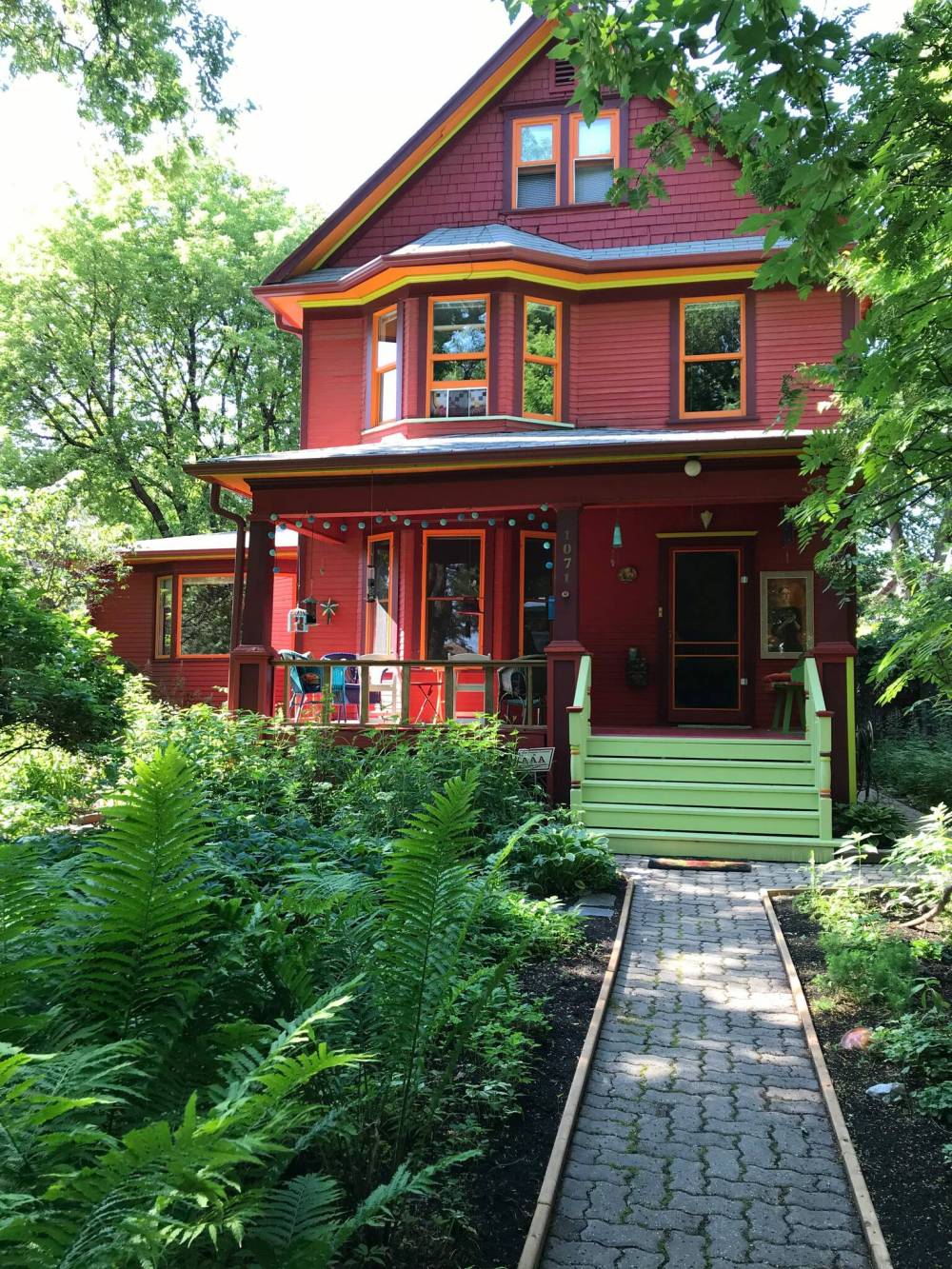
I am further as keen to grasp what the poet Emily Dickinson recommends as the co-responsibility of garden and gardener. Rather than meeting a flower “casually,” for example, she suggests meeting with a deeper knowing of the flower as an intricate sentinel in the natural world. Such a meeting understands both the flower’s profound responsibility to bud, to bloom, to “adjust” to changing conditions — “Great Nature not to disappoint”— and the gardener’s responsibility to collaborate in nurturing the flower’s growing ambition.
At the beginning of spring (and how this long winter whetted the desire for such beginnings), I am animated (sometimes overwhelmed) by the tasks that lie ahead as a garden minder, just as I think the plants themselves must feel the rush of the melt and the implacable push of the stem rising. (Of course that’s the anthropomorphic in me.)
And always, I am surprised. A perennial garden, like the kind I keep, offers surprises: which plants will stay; which wander further afield; which multiply; and which persist as a single plant (even as I may fervently wish for its replication).
I am taught by a further surprise that has to do with the fact that I have a special gift for forgetting the names of the plants that do return. Perhaps it’s the length of the winter, perhaps it’s a peculiarity of my particular nature, perhaps it is expressive of the life-death-life cycle of the seasons. But, at spring’s outset, as snow white yields to black earth, I stutter, draw blanks.
Unfettered by that forgetting, however, I point with brimming enthusiasm, relying on whatchamacallit and thingamajig as a way of naming. As the whatchamacallits and thingamajigs assume more visible proportions, I am recalled to “Aha, that’s the…”
Immersed in such pointing, I become reacquainted with the first, sharp articulation of a Hosta’s spear, catch the tender, sky blue hidden in early forget-me-nots settling themselves along the edges of a serpentine path — if I’m lucky and the forget-me-nots have decided to return for the opening up of May. Slowly and sometimes quietly, I regain my former fluency in human languages designed to name such flowering.
As the season marks its passage, I think steadily about the welcoming of growth, become as attached to the ending of any flower as I have been to its beginning, as unwilling to curb any form of its expression.
If a rogue plant happens along, I am full of wonder that the grounds around my house can host the unexpected. My garden is thus companionable for gardeners of my ilk. I might secure the term “wild” or “English” for its character, though I know full well wild is in the eye of the human beholder and English is not my garden’s first language. I do not produce the remarkable haze of colours and shapes that come in an “English Garden” as phlox and rambling rose, foxglove and Queen Anne’s Lace. If there’s lace in my yard, it’s gout weed (never controllable, always avid to reproduce) and ferns (equally generous in their willingness to branch out).

This process of forgetting and remembering names, patterns, and possibilities reveals how my developing gardener self meets the plants composing themselves in my yard. I am always learning that my garden requires only that I tend, really co-tend, complementing what naturally occurs as seedspread and rooting, rainfall, wind and sunlight.
That gentled grasp encourages me to be moved by the ingenuity of plants that find their way through cracks and crevices, to weed judiciously, make room for the creeping charlie, whose tiny mauve flowers echo lilac blooms, and celebrate the generosity of native plants — mock sunflowers, giant hyssop, Jerusalem artichokes, sweet Joe-Pye-weed.
Always I am relearning in this meet and greet that all living organisms have the same genes, a commonality disclosing noteworthy biological kinships: it has been said that humans share 98 per cent of their DNA with gladiolas; 50 per cent with trees; 45 per cent with cabbages; 25 per cent with daffodils.
As I become increasingly fluent within these larger contexts — my gardening conversation more alive with understandings of reciprocity and interconnectedness — so too my garden more freely finds its unique expression. I am given to thinking that in a time when life on the planet is in jeopardy because humans have spoken poorly and self-servingly, thinking about flowering, talking about the collaborative reality of gardening — conversing with what nature unconditionally gifts — has never been more important.
debbie.schnitzer@mts.net
Deborah Schnitzer
Winnipeg writer Deborah Schnitzer explores life lessons from women in their Third Act.
Our newsroom depends on a growing audience of readers to power our journalism. If you are not a paid reader, please consider becoming a subscriber.
Our newsroom depends on its audience of readers to power our journalism. Thank you for your support.