Rollin’ on the river
Swapping the bumpy trail for floating comfort on the Mississippi
Advertisement
Read this article for free:
or
Already have an account? Log in here »
To continue reading, please subscribe:
Digital Subscription
One year of digital access for only $1.44 a week*
- Enjoy unlimited reading on winnipegfreepress.com
- Read the E-Edition, our digital replica newspaper
- Access News Break, our award-winning app
- Play interactive puzzles
*Billed as $5.77 plus GST every four weeks. After 52 weeks, price increases to the regular rate of $19.95 plus GST every four weeks. Offer available to new and qualified returning subscribers only. Cancel any time.
To continue reading, please subscribe:
Add Free Press access to your Brandon Sun subscription for only an additional
$1 for the first 4 weeks*
- Enjoy unlimited reading on winnipegfreepress.com
- Read the E-Edition, our digital replica newspaper
- Access News Break, our award-winning app
- Play interactive puzzles
*Your next Brandon Sun subscription payment will increase by $1.00 and you will be charged $17.95 plus GST for four weeks. After four weeks, your payment will increase to $24.95 plus GST every four weeks.
Read unlimited articles for free today:
or
Already have an account? Log in here »
Hey there, time traveller!
This article was published 30/07/2022 (1541 days ago), so information in it may no longer be current.
New wheels
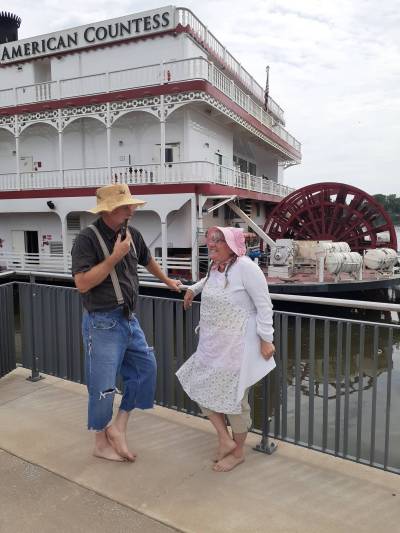
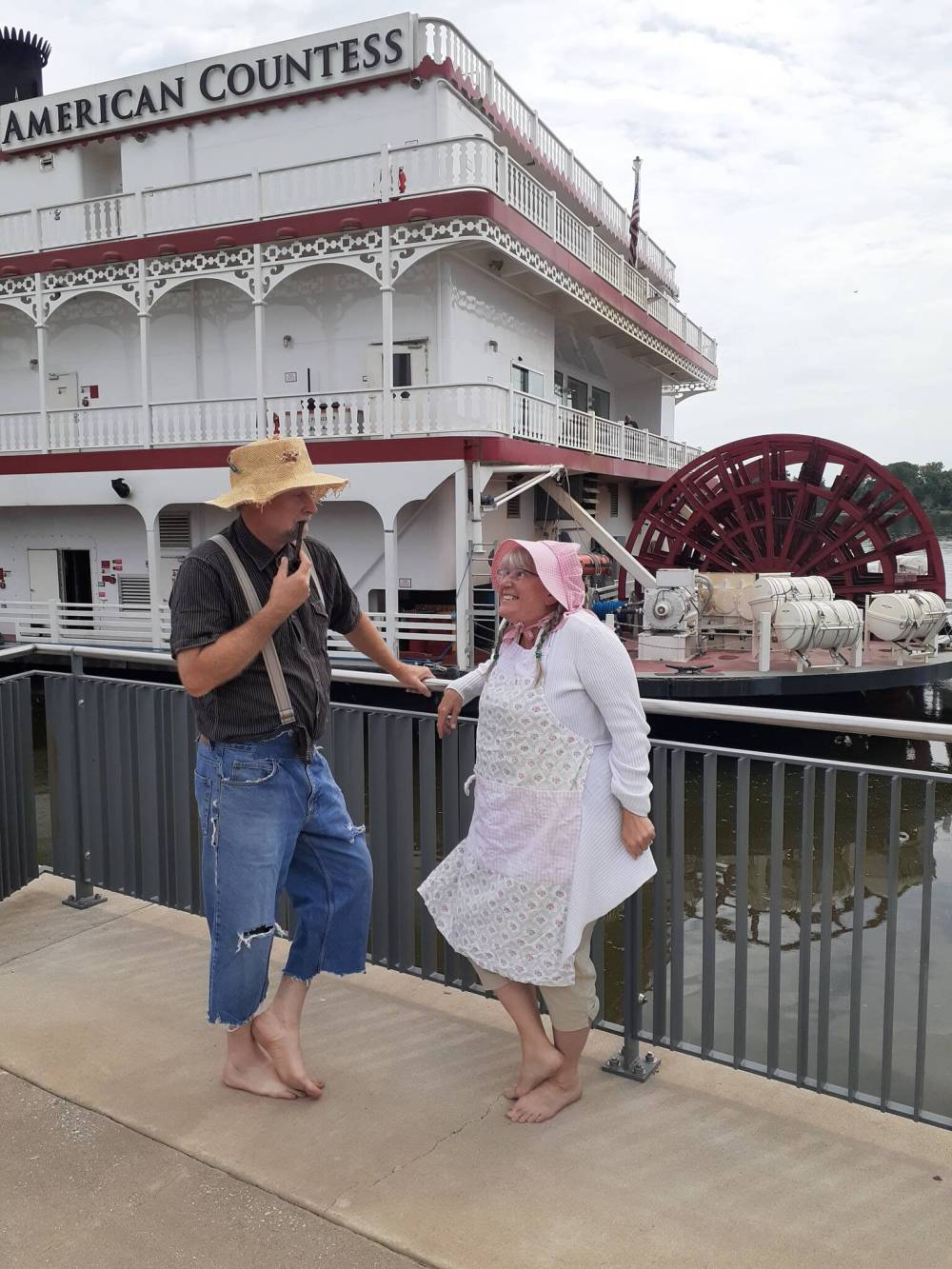
The Red River Trail from Winnipeg may have ended in St. Paul, Minn., but the trade route kept going down the Mississippi River. Just like us. Long before the Mall of America, the closest shopping centre to Red River was St. Louis. So we sent our ox and cart back to Winnipeg and got a berth on the paddle-wheeler the American Countess — a ‘floating wedding cake’ of luxury consistent with many steamboats of old. The Countess’s twin paddle-wheels are easily four times the diameter of our ox-cart wheels. We definitely traded up.
Monuments to a forgotten man
Supplied
Terry Doerksen and his wife, Patty, got a berth on the paddle-wheeler the American Countess.
Our cruise started with a night at the Radisson Hotel. I was nervous entering the world of beautiful people. After 1- weeks in close contact with Zik, my pores were still emitting hints of ‘eau de ox.’ I hadn’t had a decent bath for weeks, notwithstanding my attempt at ablutions in the Mississippi a couple days earlier. I’m still not sure if it was me or the river which gained more dirt from the encounter. I’m guessing I was in approximately the same state of hygiene as the first outsider to see the upper Mississippi — the same guy who gave his name to the hotel where we’d be staying. Pierre-Esprit Radisson. He probably would have been just as self-conscious checking in at the front desk as I was.
The original Radisson hotel, located a few blocks from Pierre-Esprit’s Mississippi, became an international chain, with a high-rise franchise eventually built in downtown Winnipeg. As to Radisson the man, his beginnings were a little less promising. As a young teen, he was kidnapped by some Mohawk warriors and when he tried to escape, his captors tortured him to within an inch of his life. After several years, Radisson did make his break and followed the fur trade west. In the end, it could be argued that Pierre-Esprit would become the most influential person in Manitoba’s history. Together with his brother-in-law, Medard Chouart des Groseilliers, Radisson spearheaded the formation of the continent-shaping Hudson’s Bay Company, for better or worse.
For me, living in the electoral district of Radisson and seeing the guy’s name in bright lights overlooking Portage Avenue, it was a little surprising how hard I had to look to find any reference to Pierre-Esprit in the Manitoba Museum. But I found it — on an electronic page near the coolest monument in the whole museum: the replica ship Nonsuch. It was the Nonsuch which carried Radisson to Hudson’s Bay and proved that exporting furs out of Manitoba’s far north was feasible.
Pierre-Esprit Radisson may not have felt comfortable in a hotel bearing his name (nor has he been properly celebrated in a province he helped shape). But, freshly bathed and writing from a paddle-wheeler on the Mississippi docked beside a Radisson hotel, I bear memory to an extraordinary man.
‘Big Big River River’
The Anishinaabeg — sometimes called Chippewa, Ojibwa or in Manitoba, Saulteaux — have shaped the history of central Canada. Their homeland stretches from Ottawa to Manitoba and then around the western end of Lake Superior into Minnesota. Anishinaabeg were often the guides and companions of outsiders to the area, so their names for places, animals and other indigenous groups have become part of the English vocabulary. Radisson was living among the Anishinaabeg when they showed him a certain big river flowing out of their territory. And they taught him its name. Mississippi. Yep. Big River. So when you talk of the ‘big Mississippi River’ you’re simply repeating yourself.
Mississippi inspiration

In a couple of days we’ll be rolling by Hannibal, Mo., the birthplace of author Mark Twain. His stories of Tom Sawyer and Huck Finn rafting on the Mississippi filled the imaginations of both Patrick Simmons of the Doobie Brothers and myself. Simmons was inspired to write a song. I was inspired to take my two boys on a raft trip down the Tuul Gol in Mongolia. I use both the words ‘raft’ and ‘trip’ with a fair bit of generosity. We stopped by the sawmill and bought what I calculated to be enough small larch logs, then hired a truck to haul us and our purchase down to the river. Armed with a hammer, rope and visions of high adventure our raft took shape. As we launched our finished craft into the water, I quickly realized that my grasp of physics was not enough to keep one man and two boys on the dry side of the river. Our adventure was in jeopardy, but I had to salvage something out of it. I told the boys to jump on without me and ride the raft to the next bend of the river and then swim to shore, leaving the raft to travel where it would and us to figure out how to get back home. Things worked out a lot better for the Doobie Brothers. Their song, Black Water, hit No. 1 on the charts in 1975.
Well, I built me a raft and she’s ready for floatin’
Ol’ Mississippi, she’s callin’ my name
Catfish are jumpin’, that paddle wheel thumpin’
Black water keeps rollin’ on past just the same
Old black water, keep on rollin’
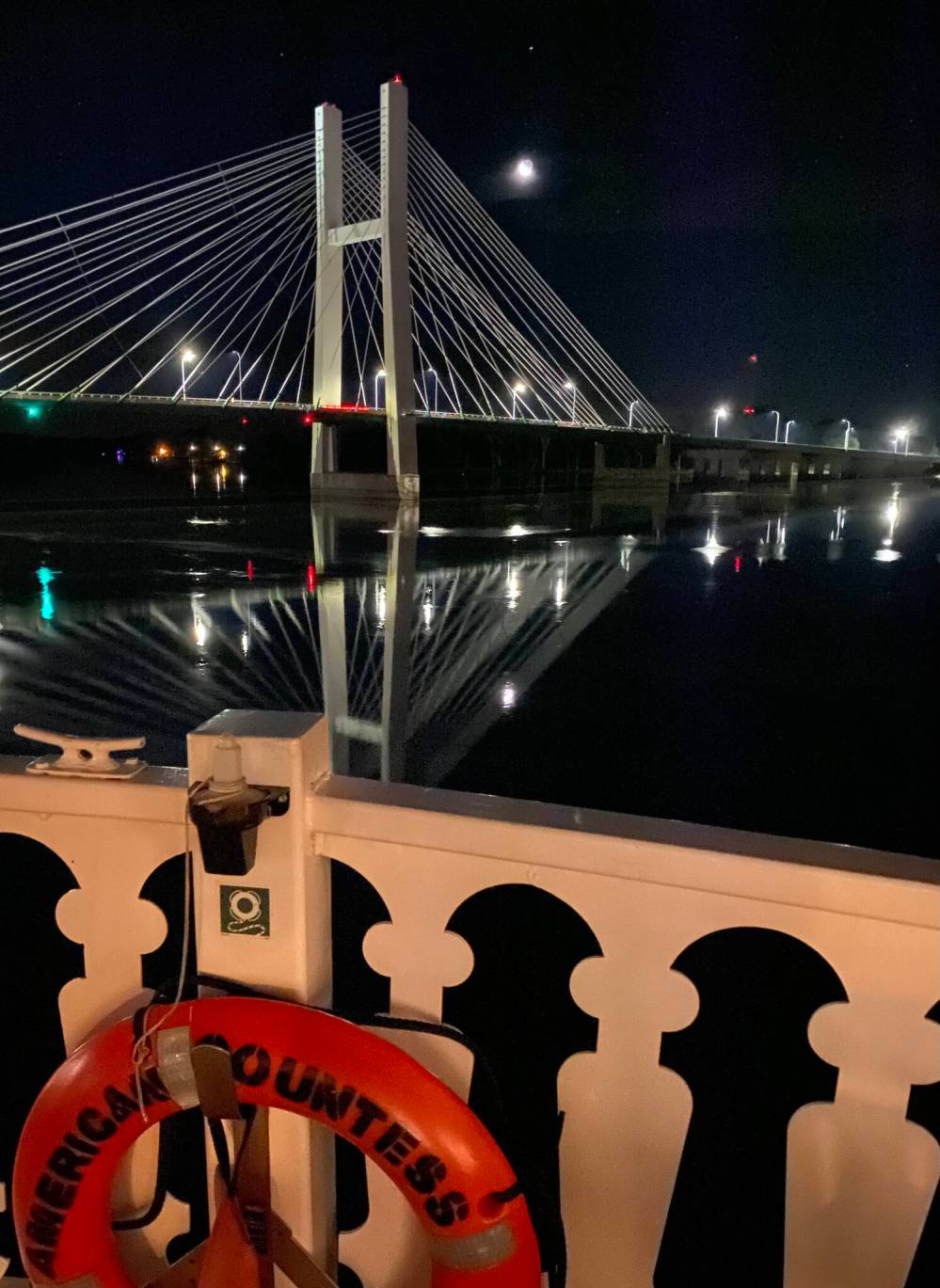
Mississippi moon, won’t you keep on shinin’ on me?
Supplied
The Mississippi moon over old black water.
(From Black Water by the Doobie Brothers)
Lacrosse
Our first port-o-call on our way to St. Louis was the city of La Crosse, Wis. There are theories on how it got it’s name, but I’m going with the one I heard at the info booth when we disembarked. Marquette, a Jesuit priest, and Jolliet, a French-Canadian explorer, were the first outsiders to travel where our paddle-wheeler passed today. They stopped where we did, and observed an epic match being played by local Dakota men. The sticks that were used to throw the ball reminded the two visitors of crosses, so both the game and the community were designated ‘La Crosse.’ Of course, the Dakota had their own name for what they were playing: the Creator’s Game. It was a lot more than fun. Their sport was an act of worship to Wakan Tanka. An unplanned parallel to the game’s new French name.
Patty and I biked our way from our boat to the city of La Crosse’s welcome statue. It seemed fitting to join the three bronze players in their worship with our own song of praise to the Creator.
A previous contingent of Winnipeggers heading to St. Louis probably didn’t stop on their way by La Crosse. The year was 1904. They were focused on getting to the first Olympics held outside of Greece, and the first to feature their sport of lacrosse. The Winnipeg Shamrocks, representing Canada, were the class of the field. They played the gold medal game against a team from St. Louis in front of 60,000 fans. The Shamrocks broke open a close game by scoring five unanswered goals in the fourth quarter to beat the host team 8-2.
In one aspect, the bronze-medal winning team’s presence at the Olympics was more significant than the Shamrocks. If any team might have been playing the Creator’s Game for its original purpose of worship it would have been another team down from Canada: Indigenous players from Brantford, Ont., representing the Mohawk Nation and competing in a truly indigenous game.
Return of the Alpha
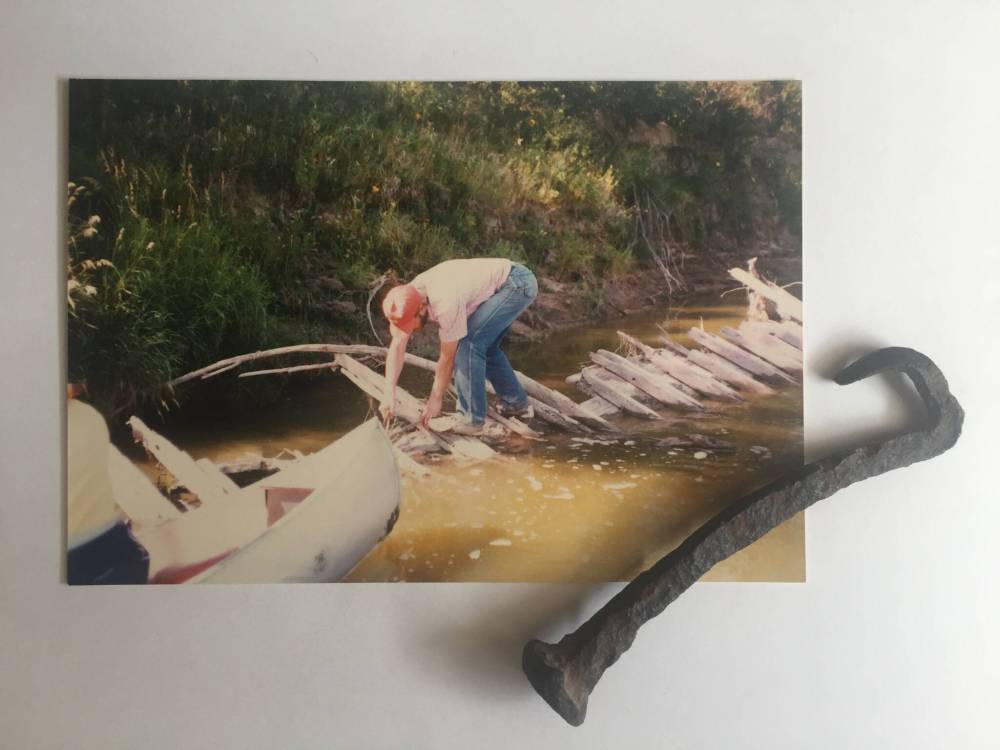
Supplied
There’s one aspect of the American Countess that’s not authentic — she’s not powered by steam. In the heyday of paddle-wheelers, the crew would throw oil in the firebox before coming in to port. They wanted to ensure that two pure-black plumes of smoke were flowing back from the smokestacks. That awesome display would be somewhat frowned upon nowadays.
But the first paddle-wheeler I ever boarded was authentic. Her smokestacks weren’t just for decoration. The S.S. Alpha worked the Red River and later the Assiniboine. In 1885, she ran aground east of Spruce Woods. The crew, who had gone to Winnipeg to get help, returned to find the Alpha plundered and dismantled. When I arrived on the scene by canoe a hundred years later, there was still a rib cage of Wisconsin oak showing above the water. I climbed on board what was left of an original paddle-wheeler, hoping I’d find a souvenir.
Yesterday, the Countess was getting ready to leave port when I remembered the crooked nail I had brought along in my backpack. The S.S. Alpha had been built right there in La Crosse before being brought to Manitoba. I had intended to bring her back home. I begged for five minutes of grace from the deckhand at the gangway and hurried onto shore. Right there beside our paddle-wheeler I found the perfect background for a homecoming reunion pic.