Attacked at home, Afghan Sikhs find community on Long Island
Advertisement
Read this article for free:
or
Already have an account? Log in here »
To continue reading, please subscribe:

Digital Subscription
One year of digital access for only $205*
- Enjoy unlimited reading on winnipegfreepress.com
- Read the E-Edition, our digital replica newspaper
- Access News Break, our award-winning app
- Play interactive puzzles
*First annual payment billed as $205.00 + GST for one year. This annual subscription will automatically renew at $233.00 + GST every 52 weeks (10% off the regular annual price of $259.35). Offer available to new and qualified returning subscribers only. Cancel any time.
To continue reading, please subscribe:
Add Free Press access to your Brandon Sun subscription for only an additional
$1 for the first 4 weeks*
- Enjoy unlimited reading on winnipegfreepress.com
- Read the E-Edition, our digital replica newspaper
- Access News Break, our award-winning app
- Play interactive puzzles
*Your next Brandon Sun subscription payment will increase by $1.00 and you will be charged $17.95 plus GST for four weeks. After four weeks, your payment will increase to $24.95 plus GST every four weeks.
Read unlimited articles for free today:
or
Already have an account? Log in here »
Hey there, time traveller!
This article was published 29/08/2022 (1477 days ago), so information in it may no longer be current.
Kulwinder Singh Soni’s voice quavered as he recounted the day in March 2020 when an Islamic State gunman burst into a Sikh gurdwara’s prayer hall in Kabul, hurling grenades and firing assault rifles. Among the 25 people killed were Soni’s father, sister-in-law and 4-year-old niece.
Police later warned the family not to attend their funerals because terrorists had planted land mines outside the temple. They were ultimately able to attend, but only after officers did a sweep and cleared them to enter the shrine.
“That’s when we decided we needed to leave Afghanistan,” Soni said. “There was absolutely no future for our family in that country.”
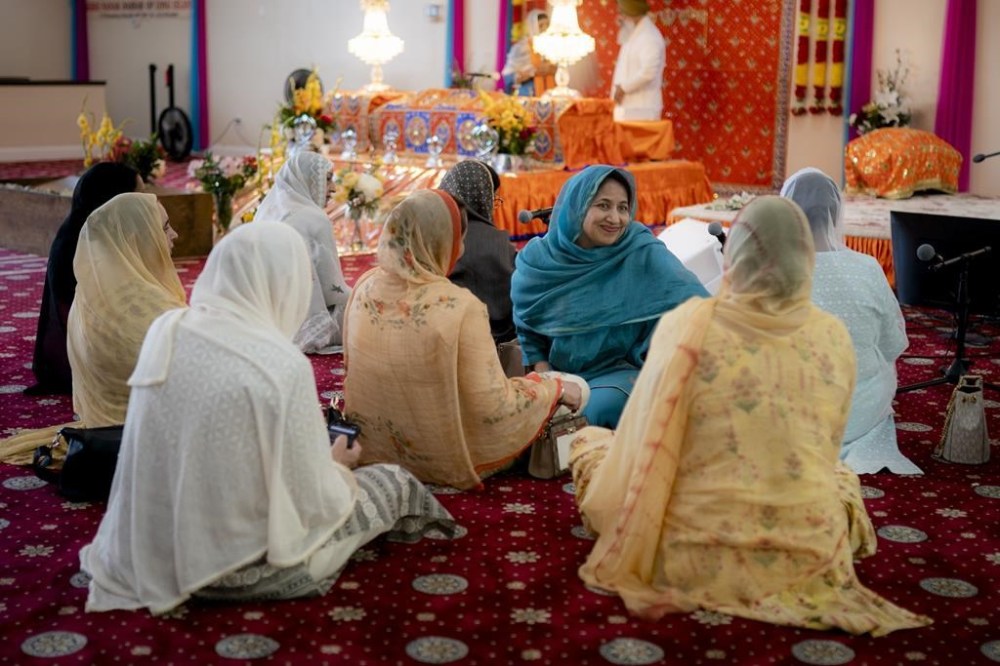
After a two-year struggle to make an exit, including nearly a year under restored rule of the fundamentalist Taliban group, Soni and 12 family members including his mother, siblings, nieces and nephews, arrived in the United States last month.
They are settling in Hicksville, on New York’s Long Island, a community that has come to be a growing refuge for not only Afghan Sikhs but also Hindus, both of them religious minorities that have increasingly suffered discrimination and persecution in their home country.
Sikhs and Hindus make up only a tiny fraction of the population of Afghanistan, which is almost entirely Muslim. Under the Taliban in the late 1990s, they were asked to identify themselves by wearing yellow armbands or badges, reminiscent of Nazi Germany, and in recent years they have been repeatedly targeted by extremists.
In July 2018 an ISIS suicide bomber ambushed a convoy of Sikhs and Hindus as they were on their way to meet President Ashraf Ghani in the eastern city of Jalalabad, killing 19. On June 16 of this year, an ISIS gunman attacked a gurdwara, or house of worship, in Kabul, killing one worshipper and wounding seven others. Sikhs have also faced challenges with cremating their dead, which they consider a sacred belief but Islam views as sacrilegious.
As the Aug. 30 one-year anniversary of U.S. forces’ withdrawal from Afghanistan approaches, a recent report by the bipartisan U.S. Commission on International Religious Freedom warns of “a rapid decline and near extinction of the already small Afghan Hindu and Sikh communities” in Afghanistan, in addition to persecution of other religious minorities.
In October 2021, the report says, the Sikh community shared videos of alleged Taliban members vandalizing and ransacking their gurdwara in the neighborhood of Karte Parwan, which is home to the remaining 100 or fewer Sikhs and Hindus in Kabul.
Soni, now 27, still has fresh memories of the 2020 gurdwara attack that ultimately drove the family from the country. When the assailants stormed the prayer hall early that morning, he was in the next room at the Gurdwara Har Rai Sahib, where his father was the chief granthi, or ceremonial reader of the Sikh sacred text.
He saw men running into the temple with shoes, something that is prohibited. As he darted out to stop them, Soni spotted the bodies of a security guard and a teen in a pool of blood right where devotees usually washed their feet before entering. He retreated with two siblings to a room, where they locked the door and hunkered down for several hours.
When the siege ended, Afghan special forces had killed the assailants and rescued at least 80 worshippers. Soni rushed to the prayer hall, where he found his three relatives dead and his mother and older brother wounded.
“My mom told me (the gunman) kept shooting and throwing bombs even as people tried to hide,” Soni said. “My brother heard his daughter’s voice calling out to him to help her. He was helpless.”
In late August of last year, after the Taliban took over Kabul, Soni, one of the few English speakers in his community, assumed the role of a spokesperson and negotiator working to secure their exit from Kabul. He tried to talk the Canadian government into evacuating about 250 Sikhs and Hindus, including his family.
After an ISIS suicide bombing at the airport scuttled that plan and fears escalated under Taliban rule, the women and children in Soni’s family moved to New Delhi and the men shuttled between India and Kabul to care for their sacred shrine. It then took months of struggle and daily communication between the U.S. State Department; the Sikh Coalition, a Sikh American advocacy group; and Afghan Sikhs in Hicksville to get the entire family of 13 to the U.S.
Paramjit Singh Bedi, a longtime community leader who moved to the United States in 1984 and was instrumental in bringing them over, is now hoping to help them get housing, work permits and medical insurance, and the children enrolled in school.
“This family has been through a lot,” Bedi said. “But we are a resilient people and we are strong and steadfast in our faith. I know they will be OK.”
Bedi has advocated for the permanent resettlement of the Afghan Sikh community here, and estimates there are about 200 of them living on Long Island.
There are also about 800 Afghan Hindus in the area, according to Doulat Radhu Bathija, a leader of that community.
Back in Afghanistan, gurdwaras and temples always stood side by side, and Bathija is thrilled that is also the case thousands of miles away on Long Island; in Hicksville, the Guru Nanak Darbar gurdwara is located right next to the Asa’Mai Hindu Temple.
Bathija said he sees the Hindu and Sikh communities as “the same,” and they visit each other’s places of worship and celebrate together Diwali, the festival of lights.
“We get together for weddings and funerals,” he said, “like a family.”
Sikhs and Hindus are not recent migrants to Afghanistan but have hundreds of years of history there. Sikh texts speak of a time when Guru Nanak, the religion’s founder, visited Afghanistan in the 1500s. Yet they are often viewed as infidels, said Jagbir Jhutti-Johal, a professor of Sikh Studies at the University of Birmingham in the U.K. Women, in particular, have been subjected to severe restrictions under the Taliban.
While as recently as the 1970s there were about 200,000 Sikhs in Afghanistan, Jhutti-Johal anticipates that by the end of this year there may be none left. Over the years, most have moved to India or the West.
Jhutti-Johal believes the West may be the best home for these communities since their Afghan ethnic identity and meager social services in India make things more complicated there.
“They are also going to need access to mental health services after everything they have been through,” she said.
Soni’s family is now trying to win formal asylum in the U.S., and supporters say they have a strong case.
“There is an overwhelming and compelling amount of evidence for how this family experienced religious persecution in Afghanistan because they are Sikhs,” said Mark Reading-Smith, senior managing director of programs for the Sikh Coalition. “They’ve lost more than we can ever imagine.”

The family is slowly recovering. But Soni said he’s not even sure what “normal” life looks like, having grown up bullied and beaten in school and on the street for being Sikh. By comparison, Long Island feels a lot more welcoming.
Soni has been praying at the gurdwara. He loves seeing his little nieces and nephews smile. And his mother does not panic anymore whenever he leaves home.
“She now tells us to go out and enjoy life,” Soni said. “Here, I think, we have the opportunity to become who we want to become.”
___
Associated Press religion coverage receives support through the AP’s collaboration with The Conversation US, with funding from Lilly Endowment Inc. The AP is solely responsible for this content.
The Free Press acknowledges the financial support it receives from members of the city’s faith community, which makes our coverage of religion possible.