The next invasive garden threat? A slithering, jumping worm

Advertisement

Advertise with us

Just when you think you’ve become accustomed to the spotted lanternfly invasion, along comes another menace to the ecosystem: the Asian jumping worm.

Read this article for free:


or

Already have an account? Log in here »

To continue reading, please subscribe:

Subscribe and receive a limited-edition Free Press branded hat or tote.

Digital Subscription

One year of digital access for only $205*

  • Enjoy unlimited reading on winnipegfreepress.com
  • Read the E-Edition, our digital replica newspaper
  • Access News Break, our award-winning app
  • Play interactive puzzles

*First annual payment billed as $205.00 + GST for one year. This annual subscription will automatically renew at $233.00 + GST every 52 weeks (10% off the regular annual price of $259.35). Offer available to new and qualified returning subscribers only. Cancel any time.

To continue reading, please subscribe:

Add Free Press access to your Brandon Sun subscription for only an additional

$1 for the first 4 weeks*

  • Enjoy unlimited reading on winnipegfreepress.com
  • Read the E-Edition, our digital replica newspaper
  • Access News Break, our award-winning app
  • Play interactive puzzles
Start now

*Your next Brandon Sun subscription payment will increase by $1.00 and you will be charged $17.95 plus GST for four weeks. After four weeks, your payment will increase to $24.95 plus GST every four weeks.

Hey there, time traveller!
This article was published 18/10/2022 (1410 days ago), so information in it may no longer be current.

Just when you think you’ve become accustomed to the spotted lanternfly invasion, along comes another menace to the ecosystem: the Asian jumping worm.

Allow me to introduce you to Amynthas agrestis, also known as “Alabama jumper,” “Jersey wriggler” and the rude-but-accurate “crazy worm.” Unlike garden-variety earthworms, these flipping, thrashing, invasive miscreants are ravenous consumers of humus, the rich, organic, essential top layer of soil formed by dead and decaying small animals, insects and leaf litter in places like forests, plant nurseries and your garden.

Plants, fungi and other soil life cannot survive without humus, and “Asian jumping worms can eat all of it,” Sarah Farmer of the U.S. Forest Service wrote in a USDA Southern Research Center blog post published in May.
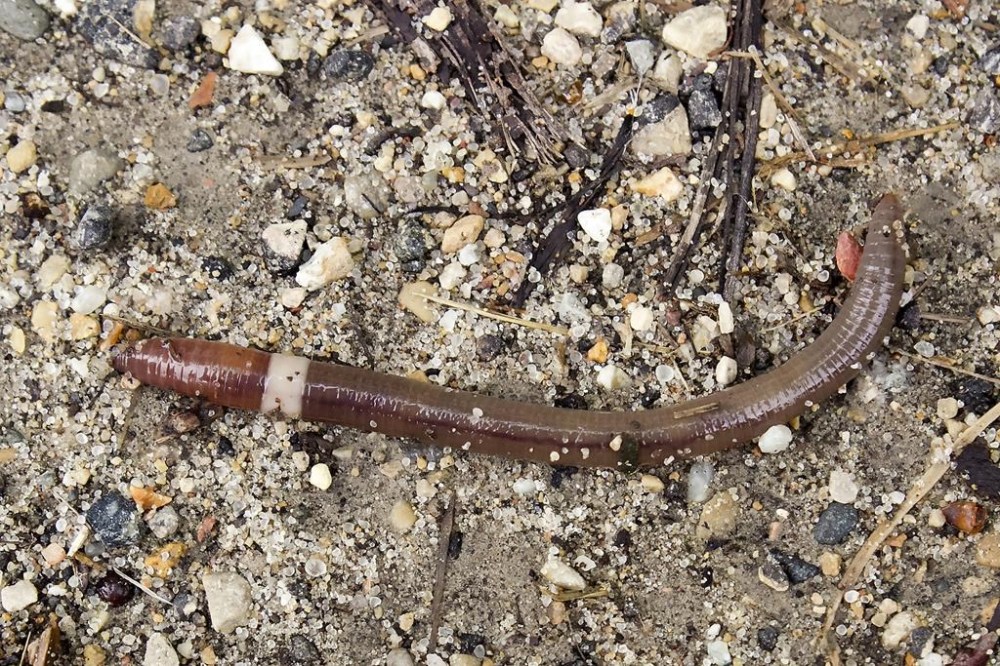
This July 2, 2014, image provided by Susan Day shows a mature Asian jumping worm found in Madison, Wis. The species is distinguishable from other earthworms by the presence of a creamy gray or white band encircling its body. (Susan Day/UW–Madison Arboretum via AP)

A decline in humus would also threaten birds and other wildlife that depend on soil-dwelling insects for food.

The insatiable invertebrates, native to east-central Asia, are believed to have been introduced to the United States in the late 1800s, likely as hitchhikers in potted plants. But their existence went largely unnoticed — or perhaps underreported — until the past decade, when ecologists flagged them as problematic, according to Dr. Timothy McCay, a biology and environmental studies professor at Colgate University in Hamilton, New York.

Since then, the worms’ presence has been confirmed in 35 states across the country.

Although their annual life cycle ends in winter, Asian jumping worm cocoons survive to spawn a new generation in spring. Their tiny eggs are nearly impossible to notice in soil or mulch, but adult worms, which range from 3 to 8 inches long, are easy to spot close to the soil surface and can often be seen moving under mulch or leaf litter, McCay said.

As they devour their way through the soil, the worms leave two things behind: cocoons and castings. The cocoons are tiny and soil-colored, so they are easy to miss. However, the castings, or excrement, have a granular, coffee-ground texture that will alert you to their presence.

The glossy worms can be either gray or brown, with a smooth cream or white collar that wraps entirely around part of their bodies. When touched, they thrash from side to side, jump, and may even slither back and forth like a snake. That behavior, coupled with their ability to reproduce rapidly without a mate, gives them an advantage over predators, McCay said.

“Robins and other birds, shrews, garter snakes, and amphibians like toads may not be able to effectively suppress their populations,” he said.

McCay, whose research focuses on understanding how the worms invade intact forests, and their effect on forest biodiversity, cautions that “gardeners should do what they can to avoid spreading jumping worms to new areas.” Because the worms typically move into forests from nearby gardens, he said, control in home and community gardens is necessary to slow their invasion into natural habitats.
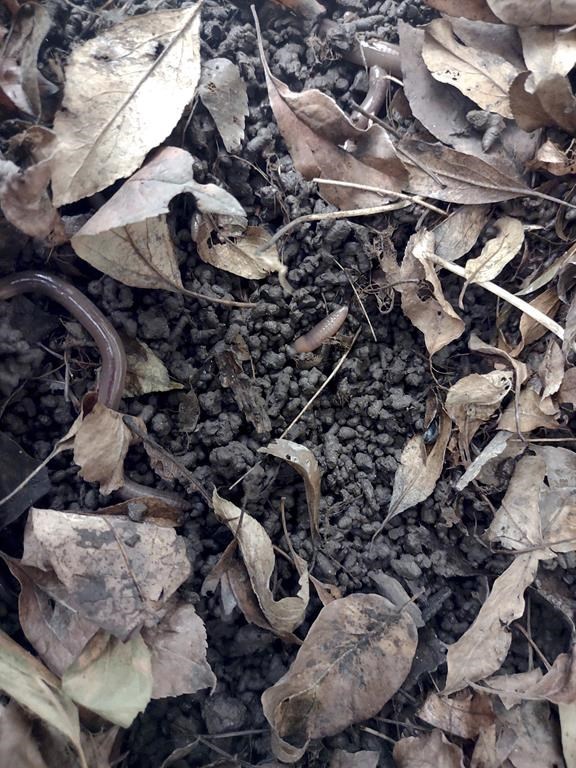
This September 2022 photo provided by Dr. Timothy McCay shows Asian jumping worms in Hamilton, N.Y., wriggling in damaged soil that bares the coffee-ground texture indicative of their presence. (Timothy McCay via AP)

So during this season of plant dividing and swapping, gardeners must be vigilant. Keep an eye out for the worms’ castings, a tell-tale sign of their presence. Inspect the soil clinging to plant roots and in the ground surrounding them. In addition, McCay advises, do not dispose of waste from infected gardens into nearby forests, and share only plants that have been repotted after their roots have been cleaned of clinging soil.

Unfortunately, there are no good control measures available for established populations of jumping worms. But McCay said picking them out by hand and dropping them into containers of vinegar will reduce their numbers. He knows of one gardener in Susquehanna County, Pennsylvania, who removed 51,000 worms that way in 2021.

—-

Jessica Damiano writes regular gardening columns for The Associated Press. She publishes a Gardening Calendar and Weekly Dirt Newsletter. Sign up here for weekly gardening tips and advice.

For more AP gardening stories, go to https://apnews.com/hub/gardening.
Report Error Submit a Tip

More Stories

Educating youth major priority for artist

Conrad Sweatman 5 minute read Preview

Educating youth major priority for artist

Conrad Sweatman 5 minute read 2:00 AM CDT

It has to be among the biggest skateboard decks in the country, and it hangs in Peatr Thomas’s art studio on Donald Street in the Exchange District.

The four-metre deck’s artwork created by Thomas, depicts Cree skateboarder Joe Buffalo, spirit lines radiating from his airborne figure, as he becomes the first skater to jump over a massive gap (also four metres) in Montreal’s Peace Park.

“I like that idea and practice of falling and getting up again, over and over to achieve something,” says Thomas, 39.

It’s a lesson he applies to his art practice.

Read
2:00 AM CDT

Treating symptoms, not the disease

Charles N. Bernstein 4 minute read 2:00 AM CDT

The backlog in emergency rooms in Manitoba stems from problems before and after the ER, not in the ER.

In Tom Brodbeck’s piece on the chronic and rising emergency room crisis in Winnipeg (Condition critical, Aug. 21) he quoted several experts who alluded to the backlog of accessible beds, beds needed so that acutely ill people can be moved out of the ER onto hospital wards.

This is a problem of an acute-care bed shortage in the acute-care hospitals and a long-term care bed shortage outside of the acute-care hospitals, where patients who no longer need acute care should be.

One major problem not addressed in Brodbeck’s article is the care required to reduce patients’ perceived or real need to come to the ER.

Late founder of Canad Inns celebrated with honorary street name

Joyanne Pursaga 3 minute read Preview

Late founder of Canad Inns celebrated with honorary street name

Joyanne Pursaga 3 minute read Yesterday at 5:40 PM CDT

The founder of Canad Inns will be remembered through an honorary street name, alongside his homegrown hotel chain’s Garden City location.

Read
Yesterday at 5:40 PM CDT

The next invasive garden threat? A slithering, jumping worm

Jessica Damiano, The Associated Press 4 minute read Preview

The next invasive garden threat? A slithering, jumping worm

Jessica Damiano, The Associated Press 4 minute read Tuesday, Oct. 18, 2022

Just when you think you’ve become accustomed to the spotted lanternfly invasion, along comes another menace to the ecosystem: the Asian jumping worm.

Allow me to introduce you to Amynthas agrestis, also known as “Alabama jumper,” “Jersey wriggler” and the rude-but-accurate “crazy worm.” Unlike garden-variety earthworms, these flipping, thrashing, invasive miscreants are ravenous consumers of humus, the rich, organic, essential top layer of soil formed by dead and decaying small animals, insects and leaf litter in places like forests, plant nurseries and your garden.

Plants, fungi and other soil life cannot survive without humus, and “Asian jumping worms can eat all of it,” Sarah Farmer of the U.S. Forest Service wrote in a USDA Southern Research Center blog post published in May.

A decline in humus would also threaten birds and other wildlife that depend on soil-dwelling insects for food.

Read
Tuesday, Oct. 18, 2022

Meta settlement should be first of many

Editorial 4 minute read Preview

Meta settlement should be first of many

Editorial 4 minute read 2:00 AM CDT

Who knew? A massive company knew its products were harmful to children and teens, and not only kept its products on the market, but worked to make them more addictive, to build their own profits.

Read
2:00 AM CDT

Manitoba Hydro’s strategy: Deny, deny, deny

Tim Sale 5 minute read Preview

Manitoba Hydro’s strategy: Deny, deny, deny

Tim Sale 5 minute read 2:00 AM CDT

Here’s a good story…

A man walks into your office and says, “Have I got a deal for you! I want $3 billion (plus perhaps a bit more) to build you something that you might use three or even four times a year, for maybe 30-60 hours each time. Sign here.”

You might respond… “and I’ve got a lovely bridge for sale…”

That is exactly what Manitoba Hydro wants — $3 billion or more, plus the fossil fuel bonus for peak load events that happen a few times each year. They assure us that the gas turbines will only be used very occasionally. At the same time, they tell us that we are headed for a crisis of energy supply by 2030.

Read
2:00 AM CDT