

6 favorite conifers and the cones they produce
Advertisement
Read this article for free:
or
Already have an account? Log in here »
To continue reading, please subscribe:
Monthly Digital Subscription
$0 for the first 4 weeks*
- Enjoy unlimited reading on winnipegfreepress.com
- Read the E-Edition, our digital replica newspaper
- Access News Break, our award-winning app
- Play interactive puzzles
*No charge for 4 weeks then price increases to the regular rate of $19.95 plus GST every four weeks. Offer available to new and qualified returning subscribers only. Cancel any time.
Monthly Digital Subscription
$4.99/week*
- Enjoy unlimited reading on winnipegfreepress.com
- Read the E-Edition, our digital replica newspaper
- Access News Break, our award-winning app
- Play interactive puzzles
*Billed as $19.95 plus GST every four weeks. Cancel any time.
To continue reading, please subscribe:
Add Free Press access to your Brandon Sun subscription for only an additional
$1 for the first 4 weeks*
*Your next subscription payment will increase by $1.00 and you will be charged $16.99 plus GST for four weeks. After four weeks, your payment will increase to $23.99 plus GST every four weeks.
Read unlimited articles for free today:
or
Already have an account? Log in here »
Hey there, time traveller!
This article was published 13/12/2022 (1121 days ago), so information in it may no longer be current.
In much of the country, much of the landscape goes barren from fall through spring. Evergreens are typically the workhorse plants that carry us through.
But not all evergreens are created equal. A subset called conifers provide not only year-round greenery but ornamental cones that command attention, feed birds (and sometimes humans), and can be used for crafts.
“Conifers are the cornerstone of the landscape and provide great beauty and function,” Vincent A. Simeone, horticulturist and public garden director, told me. And he should know: Simeone is the author of “Great Landscape Evergreens” (Chicago Review Press), a 2008 guide to more than 80 species of trees and shrubs that can be used in borders, or as hedges, green fences, privacy screens or to hide undesirable views.
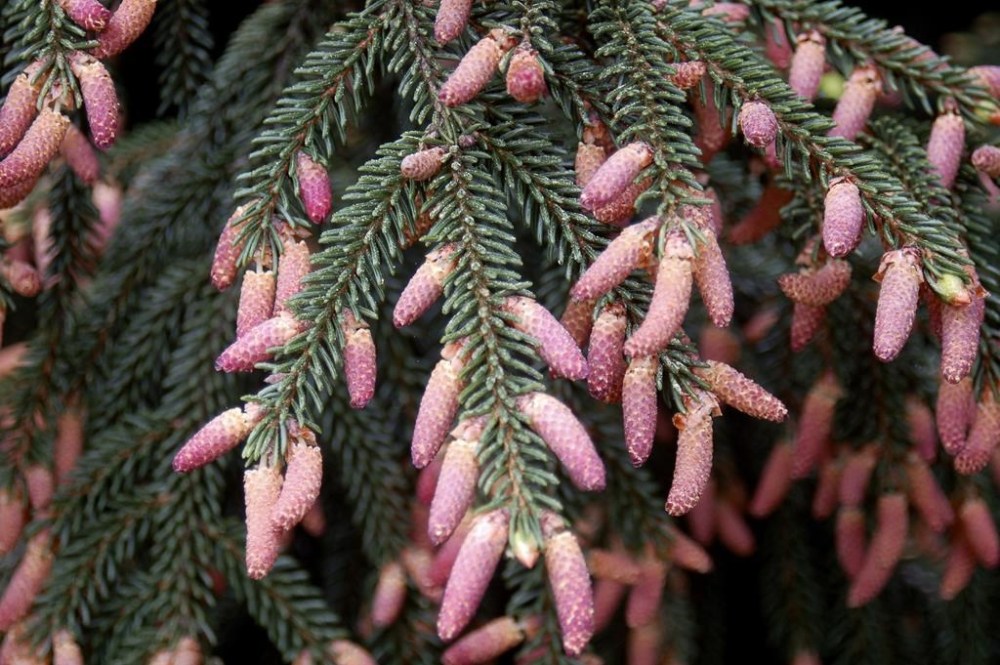
Defined as trees or shrubs that bear cones, conifers have “thin, needle-like foliage and typically a dense habit that can be effective as a specimen, screen or tall hedge,” he said.
“There are many popular conifers, as well as a few lesser-known species, that present fine-textured foliage ranging from rich green to blue green to gold. Conifers add a unique textural quality that provides four seasons of landscape interest.”
And their cones are as varied as the trees themselves. Here are six of Simeone’s favorite conifers suited for American gardens. Consider planting one or more for exceptional off-season interest.
1. Eastern white pine (Pinus strobus), hardy in zones 3-7, has 4- to 7-inch cylindrical, curved pine cones that provide an important winter food source to chickadees, finches, woodpeckers and other birds.
2. Korean pine (Pinus koraiensis), hardy in zones 3-7, displays 4- to 6-inch-long “robust” brown pine cones. Within each cone, you’ll find tasty pine nuts. Roast them for a treat.
3. Himalayan pine (Pinus wallichiana), hardy in zones 5-7, offers “very large, robust banana-shaped light brown cones, reaching between 6 and 10 inches long,” Simeone said. They’re not only beautiful in the garden and on the mantle, but also provide a good food source for birds, he said.
4. Korean fir (Abies koreana), hardy in zones 5-7, displays traffic-stopping “violet-purple cones that stand straight up on the top half of the tree,” Simeone said. “The combination of foliage and cone display is outstanding.”
5. Oriental spruce (Picea orientalis) is widely adaptable, with optimal performance in zones 4-7. Simeone said “the best qualities of this ornamental are the male flowers, which are carmine red and resemble strawberries, followed by 2- to 4-inch long purple cones that turn brown when they mature.”
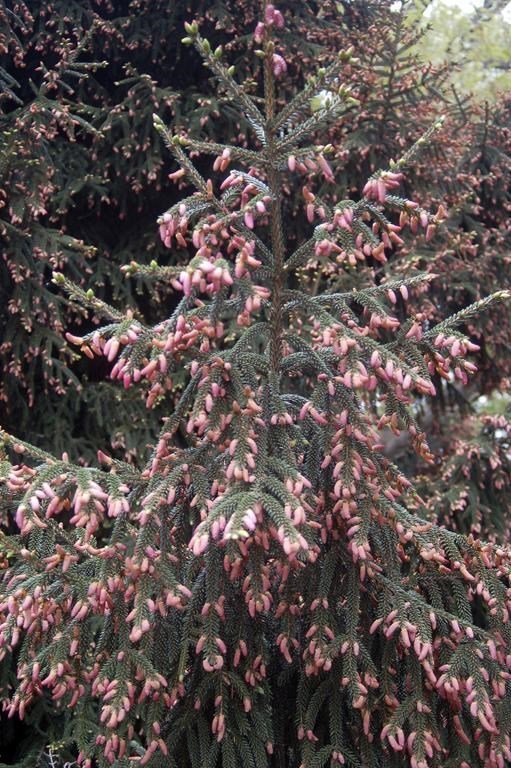
6. Eastern red cedar (Juniperus virginiana), hardy in zones 3-9, is “dioecious,” which means there are separate male and female trees within the species. The females, Simeone said, display “bunches of silvery gray, fleshy fruit that are not only ornamental but a good source of food for birds such as cedar waxwings.”
—-
Jessica Damiano writes regular gardening columns for The Associated Press. She publishes the award-winning Weekly Dirt Newsletter. Sign up here for weekly gardening tips and advice.
For more AP gardening stories, go to https://apnews.com/hub/gardening.