Canada Post honours Chloe Cooley with stamp in time for Black History Month
Advertisement
Read this article for free:
or
Already have an account? Log in here »
To continue reading, please subscribe:

Digital Subscription
One year of digital access for only $205*
- Enjoy unlimited reading on winnipegfreepress.com
- Read the E-Edition, our digital replica newspaper
- Access News Break, our award-winning app
- Play interactive puzzles
*First annual payment billed as $205.00 + GST for one year. This annual subscription will automatically renew at $233.00 + GST every 52 weeks (10% off the regular annual price of $259.35). Offer available to new and qualified returning subscribers only. Cancel any time.
To continue reading, please subscribe:
Add Free Press access to your Brandon Sun subscription for only an additional
$1 for the first 4 weeks*
- Enjoy unlimited reading on winnipegfreepress.com
- Read the E-Edition, our digital replica newspaper
- Access News Break, our award-winning app
- Play interactive puzzles
*Your next Brandon Sun subscription payment will increase by $1.00 and you will be charged $17.95 plus GST for four weeks. After four weeks, your payment will increase to $24.95 plus GST every four weeks.
Read unlimited articles for free today:
or
Already have an account? Log in here »
Hey there, time traveller!
This article was published 31/01/2023 (1315 days ago), so information in it may no longer be current.
A young Black woman who resisted her own enslavement in Queenston, Upper Canada, in the late 18th century is being honoured by Canada Post.
The Chloe Cooley commemorative stamp features an illustration of Cooley and is released in time for Black History Month.
A Canada Post release says Cooley had “a profound impact on the history of enslavement in Canada” and that her actions led to the gradual abolition of enslavement in the region.
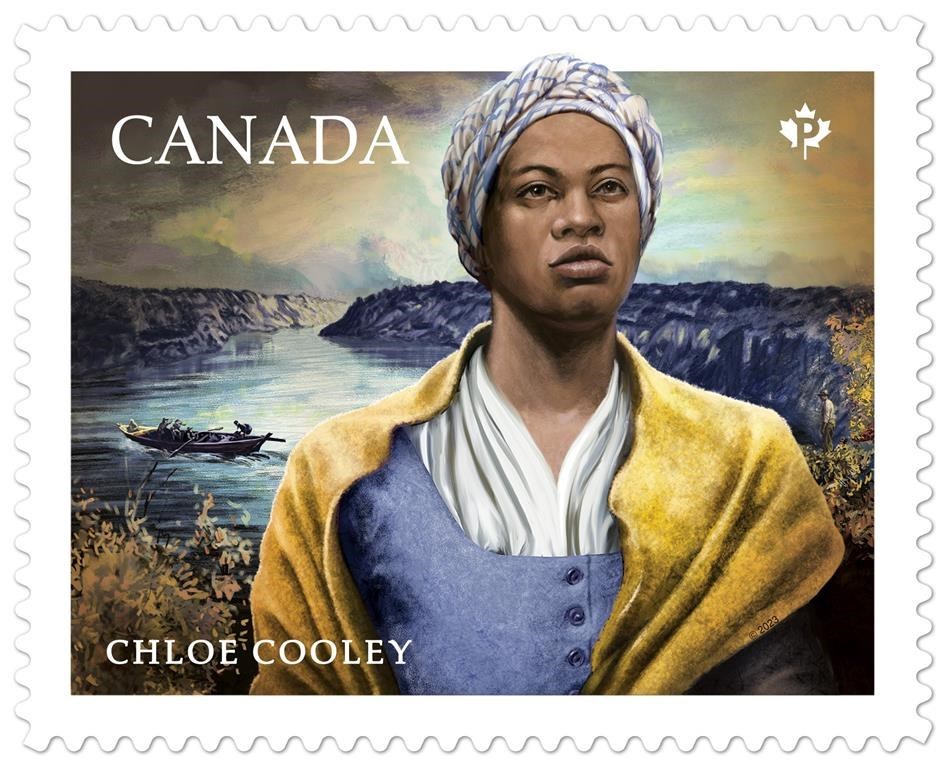
In March 1793, Cooley was kidnapped by her enslaver, Sgt. Adam Vrooman, who bound and forced her on a boat that led across the Niagara River to the United States, where she was sold.
Cooley had been known to challenge her slavery in the past, and she fought back hard.
Her screams for help and attempts to get free drew the attention of witnesses who later recounted the violent incident to Lt.-Gov. John Graves Simcoe.
Simcoe used testimony about Cooley’s attack to introduce new legislation, and in July 1793 the Act to Limit Slavery in Upper Canada was passed.
Canada Post says the legislation “set the stage for the gradual ending of enslavement in Upper Canada” and helped create “a legal refuge for those fleeing enslavement in other countries.”
The stamp was designed and illustrated with the help of experts in regional and Black history, archival paintings and other documents.
This report by The Canadian Press was first published Jan. 31, 2023.