Let’s fall in love (again) with Lilies
New book by Neepawa author celebrates Canadian lily hybridizers and valuable perennial

Advertisement
Read this article for free:
or
Already have an account? Log in here »
To continue reading, please subscribe:

Digital Subscription
One year of digital access for only $205*
- Enjoy unlimited reading on winnipegfreepress.com
- Read the E-Edition, our digital replica newspaper
- Access News Break, our award-winning app
- Play interactive puzzles
*First annual payment billed as $205.00 + GST for one year. This annual subscription will automatically renew at $233.00 + GST every 52 weeks (10% off the regular annual price of $259.35). Offer available to new and qualified returning subscribers only. Cancel any time.
To continue reading, please subscribe:
Add Free Press access to your Brandon Sun subscription for only an additional
$1 for the first 4 weeks*
- Enjoy unlimited reading on winnipegfreepress.com
- Read the E-Edition, our digital replica newspaper
- Access News Break, our award-winning app
- Play interactive puzzles
*Your next Brandon Sun subscription payment will increase by $1.00 and you will be charged $17.95 plus GST for four weeks. After four weeks, your payment will increase to $24.95 plus GST every four weeks.
Read unlimited articles for free today:
or
Already have an account? Log in here »
Hey there, time traveller!
This article was published 11/02/2023 (1321 days ago), so information in it may no longer be current.
The elegant beauty of lilies makes it one of the most familiar and valuable garden plants. It would be an understatement to say that Leanne Dowd is in love with the genus Lilium.
Dowd’s expansive garden in Neepawa includes several thousand lilies and is undoubtedly the largest collection of Canadian hybridized lilies in the country.
In recent years, some disconcerted gardeners turned their backs on lilies after the arrival of the invasive lily beetle. Dowd is part of a dedicated core of gardeners who never gave up on the lily. She has continued to collect, trade, and grow ever more lilies in her garden, a garden so bountiful and beautiful that visitors come to see it from across Manitoba and beyond.

Leanne Dowd’s Neepawa garden features lilies planted en masse. Let’s fall in love again with lilies.
Dowd’s new book, Canadian Lily Hybridizers and their Lilies: A Working Garden Reference (Pegasus Publications), will be released next week. It is the first time that such a comprehensive record of Canadian lily hybridizers and all the named lilies they created has been gathered into one book. The book explores the pioneering work of legendary hybridizers and celebrates the extraordinary cultivars developed by modern-day hybridizers. Beautiful photography throughout shows sumptuous lilies along with detailed descriptions that will inspire you to want to grow more lilies in your garden.
Writing the book grew out of Dowd’s desire to document the origins and descriptions of lilies that she grew in her own garden but the more conversations she had and the more research she did, the more information she uncovered. “It was scattered among hundreds of reference points which included boxes of old newspaper articles, society annuals, quarterlies and newsletters, personal accounts, books, and letters written between hybridizers,” says Dowd. “There were so many people who were so generous in contributing information that had been squirreled away.”
But it wasn’t just that Dowd had enough information to fill a book, there has also been a groundswell of support for her project. Some of the support has come from Manitoba’s close-knit horticultural community and friends and fellow lily enthusiasts like Sandra Venton, Deborah Petrie and many others. There is also keen interest in Dowd’s book by lily societies across Canada as well as the North American Lily Society and international lily hybridizers. Dowd explains it this way: “Most of the hybridizers profiled in my book have bred plants in many other genera – trees, shrubs, perennials — as well as lilies with limited numbers of these specimens still present in private gardens today. They exchanged plant material and supported each other in their breeding efforts towards creating plants with greater hardiness and disease resistance as well as variety, functionality and beauty. Today’s stunning lily introductions with ever greater diversity of characteristics are built on the backbone of the breeding work by early hybridizers. By rediscovering some of those initial plant crosses and their parentage, we gain a sense of how far we have come. But without a central source of information, those plant records are lost forever.”
Dowd’s book makes it possible now to learn about the hybridizing work of people like Fred Fellner, an Alberta farmer who bred Asiatic lilies and was the owner of Parkland Lilies. He received many awards for excellence in lily breeding and grew tens of thousands of up facing lilies on his huge acreage. Dowd’s book also includes personal accounts written by four of Canada’s most influential hybridizers – Darm Crook, Ieuan Evans, Wilbert Ronald, and Frank Skinner.
“Manitoba has some of the most premier, well-respected and internationally known hybridizers in Canada,” says Dowd. “Wilbert Ronald has created breakthrough lilies. He and Lynn Collicutt who worked at the Morden Research Station introduced complexity in terms of crossing unusual groups of lilies with each other. Their lily creations have a great deal of hardiness and stand out internationally among the lily hybridization community as lilies that broke barriers.”

Pegasus Publications New book by Neepawa author, Leanne Dowd, celebrates Canadian lily hybridizers and their lilies.
Ed Robinson was a lily breeder from Wawanesa who has also had tremendous influence on Dowd. Her first introduction to lilies was through his vast collection. “I think that’s where my love affair with martagon lilies started.” The pendulous flowers of Lilium martagon, also known as Turk’s-cap, start to bloom at the end of June. Martagon lilies bring exotic beauty to the shade garden. What other shade plant would give you the satiny purplish pink colour of Moonyeen or the vivacious orange of Lilium michiganense (Michigan lily)? “Martagon lilies have such a statuesque beauty,” says Dowd. “They can grow anywhere from two to six feet in height (60 cm to 1.8 metres) with up to 50 blooms. They are a flower unlike any other that you will have in your garden, and they provide a focal point but also combine well with other plants.” The martagon has a delicate beauty, but also impressive resilience. Martagon bulbs have contractile roots with the unique ability to work their way down to an ideal spot in the soil. They come back year after year and do marvellously well in your garden beds for 30 or 40 years without being moved, says Dowd.
“The Asiatic lily prefers full sun. It also prefers spacing between bulbs and benefits from being divided and transplanted every 3-4 years to retain their health and vigor. Once the bulb begins multiplying beneath the soil surface, crowding will start to produce shorter stems with smaller flowers. Dig up the whole clump, separate the bulbs, and replant.” There are different bloom periods for lilies depending on the type you grow. It is possible to have lilies blooming in your garden from the end of June through to August or into September. Lilium Scheherazade, for example, is an orienpet (oriental x trumpet) hybrid lily that blooms mid to late summer. Plant lilies in groups.

Lilies are very robust, patient, tolerant, and persistent, says Dowd. But Dowd herself has all these traits and more. When she purchased her current property a few years ago it had been neglected for many years. Painstakingly, she has removed a dense thicket of grape vines, raspberry canes, weeds and thistles. The fabled property previously belonged to Alice Moger, a well-known hybridizer. Dowd has rescued and regenerated hundreds of lilies, peonies, rose bushes, delphinium, clematis vines, irises, and much more. She has a deep love and respect for heritage plants. Her garden will also be a showcase for Manitoba Regional Lily Society’s heritage lilies.
If you still have concerns about the red lily beetle, take heart. No one is saying that the wicked lily beetle is dead, but its presence in Manitoba gardens is nowhere near the threat that once existed. Whether that’s because the parasitic wasp introduced to Manitoba in 2015 as a biological control has been wildly successful in singlehandedly decimating the local lily beetle population or whether the beetle has largely left Manitoba gardens for greener pastures, no one can say with certainty. It’s time to fall in love again with lilies.
Dowd’s book will ensure that the lily’s unique place in Canadian horticultural history and the hybridizing efforts of Canadian men and women won’t go unrecognized. Order your copy by visiting https://prairie-smoke-growers.myshopify.com/

Photos by Leanne Dowd
Martagon lily ‘Michigan’ is a rapturous beauty for the shade garden.
colleenizacharias@gmail.com

Satiny pink Moonyeen is a statuesque Martagon lily.
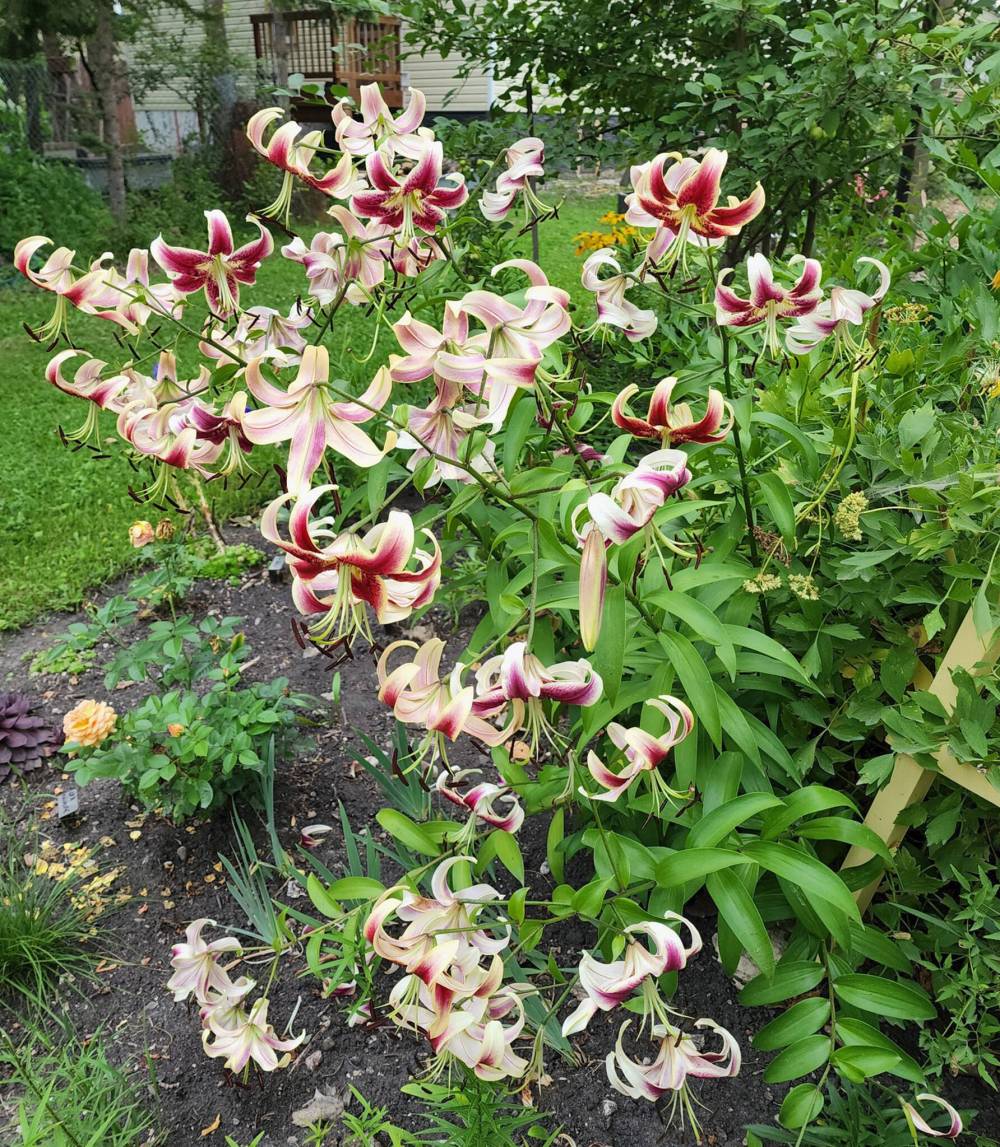
Scheherazade is an orienpet hybrid lily that blooms mid- to late summer.
Colleen Zacharias
Gardening columnist
Colleen Zacharias writes about many aspects of gardening including trends, plant recommendations, and how-to information that is uniquely relevant to Prairie gardeners. She has written a column for the Free Press since 2010 and pens the monthly newsletter Winnipeg Gardener. Read more about Colleen.
Every piece of reporting Colleen produces is reviewed by an editing team before it is posted online or published in print — part of the Free Press‘s tradition, since 1872, of producing reliable independent journalism. Read more about Free Press’s history and mandate, and learn how our newsroom operates.
Our newsroom depends on a growing audience of readers to power our journalism. If you are not a paid reader, please consider becoming a subscriber.
Our newsroom depends on its audience of readers to power our journalism. Thank you for your support.
Colleen Zacharias
Gardening columnist
Colleen Zacharias writes about many aspects of gardening including trends, plant recommendations, and how-to information that is uniquely relevant to Prairie gardeners. She has written a column for the Free Press since 2010 and pens the monthly newsletter Winnipeg Gardener. Read more about Colleen.
Every piece of reporting Colleen produces is reviewed by an editing team before it is posted online or published in print — part of the Free Press‘s tradition, since 1872, of producing reliable independent journalism. Read more about Free Press’s history and mandate, and learn how our newsroom operates.
Our newsroom depends on a growing audience of readers to power our journalism. If you are not a paid reader, please consider becoming a subscriber.
Our newsroom depends on its audience of readers to power our journalism. Thank you for your support.
Advertisement Advertise With Us
Advertisement Advertise With Us