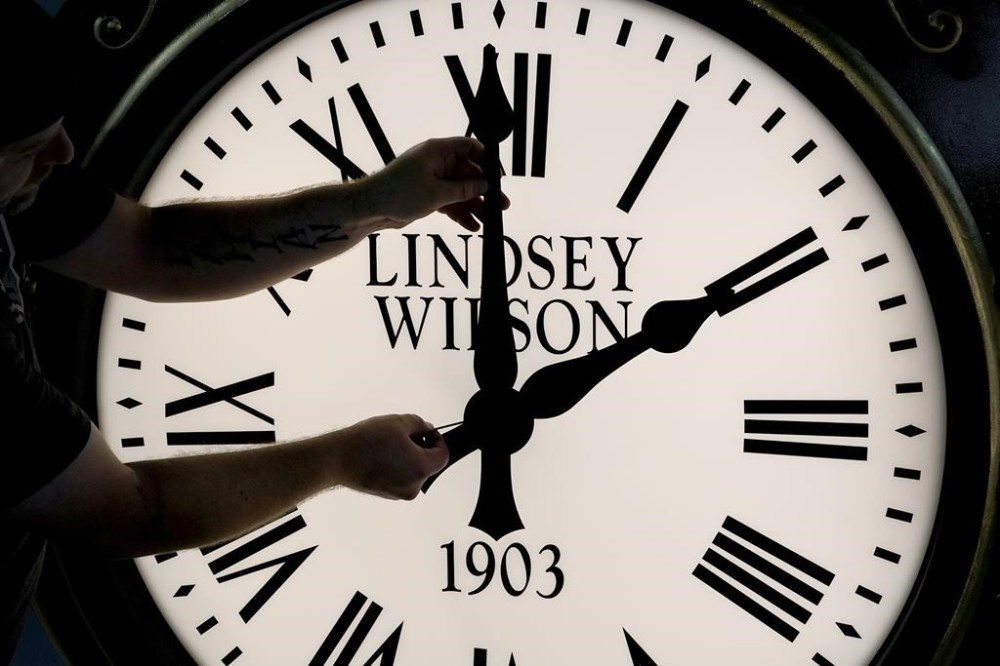
Standard time giving way to daylight saving in most of US
Advertisement
Read this article for free:
or
Already have an account? Log in here »
To continue reading, please subscribe:

Digital Subscription
One year of digital access for only $205*
- Enjoy unlimited reading on winnipegfreepress.com
- Read the E-Edition, our digital replica newspaper
- Access News Break, our award-winning app
- Play interactive puzzles
*First annual payment billed as $205.00 + GST for one year. This annual subscription will automatically renew at $233.00 + GST every 52 weeks (10% off the regular annual price of $259.35). Offer available to new and qualified returning subscribers only. Cancel any time.
To continue reading, please subscribe:
Add Free Press access to your Brandon Sun subscription for only an additional
$1 for the first 4 weeks*
- Enjoy unlimited reading on winnipegfreepress.com
- Read the E-Edition, our digital replica newspaper
- Access News Break, our award-winning app
- Play interactive puzzles
*Your next Brandon Sun subscription payment will increase by $1.00 and you will be charged $17.95 plus GST for four weeks. After four weeks, your payment will increase to $24.95 plus GST every four weeks.
Read unlimited articles for free today:
or
Already have an account? Log in here »
Hey there, time traveller!
This article was published 10/03/2023 (1296 days ago), so information in it may no longer be current.
WASHINGTON (AP) — Standard time comes to an end in most parts of the United States this weekend.
You’ll lose an hour of sleep for one night but gain more daylight in the evening in the months ahead.
The transition to daylight saving time is official at 2 a.m. local time Sunday across much of the country. Then on March 20, winter sunsets and spring is sprung.
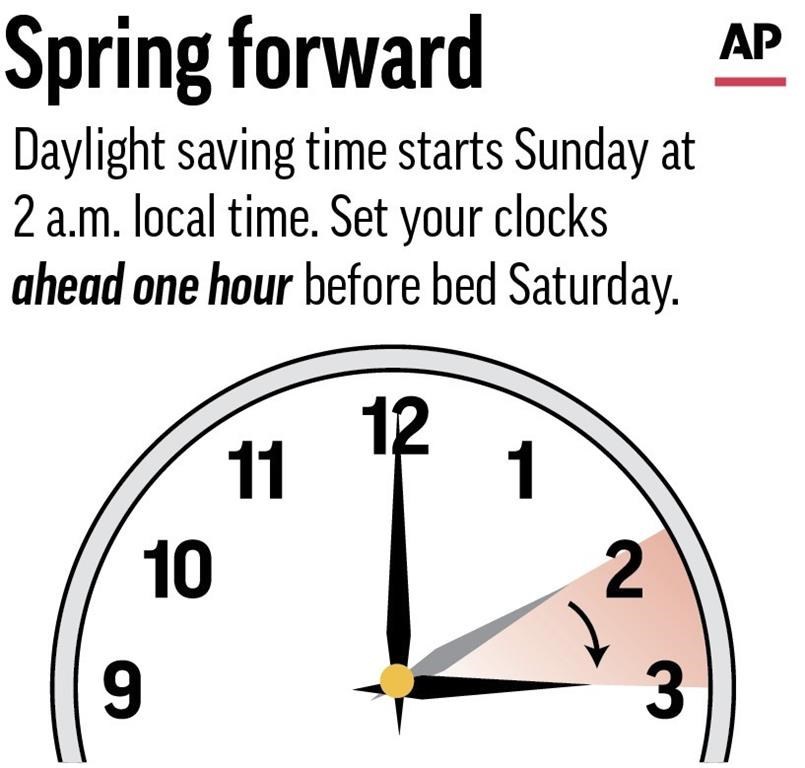
Until daylight saving time ends in the wee hours of Nov. 5, the sun will rise later in the morning than than it has during standard time but it will stay light for longer until the evening.
It’s a good idea to set clocks an hour ahead before bed Saturday night.
No time change is observed in Hawaii, most of Arizona, Puerto Rico, the U.S. Virgin Islands, American Samoa, Guam and the Northern Marianas.

A poll conducted in October 2021 found that most people in the United States want to avoid switching between daylight saving and standard time, though there is no consensus behind which should be used all year.
The poll from The Associated Press-NORC Center for Public Affairs Research found only 25% of those questioned said they preferred to switch back and forth between standard and daylight saving time. Forty-three percent said they would like to see standard time used during the entire year. Thirty-two percent said they would prefer that daylight saving time be used all year.