$90 cream and $10 toothpaste: Companies target big spenders
Advertisement
Read this article for free:
or
Already have an account? Log in here »
To continue reading, please subscribe:

Digital Subscription
One year of digital access for only $205*
- Enjoy unlimited reading on winnipegfreepress.com
- Read the E-Edition, our digital replica newspaper
- Access News Break, our award-winning app
- Play interactive puzzles
*First annual payment billed as $205.00 + GST for one year. This annual subscription will automatically renew at $233.00 + GST every 52 weeks (10% off the regular annual price of $259.35). Offer available to new and qualified returning subscribers only. Cancel any time.
To continue reading, please subscribe:
Add Free Press access to your Brandon Sun subscription for only an additional
$1 for the first 4 weeks*
- Enjoy unlimited reading on winnipegfreepress.com
- Read the E-Edition, our digital replica newspaper
- Access News Break, our award-winning app
- Play interactive puzzles
*Your next Brandon Sun subscription payment will increase by $1.00 and you will be charged $17.95 plus GST for four weeks. After four weeks, your payment will increase to $24.95 plus GST every four weeks.
Read unlimited articles for free today:
or
Already have an account? Log in here »
Hey there, time traveller!
This article was published 02/04/2023 (1263 days ago), so information in it may no longer be current.
NEW YORK (AP) —
Companies from toothpaste makers to even discounters are adding more premium items like designer body creams and services as they reach out to wealthier shoppers who are still spending freely even in the face of higher inflation and a volatile economic environment.
Think $10 toothpastes and $90 creams on supermarket shelves.
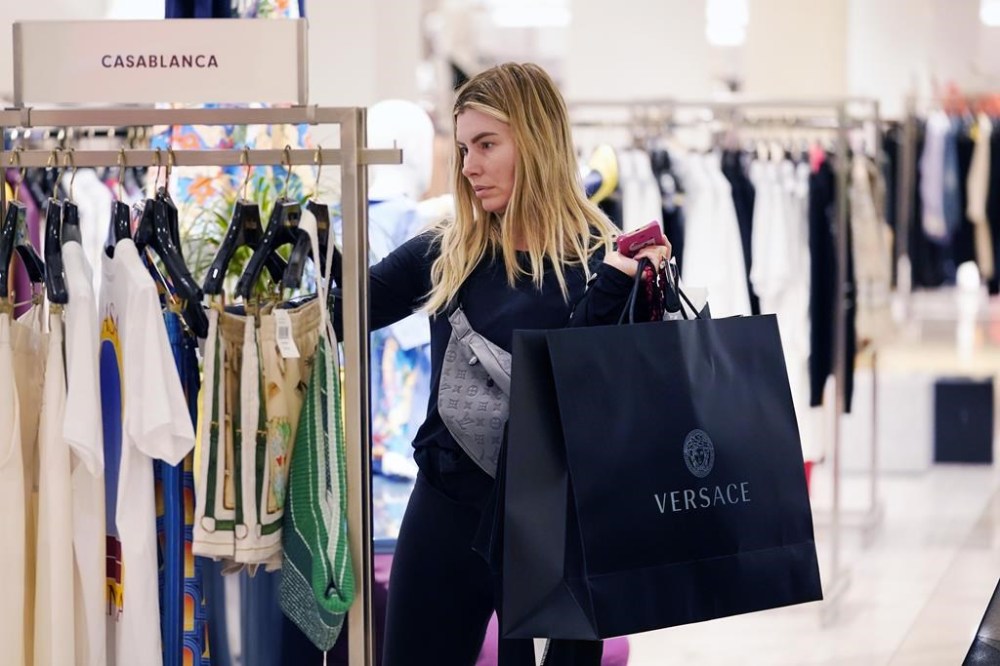
Retailers and consumer product companies felt justified in raising prices to offset higher costs from gnarled supply chains and Russia’s war in Ukraine last year. But as those financial pressures ease, some are looking for new ways to pump up sales and profits by focusing on premium items amid an overall sales slowdown.
“If you want to hedge against the economic challenges, you hedge your bets by chasing after the upper income,” said Marshal Cohen, chief industry adviser at market research firm Circana.
Many companies that normally cater to middle-income shoppers are unleashing a bevy of premium items in an attempt to grab consumers with more money to spare. But that could leave fewer options for consumers with less money to spare.
Walmart, for instance, features high-end $90 creams in its beauty aisles at select stores. Ketchup maker Heinz released a line of chef-inspired condiments called Heinz 57, including a 11.25-ounce container of infused honey with black truffle that costs roughly $7. Last year, Colgate-Palmolive made some waves by announcing its $10 three-ounce stain remover toothpaste, its first in the U.S. at this price, noting that premium products were essential to raising prices.
Meanwhile, Five Below — a chain known for selling toys and other impulse items for $5 and below — is creating a new store-within-a-store prototype: Five Beyond, which sells items at $6 and higher. Last year, the Philadelphia chain converted 250 of its 1,300 stores to include its higher-priced section and plans to expand that conversion to another 400 stores this year.
Five Below CEO Joel Anderson told analysts on a call in January that those who buy Five Beyond items spend more than twice as much as those who buy only Five Below items.
Some like Chipolte Mexican Grill have even publicized they are not pursuing discount-loving shoppers. The restaurant chain has been frank over the past year about how its price increases have scared off lower-income consumers. Last fall, it introduced Garlic Guajillo Steak, a limited-time offering that was pricier than regular steak.
In a conference call with investors in February, Chipotle Chairman and CEO Brian Niccol said the chain — which raised prices by 13.5% in its most recent quarter — is seeing higher-income customers visit more often.
“We made the decision not to go chasing people with discounts,” Niccol said. “That’s not what our brand is and that’s not what we’re going to do.”
Critics like Rakeen Mabud, chief economist at left-leaning The Groundwork Collaborative, believe such moves will only increasingly shut out the less economically fortunate.
“As products get more expensive and companies are focused more on the wealthier segments of our population or our consumers, everyday people are increasingly underserved and increasingly unable to afford the products they need,” Mabud said.
When AMC Entertainment, the world’s largest cinema chain, announced in February it was rolling out a new three-tier pricing system at all its locations by year end that would require customers to pay more for better seats, actor Elijah Wood — best known for his portrayal of Frodo Baggins in “The Lord of the Rings” film trilogy — blasted the move on Twitter.
“The movie theater is and always has been a sacred democratic space for all and this new initiative by AMCTheatres would essentially penalize people for lower income and reward for higher income,” he wrote.
The gap between the haves and have nots has only gotten wider during the pandemic.
Households with annual income of more than $156,000 make up 20.7% of the U.S. population, according to research firm GlobalData. However, they accounted for around 38.3% of all retail spending last year, up from 37.5% in 2021. Excluding food and other essentials, those shoppers in that bracket accounted for 41.7% of spending last year, up from 39.5% in 2021.
On the other end of the spectrum are lower-income households who are spending down the savings accumulated during the pandemic at a faster rate than anyone else. Households with incomes below $50,000 have depleted their savings by about half from a peak reached when the last stimulus check was sent in March 2021, according to data from the Bank of America Institute. Households with income above $250,000 have reduced their larger savings by just about 15%.
Low and middle-income shoppers have also been hurt by the Federal Reserve’s inflation-fighting campaign to hike interest rates that have made using a credit card or getting an auto loan more expensive. But the Fed’s efforts could be easing as its favored inflation gauge slowed sharply last month, while consumer spending rose modestly, according to reports by the Commerce Department released Friday.
Luxury retailer Neiman Marcus is doubling down with special services and exclusive offerings for its multi-millionaire shoppers who shop an average of 25 times a year and spend upwards of $27,000 annually. For example, the store recently teamed up with designer fashion brand Brunello Cucinelli to have a fashion show at a local ranch outside of Dallas for its top customer.
Neiman Marcus emphasized it’s hardly ignoring the rest of the customer spectrum, but it noted that given a volatile economic environment it pays to invest more in its most loyal shoppers, specifically the top 2% who drive roughly 40% of its total sales.
Chief Executive for American Express Stephen J. Squeri told analysts in an earnings call in January that the company is limiting its focus to wealthier applicants.
“That premium customer base, while not immune to economic downturn, certainly right now is spending on through,” he said.
___
Associated Press staff writers Chris Rugaber and Paul Wiseman in Washington and Dee-Ann Durbin in Detroit contributed to this report.
______
Follow Anne D’Innocenzio: http://twitter.com/ADInnocenzio