Pandemic pounds push 10,000 U.S. Army soldiers into obesity
Advertisement
Read this article for free:
or
Already have an account? Log in here »
To continue reading, please subscribe:

Digital Subscription
One year of digital access for only $205*
- Enjoy unlimited reading on winnipegfreepress.com
- Read the E-Edition, our digital replica newspaper
- Access News Break, our award-winning app
- Play interactive puzzles
*First annual payment billed as $205.00 + GST for one year. This annual subscription will automatically renew at $233.00 + GST every 52 weeks (10% off the regular annual price of $259.35). Offer available to new and qualified returning subscribers only. Cancel any time.
To continue reading, please subscribe:
Add Free Press access to your Brandon Sun subscription for only an additional
$1 for the first 4 weeks*
- Enjoy unlimited reading on winnipegfreepress.com
- Read the E-Edition, our digital replica newspaper
- Access News Break, our award-winning app
- Play interactive puzzles
*Your next Brandon Sun subscription payment will increase by $1.00 and you will be charged $17.95 plus GST for four weeks. After four weeks, your payment will increase to $24.95 plus GST every four weeks.
Read unlimited articles for free today:
or
Already have an account? Log in here »
Hey there, time traveller!
This article was published 02/04/2023 (1283 days ago), so information in it may no longer be current.
After gaining 30 pounds during the COVID-19 pandemic, U.S. Army Staff Sgt. Daniel Murillo is finally getting back into fighting shape.
Early pandemic lockdowns, endless hours on his laptop and heightened stress led Murillo, 27, to reach for cookies and chips in the barracks at Fort Bragg in North Carolina. Gyms were closed, organized exercise was out and Murillo’s motivation to work out on his own was low.
“I could notice it,” said Murillo, who is 5 feet, 5 inches tall and weighed as much as 192 pounds. “The uniform was tighter.”
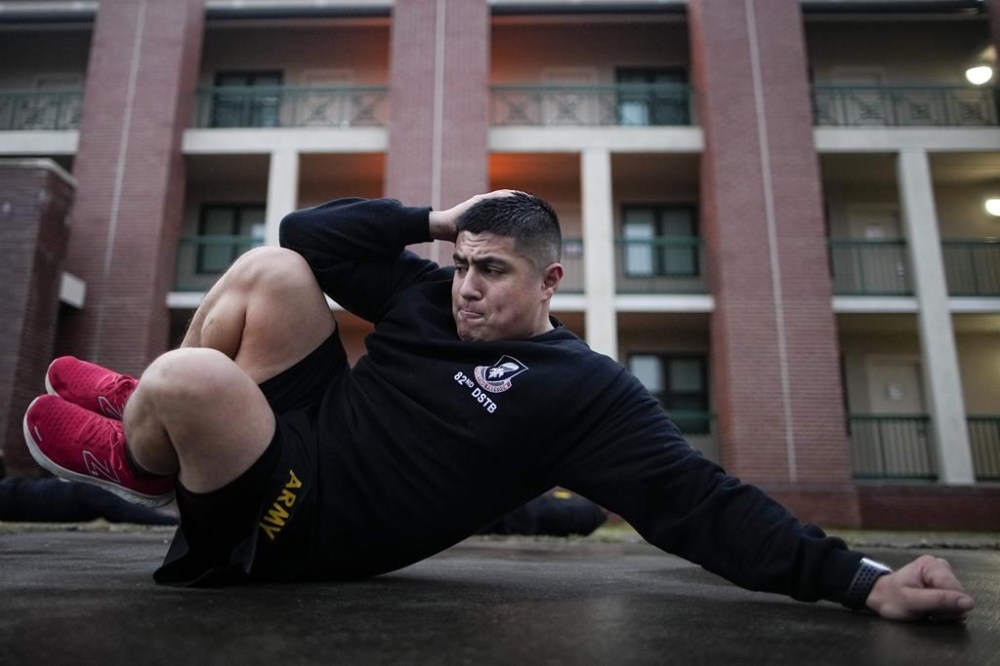
Murillo wasn’t the only service member dealing with extra weight. New research found that obesity in the U.S. military surged during the pandemic. In the Army alone, nearly 10,000 active duty soldiers developed obesity between February 2019 and June 2021, pushing the rate to nearly a quarter of the troops studied. Increases were seen in the U.S. Navy and the Marines, too.
“The Army and the other services need to focus on how to bring the forces back to fitness,” said Tracey Perez Koehlmoos, director of the Center for Health Services Research at the Uniformed Services University in Bethesda, Maryland, who led the research.
Overweight and obese troops are more likely to be injured and less likely to endure the physical demands of their profession. The military loses more than 650,000 workdays each year because of extra weight and obesity-related health costs exceed $1.5 billion annually for current and former service members and their families, federal research shows.
More recent data won’t be available until later this year, said Koehlmoos. But there’s no sign that the trend is ending, underscoring longstanding concerns about the readiness of America’s fighting forces.
Military leaders have been warning about the impact of obesity on the U.S. military for more than a decade, but the lingering pandemic effects highlight the need for urgent action, said retired Marine Corps Brigadier General Stephen Cheney, who co-authored a recent report on the problem.
“The numbers have not gotten better,” Cheney said in a November webinar held by the American Security Project, a nonprofit think tank. “They are just getting worse and worse and worse.”
In fiscal year 2022, the Army failed to make its recruiting goal for the first time, falling short by 15,000 recruits, or a quarter of the requirement. That’s largely because three-quarters of Americans aged 17 to 24 are not eligible for military service for several reasons, including extra weight. Being overweight is the biggest individual disqualifier, affecting more than 1 in 10 potential recruits, according to the report.
“It is devastating. We have a dramatic national security problem,” Cheney said.
Extra weight can make it difficult for service members to meet core fitness requirements, which differ depending on the military branch. In the Army, for instance, if soldiers can’t pass the Army Combat Fitness Test, a recently updated measure of ability, it could result in probation or end their military careers.
Koehlmoos and her team analyzed medical records for all active duty Army soldiers in the Military Health System Data Repository, a comprehensive archive. They looked at two periods: before the pandemic, from February 2019 to January 2020, and during the crisis, from September 2020 to June 2021. They excluded soldiers without complete records in both periods and those who were pregnant in the year before or during the study.
Of the cohort of nearly 200,000 soldiers who remained, the researchers found that nearly 27% who were healthy before the pandemic became overweight. And nearly 16% of those who were previously overweight became obese. Before the pandemic, about 18% of the soldiers were obese; by 2021, it grew to 23%.
The researchers relied on standard BMI, or body mass index, a calculation of weight and height used to categorize weight status. A person with a BMI of 18.5 to 25 is considered healthy, while a BMI of 25 to less than 30 is considered overweight. A BMI of 30 or higher is categorized as obese. Some experts claim that the BMI is a flawed measure that fails to account for muscle mass or underlying health status, though it remains a widely used tool.
In Murillo’s case, his BMI during the pandemic reached nearly 32. The North Carolina Army soldier knew he needed help, so he turned to a military dietician and started a strict exercise routine through the Army’s Holistic Health and Fitness, or H2F, program.
“We do two runs a week, 4 to 5 miles,” Murillo said. “Some mornings I wanted to quit, but I hung in there.”
Slowly, over months, Murillo has been able to reverse the trajectory. Now, his BMI is just over 27, which falls within the Defense Department’s standard, Koehlmoos said.
She found increases in other service branches, but focused first on the Army. The research squares with trends noted by the Centers for Disease Control and Prevention, which warned that in 2020, nearly 1 in 5 of all service members were obese.
The steady creep of obesity among service members is “alarming,” said Cheney. “The country has not approached obesity as the problem it really is,” he added.
Putting on extra pounds during the pandemic wasn’t just a military problem. A survey last year of American adults found that nearly half reported gaining weight after the first year of the COVID-19 emergency. Another study found a sharp rise in obesity among kids during the pandemic. The gains came in a country where more than 40% of American adults and nearly 20% of children struggle with obesity, according to the CDC.
“Why would we think the military is any different than a person who is not in the military?” said Dr. Amy Rothberg, an endocrinologist at the University of Michigan who directs a weight-loss program. “Under stress, we want to store calories.”

It will take broad measures to address the problem, including looking at the food offered in military cafeterias, understanding sleep patterns and treating service members with issues such as PTSD, or post-traumatic stress disorder, Rothberg said. Regarding obesity as a chronic disease that requires comprehensive care, not just willpower, is key. “We need to meet military members where they are,” she said.
A new category of effective anti-obesity drugs, including semaglutide, marketed as Wegovy, could be a powerful aid, Rothberg said. TRICARE, the Defense Department’s health plan, covers such drugs, but uptake remains low. Since June 2021, when Wegovy was approved, just 174 service members have received prescriptions, TRICARE officials said. Novo Nordisk, which makes Wegovy, funded the security group’s report, but didn’t influence the research, Rothberg said.
“People are working hard at their weight and we have to give them whatever tools we have,” Rothberg said.
___
The Associated Press Health and Science Department receives support from the Howard Hughes Medical Institute’s Science and Educational Media Group. The AP is solely responsible for all content.