FTC: Facebook misled parents, failed to guard kids’ privacy
Advertisement
Read this article for free:
or
Already have an account? Log in here »
To continue reading, please subscribe:

Digital Subscription
One year of digital access for only $205*
- Enjoy unlimited reading on winnipegfreepress.com
- Read the E-Edition, our digital replica newspaper
- Access News Break, our award-winning app
- Play interactive puzzles
*First annual payment billed as $205.00 + GST for one year. This annual subscription will automatically renew at $233.00 + GST every 52 weeks (10% off the regular annual price of $259.35). Offer available to new and qualified returning subscribers only. Cancel any time.
To continue reading, please subscribe:
Add Free Press access to your Brandon Sun subscription for only an additional
$1 for the first 4 weeks*
- Enjoy unlimited reading on winnipegfreepress.com
- Read the E-Edition, our digital replica newspaper
- Access News Break, our award-winning app
- Play interactive puzzles
*Your next Brandon Sun subscription payment will increase by $1.00 and you will be charged $17.95 plus GST for four weeks. After four weeks, your payment will increase to $24.95 plus GST every four weeks.
Read unlimited articles for free today:
or
Already have an account? Log in here »
Hey there, time traveller!
This article was published 03/05/2023 (1257 days ago), so information in it may no longer be current.
U.S. regulators say Facebook misled parents and failed to protect the privacy of children using its Messenger Kids app, including misrepresenting the access it provided to app developers to private user data.
As a result, The Federal Trade Commision on Wednesday proposed sweeping changes to a 2020 privacy order with Facebook — now called Meta — that would prohibit it from profiting from data it collects on users under 18. This would include data collected through its virtual-reality products. The FTC said the company has failed to fully comply with the 2020 order.
Meta would also be subject to other limitations, including with its use of face-recognition technology and be required to provide additional privacy protections for its users.
“Facebook has repeatedly violated its privacy promises,” said Samuel Levine, director of the FTC’s Bureau of Consumer Protection. “The company’s recklessness has put young users at risk, and Facebook needs to answer for its failures.”
Meta called the announcement a “political stunt.”
“Despite three years of continual engagement with the FTC around our agreement, they provided no opportunity to discuss this new, totally unprecedented theory. Let’s be clear about what the FTC is trying to do: usurp the authority of Congress to set industry-wide standards and instead single out one American company while allowing Chinese companies, like TikTok, to operate without constraint on American soil,” Meta said in a prepared statement.
The Menlo Park, California company added that it will “vigorously fight” the FTC’s action and expects to prevail.
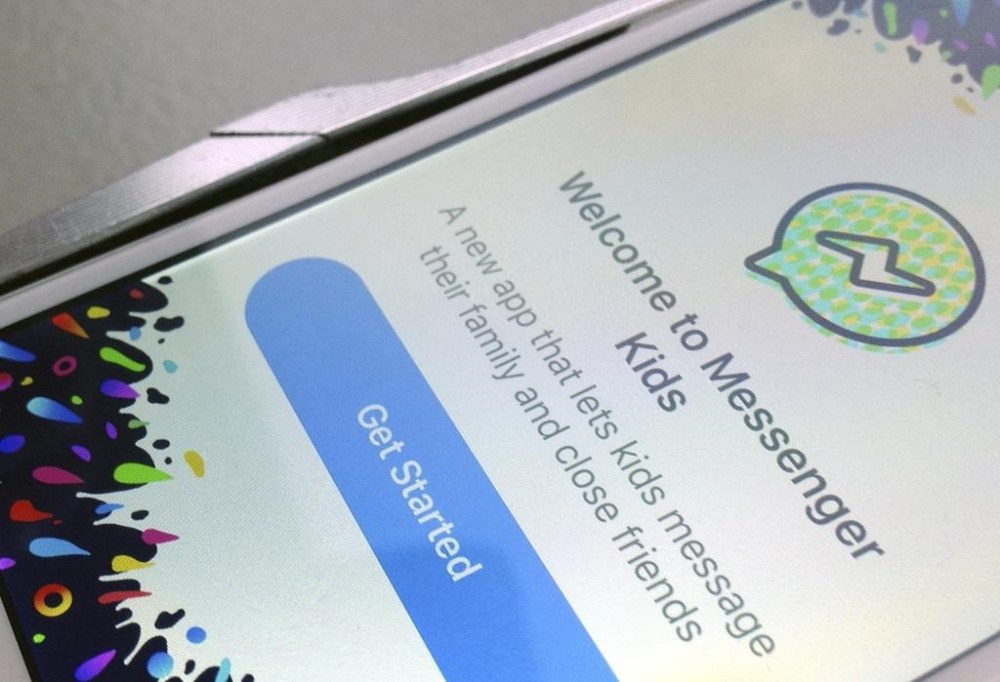
Facebook launched Messenger Kids in 2017, pitching it as a way for children to chat with family members and friends approved by their parents. The app doesn’t give kids separate Facebook or Messenger accounts. Rather, it works as an extension of a parent’s account, and parents get controls, such as the ability to decide with whom their kids can chat.
At the time, Facebook said Messenger Kids wouldn’t show ads or collect data for marketing, though it would collect some data it said was necessary to run the service.
But child-development experts raised immediate concerns.
In early 2018, a group of 100 experts, advocates and parenting organizations contested Facebook’s claims that the app was filling a need kids had for a messaging service. The group included nonprofits, psychiatrists, pediatricians, educators and the children’s music singer Raffi Cavoukian.
“Messenger Kids is not responding to a need — it is creating one,” the letter said. “It appeals primarily to children who otherwise would not have their own social media accounts.” Another passage criticized Facebook for “targeting younger children with a new product.”
Facebook, in response to the letter, said at the time that the app “helps parents and children to chat in a safer way,” and emphasized that parents are “always in control” of their kids’ activity.
The FTC now says this has not been the case. The 2020 privacy order, which required Facebook to pay a $5 billion fine, required an independent assessor to evaluate the company’s privacy practices. The FTC said the assessor “identified several gaps and weaknesses in Facebook’s privacy program.”
The FTC also said Facebook, from late 2017 until 2019, “misrepresented that parents could control whom their children communicated with through its Messenger Kids product.”
“Despite the company’s promises that children using Messenger Kids would only be able to communicate with contacts approved by their parents, children in certain circumstances were able to communicate with unapproved contacts in group text chats and group video calls,” the FTC said.

Meta critics applauded the FTC’s action. Jeffrey Chester, the executive director of the nonprofit Center for Digital Democracy, called it a “a long-overdue intervention into what has become a huge national crisis for young people.”
Meta, and with its platforms like Instagram and Facebook, Chester added, “are at the center of a powerful commercialized social media system that has spiraled out of control, threatening the mental health and well-being of children and adolescents.”
The company, he added, has not done enough to address existing problems — and is now unleashing “even more powerful data gathering and targeting tactics fueled by immersive content, virtual reality and artificial intelligence, while pushing youth further into the metaverse with no meaningful safeguards.”
As part of the proposed changes to the FTC’s 2020 order (which was announced in 2019 and finalized later), Meta would also be required to pause launching new products and services without “written confirmation from the assessor that its privacy program is in full compliance” with the order.
Meta has 30 days to respond to the FTC’s latest action.
Related Articles
New Twitter rules expose election offices to spoof accounts
Advertisement Advertise With Us
Advertisement Advertise With Us