WHO downgrades COVID pandemic, says it’s no longer emergency

Advertisement

Advertise with us

GENEVA (AP) — The World Health Organization said Friday that COVID-19 no longer qualifies as a global emergency, marking a symbolic end to the devastating coronavirus pandemic that triggered once-unthinkable lockdowns, upended economies and killed millions of people worldwide.

Read this article for free:


or

Already have an account? Log in here »

To continue reading, please subscribe:

Subscribe and receive a limited-edition Free Press branded hat or tote.

Digital Subscription

One year of digital access for only $205*

  • Enjoy unlimited reading on winnipegfreepress.com
  • Read the E-Edition, our digital replica newspaper
  • Access News Break, our award-winning app
  • Play interactive puzzles

*First annual payment billed as $205.00 + GST for one year. This annual subscription will automatically renew at $233.00 + GST every 52 weeks (10% off the regular annual price of $259.35). Offer available to new and qualified returning subscribers only. Cancel any time.

To continue reading, please subscribe:

Add Free Press access to your Brandon Sun subscription for only an additional

$1 for the first 4 weeks*

  • Enjoy unlimited reading on winnipegfreepress.com
  • Read the E-Edition, our digital replica newspaper
  • Access News Break, our award-winning app
  • Play interactive puzzles
Start now

*Your next Brandon Sun subscription payment will increase by $1.00 and you will be charged $17.95 plus GST for four weeks. After four weeks, your payment will increase to $24.95 plus GST every four weeks.

Hey there, time traveller!
This article was published 05/05/2023 (1248 days ago), so information in it may no longer be current.

GENEVA (AP) — The World Health Organization said Friday that COVID-19 no longer qualifies as a global emergency, marking a symbolic end to the devastating coronavirus pandemic that triggered once-unthinkable lockdowns, upended economies and killed millions of people worldwide.

The announcement, made more than three years after WHO declared the coronavirus an international crisis, offers some relief, if not an ending, to a pandemic that stirred fear and suspicion, hand-wringing and finger-pointing across the globe.

The U.N. health agency’s officials said that even though the emergency phase was over, the pandemic hasn’t finished, noting recent spikes in cases in Southeast Asia and the Middle East.
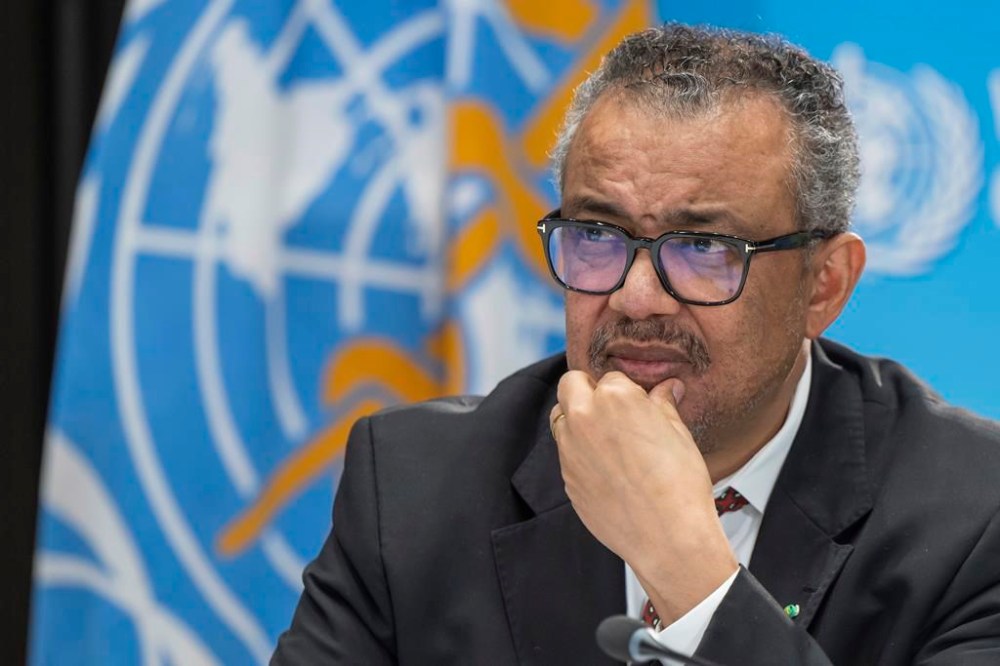
Tedros Adhanom Ghebreyesus, Director General of the World Health Organization (WHO), speaks to journalists during a press conference about the Global WHO on World Health Day and the 75th anniversary at the World Health Organization (WHO) headquarters in Geneva, Switzerland, Thursday April 6, 2023. (Martial Trezzini/Keystone via AP)

WHO says thousands of people are still dying from the virus every week, and millions of others are suffering from debilitating, long-term effects.

“It’s with great hope that I declare COVID-19 over as a global health emergency,” WHO Director-General Tedros Adhanom Ghebreyesus said.

“That does not mean COVID-19 is over as a global health threat,” he said, warning that new variants could yet emerge. Tedros noted that while the official COVID-19 death toll was 7 million, the real figure was estimated to be at least 20 million.

Tedros said the pandemic had been on a downward trend for more than a year, acknowledging that most countries have already returned to life before COVID-19.

He bemoaned the damage that COVID-19 had done to the global community, saying the pandemic had shattered businesses, exacerbated political divisions, led to the spread of misinformation and plunged millions into poverty.

The political fallout in some countries was swift and unforgiving. Some pundits say missteps by President Donald Trump in his administration’s response to the pandemic had a role in his losing reelection bid in 2020. The United States saw the deadliest outbreak anywhere in the world — where more than 1 million people died across the country.

Dr. Michael Ryan, WHO’s emergencies chief, said it was incumbent on heads of states and other leaders to negotiate a wide-ranging pandemic treaty to decide how future health threats should be faced.

Ryan said that some of the scenes witnessed during COVID-19, when people resorted to “bartering for oxygen canisters,” fought to get into emergency rooms and died in parking lots because they couldn’t get treated, must never be repeated.

When the U.N. health agency first declared the coronavirus to be an international crisis on Jan. 30, 2020, it hadn’t yet been named COVID-19 and there were no major outbreaks beyond China.

More than three years later, the virus has caused an estimated 764 million cases globally and about 5 billion people have received at least one dose of vaccine.

In the U.S., the public health emergency declaration made regarding COVID-19 is set to expire on May 11, when wide-ranging measures to support the pandemic response, including vaccine mandates, will end. Many other countries, including Germany, France and Britain, dropped most of their provisions against the pandemic last year.

When Tedros declared COVID-19 to be an emergency in 2020, he said his greatest fear was the virus’ potential to spread in countries with weak health systems.

In fact, some of the countries that suffered the worst COVID-19 death tolls were previously judged to be the best-prepared for a pandemic, including the U.S. and Britain. According to WHO data, the number of deaths reported in Africa account for just 3% of the global total.

WHO doesn’t “declare” pandemics, but first used the term to describe the outbreak in March 2020, when the virus had spread to every continent except Antarctica, long after many other scientists had said a pandemic was already underway.

WHO is the only agency mandated to coordinate the world’s response to acute health threats, but the organization faltered repeatedly as the coronavirus unfolded.

In January 2020, WHO publicly applauded China for its supposed speedy and transparent response, even though recordings of private meetings obtained by The Associated Press showed top officials were frustrated at the country’s lack of cooperation.
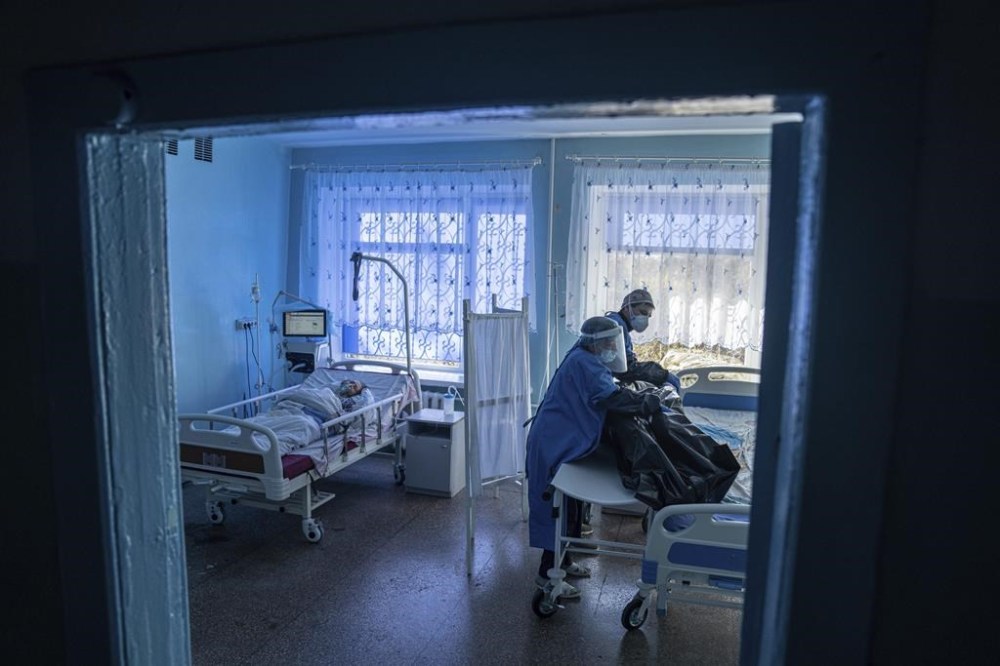
FILE - A medical worker prepares to transport the body of a COVID-19 victim at a hospital in Kakhovka, Ukraine, on Oct. 29, 2021. The World Health Organization said Friday May 5, 2023 that COVID-19 no longer qualifies as a global emergency, marking a symbolic end to the devastating coronavirus pandemic that triggered once-unthinkable lockdowns, upended economies and killed millions of people worldwide. (AP Photo/Evgeniy Maloletka, File)

WHO also recommended against mask-wearing for the public for months, a mistake many health officials say cost lives.

Numerous scientists also slammed WHO’s reluctance to acknowledge that COVID-19 was frequently spread in the air and by people without symptoms, criticizing the agency’s lack of strong guidance to prevent such exposure.

Tedros was a vociferous critic of rich countries who hoarded the limited supplies of COVID-19 vaccines, warning that the world was on the brink of a “catastrophic moral failure” by failing to share shots with poor countries.

Most recently, WHO has struggled to investigate the origins of the coronavirus, a challenging scientific endeavour that has also become politically fraught.

After a weeks-long visit to China, WHO released a report in 2021 concluding that COVID-19 most likely jumped into humans from animals, dismissing the possibility that it originated in a lab as “extremely unlikely.”

But the U.N. agency backtracked the following year, saying “key pieces of data” were still missing and that it was premature to rule out that COVID-19 might have ties to a lab.

Mark Woolhouse, an infectious diseases professor at the University of Edinburgh, described COVID-19 as a “once-in-a-lifetime disaster” and said that broad immunity against the virus meant we were now in a new phase of the outbreak.

Woolhouse noted there had also been significant criticism of WHO’s pandemic response, in addition to those of its member countries and others.

He lamented that the global community missed numerous chances to stop the coronavirus earlier, in addition to causing much “self-inflicted harm” by shutting down much of society.

“Given the ever-present threat of another pandemic, lessons need to be learned,” he said.

___

Maria Cheng reported from London.

Report Error Submit a Tip

More Stories

A day on the campaign trail: Winnipeg's mayor, seeking a second term, does double duty

Malak Abas 12 minute read Preview

A day on the campaign trail: Winnipeg's mayor, seeking a second term, does double duty

Malak Abas 12 minute read Friday, Oct. 2, 2026

In the weeks leading up to the civic election, Scott Gillingham has been performing a juggling act: he’s running to be Winnipeg’s 45th mayor, while still serving as its 44th.

“If someone asks me about the campaign, I’m going to answer them. But I think for most people, I’m the mayor of Winnipeg, even if I’m showing up as a candidate,” Gillingham, 58, says. “I try to do all I can to maintain that distinction.”

The Free Press joined Gillingham on a recent rainy September Saturday on the campaign trail, where he served in both roles during an event-laden day. City council’s final meeting before the Oct. 28 election was days earlier.

In Winnipeg, it’s rare for an incumbent to be defeated. But Gillingham knows his win in 2022 wasn’t exactly a landslide — he won with 27.5 per cent of the vote — and he’s been thinking about his second term ever since.

Read
Friday, Oct. 2, 2026

’Disgusting’ posters being investigated by police

Morgan Modjeski 4 minute read Yesterday at 2:22 PM CDT

The Winnipeg Police Service major crimes unit is investigating what some have labelled offensive and hateful posters on full-display at a Winnipeg home.

One of the people irked by the display is Gracie Garrett. She’s has lived on Ashburn Street in Winnipeg’s Minto neighbourhood for almost ten years. She’s never felt unsafe in the neighbourhood before, but now, a set of posters plastered on a nearby house are making her feel uneasy.

The five signs, posted facing the street prominently on a front window, contain a slur, refer to Nazis as “heroes” and call Muslims, Christians and other groups “evil.”

Learning of the signs Friday, Garrett said she’ll be reporting the posters to police, as she worries they incite and promote violence.

Creative powerhouse Perry Rosemond never lost Winnipeg roots

Ben Waldman 7 minute read Preview

Creative powerhouse Perry Rosemond never lost Winnipeg roots

Ben Waldman 7 minute read Yesterday at 6:00 AM CDT

He created King of Kensington, directed the troops in the Royal Canadian Air Farce, and his creative eye was behind the lens for television shows starring Johnny Cash, Tom Jones, Mr. Dress-Up and the Friendly Giant.

He also wrote and developed the Canadian version of Sesame Street during his time as the head of school and preschool programming for CBC in Toronto, and directed a televised special in 2002 for Winnipeg sketch comedy troupe Royal Liechtenstein Theatre Company.

But before his name featured in the credits of some of the most iconic and influential pieces of the Cancon canon, Perry Rosemond was an only child living in a crammed, multi-generational home in Winnipeg’s North End, racing each day to beat the morning bell next door at William Whyte School.

In memoirs that have yet to be published, the late television producer recalled his childhood. “(T)here were 14 of us in the house at 193 Andrews St., and it wasn’t that big of a house,” he writes.

Read
Yesterday at 6:00 AM CDT

Letters, Oct. 3

7 minute read Yesterday at 2:01 AM CDT

A morning in the life …

My very first lesson does not start when I walk into that lecture hall, oh no — it starts long before. It begins when I walk to my car, check the estimated arrival time to the University of Manitoba and hope that Winnipeg traffic agrees with it.

A drive that appears completely manageable changes almost immediately when I’m greeted by a tsunami of orange pylons and a line of cars that appears to go on forever. Traffic moves by the inch, lanes magically disappear and the detour I took yesterday now has a detour of its own. These factors make me do a calculation that I have become all too familiar with. How late can I arrive and still find parking, run to my class across campus and get to class with enough time left to make it worth it?

I have grown used to people saying, “Why not just leave earlier?” I do. But when I’m already leaving for my 8:30 a.m. class at 7 a.m., there’s only so much I can do. This drive that some would think is relaxing is one that feels like an assignment that I didn’t know I had to complete and is due at 8:30 a.m.

Living the dream

Ken Wiebe 7 minute read Preview

Living the dream

Ken Wiebe 7 minute read Yesterday at 4:48 PM CDT

DETROIT – As Tyrel Bauer took a left turn out of the tunnel from the Winnipeg Jets dressing room and into the stands, he was met with a hearty round of applause from the 25 friends and family members who had made the trek from various points around North America.

Bauer had just realized a childhood dream and the significance of the moment was not lost on some of his biggest supporters.

“It was a special walk, for sure. A special walk,” Bauer said on Saturday afternoon before the Jets departed for a two-game road trip that begins on Sunday in Detroit against the Red Wings. “Those people who came – and many more that weren’t there and were cheering on from afar – they’ve always been there.

“I wanted that for my family, maybe even more than I wanted it for me. They’ve been through thick and thin. I’ve stressed mom out quite a bit over the years doing my job. That meant a lot for them and I’m really happy they could be there for it.”

Read
Yesterday at 4:48 PM CDT

WHO downgrades COVID pandemic, says it’s no longer emergency

Maria Cheng And Jamey Keaten, The Associated Press 6 minute read Preview

WHO downgrades COVID pandemic, says it’s no longer emergency

Maria Cheng And Jamey Keaten, The Associated Press 6 minute read Sunday, May. 7, 2023

GENEVA (AP) — The World Health Organization said Friday that COVID-19 no longer qualifies as a global emergency, marking a symbolic end to the devastating coronavirus pandemic that triggered once-unthinkable lockdowns, upended economies and killed millions of people worldwide.

The announcement, made more than three years after WHO declared the coronavirus an international crisis, offers some relief, if not an ending, to a pandemic that stirred fear and suspicion, hand-wringing and finger-pointing across the globe.

The U.N. health agency's officials said that even though the emergency phase was over, the pandemic hasn't finished, noting recent spikes in cases in Southeast Asia and the Middle East.

WHO says thousands of people are still dying from the virus every week, and millions of others are suffering from debilitating, long-term effects.

Read
Sunday, May. 7, 2023