Some doctors, patients want Canada to follow U.S. proposal for earlier mammograms
Advertisement
Read this article for free:
or
Already have an account? Log in here »
To continue reading, please subscribe:

Digital Subscription
One year of digital access for only $205*
- Enjoy unlimited reading on winnipegfreepress.com
- Read the E-Edition, our digital replica newspaper
- Access News Break, our award-winning app
- Play interactive puzzles
*First annual payment billed as $205.00 + GST for one year. This annual subscription will automatically renew at $233.00 + GST every 52 weeks (10% off the regular annual price of $259.35). Offer available to new and qualified returning subscribers only. Cancel any time.
To continue reading, please subscribe:
Add Free Press access to your Brandon Sun subscription for only an additional
$1 for the first 4 weeks*
- Enjoy unlimited reading on winnipegfreepress.com
- Read the E-Edition, our digital replica newspaper
- Access News Break, our award-winning app
- Play interactive puzzles
*Your next Brandon Sun subscription payment will increase by $1.00 and you will be charged $17.95 plus GST for four weeks. After four weeks, your payment will increase to $24.95 plus GST every four weeks.
Read unlimited articles for free today:
or
Already have an account? Log in here »
Hey there, time traveller!
This article was published 12/05/2023 (1239 days ago), so information in it may no longer be current.
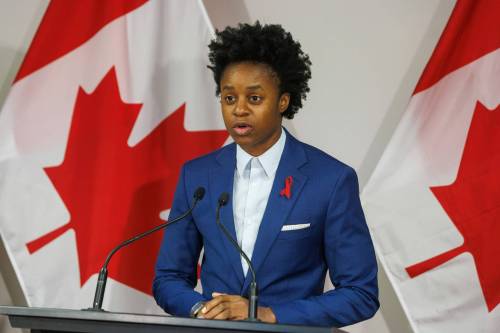
The co-chair of a Canadian health panel says there’s no need for women to start having routine mammograms at age 40, despite new draft recommendations from an American task force calling for that change.
Dr. Guylène Thériault of the Canadian Task Force on Preventive Health Care said she does not see any reason to change the guidelines. Regular mammography screening is currently recommended in both countries for women between the ages of 50 and 74.
However, Hannah Jensen, a spokeswoman for the Health Ministry in Ontario, said Thursday the province is “exploring” lowering the breast cancer screening age to 40. British Columbia will also review the U.S. draft recommendations to determine if any changes will be made to its screening program, the province’s health minister said.
The U.S. Preventive Services Task Force released draft recommendations Tuesday saying screening for average-risk women should start a decade earlier and be done every two years because recent evidence suggests that would have a “moderate benefit” in reducing deaths.
Thériault said the Canadian task force does not intend to update guidelines set in 2018 because the benefits of earlier screening do not outweigh the risks of false-positive results and overdiagnosis when harmless tumours are detected.
Out of 2,000 women who are screened over a decade between the ages of 40 and 49, one woman would die of breast cancer. About 295 false-positives would be detected among those cases, she said.
“Looking at the guidelines, we don’t see that there was anything new and we were a bit surprised,” Thériault said of the U.S. task force’s draft recommendations.
“In Canada, what we are saying is women should be empowered. They should have the information that they need to make a decision,” she said about the pros and cons of earlier mammograms.
Women should ask a family doctor for screening if there is a history of breast cancer in their family or if they have any specific concerns, Thériault added.
The guidelines are reviewed every five years and are due for an update, the Canadian task force said.
In its draft recommendations, the U.S. task force cited two studies that suggest there is adequate evidence of the “small” harms of biennial screening mammography, including false-positive results, when younger women are screened. It said false-positives are more likely with annual mammograms compared with longer intervals between screening.
Heather Campbell of Calgary said earlier routine screening could have spared her some painful treatments and surgery. She found a lump in her left breast on Oct. 13, 2017, at age 44 and was diagnosed with breast cancer two weeks later.
“I had no family history of breast cancer,” she said. “The tumours were too large to do radiation.”
That meant she first had chemotherapy, followed by surgery to remove about 40 per cent of her breast, then radiation. Two years later, she had a full hysterectomy to remove her uterus because her cancer was fuelled by estrogen, and an oophorectomy to remove both of her ovaries.
One important factor is often not taken into consideration by the medical community when it comes to breast cancer, said Campbell, a chemical engineer.
“I’m a Black woman. And Black women present with more aggressive cancers at earlier stages.”
Even the “breast catalogue” she looked at before considering reconstruction surgery featured white women’s breasts, she said.
The U.S. task force noted Black women are 40 per cent more likely to die of breast cancer than white women, and earlier mammograms could be especially important in addressing that disparity.
Race-based data in health care is not routinely collected in Canada and what’s available in the U.S. does not necessarily apply elsewhere, Campbell said.
“It’s really about understanding diversity within Black women in Canada. Black women in Canada are both African and Afro-Caribbean and European and that presents differently than the population of Black women who are in the U.S. Basically, you have to get to a place where you say, ‘We’re going to provide respectful health care to the full plurality of our population.'”
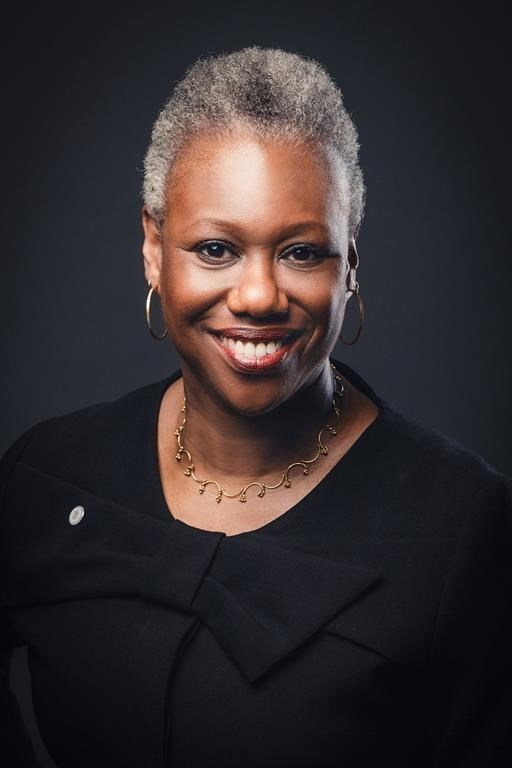
Dr. Andrea Covelli, a Toronto surgeon who looked at surgical decision-making in breast cancer as part of her PhD thesis, said her experience with patients has her calling for earlier mammography screening in Canada.
“I see many, many young patients with self-detected breast cancer. And if we were doing screening, those maybe would have been identified earlier. For some women, that might mean avoiding chemotherapy. For some women, that might mean avoiding mastectomy. So, it’s not without potential implications,” she said of later screening.
“And we see a shift in incidence in age of onset of cancers. I think we will eventually go to screening at 40.”
Covelli said the Canadian task force’s guidelines focus on standard screening for non-high-risk women.
“This is where I think people get confused, or say that the task force could be clearer,” she said.
A woman of any age should see a doctor about imaging if she has new symptoms, said Covelli, who is also an assistant professor at the University of Toronto.
“The challenge with that is that many women come to me who have had some doubts and have wanted to start screening at an earlier age. And their physician has said to them, no. That’s because of the guidelines that say (screening should start at) 50.”
She said Canadian guidelines should say “the option for screening can start earlier, at the discretion of the patient.”
“Right now, that’s not clear.”
The lack of clarity has created ongoing tension about screening guidelines because, according to data from the Canadian Cancer Society, some provinces offer mammograms to women in their 40s if they get a referral, or in the case of British Columbia, women can refer themselves for screening.
While saying that B.C. would take a look at the latest proposed screening guidelines in the U.S., Health Minister Adrian Dix added Thursday that the province has “led Canada in providing information on breast density and mammogram results.”
Breast density refers to the amount of glandular and fibrous tissue as well as fat in a woman’s breasts. Dense breasts make it more difficult for radiologists to see cancer on a mammogram because it’s hard to distinguish between cancer and dense tissue.

Covelli, who provided medical expertise for a program called Every Breast Counts, said its goal is to support Black women because “traditionally, breast cancer has been advertised as a white woman’s disease.”
The virtual initiative was launched two years ago by Women’s College Hospital in Toronto and helps Black women feel seen and heard because their experience with breast cancer is different, she said.
— With files from Brieanna Charlebois in Vancouver and The Associated Press
This report by The Canadian Press was first published May 12, 2023.
Canadian Press health coverage receives support through a partnership with the Canadian Medical Association. CP is solely responsible for this content.
Related Articles
Doughnuts to dollars: Bake sales help Russell pay for cancer centre
Advertisement Advertise With Us
Advertisement Advertise With Us