Women have harder time getting help after stroke due to gender roles: report
Advertisement
Read this article for free:
or
Already have an account? Log in here »
To continue reading, please subscribe:

Digital Subscription
One year of digital access for only $205*
- Enjoy unlimited reading on winnipegfreepress.com
- Read the E-Edition, our digital replica newspaper
- Access News Break, our award-winning app
- Play interactive puzzles
*First annual payment billed as $205.00 + GST for one year. This annual subscription will automatically renew at $233.00 + GST every 52 weeks (10% off the regular annual price of $259.35). Offer available to new and qualified returning subscribers only. Cancel any time.
To continue reading, please subscribe:
Add Free Press access to your Brandon Sun subscription for only an additional
$1 for the first 4 weeks*
- Enjoy unlimited reading on winnipegfreepress.com
- Read the E-Edition, our digital replica newspaper
- Access News Break, our award-winning app
- Play interactive puzzles
*Your next Brandon Sun subscription payment will increase by $1.00 and you will be charged $17.95 plus GST for four weeks. After four weeks, your payment will increase to $24.95 plus GST every four weeks.
Read unlimited articles for free today:
or
Already have an account? Log in here »
Hey there, time traveller!
This article was published 01/06/2023 (1219 days ago), so information in it may no longer be current.
Diane Baronette’s stroke symptoms in 2021 were initially misdiagnosed at a local emergency room, which resulted in serious mobility issues she’s dealing with to this day.
“My whole arm is numb but my fingers and my feet are the worst,” Baronette said of her ongoing symptoms, which forced her to leave a management job she loved.
Navigating health care and dealing with expectations has been tough as she tries to cope with how her life has changed, similar to the experiences of other women who take on the majority of caregiving responsibilities — an issue highlighted in a report released Thursday by the Heart and Stroke Foundation.
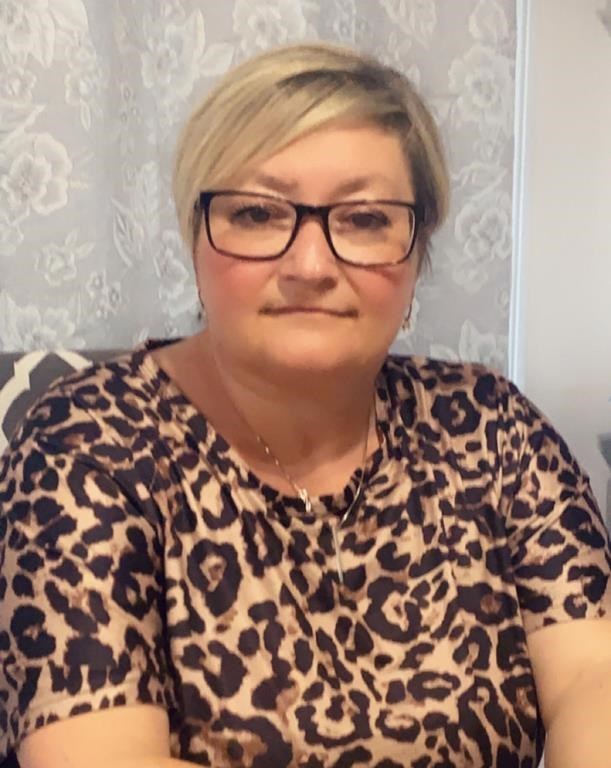
She had to wait nearly two months to get rehabilitation in the community near Cache Bay, Ont., to help her walk and get the strength back in her arm and leg before she could transition to exercises at home for the stiffness in her foot and hand.
“It was difficult,” said Baronette, who’d been the sole caregiver for her husband due to his lung disease, heart issues and inability to work.
“The tables kind of turned and he had to take care of me,” said Baronette, who suffered through depression after losing her independence and the ability to befully active with her two young grandchildren. She also lamented not having the strength to help out, “as a mother,” at her two children’s upcoming weddings.
It was also tough for Baronette to accept she had a stroke at age 52, something she believed would happen to an older person. Now, she wants other women to know they should get help for their symptoms as soon as possible, ditch the guilt of no longer being able to do so much for their families and “put yourself first.”
Women already have higher rates of mood and anxiety disorders than men, putting them at greater risk of developing depression, the Heart and Stroke Foundation said in its report.
While people of any age can have a stroke, women are disproportionately affected.Their risktriples during pregnancy and is also higher after menopause and when they’re elderly because strokes can be more severe then, putting them at risk of dying, it says.
It adds that in 2019, almost a third more women died of stroke than men. When they survive a stroke, their outcomes are worse, including the toll on their mental health.
Patrice Lindsay, director of health systems for the foundation, said women are up to 60 per cent less likely to fully recover from a stroke compared with men, depending on which part of the brain was affected, how fast they get to hospital and the treatment they get.
Women are also less likely to access post-stroke rehabilitation because they feel pressured to resume their caretaker roles, whether that’s caring for children, aging parents or others, Lindsay said.
As for outpatient services, women are more likely to be in jobs without benefits that include physiotherapy and often can’t afford to pay out of pocket or take time offto go toappointments, she said.
“A lot of those factors also contribute to your mental health and how well you are able to adjust to this life, after having had this major physical insult to your brain,” said Lindsay, adding that along with a weak arm or speech difficulties, for example, some people have emotional challenges depending on which part of their brain was affected.
According to the Heart and Stroke Foundation’s best practice guidelines, people should be assessed within 48 hours of entering hospital for the type of rehabilitation they need there and assessed again before they are discharged for whether they should get ongoing rehab in hospital or in the community.
But not every hospital has inpatient rehab beds or services in clinics or in patients’ homes, which is particularly concerning for Indigenous communities, Lindsay said.
Older women who have strokes face greater challenges.
Dr. Mark Bayley, a Heart and Stroke-funded researcher, said they have a higher incidence of stroke, typically in their 70s, when they may be widowed and without a nearby family member to take them to rehabilitation appointments.
Those who have had severe strokes are also not as optimistic about their recovery if they know they will be returning to a home where they live alone and have to climb stairs with weakness on one side of their body, said Bayley,also program medical director at the University Health Network-Toronto Rehabilitation Institute.
“It gets worse when people are in vulnerable groups, like for example, when English is not their first language or they have lower socioeconomic means.”
However, Bayley said there is now more of an effort to monitor those types of differences to accessing rehabilitation and providing some programs virtually.
Community support for the most vulnerable people, especially women who are accustomed to being the caregivers, is essential because they will need ongoing care in their home from nurses, physiotherapists and perhaps occupational therapists, he said.
When it comes to clinical trials, fewer women than men generally enrol in them, but for studies on stroke, less than a third of the participants are women, Bayley said.
“We know that there are more women than men who are having stroke. And this is very concerning to us because if the research doesn’t involve enough women and they have a different response to treatment, then we may not be providing the best practice guidelines, which maybe need to be adapted.”
One project currently underway, and partly fundedby the Heart and Stroke Foundation, is trying to determine through surveys and interviews why so few women participate in the research, he said.
This report by The Canadian Press was first published June 1, 2023
Canadian Press health coverage receives support through a partnership with the Canadian Medical Association. CP is solely responsible for this content.