This school reopened quickly after COVID. Kids’ reading was still behind
Advertisement
Read this article for free:
or
Already have an account? Log in here »
To continue reading, please subscribe:
Digital Subscription
One year of digital access for only $1.44 a week*
- Enjoy unlimited reading on winnipegfreepress.com
- Read the E-Edition, our digital replica newspaper
- Access News Break, our award-winning app
- Play interactive puzzles
*Billed as $5.77 plus GST every four weeks. After 52 weeks, price increases to the regular rate of $19.95 plus GST every four weeks. Offer available to new and qualified returning subscribers only. Cancel any time.
To continue reading, please subscribe:
Add Free Press access to your Brandon Sun subscription for only an additional
$1 for the first 4 weeks*
- Enjoy unlimited reading on winnipegfreepress.com
- Read the E-Edition, our digital replica newspaper
- Access News Break, our award-winning app
- Play interactive puzzles
*Your next Brandon Sun subscription payment will increase by $1.00 and you will be charged $17.95 plus GST for four weeks. After four weeks, your payment will increase to $24.95 plus GST every four weeks.
Read unlimited articles for free today:
or
Already have an account? Log in here »
Hey there, time traveller!
This article was published 10/06/2023 (1229 days ago), so information in it may no longer be current.
COLUMBUS, Kan. (AP) — Students spread out in their rural Kansas classroom, answering questions with a partner about invaders atop elephants attempting to sack Rome more than 2,000 years ago.
“Do you want to read?” one of the third graders, Parker, asked his partner after the lesson on the Punic Wars. “Because I’m not really good.”
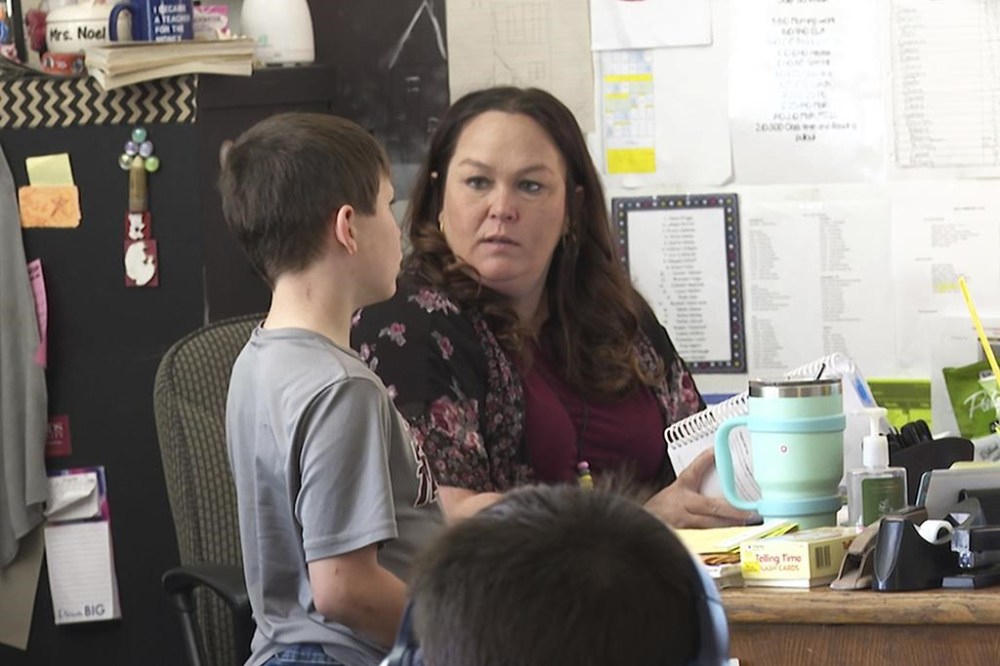
Bekah Noel told her students to jot down answers for their partners if they needed extra help writing or spelling. Halfway through the school year, with some of her students reading nearly 200 words per minute and others struggling to sound out around 10, she has had to make a lot of tweaks like this.
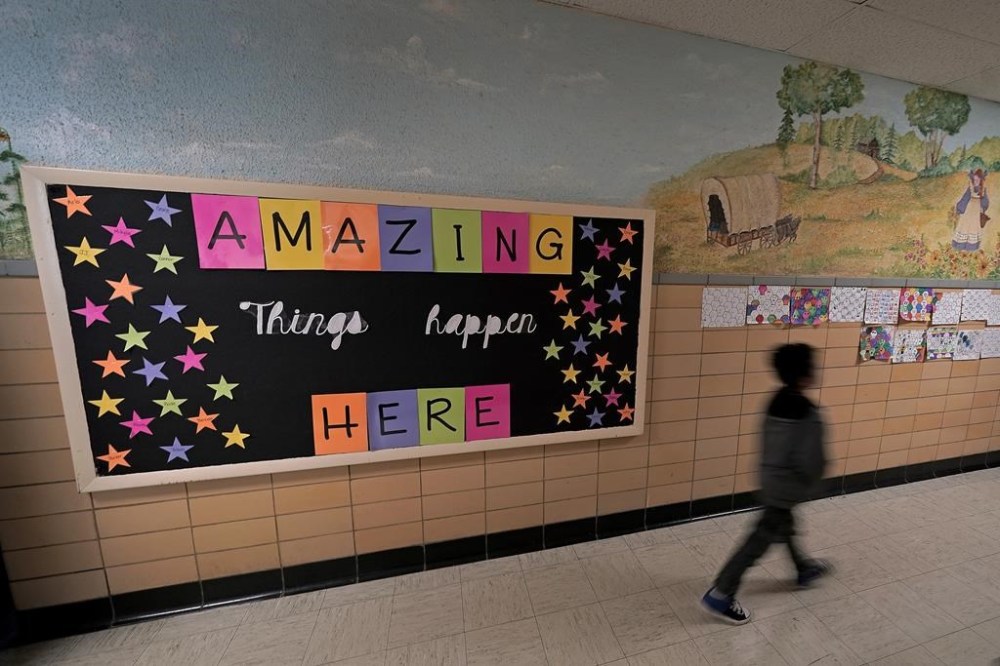
Exiting from the pandemic, the assumption might be that Noel’s students should be among the least scathed. The tiny, 900-student school system in Columbus pivoted to remote learning briefly in March 2020 before going back in person that fall, initially without masks. While some U.S. students spent a year or more learning online, pandemic school in rural Kansas was as normal as it got.
But the upheaval still took a toll. Students and teachers got sick, social distancing made it hard to teach kids in small groups, and the pace of teaching ground to a crawl. Three years later, Noel has more third graders than ever who are reading below grade level. That’s the true elephant in the room.
“I have kids,” Noel said midway through the year, “that legitimately cannot read.”
Noel is used to adapting to students’ needs, and she has been pulling out all the strategies in her toolkit. She pairs strong and struggling students, reads questions aloud and jots down dictated answers for students to rewrite in their own handwriting.
As the pandemic was raging, the district also adopted a new strategy: a reading curriculum that is heavy on phonics — a stressful gamble that the science-backed curriculum might help kids catch up.
There are signs the changes are helping, particularly for older students. Educators from other schools have been coming to observe the changes. But this is third grade, the last year students are typically taught to read.
And time is running out.
___
AS VIRUS SPREAD, ‘EVERYBODY WAS STRESSED OUT’
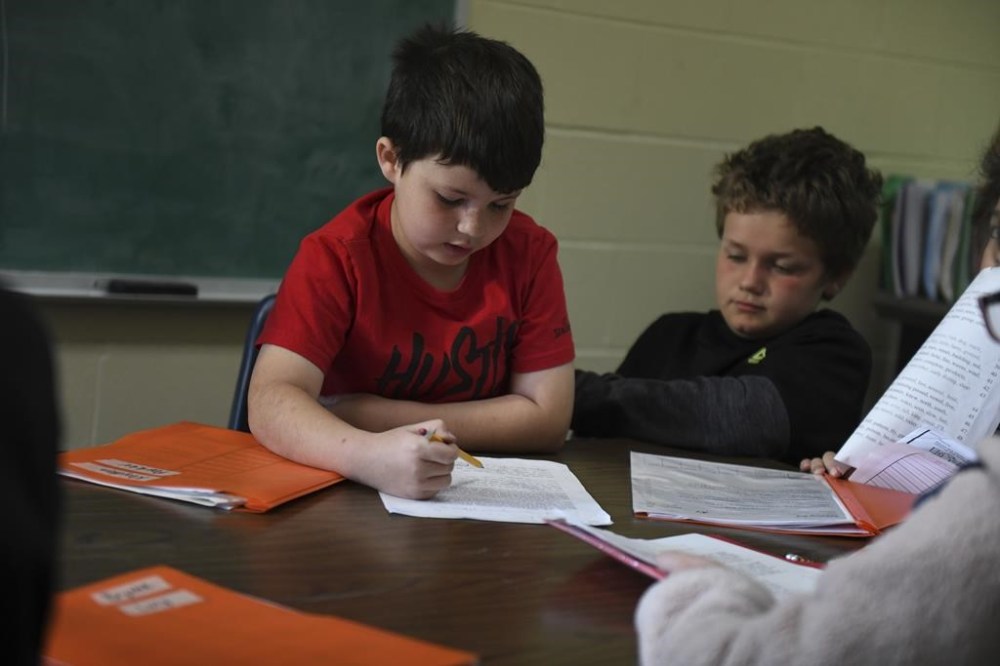
During a group session in October, third grader Emmett Mayfield and a classmate dismantled the word “athletic” with paraprofessional Jessica Seitz. Columbus used federal pandemic relief money to double the number of paraprofessionals assigned to help its small groups of struggling students.
“How many syllables do we have?” she asked. Emmett answered: “Three.”
It was part of a lesson on closed syllables, a term that refers to a vowel being followed by a consonant. This matters because it creates a short vowel sound, meaning the letter “A” in the word is pronounced as “ah.” If it was a long vowel, it would sound more like the name of the letter.
“Make a fist,” Seitz instructed. “We are closing that door. The consonant is stopping that vowel from saying its name.”
This type of lesson is a common one now that the district emphasizes the so-called science of reading that is gaining momentum nationwide. Schools piloted two new reading curriculums for a few weeks in November and December of 2020, as COVID-19 case levels soared.
Spared initially, small towns in rural Kansas were so overwhelmed that hospitals had to fly patients hundreds of miles away for treatment. Parker’s mom, Chelsea Brinson, a medical assistant, was testing droves of COVID samples at a clinic. “Everybody was stressed out,” said Brinson, who now works as a nurse’s assistant in the district.
Students started masking. But that meant mask breaks were added to the already disrupted schedule.
Reading specialist Kelly Walters asked the overwhelmed teachers whether they wanted to put the reading pilot on hold.
“One hundred percent of our staff said, ‘No, we want to move forward,’” recalled Walters, who struggled so much to learn to read herself that she suspects an undiagnosed case of dyslexia was to blame.
The program they picked weaves phonics and other reading changes throughout the curriculum. No longer are those elements mostly isolated to worksheets. Staff praised it, which was encouraging to Walters, who tested the materials on her youngest child, just 3 at the time, while stuck at home early in the pandemic.
“As a mom, who was a struggling reader, to give that gift —” she said, and then stopped and corrected herself. “I shouldn’t have said it was a gift, because it’s not a gift. It’s a right.”
___
THIRD GRADERS WERE READING LIKE FIRST GRADERS
In late November, Noel taught a science lesson on the skeletal system. Like the rest of the curriculum, it also incorporated reading instruction, with “structure” among the vocabulary words she highlighted.
“Have you ever seen a house being built before?” Noel asked. The students blurted out examples before she continued: “And they’ll have the wood up first, and it will be like beams.”
She then asked whether the word “structure” was a noun, verb, adjective or adverb. Why, she then asked, was it one of the vocabulary words in a lesson on the skeletal system?
Parker shared his answer: “Because our spine holds up the rest of our body.” Noel rewarded him with a fist bump.
Parker started the year reading at the level of a first grader. He was, Noel, said, “embarrassed.” Midway through the year he seemed stuck, learning new skills and then seeming to forget it all. Staff were worried. He was flagged for a special education assessment.
When the pandemic first closed schools in 2020, Parker was a kindergartener. His mom recalled “freaking out,” trying to figure out what to do with him. To get him to do schoolwork, his grandmother or someone else had to sit beside him at all times. Otherwise, Parker said, he would “squirrel off.”
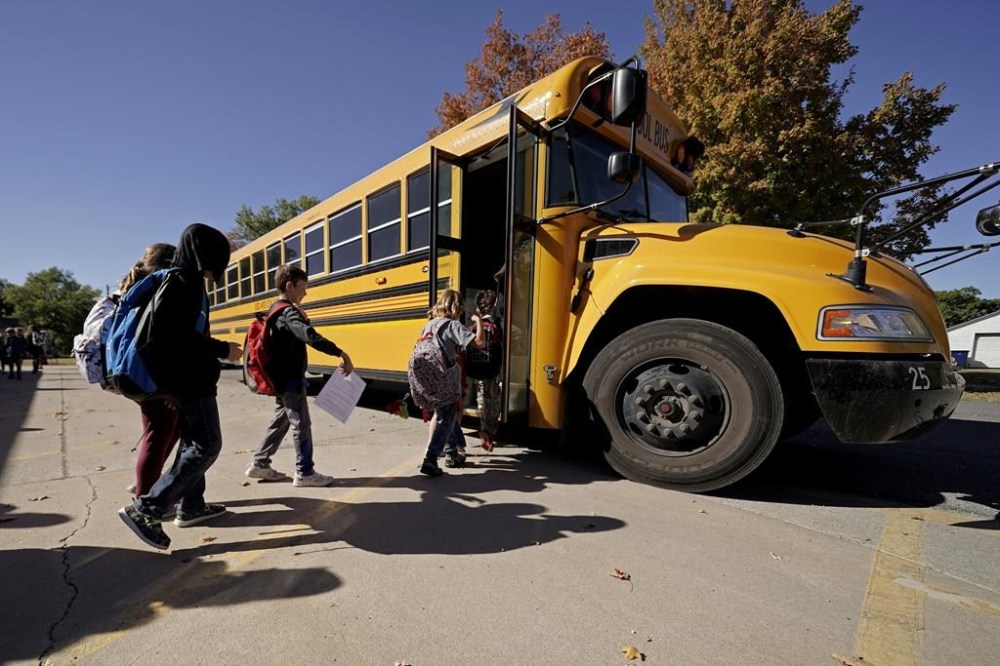
Columbus and many other rural school systems reopened that fall. With strong opposition to masks locally, the district instead added “sneeze guards” to desks. But in-person school was far from normal. The pandemic had hobbled one of teachers’ most effective tools: small groups.
Typically, they would pull kids from different classes to create groups targeting specific skills, Noel said. But with COVID, they were trying to keep each of the classes separated to limit the spread of disease. And then there was COVID itself. Between illnesses and quarantines, students and staff were missing two weeks or more of school multiple times throughout the year.
“It was taking us two days to do something that would have taken us one,” Noel said.
Noel was infected twice, forced to miss school again just this past fall because of a COVID-sickened child. Parker caught COVID in first grade, missing two weeks of school.
Across the country, federal data show, the disruptions wrought by the pandemic were accompanied by widespread learning setbacks, even in states that saw students return quickly to in-person learning. Among those showing the largest learning losses are this year’s crop of third graders, who were in kindergarten when the pandemic hit, a foundational year for learning to read.
Now Noel’s students and other third graders are under pressure to master reading ahead of later grades, where literacy is key to learning everything else.
___
KIDS START CATCHING UP, BUT SLOWLY
By late January, it was time to show off at “Books and Breakfast,” with parents, grandparents, preschool-age siblings and friends visiting Highland School to see what the children were learning. The students sprawled around the school building, eating doughnuts and reading books to their special guests.
As Emmett read aloud from “Grumpy Monkey,” he got some help with the word “discovery” and plowed ahead, reading clearly how the bananas were “too sweet.”
“I used to didn’t like to read,” said Emmett, who started the year reading more like an early second grader, “but I just started reading.”
At home, though, he is still resisting reading, said his mother, Jessica Mayfield, a 39-year-old hospital lab technician. She blames it in part on those “awful” days of virtual learning. There were meltdowns, and she fretted even then that he would fall behind, with those early years of school so “crucial.”
Mayfield, herself an avid reader, doesn’t know what more the district could have done. “I think,” she said, “it’s just to be expected.”
Assessments showed 13 of Noel’s 24 students are reading below grade level. Many of them are kids who moved to the district in the middle of this school year. Nine have been getting the most intensive so-called tier-three level of support. Some of her students scored so highly they were evaluated for the gifted program. In a rarity, none fell in the middle tier group of kids needing just a little extra help.
It’s a trend seen elsewhere around the country as the pandemic widened the gap between higher- and lower-performing students.
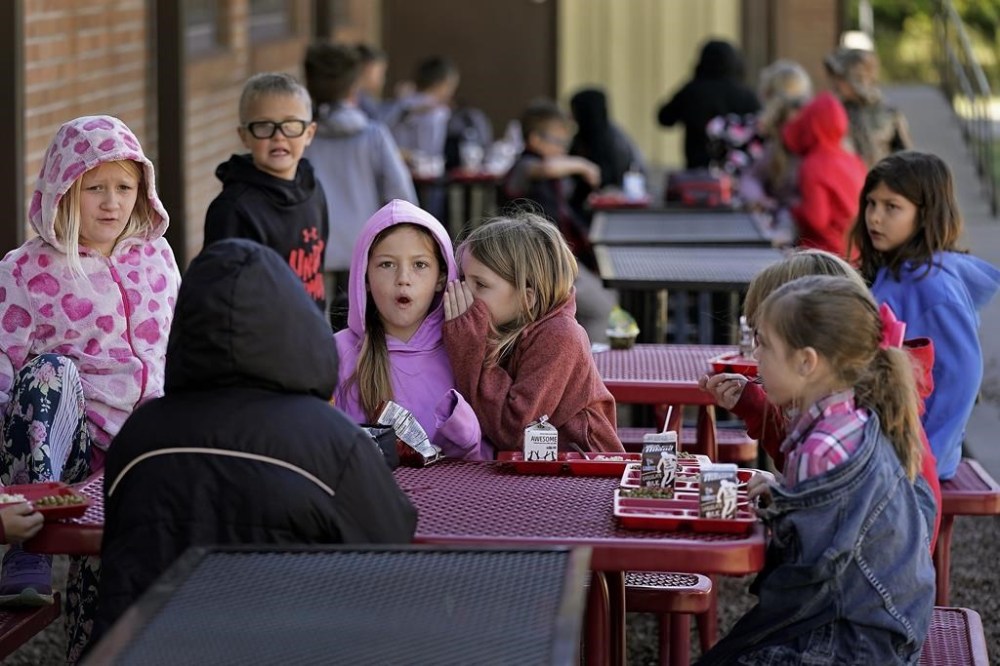
Noel is working harder than ever to keep her advanced students from getting bored, assigning them special projects. Grace Epler, an advanced reader who is prone to finishing assignments early, sometimes spends her free time making up math problems, helping her classmates or playing educational games on her iPad.
State tests are looming, and it weighs heavily on Grace.
“They compare this school to all the other elementary schools in Kansas, and it scares me,” she said at lunchtime, her wrist in a pink splint after a swing mishap. “I might get, like, five wrong.”
This even though she reads nearly anything put in front of her. She is particularly partial to a book the kids wrote and illustrated themselves that documented what they will miss most about their soon-to-close school, a building filled with quirks like a toilet in an old shower stall.
Many kids in Noel’s class are progressing, but not as much as she would like.
“Those highs grew even more,” Noel said. “And the lows, they grew, but they’re still quite a bit lower.”
___
READING ‘ACTUALLY’ BECOMES FUN
One day in April, Emmett and Parker were taking a turn in the small group getting extra reading help. After talk of the basketball and softball seasons, the small group took turns reading a book called “A Prince Among Donkeys,” with lots of words and spelling patterns they’ve seen before.
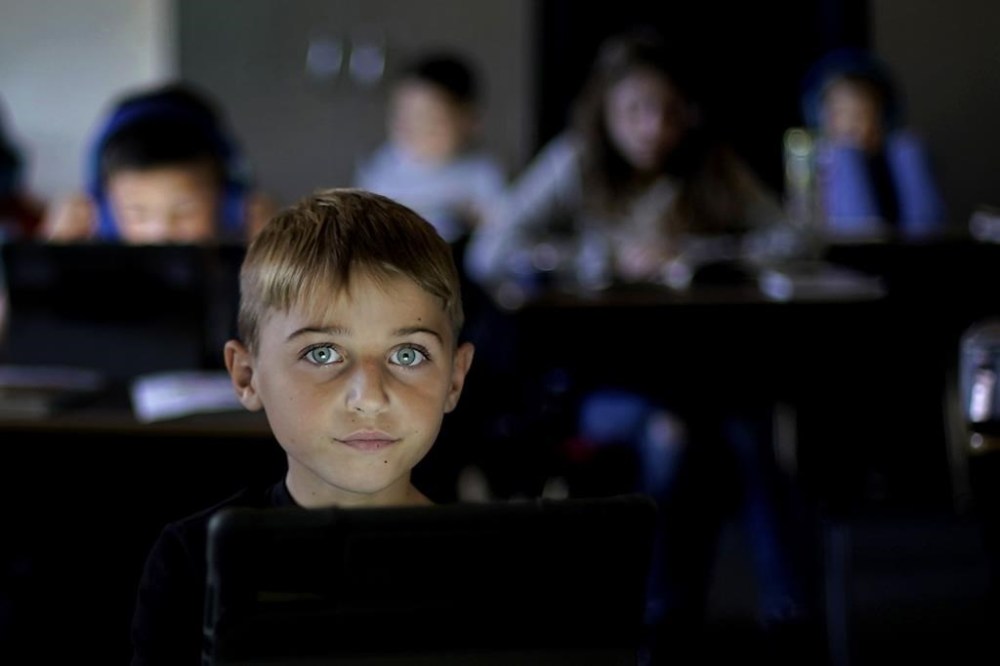
Parker rested his hand on his forehead, reading: “To Adam’s surprise, Emma smelled.” Then, a quick correction: “smelled” to “smiled.”
Imperfect though it was, something had happened over these months of phonics drills and small-group work. When the special education testing came back, not only did it show he didn’t qualify, but he also made so much progress he was close to reading at the level of a beginning third grader.

“I actually do like reading now,” Parker explained. He described evenings spent on the couch with his mother, practicing. He and Emmett are now obsessed with the same book series about a superhero cat. “It’s just fun to do.”
When Parker finished his turn reading, he had the choice of picking who would go next. But he didn’t choose Emmett or any of the other kids.
“Can I pick myself?” he asked. And he kept reading.
___
The Associated Press education team receives support from the Carnegie Corporation of New York. The AP is solely responsible for all content.