In the West Bank, UNESCO site Battir could face a water shortage from a planned Israeli settlement
Advertisement
Read this article for free:
or
Already have an account? Log in here »
To continue reading, please subscribe:

Digital Subscription
One year of digital access for only $205*
- Enjoy unlimited reading on winnipegfreepress.com
- Read the E-Edition, our digital replica newspaper
- Access News Break, our award-winning app
- Play interactive puzzles
*First annual payment billed as $205.00 + GST for one year. This annual subscription will automatically renew at $233.00 + GST every 52 weeks (10% off the regular annual price of $259.35). Offer available to new and qualified returning subscribers only. Cancel any time.
To continue reading, please subscribe:
Add Free Press access to your Brandon Sun subscription for only an additional
$1 for the first 4 weeks*
- Enjoy unlimited reading on winnipegfreepress.com
- Read the E-Edition, our digital replica newspaper
- Access News Break, our award-winning app
- Play interactive puzzles
*Your next Brandon Sun subscription payment will increase by $1.00 and you will be charged $17.95 plus GST for four weeks. After four weeks, your payment will increase to $24.95 plus GST every four weeks.
Read unlimited articles for free today:
or
Already have an account? Log in here »
Hey there, time traveller!
This article was published 21/06/2023 (1185 days ago), so information in it may no longer be current.
BATTIR, West Bank (AP) — Generations of Palestinians have worked the terraced hillsides of this West Bank farming village southwest of Jerusalem, growing olives, fruits, beans and exquisite eggplants renowned across the region in a valley linked to the biblical King David.
But residents fear their ancient way of life could soon be in danger as Israel’s far-right government moves ahead with a settlement project on a nearby hilltop. Environmental groups say the construction could devastate already strained water sources supplying the agricultural terraces and cause extensive damage to an already precarious ecosystem.
Battir’s plight shines a light on how the trappings of the Israeli-Palestinian conflict — settlements, land disputes and military activity — can take a toll on the region’s environment, natural resources and cultural heritage.
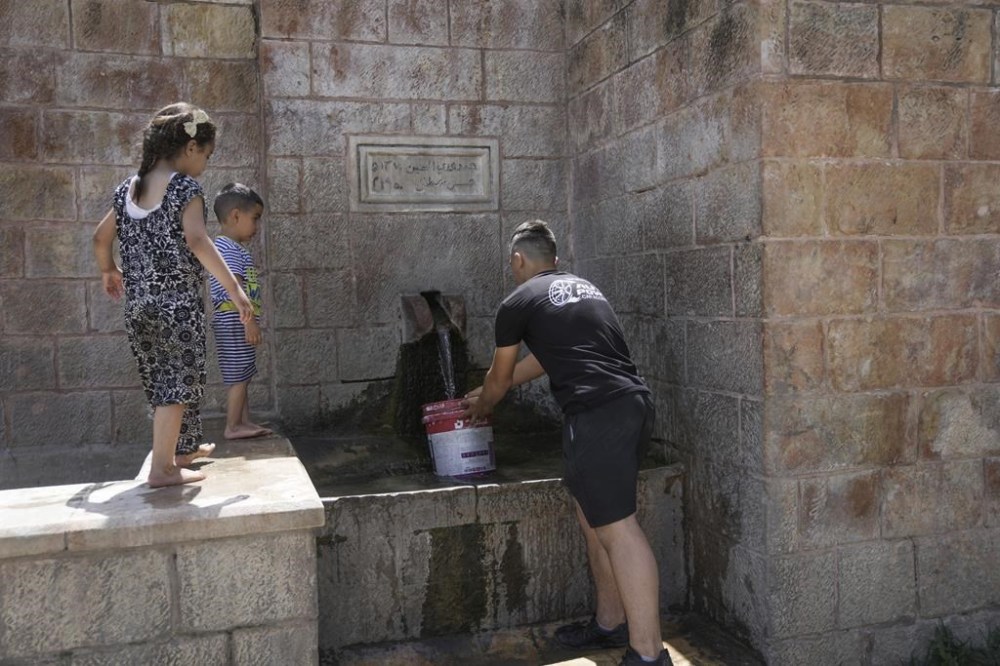
The proposed construction “will grab a great amount of land, and you don’t know where it will end,” said Rashid Owinah, 58, whose family has farmed in Battir for generations. “This will affect the community mentally, economically and socially.”
Two environmental groups, EcoPeace and the Society for the Protection of Nature, have petitioned Israeli authorities to halt the plan, citing its potential impact on the lush terrace gardens below.
In the valley where the Bible says David battled the Philistines, which in spots seem undisturbed by modernity, the farmers channel water from a 2,000-year-old Roman-era pool to grow crops on terraces that cascade down the mountainsides.
On a recent day, water burbled out of a rock face and trickled down an aqueduct beneath a fruiting mulberry tree toward the disused Ottoman train tracks below that once brought the terraces’ produce to Jerusalem.
While the expansion of the Har Gilo settlement has long been on the books, Prime Minister Benjamin Netanyahu ’s new ultranationalist and religious government has made such projects a top priority. Local settler leaders are pushing hard to make the plan a reality.
The United Nations’ cultural heritage body, UNESCO, recognized the millennia-old terraces in the serpentine valleys around Battir as a world heritage site in 2014.
“The complex irrigation system of this water supply has led to the creation of dry walls terraces which may have been exploited since antiquity,” according to documentation filed with UNESCO. “The integrity of this traditional water system is guaranteed by the families of Battir, who depend on it.”
Between the terraces and a surrounding buffer zone meant to protect them, the UNESCO cultural landscape makes up around 10 square kilometers (3.8 square miles) of hills and wadis. Plastic litter left by picnickers is strewn along paths crisscrossing the valley.
The terraces, which for generations served as the market garden of Jerusalem and Bethlehem, are irrigated by intricate aqueducts and channels that the village’s farmers share. Around 40% of Battir’s 5,000 residents depend on agriculture for a living, according to former mayor Akram Bader.
“Here, we refuse to use the new machines,” he said. “We want to keep the traditional way of agriculture.”
Environmentalists say those springs would be endangered by Israel’s planned settlement construction in the buffer zone abutting the terraces.
“If you build an extensive town at the top, it destroys this landscape,” said Nadav Tal, a hydrologist who serves as the Middle East Water Officer for EcoPeace, a joint Israeli-Palestinian group.
The springs dotting the valley at the base of Battir are fed by groundwater that is recharged by rainfall percolating into the limestone hills above. “If you build on top of these rocks, you can block the water from reaching the springs,” he said.
Access to water is already a challenge for Palestinians living under Israeli occupation, with many suffering from chronic supply shortages.
Israel effectively controls most of the water supply in the territory and limits the amount of water the Palestinians can extract from the mountain aquifer, the main water supply in the territory. Modern construction elsewhere has caused springs Palestinian farmers depend on to dry up.
On top of that, human-driven climate change is projected to raise global temperatures and cause more frequent droughts in the Levant. Burgeoning Israeli and Palestinian populations are expected to further strain limited water resources.
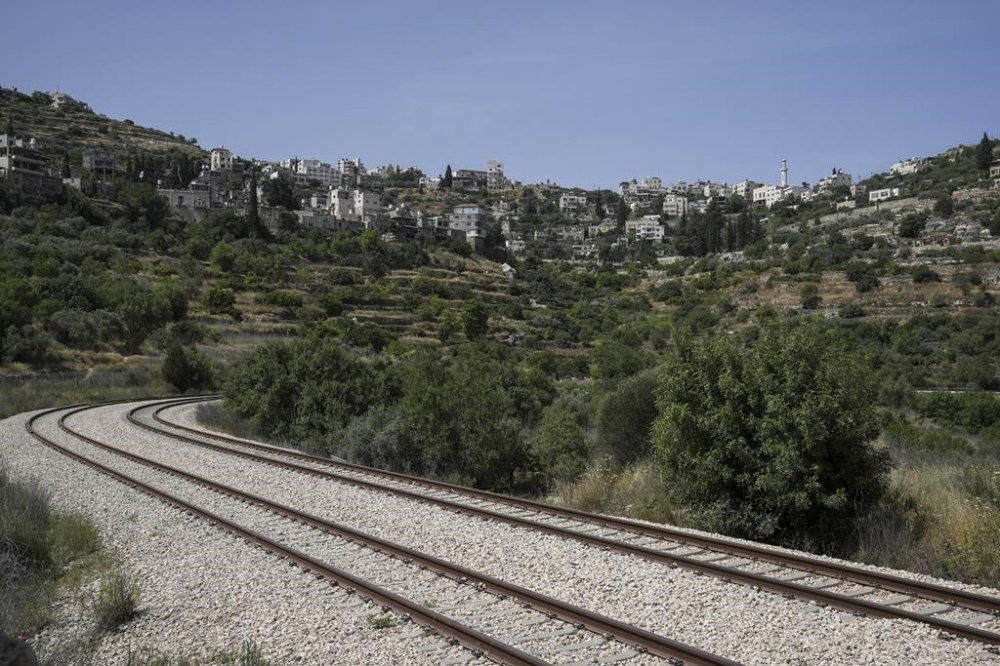
The future settlement plan, known as Har Gilo West, is slated to develop a craggy hilltop less than a mile (1.5 km) across the valley north of Battir. The project, which would effectively double the size of the existing Har Gilo settlement, is set to begin with 560 new housing units atop a ridge overlooking the terraces.
Shlomo Ne’eman, head of the Gush Etzion settlement council, said there is a dire housing shortage in the area, and Har Gilo in particular. He said all urban development comes at the expense of the environment, but in the case of Har Gilo West he argues that it is atop “a rocky hill that has no natural value.”
“There are no springs, there are no forests, there is no rare flora,” Ne’eman said, accusing environmental groups of selective, political activism.
He insisted that the Har Gilo West plans “aren’t close to the terraces, don’t approach them, don’t harm and don’t touch them.”
In its petition, the Society for the Protection of Nature in Israel said the plan “doesn’t meet any environmental criterion” and lacked standard environmental assessment documentation.
A summertime survey it conducted on the site found at least 195 plant species, 25 butterfly species, numerous bird species, including at least three listed as endangered, and said it was a habitat for the endangered mountain gazelle and threatened striped hyena.
COGAT, the Israeli military body responsible for civilian affairs in the occupied West Bank, said the existing plans are aimed at “minimizing damage to the landscape, and (pay) attention to other environmental issues.” It said the planning would examine objections filed by environmental groups but gave no indication of when that would happen.

Israel captured the West Bank, along with east Jerusalem and the Gaza Strip, in the 1967 Mideast war. The Palestinians seek those territories for a future independent state.
Most of the international community considers Israeli settlements an impediment to the creation of a viable Palestinian state alongside Israel. More than 700,000 Jewish settlers now live in dozens of settlements in east Jerusalem and the West Bank.
Previous plans to build a section of Israel’s West Bank separation barrier adjacent to the terraces were scrapped after vocal opposition over its potential impact on wildlife and the ecosystem.
Yonathan Mizrachi of the Israeli anti-settlement group Peace Now said the Har Gilo West plans have already passed several steps in the byzantine settlement approval process.
Although the the plan still awaits final authorization before bulldozers move in, he said the approval of a highway expansion for Har Gilo last September indicates Israel’s intention of moving forward.