Maternal deaths in the US more than doubled over two decades. Black mothers died at the highest rate
Advertisement
Read this article for free:
or
Already have an account? Log in here »
To continue reading, please subscribe:

Digital Subscription
One year of digital access for only $205*
- Enjoy unlimited reading on winnipegfreepress.com
- Read the E-Edition, our digital replica newspaper
- Access News Break, our award-winning app
- Play interactive puzzles
*First annual payment billed as $205.00 + GST for one year. This annual subscription will automatically renew at $233.00 + GST every 52 weeks (10% off the regular annual price of $259.35). Offer available to new and qualified returning subscribers only. Cancel any time.
To continue reading, please subscribe:
Add Free Press access to your Brandon Sun subscription for only an additional
$1 for the first 4 weeks*
- Enjoy unlimited reading on winnipegfreepress.com
- Read the E-Edition, our digital replica newspaper
- Access News Break, our award-winning app
- Play interactive puzzles
*Your next Brandon Sun subscription payment will increase by $1.00 and you will be charged $17.95 plus GST for four weeks. After four weeks, your payment will increase to $24.95 plus GST every four weeks.
Read unlimited articles for free today:
or
Already have an account? Log in here »
Hey there, time traveller!
This article was published 03/07/2023 (1200 days ago), so information in it may no longer be current.
Maternal deaths across the U.S. more than doubled over the course of two decades, and the tragedy unfolded unequally.
Black mothers died at the nation’s highest rates, while the largest increases in deaths were found in American Indian and Native Alaskan mothers. And some states — and racial or ethnic groups within them – fared worse than others.
The findings were laid out in a new study published Monday in the Journal of the American Medical Association. Researchers looked at maternal deaths between 1999 and 2019 — but not the pandemic spike — for every state and five racial and ethnic groups.
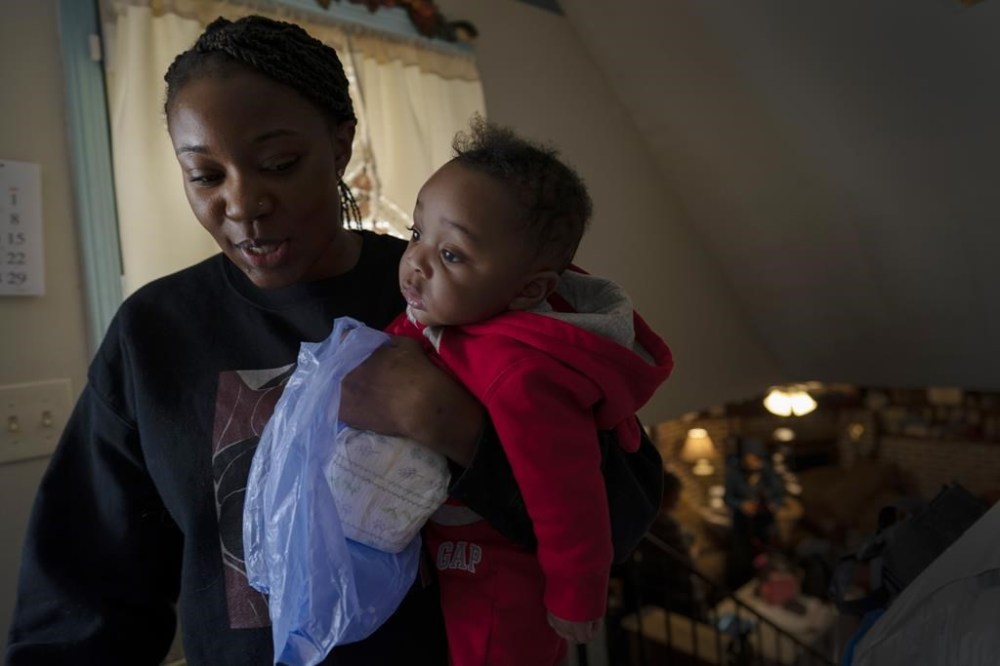
“It’s a call to action to all of us to understand the root causes — to understand that some of it is about health care and access to health care, but a lot of it is about structural racism and the policies and procedures and things that we have in place that may keep people from being healthy,” said Dr. Allison Bryant, one of the study’s authors and a senior medical director for health equity at Mass General Brigham.
Among wealthy nations, the U.S. has the highest rate of maternal mortality, which is defined as a death during pregnancy or up to a year afterward. Common causes include excessive bleeding, infection, heart disease, suicide and drug overdose.
Bryant and her colleagues at Mass General Brigham and the Institute for Health Metrics and Evaluation at the University of Washington started with national vital statistics data on deaths and live births. They then used a modeling process to estimate maternal mortality out of every 100,000 live births.
Overall, they found rampant, widening disparities. The study showed high rates of maternal mortality aren’t confined to the South but also extend to regions like the Midwest and states such as Wyoming and Montana, which had high rates for multiple racial and ethnic groups in 2019.
Researchers also found dramatic jumps when they compared maternal mortality in the first decade of the study to the second, and identified the five states with the largest increases between those decades. Those increases exceeded:
— 162% for American Indian and Alaska Native mothers in Florida, Illinois, Kansas, Rhode Island and Wisconsin;
— 135% for white mothers in Georgia, Indiana, Louisiana, Missouri and Tennessee;
— 105% for Hispanic mothers in Georgia, Illinois, Indiana, Minnesota and Tennessee;
— 93% for Black mothers in Arkansas, Georgia, Louisiana, New Jersey and Texas;
— 83% for Asian and Pacific Islander mothers in Georgia, Illinois, Kansas, Michigan and Missouri.
“I hate to say it, but I was not surprised by the findings. We’ve certainly seen enough anecdotal evidence in a single state or a group of states to suggest that maternal mortality is rising,” said Dr. Karen Joynt Maddox, a health services and policy researcher at Washington University School of Medicine in St. Louis who wasn’t involved in the study. “It’s certainly alarming, and just more evidence we have got to figure out what’s going on and try to find ways to do something about this.”
Maddox pointed to how, compared with other wealthy nations, the U.S. underinvests in things like social services, primary care and mental health. She also said Missouri hasn’t funded public health adequately and, during the years of the study, hadn’t expanded Medicaid. They’ve since expanded Medicaid — and lawmakers passed a bill giving new mothers a full year of Medicaid health coverage. Last week, Missouri Gov. Mike Parson signed budget bills that included $4.4 million for a maternal mortality prevention plan.
In neighboring Arkansas, Black women are twice as likely to have pregnancy-associated deaths as white women, according to a 2021 state report.
Dr. William Greenfield, the medical director for family health at the Arkansas Department of Health, said the disparity is significant and has “persisted over time,” and that it’s hard to pinpoint exactly why there was an increase in the state’s maternal mortality rate for Black mothers.
Rates among Black women have long been the worst in the nation, and the problem affects people of all socioeconomic backgrounds. For example, U.S. Olympic champion sprinter Tori Bowie, 32, died from complications of childbirth in May.
The pandemic likely exacerbated all of the demographic and geographic trends, Bryant said, and “that’s absolutely an area for future study.” According to preliminary federal data, maternal mortality fell in 2022 after rising to a six-decade high in 2021 — a spike experts attributed mainly to COVID-19. Officials said the final 2022 rate is on track to get close to the pre-pandemic level, which was still the highest in decades.
Bryant said it’s crucial to understand more about these disparities to help focus on community-based solutions and understand what resources are needed to tackle the problem.
Arkansas already is using telemedicine and is working on several other ways to increase access to care, said Greenfield, who is also a professor of obstetrics and gynecology at the University of Arkansas Medical Center in Little Rock and was not involved in the study.
The state also has a “perinatal quality collaborative,” a network to help health care providers understand best practices for things like reducing cesarean sections, managing complications with hypertensive disorders and curbing injuries or severe complications related to childbirth.

“Most of the deaths we reviewed and other places have reviewed … were preventable,” Greenfield said.
___
AP Public Health Collaborations Editor Erica Hunzinger contributed to this report
——
The Associated Press Health and Science Department receives support from the Howard Hughes Medical Institute’s Science and Educational Media Group and the Robert Wood Johnson Foundation. The AP is solely responsible for all content.