Boy who died from asthma amid wildfire smoke is ‘face of climate crisis,’ doctor says
Advertisement
Read this article for free:
or
Already have an account? Log in here »
To continue reading, please subscribe:

Digital Subscription
One year of digital access for only $205*
- Enjoy unlimited reading on winnipegfreepress.com
- Read the E-Edition, our digital replica newspaper
- Access News Break, our award-winning app
- Play interactive puzzles
*First annual payment billed as $205.00 + GST for one year. This annual subscription will automatically renew at $233.00 + GST every 52 weeks (10% off the regular annual price of $259.35). Offer available to new and qualified returning subscribers only. Cancel any time.
To continue reading, please subscribe:
Add Free Press access to your Brandon Sun subscription for only an additional
$1 for the first 4 weeks*
- Enjoy unlimited reading on winnipegfreepress.com
- Read the E-Edition, our digital replica newspaper
- Access News Break, our award-winning app
- Play interactive puzzles
*Your next Brandon Sun subscription payment will increase by $1.00 and you will be charged $17.95 plus GST for four weeks. After four weeks, your payment will increase to $24.95 plus GST every four weeks.
Read unlimited articles for free today:
or
Already have an account? Log in here »
Hey there, time traveller!
This article was published 18/07/2023 (1176 days ago), so information in it may no longer be current.
A nine-year-oldB.C.boy who died from asthma exacerbated by wildfire smoke is “the face of the climate crisis in Canada right now,” the Canadian Association of Physicians for the Environment (CAPE) said on Tuesday.
The group’s president, Dr. Melissa Lem, said Carter Vigh’s death underscores the urgent need to better protect vulnerable people from the effects of wildfires and other climate change-driven emergencies — as well as pick up the pace of tackling climate change itself.
“What Carter’s story tells me is that we are woefully unprepared for the health impacts of climate change as a society and in the health-care system,” Lem told The Canadian Press.
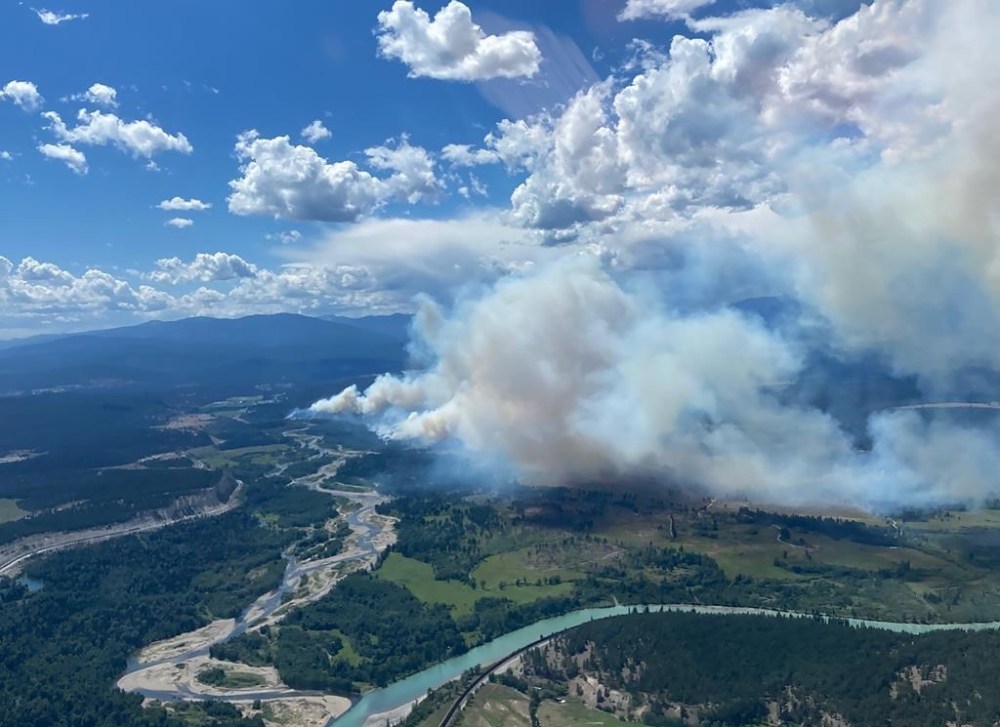
“It’s a moral imperative for governments to end our dependence on fossil fuels before more kids like Carter die,” she said.
Burning fossil fuels leads to climate change, which in turn can trigger wildfires, as well as create other air pollution, Lem said.
Carter’s aunt, Anamaria Vigh, said on Facebook that the boy from 100 Mile House, B.C., died from asthma last week in hospital.
On Monday, the B.C. Coroner’s office posted a public safety bulletin confirming it is investigating Carter’s death.
“The sudden and unexpected death of this young boy is a heartbreaking loss for his family and community,” the bulletin said.
“As the province experiences greater impacts from the effects of climate change, British Columbians are learning more about the risks associated with wildfire smoke, extreme heat and other environmental factors. This greater awareness can help us respond when risks are identified,” it said.
Whenever wildfire smoke starts appearing, Lem — who is also a family doctor in Vancouver — sees a rise in patients suffering from asthma and sore throats.
More severe asthma attacks, as well as other respiratory diseases and heart problems, end up in the emergency department, she said.
The B.C. Coroner’s bulletin also said that smoke from wildfires is especially dangerous for children, older people and those with pre-existing heart and lung conditions.
There are some precautions that people can take to minimize their exposure to wildfire smoke, the bulletin said, including staying inside with windows closed and using “high-quality portable air cleaners with HEPA filtration to remove smoke particles from indoor air.”
The coroner’s office also recommended keeping windows closed and air conditioning on in cars, as well as taking refuge in “places with controlled air supply,” including shopping malls or public libraries.

Lem said Carter’s death is “every parent’s and every doctor’s worst nightmare.”
“We have to sprint as fast as we can to both adapt to the effects of climate change (by) protecting people from the effects of wildfire, smoke and heat,” she said.
“At the same time, (we have to) sprint to mitigate climate change by reducing our use of and expansion of fossil fuels as quickly as we can.”
This report by The Canadian Press was first published July 18, 2023.
Canadian Press health coverage receives support through a partnership with the Canadian Medical Association. CP is solely responsible for this content.
Related Articles
B.C.'s wildfire season, yet to peak, sets record
Advertisement Advertise With Us
Advertisement Advertise With Us