A meat allergy caused by tick spit is getting more common, CDC says

Advertisement

Advertise with us

NEW YORK (AP) — More than 100,000 people in the U.S. have become allergic to red meat since 2010 because of a weird syndrome triggered by tick bites, according to a government report released Thursday. But health officials believe many more have the problem and don't know it.

Read this article for free:


or

Already have an account? Log in here »

To continue reading, please subscribe:

Subscribe and receive a limited-edition Free Press branded hat or tote.

Digital Subscription

One year of digital access for only $205*

  • Enjoy unlimited reading on winnipegfreepress.com
  • Read the E-Edition, our digital replica newspaper
  • Access News Break, our award-winning app
  • Play interactive puzzles

*First annual payment billed as $205.00 + GST for one year. This annual subscription will automatically renew at $233.00 + GST every 52 weeks (10% off the regular annual price of $259.35). Offer available to new and qualified returning subscribers only. Cancel any time.

To continue reading, please subscribe:

Add Free Press access to your Brandon Sun subscription for only an additional

$1 for the first 4 weeks*

  • Enjoy unlimited reading on winnipegfreepress.com
  • Read the E-Edition, our digital replica newspaper
  • Access News Break, our award-winning app
  • Play interactive puzzles
Start now

*Your next Brandon Sun subscription payment will increase by $1.00 and you will be charged $17.95 plus GST for four weeks. After four weeks, your payment will increase to $24.95 plus GST every four weeks.

Hey there, time traveller!
This article was published 27/07/2023 (1140 days ago), so information in it may no longer be current.

NEW YORK (AP) — More than 100,000 people in the U.S. have become allergic to red meat since 2010 because of a weird syndrome triggered by tick bites, according to a government report released Thursday. But health officials believe many more have the problem and don’t know it.

A second report estimated that as many as 450,000 Americans have developed the allergy. That would make it the 10th most common food allergy in the U.S., said Dr. Scott Commins, a University of North Carolina researcher who co-authored both papers published by the Centers for Disease Control and Prevention.

Health officials said they are not aware of any confirmed deaths, but people with the allergy have described it as bewildering and terrifying.
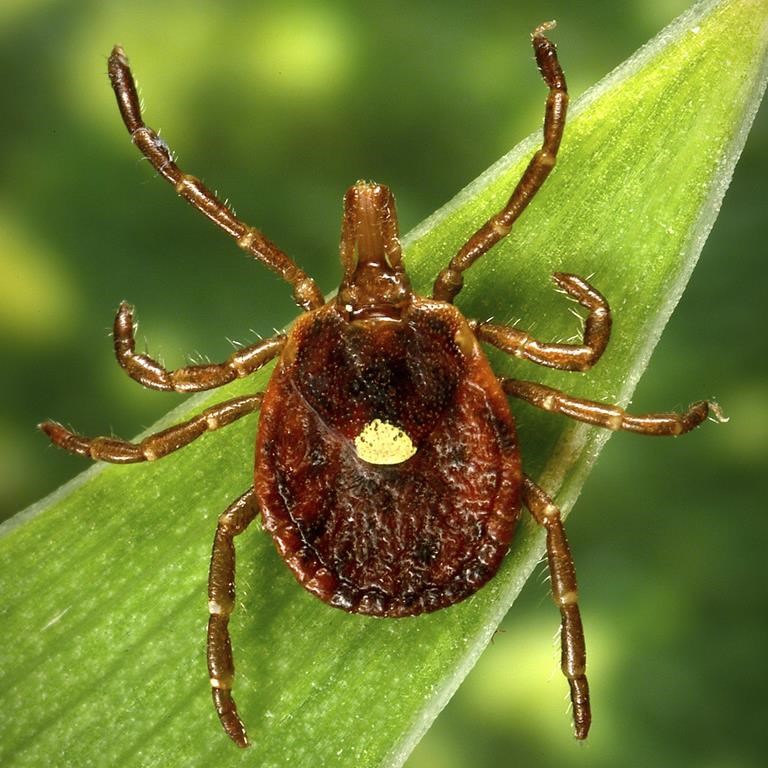
This undated photo provided by the U.S. Centers for Disease Control and Prevention shows a female Lone Star tick, which despite its Texas-sounding name, is found mainly in the Southeast. At least 100,000 people in the U.S. have become allergic to red meat since 2010 because of a weird syndrome triggered by tick bites. That's according to a new government report. But health officials believe more have the problem and don’t know it, and the actual number is more than than four times higher. The Centers for Disease Control and Prevention on Thursday, July 27, 2023 released two reports on the growing tick-borne allergy problem. (James Gathany/CDC via AP)

“I never connected it with any food because it was hours after eating,” said one patient, Bernadine Heller-Greenman.

The reaction, called alpha-gal syndrome, occurs when an infected person eats beef, pork, venison or other meat from mammals — or ingests milk, gelatin or other mammal products.

It’s not caused by a germ but by a sugar, alpha-gal, that is in meat from mammals — and in tick spit. When the sugar enters the body through the skin, it triggers an immune response and can lead to a severe allergic reaction.

Scientists had seen reactions in patients taking a cancer drug that was made in mouse cells containing the alpha-gal sugar. But in 2011 researchers first reported that it could spread through tick bites, too.

They tied it to the lone star tick, which despite its Texas-themed name is most common in the eastern and southern U.S. (About 4% of all U.S. cases have been in the eastern end of New York’s Long Island.)

One of the studies released Thursday examined 2017-2022 test results from the main U.S. commercial lab looking for alpha-gal antibodies. They noted the number of people testing positive rose from about 13,000 in 2017 to 19,000 in 2022.

Experts say cases may be up for a variety of reasons, including lone star ticks’ expanding range, more people coming into contact with the ticks or more doctors learning about it and ordering tests for it.

But many doctors are not. The second study was a survey last year of 1,500 U.S. primary care doctors and health professionals. The survey found nearly half had never heard of alpha-gal syndrome, and only 5% said they felt very confident they could diagnose it. Researchers used that information to estimate the number of people with the allergy — 450,000.

People with the syndrome can experience symptoms including hives, nausea, vomiting, diarrhea, severe stomach pain, difficulty breathing, dizziness and swelling of the lips, throat, tongue or eye lids. Unlike some other food allergies, which occur soon after eating, these reactions hit hours later.

Some patients have only stomach symptoms, and the American Gastroenterological Association says people with unexplained diarrhea, nausea and abdominal pain should be tested for the syndrome.

Doctors counsel people with the allergy to change their diet, carry epinephrine and avoid tick bites.

The allergy can fade away in some people — Commins has seen that happen in about 15% to 20% of his patients. But a key is avoiding being re-bitten.

“The tick bites are central to this. They perpetuate the allergy,” he said.

One of his patients is Heller-Greenman, a 78-year-old New York art historian who spends summers on Martha’s Vineyard. She has grown accustomed to getting bitten by ticks on the island and said she has had Lyme disease four times.

About five years ago, she started experiencing terrible, itchy hives on her back, torso and thighs in the middle of the night. Her doctors concluded it was an allergic reaction, but couldn’t pinpoint the trigger.

She was never a big meat eater, but one day in January 2020 she had a hamburger and then a big, fatty steak the following evening. Six hours after dinner, she woke up nauseated, then suffered terrible spells of vomiting, diarrhea and dizziness. She passed out three times.

She was diagnosed with alpha-gal syndrome shortly after that, and was told to avoid ticks and to stop eating red meat and dairy products. There have been no allergic reactions since.

“I have one grandchild that watches me like a hawk,” she said, making sure she reads packaged food labels and avoids foods that could trigger a reaction.

“I feel very lucky, really, that this has worked out for me,” she said. “Not all doctors are knowledgeable about this.”

___

The Associated Press Health and Science Department receives support from the Howard Hughes Medical Institute’s Science and Educational Media Group. The AP is solely responsible for all content.

Report Error Submit a Tip

More Stories

Double climate whammy hits home

Editorial 4 minute read Preview

Double climate whammy hits home

Editorial 4 minute read 2:00 AM CDT

It’s a bit of a one-two punch. First, the show-and-tell of what global warming could be bringing us. Then, the fact we’ve already failed our best chance of halting climate change.

Read
2:00 AM CDT

Finding my way through the ‘odd uneven time’

Pam Frampton 5 minute read Preview

Finding my way through the ‘odd uneven time’

Pam Frampton 5 minute read 2:00 AM CDT

I am taking a turn in the garden with a cup of tea on a Friday morning. It is 16 C in St. John’s but feels warmer in the stillness. We have been given the rare gift of a morning without wind. I gladly accept it.

Read
2:00 AM CDT

Winkler-based internet provider delivering high-speed service to 30 rural and First Nations Manitoba communities

Nicole Buffie 3 minute read Preview

Winkler-based internet provider delivering high-speed service to 30 rural and First Nations Manitoba communities

Nicole Buffie 3 minute read Yesterday at 7:12 PM CDT

Valley Fiber says it is undertaking one of its largest fibre optic projects and is building infrastructure that will deliver internet to 10,000 homes and businesses in rural and First Nations communities across Manitoba.

“These communities will now have access to the fastest internet network in Manitoba, and it will power their lives and their business,” Ryan Klassen, chief executive officer of the Winkler-based internet provider, said Tuesday from Fisher River Cree Nation.

The province has granted Valley Fiber use of two of its underused cables on the existing Manitoba Hydro fibre optic network for up to 20 years as part of the project, which will connect nearly 30 communities — including Buffalo Point, Hollow Water, Black River and Peguis First Nations, along with Fisher River and Fox Lake Cree Nations — to high-speed internet.

Construction should be finished by 2027.

Read
Yesterday at 7:12 PM CDT

Education student designs lesson plans to take a bite out of food marketing

Maggie Macintosh 4 minute read Preview

Education student designs lesson plans to take a bite out of food marketing

Maggie Macintosh 4 minute read Monday, Sep. 7, 2026

Instead of apples, Emma Caronte is handing out lesson plans on local food history to Manitoba teachers this back-to-school season.

The undergraduate researcher spent her summer break creating a social studies unit that investigates food guide evolution, marketing tactics and how honey dill sauce became a pantry staple on the Prairies.

“I want students to develop a greater interest in food and what outside influences affect their choices and what we consider ‘healthy,’” said Caronte, a final-year education student at the University of Manitoba.

She is advertising her 112-page project as a user-friendly resource for classroom teachers and “a fun sub plan” targeted at Grade 6, 7, 8 and 9.

Read
Monday, Sep. 7, 2026

Parts of River Heights hammered by storm

Melissa Martin 5 minute read Preview

Parts of River Heights hammered by storm

Melissa Martin 5 minute read Monday, Sep. 7, 2026

A powerful storm cut a swath of destruction through River Heights on Sunday, leaving much of the area without power.

Nobody was hurt in the storm.

By the time it subsided, parts of the quiet neighbourhood, especially Borebank and Lindsay streets between Grant and Taylor, had been ravaged: power lines downed, Manitoba Hydro poles toppled, trees splintered and crashed down on vehicles and homes.

In one case, a vehicle was flipped into a yard and sat under a partially downed tree. Shingles were stripped from roofs. Some residents described looking out during the storm and seeing power lines ablaze and the blue glow of electricity arcing over their backyards.

Read
Monday, Sep. 7, 2026

Weekender festivities to take over downtown

Sheldon Birnie 3 minute read Preview

Weekender festivities to take over downtown

Sheldon Birnie 3 minute read 6:00 AM CDT

Come one, come all, to Graham Avenue this weekend.

Organizers of the Weekender hope to welcome thousands of Winnipeggers to the streets and parking lots in and around the Graham Avenue pedestrian mall in what they are billing as “Downtown’s Biggest Street Party.”

Starting Friday evening and running through Sunday, the free festival boasts a plethora of ways by which visitors can enjoy themselves. From food trucks to markets, games to live music, classic cars and free bike repairs, the festival aims to provide a little something for everyone.

“The Weekender is truly about bringing people together, to have fun, to experience all that downtown has to offer,” says Olivia Billson, director of communications and public relations for Downtown Winnipeg BIZ, which is putting on the festival in conjunction with Smith Events and Arch Events.

Read
6:00 AM CDT