How much time do you need for an international layover?
Advertisement
Read this article for free:
or
Already have an account? Log in here »
To continue reading, please subscribe:

Digital Subscription
One year of digital access for only $205*
- Enjoy unlimited reading on winnipegfreepress.com
- Read the E-Edition, our digital replica newspaper
- Access News Break, our award-winning app
- Play interactive puzzles
*First annual payment billed as $205.00 + GST for one year. This annual subscription will automatically renew at $233.00 + GST every 52 weeks (10% off the regular annual price of $259.35). Offer available to new and qualified returning subscribers only. Cancel any time.
To continue reading, please subscribe:
Add Free Press access to your Brandon Sun subscription for only an additional
$1 for the first 4 weeks*
- Enjoy unlimited reading on winnipegfreepress.com
- Read the E-Edition, our digital replica newspaper
- Access News Break, our award-winning app
- Play interactive puzzles
*Your next Brandon Sun subscription payment will increase by $1.00 and you will be charged $17.95 plus GST for four weeks. After four weeks, your payment will increase to $24.95 plus GST every four weeks.
Read unlimited articles for free today:
or
Already have an account? Log in here »
Hey there, time traveller!
This article was published 02/08/2023 (1133 days ago), so information in it may no longer be current.
Most airlines recommend arriving at least two hours before domestic flights and at least three hours before international flights. But do you need that much time for connections between international flights?
Layovers of just 30 minutes can be feasible for domestic flights, especially at small airports where the next flight might be just one gate over. But international layovers are typically far more complicated, and even two hours can be insufficient. Here’s how to book flights with an international layover, and how much time you really need.
WAYS TO BOOK A FLIGHT WITH AN INTERNATIONAL LAYOVER
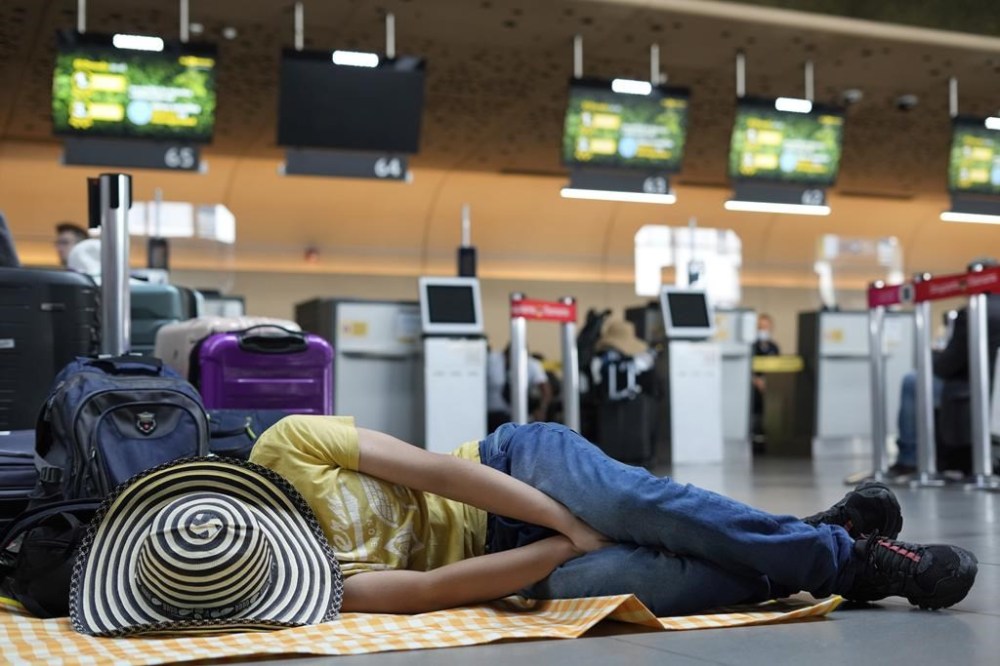
Let’s say you’re flying from Houston to Hanoi, Vietnam. There might be no direct flights between those two cities, but you could get there via layover.
The most common, least risky way to book international flights necessitating a layover is by searching for flights between your departure and arrival cities. Even with no nonstops available, the airline automatically determines your layover and puts both flights on one reservation. This strategy is ideal for a few reasons:
— If you miss your second flight because the first was delayed or canceled, airlines will generally rebook you at no additional cost so you’re not just stranded in say, Hong Kong, on the way from Houston to Hanoi.
— Checked bags are less likely to get lost, as they’re usually checked to the final destination.
— You won’t need to know how long you need between flights because airlines won’t let you book less than the minimum connection time, or MCT, anyway.
Minimum connection times vary by airport and sometimes even terminal. For example, the lowest MCT is just one hour (for flights within its tiny terminal 3), according to the latest customer guide for Paris Charles de Gaulle airport. But for certain flight combinations, the airport requires 2.5 hours, minimum.
On the other hand, booking two separate flights is sometimes considered a clever money move. You might find an amazing deal from Houston to Hong Kong — even if airfares to Hanoi (your final destination in this example) are exorbitantly high. In that case, you might nab that Hong Kong deal. From there, you could separately book a budget airline operating within Asia to go onward to Hanoi.
But such savings are often not worth it, largely because neither airline is obligated to help you if one flight disruption causes you to miss the other. Instead, you’ll likely be left in a foreign country that you never intended to visit at all.
Here are a few risks to consider when booking on two separate itineraries:
— Flight disruptions are common. Only 77% of U.S. domestic flights between April 2022 and April 2023 arrived on time, according to the Bureau of Transportation Statistics.
— If you miss your second flight, it’s unlikely you’ll get the money back (unless you booked refundable airfares or had Cancel For Any Reason travel insurance).
— For flights through Europe, you’ll lose the protections of EU261 (which provides compensation for delays two hours or more).
WHAT HAPPENS DURING AN INTERNATIONAL LAYOVER?
Depending on your risk tolerance, even three hours might be insufficient for international connection. Risk averse passengers booking two separate itineraries might budget at least a day between flights. That’s because — even if you land on time — there are many steps (and lines) along the way that might hold you up.
Arriving in a foreign country might require you to go through immigration and clear customs, even if you’re only staying there for a brief layover. If you’re flying on two separate itineraries with checked bags, you’ll have to retrieve your luggage and recheck it. You’ll also need to visit your next airline’s check-in desk to collect your boarding pass if you can’t retrieve it online. Depending on the airport, it might be a hike (or a shuttle) to your next gate. Then, you’ll have to go through security and passport control again.
MAKE THE MOST OF A LONG LAYOVER

Booking international flights on two separate itineraries can sometimes save money, but if things go awry you could end up paying far more to rebook missed flights. Mitigate that risk with a long layover, which doesn’t have to be that bad. With a credit card that offers Priority Pass membership, you could relax in an airline lounge. Amenities vary, but lounges often provide buffets, nap rooms and showers. Or, just build in a few buffer days to really slow down and embrace the long layover.
____________________________________
This article was provided to The Associated Press by the personal finance website NerdWallet. Sally French is a writer at NerdWallet. Email: sfrench@nerdwallet.com.
RELATED LINK:
NerdWallet: Should U.S. airlines pay passengers for delays like the EU? https://bit.ly/nerdwallet-should-u-s-pay-passengers-for-delay