How a family’s choice to donate a body for pig kidney research could help change transplants
Advertisement
Read this article for free:
or
Already have an account? Log in here »
To continue reading, please subscribe:

Digital Subscription
One year of digital access for only $205*
- Enjoy unlimited reading on winnipegfreepress.com
- Read the E-Edition, our digital replica newspaper
- Access News Break, our award-winning app
- Play interactive puzzles
*First annual payment billed as $205.00 + GST for one year. This annual subscription will automatically renew at $233.00 + GST every 52 weeks (10% off the regular annual price of $259.35). Offer available to new and qualified returning subscribers only. Cancel any time.
To continue reading, please subscribe:
Add Free Press access to your Brandon Sun subscription for only an additional
$1 for the first 4 weeks*
- Enjoy unlimited reading on winnipegfreepress.com
- Read the E-Edition, our digital replica newspaper
- Access News Break, our award-winning app
- Play interactive puzzles
*Your next Brandon Sun subscription payment will increase by $1.00 and you will be charged $17.95 plus GST for four weeks. After four weeks, your payment will increase to $24.95 plus GST every four weeks.
Read unlimited articles for free today:
or
Already have an account? Log in here »
Hey there, time traveller!
This article was published 19/08/2023 (1148 days ago), so information in it may no longer be current.
NEW YORK (AP) — Mary Miller-Duffy was dazed and grieving. Her brother suddenly collapsed and days later was brain-dead. Now she faced a tough question: Would she donate his body for research?
That’s how the body of Maurice “Mo” Miller started its journey to a sunny corner of NYU Langone Health’s intensive care unit — and became part of the quest to one day ease the nation’s transplant shortage with organs from animals.
“He always wanted to help people,” said Miller-Duffy, who struggled with the choice but is proud of her brother’s last act. “This tragic death, this fast short death — something good has come out of it.”
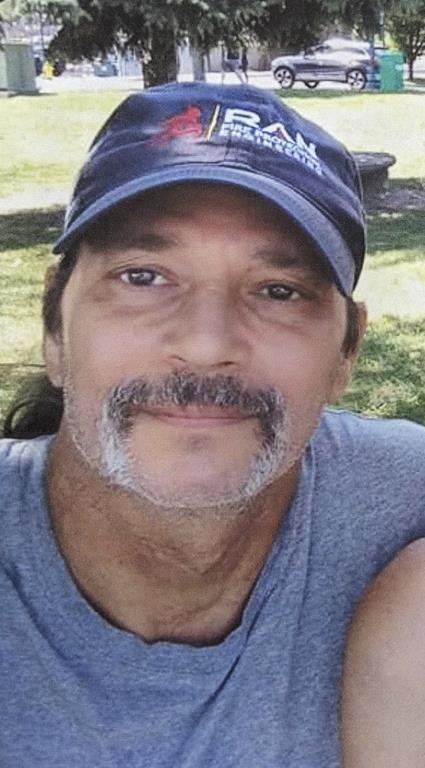
Surgeons replaced Miller’s kidneys with one from a genetically modified pig on July 14. Then doctors and nurses cared for the deceased man like they would a living patient while anxiously ticking off the days.
Remarkably, over a month later the new organ is performing all the bodily functions of a healthy kidney — the longest a pig kidney has ever worked in a person. Now the countdown is on to see if the kidney can last into September, a second month.
The Associated Press got an inside look at the challenges of experiments with the dead that may help bring animal-to-human transplants closer to reality.
___
Getting an organ transplant today is a long shot. More than 100,000 people are on the national waiting list, most who need a kidney. Thousands die waiting. Thousands more who could benefit aren’t even added to the list.
“I had seven cardiac arrests before I even was sick enough” to qualify for a new heart, said Dr. Robert Montgomery, chief of NYU Langone’s transplant institute. He’s a kidney transplant surgeon — and was lucky enough to get his own heart transplant in 2018.
Filling the gap, he’s convinced, will require using animal organs.
After decades of failed attempts, now pigs genetically modified so their organs are more humanlike are renewing interest in so-called xenotransplantation. Last year, University of Maryland surgeons tried to save a dying man with a pig heart — and he survived for two months.
Montgomery is getting more practice in the dead before taking a chance with a living patient. A handful of prior experiments at NYU and the University of Alabama at Birmingham have kept pig kidneys and hearts working in donated bodies for a few days to a week, avoiding the immediate rejection that doomed many earlier attempts.
But the most common kind of organ rejection develops over a month. That pig heart in Maryland worked great for nearly 50 days until abruptly faltering. Watching how pig kidneys reach those timepoints in donated bodies could offer vital lessons — but how long could Montgomery expect a family to turn over their loved one?
“I’m in awe of someone who can make a decision like that at, you know, one of the worst moments in their lives and really think about … humanity,” he said.
____
In Newburgh, New York, an ambulance had raced Miller to the hospital after he collapsed, a mass in his brain. He never woke up from the biopsy, brain-dead at just 57. Next steps were up to his sister, his closest relative.
Miller-Duffy asked about donating his organs but he didn’t qualify. That biopsy had found cancer.
Only then did the organ agency broach whole-body donation. Miller-Duffy wasn’t familiar with that, but the goal of improving kidney transplants, “that kind of struck a chord.” Another brother had died of kidney disease as a toddler. Other relatives have kidney-damaging illnesses or even died on dialysis.
Flipping through family photos, Miller-Duffy recalled how her brother would adopt animals and once took care of a terminally ill friend. Still, she had questions.
In a video call, Montgomery explained the pig transplant to Miller-Duffy and her wife, Sue Duffy — and why it could make a difference. Montgomery’s compassion won them over.
“His body is not being hurt, you know,” Duffy said. “It’s just an incubation for the study to be done.”
____
The experiment served as a rehearsal for one day operating in a living patient. Montgomery finished removing Miller’s own kidneys as a helicopter headed for the hospital’s riverside landing pad. Drs. Jeffrey Stern and Adam Griesemer, fellow NYU surgeons, raced in kidneys they’d removed from a pig bred by Blacksburg, Virginia-based Revivicor.
Sewing a pig kidney into a donated body isn’t much different than a regular transplant, Stern said. Post-surgery immune-suppressing drugs are standard, too.
One twist: Tacked onto the pig’s kidney was its thymus, a gland that trains immune cells — and thus might help protect the organ.
Lots of extra steps come before and after surgery.
First, what pig to use: Some have up to 10 genetic changes but Montgomery is betting one is enough — removal of a single porcine gene that triggers an immediate immune attack.
While the pigs are housed in a germ-free facility, researchers performed extra testing for any hidden infection. Everyone in the operating room must have certain vaccinations and undergo blood tests of their own.
Surgery over, doctors wheeled Miller’s body into the same ICU room where five years earlier Montgomery had recovered from his heart transplant.
Next came more intense testing than living patients could tolerate. Every week doctors biopsy the kidney, putting samples under the microscope to spot any hints of rejection. Blood is continually monitored, the spleen got a peek, and nurses keep close watch that the body is being properly maintained on the ventilator.
The first few weeks, Griesemer checked lab test results and vital signs multiple times a day: “You’re like, OK, hopefully things are still good — but is this the day it starts to turn?”
And they’re shipping biopsy samples to research partners across the country and as far away as France.
“Our staff doesn’t sleep that much,” said Elaina Weldon, a nurse practitioner who oversees the transplant research. But with each passing week, “everybody is really now at the point of, what more can we do? How far can we push?”
She knows firsthand the huge interest: NYU quizzed community groups and religious leaders before embarking on research with donated bodies that might have sounded “a little bit more on the sci-fi side of things.”
Instead, many people wanted to know how soon studies in the living could start, something the Food and Drug Administration will have to decide. Dozens have written Montgomery, eager to participate.
___
Montgomery regularly calls Miller-Duffy and her wife with updates, and invited them to NYU to meet the team. And as the study’s initial one-month deadline approached, he had another ask: It was going so well, could they keep her brother’s body for a second month?

It meant further postponing plans for a memorial service but Miller-Duffy agreed. Her request: That she gets to be there when her brother is finally disconnected from the ventilator.
Whatever happens next, the experiment has changed Sue Duffy’s outlook on organ donation.
“Maybe I don’t need all my organs when I go to heaven,” she said. “Before I was a hard no. … Now I’m a hard yes.”
___
The Associated Press Health and Science Department receives support from the Howard Hughes Medical Institute’s Science and Educational Media Group. The AP is solely responsible for all content.